Sober October: The Month America Decided to Put the Glass Down

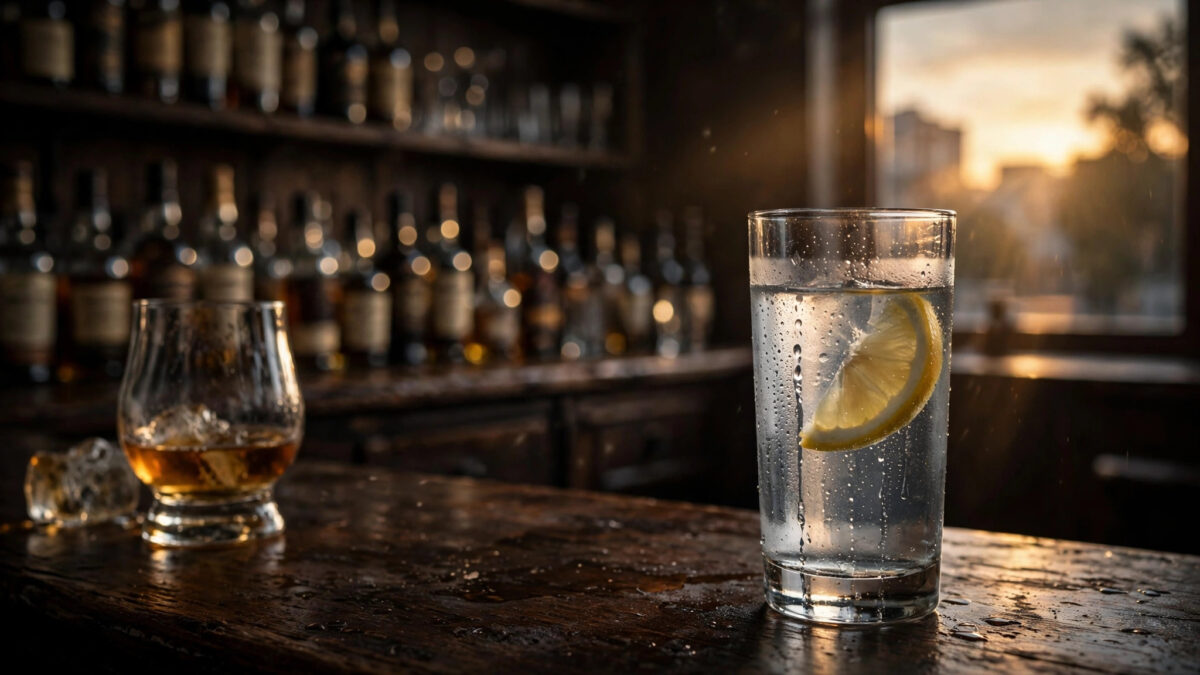
What would make millions of people in the land of neon-lit bars and billion-dollar breweries voluntarily walk away from the bottle — not in some quiet January after the excesses of the holidays, but right here in October, at the very threshold of the year’s biggest drinking season? It is not the law that orders them. It is not a sermon from any pulpit. It is something far more powerful, and far more rare: a people deciding, of their own accord, to stop.
I write these words as the second day of October 2026 dawns, and the numbers are impossible to ignore. According to the newly released State of Sober October 2026 Report by the telehealth platform Oar Health, roughly one in four Americans has pledged to go alcohol-free for the entire month. In South Carolina, four in ten residents say they will give up the bottle for thirty days. Even New York — where only sixteen per cent have pledged, the lowest in the nation — is talking about it. A movement that began in 2014 as a modest British charity fundraiser for Macmillan Cancer Support, asking people to skip their evening drink and donate the savings to cancer patients, has crossed the ocean and become one of America’s most striking cultural trends.
History, my reader, always leaves a mirror lying around. And this particular mirror reflects something America has seen before.
A Century Ago, the Law Tried — and Failed
A little over a century ago, this same nation decided that alcohol was the enemy. In 1920, the Eighteenth Amendment outlawed the manufacture and sale of intoxicating liquors across the United States, and the Prohibition era began. It was the law of the land, backed by the full might of the state — and it failed spectacularly. Speakeasies multiplied, bootleggers grew rich, ordinary citizens became criminals overnight, and thirteen years later the amendment was repealed. The lesson America took from Prohibition was supposed to be that you cannot legislate morality, that the bottle cannot be taken from a man by force.
But notice the delicious irony now unfolding. What the state could not achieve with amendments, raids, and prison cells, a generation is achieving with nothing but its own will. Nobody is banning the bottle this October. The bars are open. The breweries are running. The choice is entirely, freely, and voluntarily made — and that is precisely why it may succeed where Prohibition failed. A decree imposed from above breeds rebellion; a decision taken from within breeds transformation.
The Young Are Leading the Revolt
And it is not only October that tells this story. The young are leading the revolt. A Gallup survey conducted in 2025 found that only half of Americans aged eighteen to thirty-four now report drinking alcohol at all — down from seventy-two per cent two decades ago. Only fifty-four per cent of American adults overall say they drink, a record low in Gallup’s long polling history. Two-thirds of the young now believe that even moderate drinking is bad for their health, up from forty per cent just a decade ago. Generation Z — mocked for many things, rarely praised — has quietly become the most sober generation America has produced in modern times. Nearly half of them have never had an alcoholic drink in their lives.
Ask yourself why. The health-conscious answer is the easiest: fifty-three per cent of Americans now believe moderate drinking harms health, nearly double the twenty-eight per cent who thought so in 2015. The World Health Organization estimates that alcohol kills some 2.6 million people worldwide every year — it is the leading risk factor for premature death among people aged twenty to thirty-nine. Tom Frieden, the former director of the U.S. Centers for Disease Control and Prevention, has called alcohol “the forgotten killer,” noting that it ends an estimated 178,000 American lives each year — more than die from stroke, four times the toll of breast cancer. A month without the bottle brings measurable changes: a 2018 study published in the peer-reviewed journal BMJ Open found that moderate-to-heavy drinkers who abstained for just one month saw improvements in insulin resistance, weight, blood pressure, and cancer-related growth factors.
What the Numbers Cannot Say
But data alone never moves a civilisation, my reader. Data is cold; conviction is warm. Something deeper is stirring here, and I suspect it is this: a generation raised on screens and simulation has developed a peculiar hunger for reality — for mornings that arrive clear-headed, for evenings remembered instead of erased, for a mind that belongs to its owner. The young man who refuses the drink is not necessarily holier than his father; he may simply have counted the cost more carefully. He has seen what the bottle did to the generations before him, and he has decided — quietly, without fanfare, without a single law being passed — that the price is too high.
There is a civilisational dimension to this that deserves our attention. Every great tradition of the world — and I say this as one who belongs to a faith that treats intoxication as the mother of all evils — has warned that a nation of drunkards is a nation of the half-alive. History’s judgment on the bottle has been remarkably consistent: societies that drown their evenings drown their mornings too. What is remarkable about Sober October is not that it preaches this; it is that no one is preaching it. There is no mass movement, no charismatic leader, no manifesto. There are only millions of private decisions, made in millions of kitchens and bedrooms, adding up to something that looks, from a distance, like a quiet revolution.
Even the paradox in the survey data tells a human story. The Oar Health report found that heavy drinkers — those who stand to gain the most from a sober month — are the most aware of Sober October yet the least likely to attempt it, and four times more likely to expect it to be a struggle. Ninety-two per cent of those who attempt it experience cravings, and most cravings strike before the month’s halfway mark. Read that again and tell me it is not the oldest human drama wearing modern clothes: the very ones who know they need the medicine are the ones most afraid to swallow it. This is why the campaign’s supporters argue that willpower alone is not enough, and that proven medical tools — treatments like the FDA-approved naltrexone — deserve to be part of the conversation about recovery.
The Fog, Not the Bottle
And so here is my verdict, offered not as a verdict of condemnation but of observation. America tried to ban the bottle by law and learned that you cannot force a soul. A century later, the soul is moving on its own. Whether this October turns into a November — whether a month of clarity becomes a habit of clarity — no survey can tell us. That will be decided the way all civilisational changes are decided: not in reports, but in the quiet hour when a man stands before his own reflection and asks himself the oldest question in the world. Am I master of this thing, or is this thing master of me?
The answer America is giving this October should make the rest of us listen. And perhaps, just perhaps, the bottle is not the enemy at all. The enemy was always the fog. And nations, like men, sometimes wake up.
Sources & References
Oar Health — State of Sober October 2026 Report (press release, 30 September 2026): national survey figures — 26% national participation, 16% New York, 41% South Carolina; heavy-drinker findings; cravings data.
New York Post (1 October 2026): New York ranks last in Sober October awareness and participation.
Gallup — alcohol consumption polling, 2025: only 50% of 18–34-year-olds drink; 54% of adults drink (record low); 53% view moderate drinking as harmful, up from 28% in 2015.
World Health Organization — SAFER initiative progress report (June 2026): alcohol-related harm causes an estimated 2.6 million deaths each year.
World Health Organization — Global alcohol action plan 2022–2030: harmful use of alcohol causes approximately 3 million deaths every year; alcohol is a causal factor in more than 200 disease and injury conditions.
Tom Frieden — “Why Alcohol Is the Forgotten Killer”: former CDC Director on alcohol killing an estimated 178,000 Americans a year and alcohol as the fourth leading risk factor for death in the U.S.
Brandeis University (September 2025): Gallup data showing 18–34 drinking rate fell from 72% to 50% over two decades.
Morning Brew (March 2026): Gen Z drinking decline and its drivers.
Farmers’ Advance / USA Today network (October 2025): Sober October origins — Macmillan Cancer Support, 2014; BMJ Open 2018 study on one-month abstinence benefits; Gateway Healthcare expert quotes.
St. Clair Health: CDC emergency-room data on alcohol-related visits.
