Shehbaz Sharif Renews Conditional Talks Offer to PTI, Urges End to Islamabad Long March

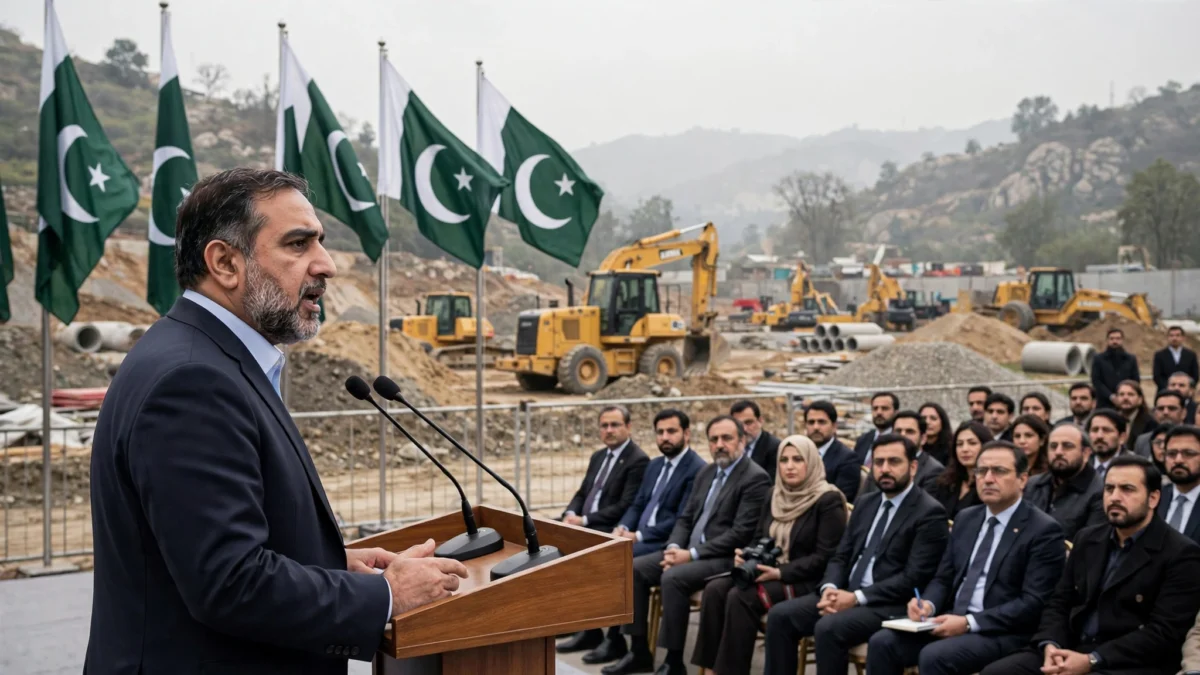
Prime Minister Shehbaz Sharif on Tuesday renewed the federal government’s offer of political dialogue with the Pakistan Tehreek-e-Insaf, but made it conditional on the opposition party first calling off its long march to Islamabad, warning that continued street agitation would directly damage the country’s fragile economy.
“Unfortunately, the shadows of dharnas and long marches have once again emerged,” the prime minister said while addressing the groundbreaking ceremony of the Kashmir Chowk Underpass in Islamabad, according to The News. “I urge you to come to your senses, end the long march and sit-in, and then we will sit with you.”
Sharif said the ruling coalition had collectively decided to engage the PTI leadership to persuade it to abandon protest politics, and accused the opposition of deliberately sabotaging three rounds of negotiations held over the weekend in National Assembly Speaker Ayaz Sadiq’s chamber. The PML-N and PPP had negotiated with the PTI for two days, he said, but the opposition demanded changes to already-settled points at the last moment and worked to ensure the talks failed, according to Abb Takk.
The prime minister framed the standoff in economic terms, warning that the first casualty of renewed sit-ins and road blockades would be Pakistan’s exports, imports and manufacturing. “If workers and engineers do not reach factories and offices on time, the loss will be Pakistan’s,” he said. He maintained that his government had put the economy back on its feet after two and a half years of hard work, citing improved IT exports and remittances in September.
Minister of State for Interior Tallal Chaudhry separately held Khyber Pakhtunkhwa Chief Minister Sohail Afridi responsible for the breakdown of the talks, saying the PTI delegation withdrew after consulting Afridi at the last minute, according to WE News English. The PTI, for its part, has said the deadlock persists because its negotiators were not allowed to meet party founder Imran Khan in Adiala Jail.
The PTI began its long march from Lakki Marwat on October 4 after postponing it from September 27, with the convoy led by Chief Minister Afridi having reached Kohat by Tuesday, according to The News. Party convoys are expected to converge at Khairabad on October 8, when the leadership is to announce the next phase. Federal authorities have deployed tens of thousands of security personnel and blocked routes into Islamabad with shipping containers, and have repeatedly warned that the marchers will not be allowed to enter the capital.
The prime minister’s latest offer came against the backdrop of the government reportedly weighing governor’s rule or emergency in Khyber Pakhtunkhwa — a move the PPP has publicly argued against, urging a political settlement instead.
Analysis: Why It Matters
The wording of this offer matters more than the offer itself. By making dialogue conditional on the march ending first, the government has turned the sequencing question into the whole negotiation: each side is asking the other to move first so it cannot be accused of blinking. The PTI’s own condition — access to Imran Khan before it calls anything off — is a mirror image of the same trap. That is why three rounds of talks can end in deadlock without a single substantive disagreement being resolved: neither camp trusts the other enough to take the first step, so process itself becomes the battlefield.
The economy argument is the government’s strongest card in this framing. After two and a half years of stabilisation, the prime minister is trying to shift the costs of the standoff from the political arena to the material one — exports, factories, workers reaching offices — so that the march registers not as protest but as economic sabotage. It is a framing designed to peel away the business community and the middle class, and to give international partners a reason to quietly back the government’s line.
What happens next hinges on Thursday’s convergence at Khairabad. If the unified convoy turns toward Islamabad in full strength, the container-and-police strategy will be tested at a scale it has not faced yet, and the governor’s-rule option could move from threat to instrument. Three things to watch: whether the government offers any concession on access to Khan as a sequencing off-ramp, whether the PPP’s resistance keeps the emergency option on paper only, and whether PTI turnout on October 8 matches the build-up or reveals the limits of the mobilisation.
Sources

About the Author — Abdul Mannan
Related Articles
End the March and We Will Talk: Shehbaz Offers PTI Conditional Dialogue as Governor Draws Line at Attock
Prime Minister Shehbaz Sharif has offered PTI fresh talks on condition the party ends its long march to…
Islamabad Mulls Governor’s Rule or Emergency in Khyber Pakhtunkhwa as PTI March Presses Toward the Capital
Dawn reports Islamabad is "seriously considering" governor's rule in the PTI-run province, with a government source saying an…
Guterres Lands in Islamabad for Three-Day Visit as Pakistan’s US–Iran Mediation Takes Centre Stage
UN chief António Guterres arrived in Islamabad on Tuesday for a three-day official visit, with Pakistan's US–Iran mediation…