Sohail Afridi Launches Counter-Offensive Against KP Governor, Calls Kundi’s Security Meeting Unconstitutional

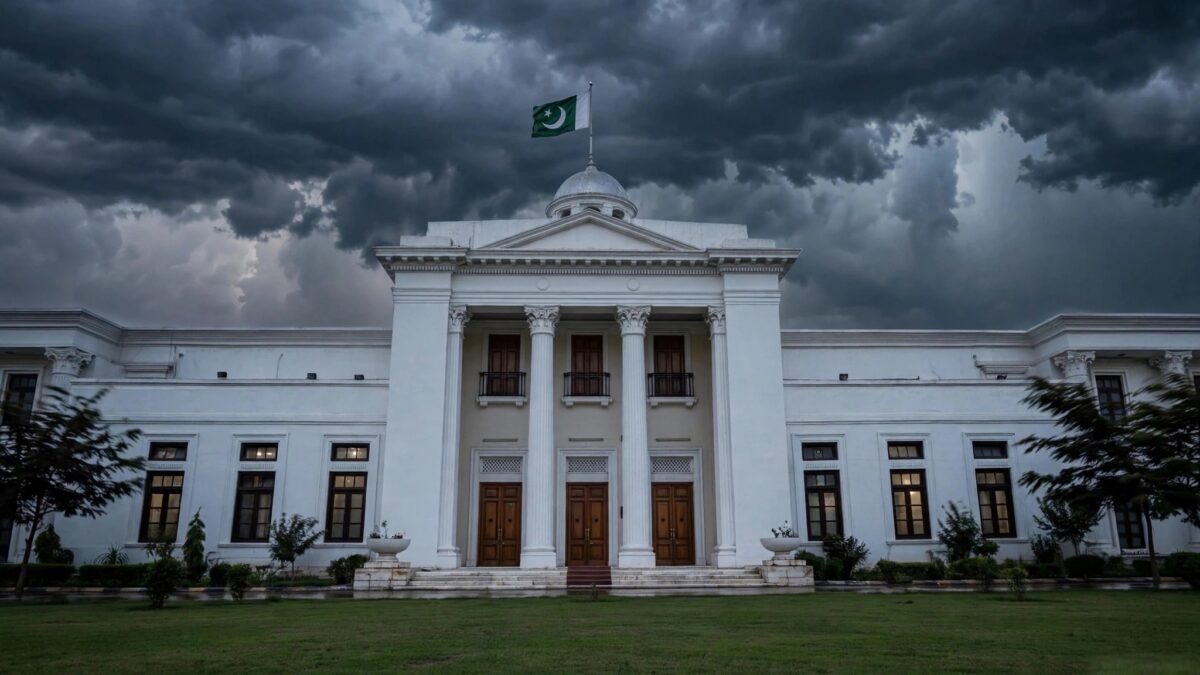
PESHAWAR — Khyber Pakhtunkhwa Chief Minister Sohail Afridi on Wednesday launched his most aggressive counter-offensive yet against Governor Faisal Karim Kundi, declaring the governor’s high-level security meeting on the province’s law-and-order situation “unconstitutional” and warning that his elected provincial government would not submit to what he described as an assault on the Constitution and democratic governance.
Addressing a meeting of the provincial cabinet, Afridi said the PTI-led government had been elected with a two-thirds majority in the provincial assembly, and that the assembly, the cabinet and the provincial administration were all fully functional — a record he invoked to argue that there was no constitutional room for the governor to summon the province’s top bureaucracy on his own, according to the COW News Digital account of the meeting.
The chief minister was responding to a meeting convened by Kundi on October 6 to review the security situation in the province and the measures being taken to counter terrorism. The chief secretary, the inspector general of police and other senior officials attended the governor’s session, which was announced from Governor House in Peshawar with an official handout on the discussions.
Afridi questioned how the governor could justify summoning the chief secretary and the inspector general of police for a security meeting when an elected government was in place. He said he would seek the opinion of the provincial advocate general on the constitutional status of the governor’s meeting, and argued that the Constitution prescribed a clear procedure for removing a chief minister — a vote of no confidence — and that any other route was unconstitutional. Express News also carried the chief minister’s statement, reporting that Afridi described the governor’s proceedings as unconstitutional and insisted that no one would be allowed to undermine democratic principles.
According to Dawn, which updated its account of the confrontation on Thursday morning, Afridi went further still: the chief minister told the chief secretary and the inspector general of police not to follow “unconstitutional” orders, rejected counter-terrorism operations imposed without provincial consent, and sought legislation that would allow a governor to be impeached. Those details were reported by Dawn; the core confrontation at the cabinet meeting — Afridi’s rejection of the governor’s security session as unconstitutional and his defence of his elected mandate — was confirmed independently by multiple outlets.
The exchange is the latest and sharpest escalation in a standoff that has been building for weeks between the PTI-led provincial government and a federal establishment that says Khyber Pakhtunkhwa’s security situation has become untenable.
Only four days earlier, Federal Interior Minister Mohsin Naqvi and Governor Kundi had met at Governor House in Peshawar and discussed the province’s security situation, political developments and the PTI’s long march toward Islamabad. A statement issued after that meeting said the two officials had discussed the possibility of imposing governor’s rule or an emergency if such measures became necessary to protect the province, and that the governor had agreed to play his constitutional role if the president and the prime minister deemed such a step necessary, according to reports in pakhtundigital and the Islamabad Post. The same statement raised concern about the alleged facilitation of militants through security checkpoints during the long march and about the use of an official provincial helicopter during the protest — claims PTI has dismissed.
The pressure did not stop there. On Monday, Federal Minister for Kashmir Affairs and Gilgit-Baltistan Ameer Muqam said in Peshawar that the legal conditions for imposing governor’s rule in Khyber Pakhtunkhwa had been fulfilled, citing what he described as unlawful actions by Chief Minister Afridi, according to The News. And late on October 7, Dawn reported that Kundi himself had said an emergency or governor’s rule would “definitely” be imposed if it was deemed necessary to “save” the province.
The confrontation is unfolding against two parallel crises. The first is the PTI’s long march toward Islamabad, launched on October 4 from Lakki Marwat after three rounds of negotiations between the party and the Shehbaz Sharif government collapsed over the weekend. The party, led by Afridi, is demanding the release of its jailed founder, former prime minister Imran Khan, along with access to medical care and meetings for him. The federal government says it will not permit the marchers to enter Islamabad’s government district, has sealed highways with shipping containers, and has warned that those who break the law will face prosecution. Reuters reported that thousands of police and paramilitary personnel have been stationed in and around the capital.
The second is the dispute over counter-terrorism policy in a province bordering Afghanistan that has seen rising militant attacks in recent months. The two sides give sharply different accounts of why the weekend talks failed. Naqvi said 99 per cent of a draft agreement had been settled before Afridi’s side made late changes, and blamed the chief minister for sabotaging the negotiations by refusing to cooperate on a state-backed counter-terrorism policy. PTI leaders, including party secretary general Salman Akram Raja, said the federal side insisted that the province endorse and “own” anti-terrorism operations initiated unilaterally by the federation — a condition the provincial government refused.
Afridi has also accused the federation of financially starving the province. At the cabinet meeting he repeated his claim that the financial integration of the former tribal districts, merged with Khyber Pakhtunkhwa in 2018, had still not been fully completed, and that around Rs100 billion in compensation for people displaced by federal security policies remained outstanding — grievances he has raised repeatedly in recent weeks.
Imran Khan, meanwhile, remains in Adiala Jail in Rawalpindi, where he has been held since 2023. He describes himself as a political prisoner and his party says the more than 100 cases against him are politically motivated; the government and the military deny orchestrating his imprisonment and point to the judiciary. Three rounds of negotiations have also addressed access to the former prime minister by his family and his personal physician — a point on which Afridi claims court orders have not been implemented.
A fresh twist arrived on Thursday morning, when Dawn reported that the Peshawar High Court had rejected Afridi’s plea challenging Election Commission proceedings against him, with the judge advising the chief minister’s counsel to let the commission hear him first. The ruling adds a legal front to a battle that is already being fought in the courts, on the streets and in the constitutional order of the province.
Analysis: Why It Matters
The Afridi–Kundi confrontation is no longer a routine federal–provincial quarrel. It is becoming a constitutional war of attrition in which both sides are reaching for the heaviest instruments the Pakistani constitutional order offers — and pointing them at each other.
Consider the symmetry. Islamabad’s side is openly weighing governor’s rule or an emergency under the Constitution’s emergency provisions, a step that would suspend the elected provincial government and place the province under the governor’s authority, with the sanction of the president and prime minister. Afridi’s answer, according to Dawn, is to seek legislation that would make the governor impeachable — a mirror-image threat aimed at the very office that would administer governor’s rule. Two constitutional weapons, drawn in the same week, over the same province.
The stakes go beyond personalities. Khyber Pakhtunkhwa is where Pakistan’s two most combustible pressures meet: a restive border province facing a genuine militant resurgence, and the heartland of the country’s largest opposition party, whose founder sits in jail and whose supporters are marching on the capital. The federation argues that security cannot wait for political accommodation — that a province facing rising terrorism, and whose chief minister is leading a protest convoy toward Islamabad, cannot be left to its own devices. The provincial government argues that an elected mandate with a two-thirds majority cannot be set aside by bureaucratic fiat, and that counter-terrorism policy imposed without provincial consent is both unconstitutional and, in its telling, counterproductive.
The courts are now entangled on both sides. The Islamabad High Court’s September 14 order has already warned that using provincial government resources to facilitate the march could expose a chief minister to constitutional consequences — a ruling The News has noted could put Afridi’s office itself at risk. The Peshawar High Court’s rejection of his plea against the Election Commission adds another legal pressure point. Meanwhile the advocate general’s opinion on the governor’s meeting, which Afridi has sought, could become the next flashpoint: if the province’s top law officer declares the governor’s session unconstitutional, the chief secretary and the inspector general of police will face conflicting instructions from two constitutional offices.
History counsels caution about where this road leads. Pakistan has seen governor’s rule imposed in provinces before, and it has never calmed politics — it has inflamed it. The PTI’s last large-scale protest two years ago ended in deadly clashes with security forces, and every week of brinkmanship raises the odds of a repeat. The containers now sealing Islamabad’s highways are a familiar, grim sight: they signal that the state expects confrontation, and confrontation has a way of fulfilling expectations.
There is also a deeper institutional question that neither side is answering. If the governor can convene the province’s security apparatus over the head of an elected chief minister, and if the chief minister can in turn direct the bureaucracy to ignore the governor, then Khyber Pakhtunkhwa effectively has two competing chains of command — the precise condition in which security policy, already fragile in the border districts, breaks down. The militant groups watching this standoff are unlikely to wait for Pakistan’s constitutional scholars to settle the argument.
What to watch next is a short list with outsized consequences. First, the advocate general’s opinion on the governor’s meeting, which will determine whether the chief secretary and police chief obey Peshawar’s elected government or the Governor House. Second, whether the federal cabinet formally moves on governor’s rule or an emergency — or whether, as has happened before, the threat itself is the tactic. Third, the PTI march’s next phase, with convoys scheduled to converge and the capital still sealed. And fourth, the courts: the Election Commission proceedings against Afridi, and any fresh petitions on the governor’s actions, could decide this standoff faster than any march or cabinet meeting.
For now, Pakistan’s federation is being stress-tested in its most sensitive province, in public, and in real time. Both sides claim to be defending the Constitution. The Constitution, as ever, will have the last word — but it may take the courts to speak it.
Sources
COW News Digital, “KP Chief Minister Calls Governor Security Meeting Unconstitutional” — https://www.thecownews.com/pakistan/kp-chief-minister-calls-governor-security-meeting-unconstitutional/
The News, “Legal grounds for governor rule in KP fulfilled, says minister amid tensions” — https://www.thenews.pk/story/1439942-legal-grounds-for-governor-rule-in-kp-fulfilled-says-minister-amid-tensions
Pakhtun Digital, “Governor’s Rule in KP? Naqvi, Kundi Hold Key Peshawar Meeting” — https://pakhtundigital.com/governors-rule-in-kp-naqvi-kundi-hold-key-peshawar-meeting/

About the Author — Abdul Mannan
Related Articles
Shehbaz Sharif Renews Conditional Talks Offer to PTI, Urges End to Islamabad Long March
Prime Minister Shehbaz Sharif renewed the government's offer of dialogue with the PTI, but only if the party…
End the March and We Will Talk: Shehbaz Offers PTI Conditional Dialogue as Governor Draws Line at Attock
Prime Minister Shehbaz Sharif has offered PTI fresh talks on condition the party ends its long march to…
Islamabad Mulls Governor’s Rule or Emergency in Khyber Pakhtunkhwa as PTI March Presses Toward the Capital
Dawn reports Islamabad is "seriously considering" governor's rule in the PTI-run province, with a government source saying an…