Kenya Rules Out Second Ebola Case as Suspected Wajir Infection Tests Negative; Minister Rejects Border Closure

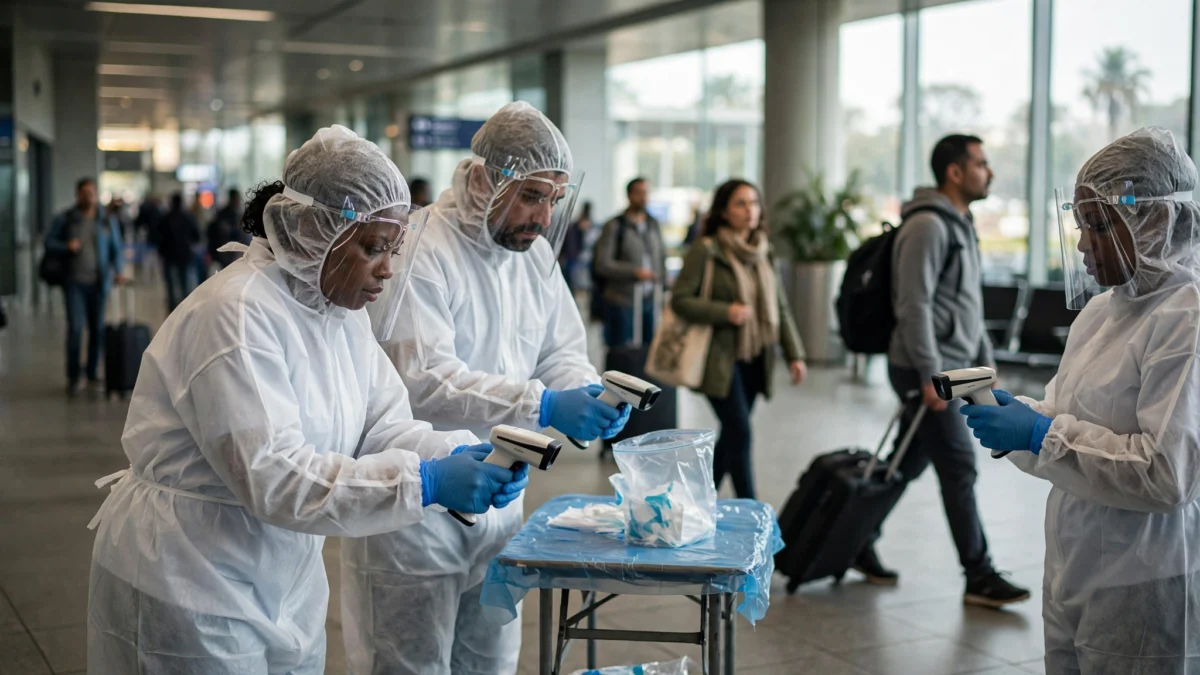
Kenya’s worst-case scenario for the moment did not materialise. Preliminary laboratory results for a patient suspected of carrying Ebola virus disease in Wajir County have come back negative, the county’s governor announced on Thursday, ruling out what would have been the country’s second Ebola case within days of its first-ever confirmed infection.
The patient, a 20-year-old man who travelled from the Democratic Republic of Congo through Uganda before arriving in Wajir South, was being assessed at Habaswein Sub-County Hospital after presenting with fever, headache and a cough — a clinical picture close enough to the confirmed case earlier this week that health officials treated him as a suspected Ebola infection and followed full public-health procedure. Samples were sent to the National Public Health Virology Laboratory in Nairobi, which reported the preliminary negative result, according to the county government.
“I am pleased to report that the preliminary laboratory results indicate that the sample is NEGATIVE for Ebola,” the Wajir County governor said in a statement reported by Reuters. Wajir Governor Ahmed Abdullahi separately confirmed to the Eastleigh Voice that the man would remain under medical observation while health officials continue monitoring his condition.
The scare underscored how quickly Kenya’s alert system now operates: the patient first developed symptoms while still in the Democratic Republic of Congo, according to a Habaswein police report cited by local media, sought treatment after arriving in the area, and was isolated within hours when his condition failed to improve and his travel history raised red flags. Contact identification was under way before the test result arrived — a speed that would have been unthinkable in earlier African outbreak eras.
The first case that started it all
The negative result is a genuine relief, because Tuesday’s announcement of Kenya’s first-ever Ebola case was already the country’s most serious infectious-disease development in years. Health Cabinet Secretary Aden Duale confirmed on October 6 that a Kenyan citizen who had been living in the Democratic Republic of Congo for seven years had tested positive for the Bundibugyo strain of Ebola at two national laboratories in Nairobi — and died on October 5, despite receiving supportive care in isolation.
The man’s journey mapped almost exactly onto the Wajir patient’s route: domestic travel within Congo across three Ebola-affected provinces, then by road from Beni to Kampala in Uganda, and on to Nairobi aboard a commercial flight. He had fallen ill about a month before arriving in Kenya, though precisely when he became infected remains unclear, according to Duale.
What disturbed epidemiologists most was how the man passed through successive layers of screening. Ugandan authorities recorded a “normal temperature” when he was screened at Entebbe airport; Kenyan authorities suspect he may have taken fever-reducing medication to mask symptoms before boarding for Nairobi. “We are trying to retrieve the digital form he would have filled out at Entebbe airport when he went through the thermal scanning process,” Dr. Richard Mugahi, a senior Ugandan health official, told Reuters, adding that officials were also reviewing airport security-camera footage to trace the driver who dropped the man at the airport.
By Wednesday, Duale said health officials had listed 57 contacts of the dead man — including flight passengers and crew — and placed 10 in quarantine, with efforts to trace the rest intensified. A dedicated screening gate has now been established at Nairobi’s Jomo Kenyatta International Airport for passengers arriving from Congo and other countries linked to the outbreak.
No border closure — screening instead
Faced with public pressure to seal the country’s frontiers, Kenya’s government on Thursday publicly ruled out closing its borders. “We will not close. If you are closing and discriminating then they will find other illegal ways in,” Duale said, arguing that enhanced screening and surveillance would do more to stop the virus than a blanket closure that would simply push travellers toward unofficial crossings beyond the reach of health authorities.
The position won backing from the World Health Organization, which advised Kenya against travel or trade restrictions based on currently available information, saying such measures are less effective than targeted public-health interventions. The WHO’s stance aligns with its long-standing guidance under the International Health Regulations: blanket bans punish economies while doing little to interrupt transmission, which moves faster through informal channels anyway.
The advice, however, has not reassured everyone abroad. The United Kingdom issued a travel advisory for Kenya urging citizens to reconsider non-essential travel after the confirmation of the country’s first imported Ebola case, and the United States issued a health alert for Americans in Kenya. Duale, for his part, has reassured international partners that Kenya remains safe for travellers and investors, pointing to isolation facilities and screening at key points of entry including JKIA and the Kenya–Uganda border.
China extended Kenya a 260-million-shilling (about $2 million) cash grant to bolster Ebola preparedness and drought relief, while the World Bank’s $51.96 billion shilling emergency facility for climate and disease impacts provides a larger backstop. Kenya has also intensified screening for travellers arriving from 10 African countries and stepped up controls at the Isibania border point linking Kenya and Tanzania.
The testing machine running at full tilt
Beyond the single Wajir scare, the Ministry of Health said it has now tested 129 suspected Ebola cases at the National Virology Reference Laboratory and collaborating laboratories — every one returning negative. More than 140,000 travellers have been screened and over 100 suspected alerts investigated, all negative, according to the ministry’s Thursday update.
Principal Secretary for Public Health Mary Muthoni told reporters Kenya remains on high alert because of its position as a major regional transport and travel hub — a candid acknowledgment that Nairobi’s role as East Africa’s busiest aviation gateway makes total exclusion of the virus nearly impossible while the regional outbreak burns on.
The Democratic Republic of Congo continues to battle what Reuters described as the second-largest Ebola epidemic on record, with more than 8,000 cases, while Eastleigh Voice reporting put the DRC death toll above 600. Kenya is the fourth country to record a case linked to the eastern Congo epidemic.
Not all of the response has been smooth. Some healthcare workers at Nairobi Hospital protested their mandatory quarantine after attending to the patient who died, and the Kenya Medical Association has urged strict compliance with the full 21-day Ebola quarantine period. An internal government review of Kenya’s readiness — conducted by the Bundibugyo Virus Disease Incident Management System under the Kenya National Public Health Institute — found the country still vulnerable to a major Ebola outbreak, with case management scoring just 36 per cent, infection prevention and control 25 per cent, logistics 49 per cent and preparedness at points of entry 60 per cent. The same review found strengths too: contact tracing at 100 per cent, rapid-response teams at 90 per cent and laboratory capacity at 87 per cent. Overall preparedness stood at 66 per cent when the emergency response began in May.
Analysis: Why It Matters
The negative test from Wajir is the best news Kenya could have received this week — but it is more than a sigh of relief. It is the first live demonstration that the country’s alert system actually fires. A man with the wrong travel history and the wrong symptoms was detected, isolated, and cleared by a national laboratory within about 24 hours, with contact tracing initiated before the result was known. That is precisely how a first-ever case stays an only case.
Yet the episode exposes the uncomfortable question the confirmed case raised and did not answer: why did every layer of airport screening fail to stop the first patient? Thermal scanning can be defeated by a paracetamol tablet — a well-known limitation that no amount of protocol rhetoric removes. The real gap, as Duale acknowledged implicitly by establishing a dedicated screening gate at JKIA, is that screening has been generic when the threat is specific. A traveller arriving from an Ebola-affected province of the DRC should not be facing the same cursory temperature check as everyone else. Uganda’s scramble through Entebbe’s digital declaration forms and security footage suggests the first patient’s forms may hold their own answers — and the outcome of that review deserves to be public.
The border-closure rejection is the week’s most consequential policy decision, and it places Kenya on the same side of history as the WHO’s IHR doctrine and the opposite side from decades of instinctive border politics. Duale’s argument — that closures merely reroute movement through unofficial channels where health authorities cannot see it — is epidemiologically sound and politically brave, because it forfeits the most visible thing a government can do. The UK travel advisory and the US health alert show that foreign governments will impose their own judgments regardless. Kenya’s wager is that demonstrably competent screening is better protection than a sealed border nobody can seal anyway; the region will be watching to see whether the 36-per-cent case-management score catches up with the 100-per-cent contact-tracing score.
The Bundibugyo strain adds a grim dimension that generic Ebola coverage often glosses over. Unlike the Zaire ebolavirus, for which vaccines and licensed therapeutics exist, there are currently no approved vaccines or specific treatments for Bundibugyo virus disease, though candidate products are being evaluated in clinical trials, according to WHO information cited in local reporting. Every new case is therefore a case that medicine cannot specifically treat — which is why the contact list of 57 people and the 21-day quarantine clock are the entire firewall.
Finally, the negative Wajir result will not end the story. The 21-day quarantine periods for the first case’s contacts are still running, the DRC outbreak is still growing, and each arriving flight from the region resets the odds. The honest metric to watch is not whether another alert fires — alerts will keep firing, and that is the system working — but whether the next one is caught as fast, and whether the internal review’s weakest scores are shored up before they are tested for real. For now, Kenya has one confirmed case, one all-clear, and a strategy it is prepared to defend. The virus gets a vote too.
Sources
- Reuters — Kenya says tests on suspected Ebola case come back negative
- The Eastleigh Voice — Wajir suspected Ebola case tests negative, county authorities confirm
- Reuters (via Devdiscourse) — Kenya Ebola case exposes gaps in border screenings
- The Eastleigh Voice — Kenya tests 129 suspected Ebola cases as DRC outbreak surpasses 600 deaths
- The Eastleigh Voice — Kenya still unprepared for major Ebola outbreak as review exposes critical health system gaps
- Kenyan Mirror — Ebola Response Escalates, Duale Rules Out Kenya Border Closure

About the Author — Abdul Mannan
Related Articles
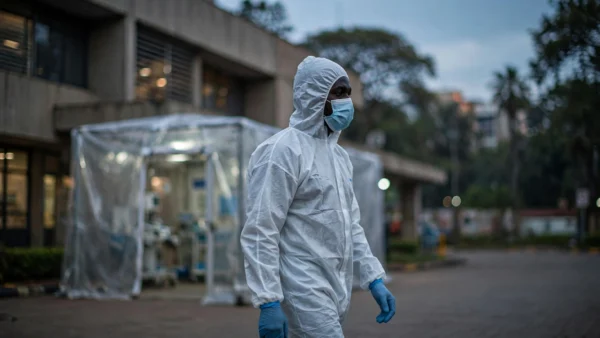
Kenya Confirms Its First-Ever Ebola Case as Man Dies in Nairobi After Travelling From Congo
Kenya has confirmed its first-ever Ebola case — a Kenyan citizen who had been living in Congo for…

One in Eight Cancer Cases Worldwide Linked to Common Infections, WHO Study Finds
A WHO cancer agency study estimates 2.3 million new cancers in 2024 — one in eight worldwide —…
Pennsylvania Measles Outbreak Passes 1,000 Cases With Five Deaths — the Worst US Outbreak Since 1991
Pennsylvania's measles outbreak has surpassed 1,000 confirmed cases with five deaths, according to state health officials — making…