IMF Reaches Staff-Level Agreement With Pakistan, Unlocking About $1.2 Billion Pending Board Approval

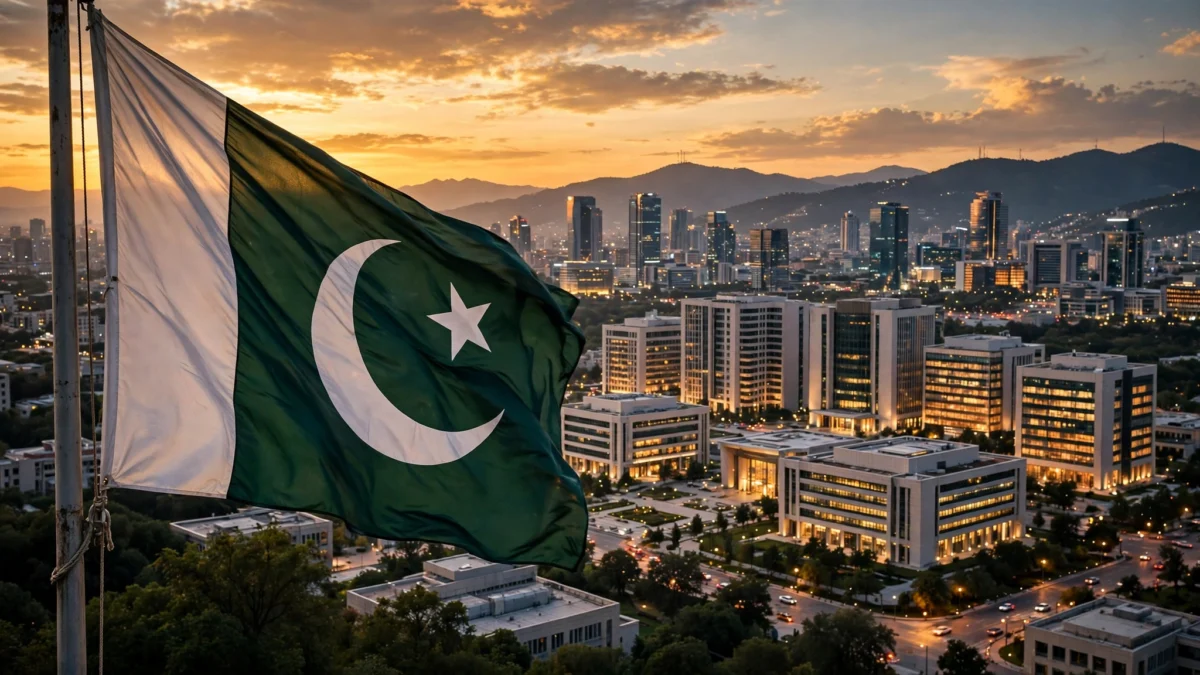
Pakistan has cleared a major hurdle in its international economic programme after the International Monetary Fund announced a staff-level agreement with the country’s authorities, a step that could unlock about $1.2 billion in fresh financing once the Fund’s Executive Board approves it.
The agreement covers the fourth review of Pakistan’s 37-month Extended Fund Facility arrangement and the third review of its 28-month Resilience and Sustainability Facility, the IMF said in a statement issued from Washington on Wednesday, October 7. A mission led by the Fund’s mission chief for Pakistan, Iva Petrova, held discussions with Pakistani officials in Karachi and Islamabad from September 23 to October 7, alongside the 2026 Article IV consultation, according to the statement.
If the Executive Board signs off, Pakistan will have access to about $1.0 billion (SDR 760 million) under the Extended Fund Facility and about $210 million (SDR 154 million) under the climate-focused Resilience and Sustainability Facility, bringing total disbursements under the two arrangements to roughly $5.7 billion, according to the IMF and Reuters.
A staff-level agreement is not a disbursement — it is the Fund’s technical staff formally recommending that the Board approve the next tranche. But in the choreography of IMF lending, it is the moment markets, creditors and governments treat as the real green light. The board vote typically follows within weeks; the Fund said the money could reach Pakistan within about four to five weeks of the announcement.
The timing matters beyond the money. The Extended Fund Facility — the $7 billion programme approved in 2024 — is the anchor of Pakistan’s external financing. The country remains heavily dependent on outside funding to shore up its foreign exchange reserves and meet its debt repayments, as Reuters noted. Each successful review is therefore read by investors and rating agencies as a signal that the programme stays on course, and this one comes with an unusually explicit vote of confidence.
A programme the Fund says is on track
The IMF’s statement was notably warm. Programme implementation under the Extended Fund Facility “has remained broadly on track despite a challenging external environment,” the Fund said, adding that Pakistani authorities had “successfully navigated the impact of the Middle East conflict” and that strong policies had helped preserve macroeconomic stability.
The headline numbers tell a story of cautious recovery. Real GDP growth reached 4 percent in the first three quarters of FY26, with full-year growth estimated at 3.6 percent, according to the IMF. Headline inflation, after peaking in May, moderated to about 10.3 percent in September, while core inflation stayed contained. The current account was broadly balanced in FY26, supported by strong remittance inflows, and gross reserves climbed to about $21.5 billion by the end of September. The Fund also pointed to sovereign rating upgrades and renewed access to international markets as signs of stronger policy credibility.
Still, the statement carried the standard warning. Risks remain elevated, the IMF cautioned, citing geopolitical tensions, volatile energy prices, tighter global financial conditions and trade disruptions. Reuters, in its own reporting on the deal, quoted S&P Global Market Intelligence principal economist Ahmad Mobeen, who said earlier this year that Pakistan is the most vulnerable major Asia-Pacific economy to a prolonged Middle East conflict, given its reliance on Gulf energy imports, remittances and financing support from the region.
The conditions: fuel subsidies, a primary surplus and state firms
Money from the Fund never comes without strings, and this review is no exception. The IMF laid out a set of fiscal priorities that will test the government’s political nerve in the months ahead.
The most politically charged item is the fuel support scheme. Islamabad will “promptly” phase out its fuel relief programme — the subsidy scheme aimed at users of motorcycles, rickshaws and small cars — given its high cost and broad targeting, according to the Express Tribune. Any future fuel support, should oil prices surge unexpectedly, “should be limited, time-bound, targeted using established social assistance programs, and accommodated within the FY27 budget envelope,” the IMF said.
The fiscal framework is equally demanding. The IMF said Pakistan’s FY27 budget should be implemented firmly, with an underlying primary surplus target of 2 percent of GDP, to put public debt on a sustainable downward path.
Other priorities named by the Fund include improvements in social and health sector spending and better governance of state-owned companies. On the climate side — the Resilience and Sustainability Facility’s domain — the mission chief said Pakistan was “continuing efforts to strengthen resilience to climate change,” with reforms advancing on irrigation water pricing and collection, better-targeted electricity subsidies, energy-efficiency standards and transport decarbonisation.
Analysis: Why It Matters
On its face, this is a routine IMF review — the fourth of its kind under the current facility. But there is nothing routine about what it reveals about Pakistan’s position right now, or about the stakes of what comes next.
First, consider the scorecard. Fourth reviews are where IMF programmes historically get wobbly; the easy reforms are done, the politically painful ones begin. That the Fund describes implementation as “broadly on track” two years into a 37-month programme is, by the standards of Pakistan’s long and fractious history with the Fund, a genuine achievement. The country has cycled through more than twenty IMF programmes, and reviews that glide through without a waiver or a prior action are the exception rather than the rule. For the Shehbaz Sharif government, keeping the programme clean is the single most important credential it can present to foreign creditors, bond markets and the Gulf lenders who top up its reserves.
Second, look at what the Fund is really buying — and what it is refusing to buy. The agreement accepts Pakistan’s macro narrative (growth steady, inflation falling, reserves rebuilding) but attaches conditions that bite directly into domestic politics. The fuel relief scheme is not an abstract budget line; it is money in the pocket of the motorcycle commuter and the rickshaw driver. Phasing it out “promptly” will feed straight into the cost-of-living pressure that is already the defining grievance in Pakistani politics. The IMF’s insistence that any future support be “limited, time-bound, targeted” is a bet that Pakistan can build the social-protection machinery — through programmes like Benazir Income Support — to cushion the blow. Whether that machinery actually reaches the people who lose the subsidy is the open question on which the whole strategy turns.
Third, the timing could hardly be more delicate. The announcement lands while Pakistani politics is in one of its tensest phases in recent years: a PTI protest march led by Khyber Pakhtunkhwa Chief Minister Sohail Afridi has been working its way toward Peshawar this week demanding the release of jailed former prime minister Imran Khan, with the capital bracing for a possible push toward Islamabad. Economic technocrats in Islamabad want the IMF deal to project stability; street politics is projecting the opposite. A government that is visibly under pressure is a government more likely to blink on the politically hard conditions the Fund has just attached — which is exactly why the IMF put the fuel scheme and the primary surplus in writing rather than leaving them to quiet understandings.
Fourth, the climate money deserves more attention than it usually gets. The Resilience and Sustainability Facility is the Fund’s newest lending window, and Pakistan is one of its early big tests. The reforms it ties money to — water pricing, electricity subsidy targeting, transport decarbonisation — are the unglamorous plumbing of climate adaptation in a country whose floods have repeatedly destroyed billions of dollars of infrastructure in a single season. The $210 million tranche is small beside the $1 billion EFF payout, but it signals that the Fund now treats climate vulnerability as a macroeconomic variable in Pakistan, not a development afterthought. For a country where the next major flood is a question of when, that is a meaningful institutional shift.
Fifth, and most structurally, watch the 2 percent primary surplus. This is the Fund’s line in the sand on debt sustainability. A primary surplus — revenue exceeding non-interest spending — means the government must genuinely tighten its belt rather than borrowing to cover the day-to-day gap. Hitting 2 percent of GDP will require either raising more revenue or spending less on things voters can see. Past Pakistani governments have agreed to such targets at review time and then let them slip between reviews. The fact that the IMF named it again, explicitly, suggests Washington is not confident this time will be different either.
What to watch next: the IMF Executive Board’s vote, expected within about four to five weeks — a rejection at this stage would be almost unheard of, but the staff recommendation is only as good as the conditions attached to it. Then the FY27 budget’s actual execution, the timeline for dismantling the fuel relief scheme, and whether the government’s political bandwidth — consumed as it is by confrontation with the opposition — can sustain the reform commitments it has just made. The money is real, the praise is real, and so are the conditions. Whether all three survive contact with Pakistani politics is the question the next review will have to answer.
Sources
- International Monetary Fund, press release, October 7, 2026 (IMF press release, October 7, 2026)
- Reuters, October 7, 2026 (Reuters, October 7, 2026)

About the Author — Abdul Mannan
Related Articles
Sohail Afridi Launches Counter-Offensive Against KP Governor, Calls Kundi’s Security Meeting Unconstitutional
Khyber Pakhtunkhwa's chief minister has rejected the governor's security meeting as unconstitutional and, according to Dawn, wants legislation…
Shehbaz Sharif Renews Conditional Talks Offer to PTI, Urges End to Islamabad Long March
Prime Minister Shehbaz Sharif renewed the government's offer of dialogue with the PTI, but only if the party…
End the March and We Will Talk: Shehbaz Offers PTI Conditional Dialogue as Governor Draws Line at Attock
Prime Minister Shehbaz Sharif has offered PTI fresh talks on condition the party ends its long march to…