NASA’s SPHEREx Telescope Unveils a Menagerie of Brown Dwarfs with Chemically Rich Atmospheres

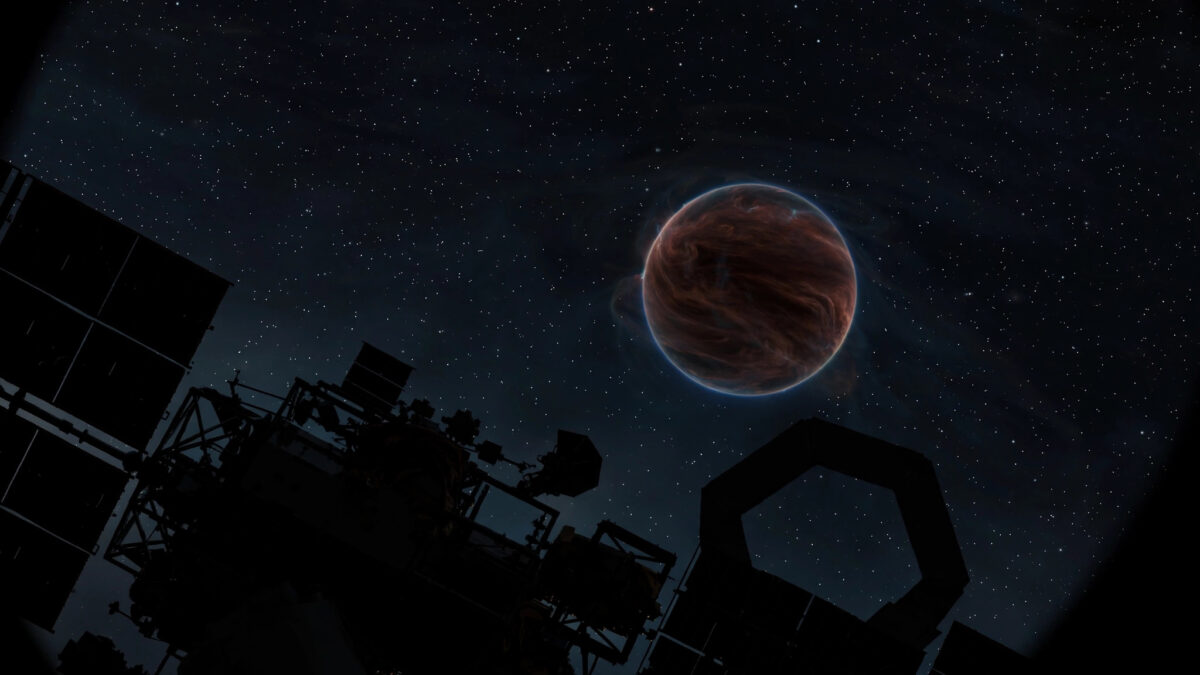
A new NASA space telescope has peered into the atmospheres of some of the strangest objects in the cosmos — brown dwarfs, the “failed stars” that drift alone through the darkness between the stars — and found a chemical menagerie far richer than astronomers expected. According to new findings published in The Astrophysical Journal, spectra of 37 nearby brown dwarfs reveal atmospheres harbouring water, carbon dioxide, carbon monoxide and methane, and the molecules shift from object to object across the entire temperature range these objects span.
The results, announced by NASA this week, come from SPHEREx — the Spectro-Photometer for the History of the Universe, Epoch of Reionization, and Ices Explorer — an infrared space telescope launched in March 2025 and managed by the agency’s Jet Propulsion Laboratory in Southern California. It is the first instrument to image thousands of brown dwarfs across the deep-red and infrared wavelengths where their atmospheric chemistry leaves its clearest fingerprints.
“We’re seeing the signatures of these molecules and how they change from object to object across the entire temperature regime,” said study co-author J. Davy Kirkpatrick, a scientist at Caltech’s IPAC, according to NASA. “Our paper concentrated on just three dozen, but we have thousands more that we are in the process of analyzing.”
## What Brown Dwarfs Are — and Why They Have Resisted Study
Brown dwarfs sit in an odd corner of the cosmic bestiary. First discovered in the 1990s, they form from collapsing clouds of gas exactly as stars do, but they are not hefty enough to sustain hydrogen fusion in their cores. That single missing ingredient denies them true stardom. Instead they are dimly glowing balls of warm gas that slowly cool and fade over billions of years — independent celestial objects, as lead author Zafar Rustamkulov of IPAC put it, that “will fade into eternity alone.”
They share characteristics with Jupiter and Saturn — indeed, some are not much heavier than the largest planets — yet unlike most planets they are not bound to any star. They drift through the darkness of interstellar space, heated entirely from within. Because they glow so faintly, and because their light emerges mostly in the infrared, they have been extraordinarily difficult to study. Until now, only a few dozen of these “dark wanderers” had been observed in detail with space-based telescopes. As NASA notes, much of astronomers’ understanding of their composition, storminess and evolution has come from theoretical models rather than direct observation.
“Unlike exoplanets, free-floating brown dwarfs are completely independent celestial objects,” Rustamkulov said, according to NASA. “We’re still learning how complex they are.”
## How SPHEREx Sees What Ground Telescopes Cannot
SPHEREx’s advantage is spectral. The telescope measures the brightness of its targets in 102 different colours, from the deepest red our eyes can see to the invisible heat of infrared light, building a spectrum for each object. Those spectra function like fingerprints: molecules carve out distinct absorption patterns in the light shining out to space, and each molecule leaves its own signature.
Crucially, SPHEREx observes from orbit. “From orbit, SPHEREx sees wavelengths of light that are basically impossible to see with telescopes on the ground because water in Earth’s atmosphere absorbs them,” Rustamkulov said, according to NASA. The telescope is, in effect, peering past the fog of our own planet’s water vapour to read the deep, red clouds of brown dwarfs all over the sky.
The brown dwarf haul is, in a sense, a happy accident. Spotting brown dwarfs is something of a side project for SPHEREx: the telescope takes about 3,600 unique images per day to stitch into maps of the entire sky. Its primary mission is cosmology — knowing where hundreds of millions of galaxies are distributed across the cosmos will help scientists reconstruct what happened in the first billionth of a trillionth of a trillionth of a second after the Big Bang — while it also searches for the chemical ingredients of life and for interstellar ice that could one day seed oceans on distant worlds. The brown dwarfs simply happened to be there, thousands of them, waiting in the same data.
For years, brown dwarfs had been spotted by other observatories, including NASA’s James Webb Space Telescope and the retired Spitzer Space Telescope. But according to NASA, thanks to its spectral coverage, SPHEREx is now imaging thousands of them for the first time in the fruitful deep-red and infrared region of the electromagnetic spectrum.
## The Findings: 37 Worlds, Each One Different
The new study analysed SPHEREx observations of 37 nearby brown dwarfs spanning the full brown dwarf temperature range — from about 4,000 degrees Fahrenheit (2,200 degrees Celsius) down to minus 10 degrees Fahrenheit (minus 20 degrees Celsius). Their spectra revealed chemically rich atmospheres holding water, carbon dioxide, carbon monoxide and methane, and the balance of those molecules changes from object to object across the entire temperature regime.
Some of the objects SPHEREx observed are in a dynamic stage of life: their exotic clouds are thinning out, giving way to methane-rich atmospheres. At those infrared wavelengths, the molecular patterns in the light change as brown dwarfs grow older and colder — and the new data show that this cooling transition is more complicated than the models expected.
“The state-of-the-art models are capturing the general chemical trend, but when it comes to these cloudy transitions, the models are struggling to match the data,” Rustamkulov said, according to NASA. “No two brown dwarfs are alike. Even at the same temperature, their spectra look quite distinct.”
That individuality is one of the study’s headline results. Two brown dwarfs at the same temperature can look chemically different — a finding that will force theorists to reckon with the messy, weather-driven reality of these objects rather than treating them as tidy points on a temperature scale.
## Analysis: Why It Matters
The SPHEREx result matters on at least four levels — and the deepest of them is not really about brown dwarfs at all.
**First, it is a sample-size revolution.** Before SPHEREx, the entire field of brown dwarf atmospheric science rested on a few dozen well-studied objects. This study alone adds 37 with unprecedented spectral detail, and the team says thousands more are already in the pipeline. A field that has been running largely on theory is about to be flooded with data. In science, that transition — from a handful of anecdotes to a statistically meaningful census — is often the moment when wrong ideas get exposed and right ones get refined. The brown dwarf census has begun.
**Second, the models are on notice.** The finding that state-of-the-art models capture the broad chemical trend but fail during the cloudy transitions is a precise, useful kind of failure. It tells theorists exactly where their one-dimensional, equilibrium assumptions break down: in the messy physics of clouds forming, thinning and dispersing as these objects cool. Kirkpatrick’s framing is memorable — the work has turned the team into “accidental meteorologists.” Weather prediction on Earth is notoriously hard; weather prediction on a free-floating world heated from within, with exotic silicate and methane clouds, will be harder still. But at least now there is a map of the discrepancies, and every discrepancy is a research programme waiting to happen.
**Third, brown dwarfs are laboratories for exoplanets.** The chemistry and physics on display here — clouds, convection, disequilibrium chemistry — are the same processes that shape the atmospheres of gas-giant exoplanets. But exoplanets are typically studied through the dimming of their host star’s light as they pass in front of it, a technique that mixes the planet’s signal with stellar noise. Brown dwarfs shine (faintly) on their own, so their spectra are cleaner. Everything astronomers learn about cloud transitions and chemical diversity from SPHEREx’s brown dwarf census will sharpen the interpretation of exoplanet atmospheres — including, eventually, the atmospheric searches around rocky worlds that future missions will target. The “menagerie” is thus also a calibration set.
**Fourth, the mission architecture itself is the lesson.** SPHEREx was built to study the infant universe, yet some of its most arresting early science concerns failed stars in our own cosmic backyard. The discovery was essentially free — a side effect of mapping the whole sky in 102 colours. That is an argument for survey astronomy in general and for open data in particular: SPHEREx’s dataset is freely available to scientists and the public, and the team analysing it spans 13 institutions across the United States, South Korea and Taiwan, led by principal investigator Jamie Bock of Caltech with JPL’s Olivier Doré as project scientist. When a survey is broad enough and the data open enough, discovery becomes a matter of asking the data new questions rather than building new telescopes.
There is also a subtler point worth making. The chemical richness found — water, carbon dioxide, carbon monoxide, methane — reads like an inventory of a planet’s atmosphere, not a star’s. Brown dwarfs blur the boundary between the two categories, and every new finding like this one weakens the idea that “star” and “planet” are cleanly separated boxes. Nature’s continuum keeps refusing to respect our filing system. The goth wanderers, as Rustamkulov affectionately called them, are neither fish nor fowl — and that is precisely what makes them interesting.
## What to Watch Next
The study is a first instalment, not a final word. The thousands of brown dwarfs still being processed will show whether the 37 studied so far are representative or merely the opening chapter — and whether the model failures at cloud transitions yield to better physics or demand genuinely new thinking. Watch for follow-up work pairing SPHEREx’s broad census with deep dives by the James Webb Space Telescope, which can resolve individual objects at exquisite detail, including time-series observations that track how their clouds evolve as they rotate. Watch, too, for the theorists’ response: the teams that build brown dwarf and exoplanet atmosphere models now have 37 new spectra to fit, and the races to explain the cloudy transitions are likely to be the field’s liveliest debates in the coming years. And beyond brown dwarfs themselves, watch SPHEREx’s primary cosmology results — the full-sky maps that were the mission’s reason for existing — for the same pattern: a survey built for one question quietly answering others.
## Sources
– NASA — “NASA’s SPHEREx Telescope Sees Menagerie of Brown Dwarfs” (https://www.nasa.gov/missions/spherex/nasas-spherex-telescope-sees-menagerie-of-brown-dwarfs/)
– phys.org — “SPHEREx spots menagerie of brown dwarfs with atmospheric water and methane” (https://phys.org/news/2026-10-spherex-menagerie-brown-dwarfs-atmospheric.html)
– Astrobiology — “SPHEREx Telescope Sees Menagerie Of Brown Dwarfs” (https://astrobiology.com/2026/10/09/spherex-telescope-sees-menagerie-of-brown-dwarfs/)

About the Author — Abdul Mannan
Related Articles
First-Ever Radio Signal Detected From a Planet Beyond Our Solar System — and It’s Coming From a Giant Aurora
Astronomers have directly detected radio waves from an exoplanet for the first time — auroral bursts from the…

Nvidia-Backed Upscale AI Launches Token Fabric, the Networking Platform That Lets Data Centres Mix AI Chips From Rival Suppliers
Backed by Nvidia, Salesforce and Temasek and valued at $2 billion, startup Upscale AI has unveiled Token Fabric…

South Korea’s Nuri Rocket Places Five NEONSAT Satellites in Orbit on Landmark Fifth Flight, One CubeSat Fails to Separate
South Korea's home-grown Nuri rocket completed its most complex mission yet on October 7, placing five NEONSAT Earth-observation…