US Measles Cases Reach 4,080 With Hospitalisations Rising as New York Emergency and Pennsylvania School Cluster Escalate the Worst Outbreak in 35 Years

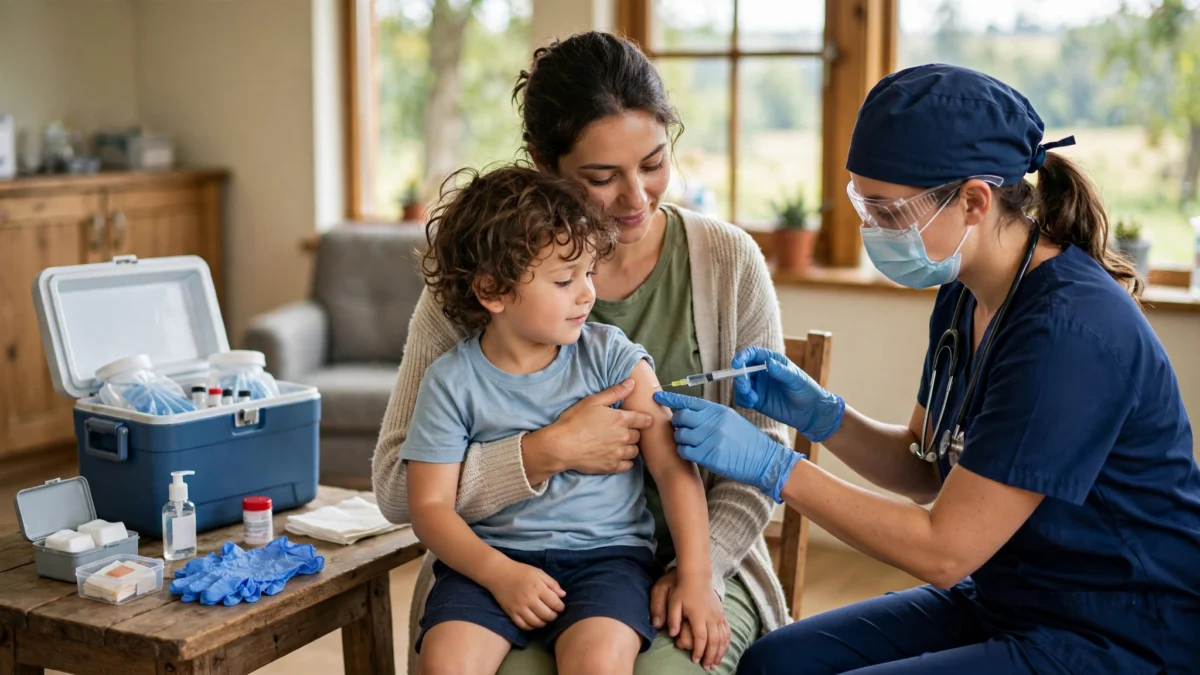
The United States’ measles outbreak continued its grim march forward this week, with the Centers for Disease Control and Prevention reporting 4,080 confirmed cases as of October 8, an increase of 193 infections in a single week, according to Reuters. The figure cements 2026 as America’s worst year for the disease since 1991, more than a quarter-century after the country declared measles eliminated.
The CDC’s Friday update contained numbers that deepen the alarm beyond the headline total. Measles-related hospitalisations this year stand at 414, or 10 per cent of all cases, compared with 244 hospitalisations in the whole of 2025. The agency also confirmed two measles-associated deaths in 2026, though it did not identify the states involved, against three deaths recorded in 2025, according to the Reuters report.
Separately, Pennsylvania health officials have reported five deaths linked to the state’s own measles outbreak this year, a discrepancy with the federal count that has drawn attention. The CDC shifted its methodology last month, using mortality data from the National Center for Health Statistics rather than relying on state health departments, a change that has drawn scrutiny, Reuters reported.
Children and teenagers aged 5 to 19 accounted for the largest share of cases at 1,716 infections, or 42 per cent of the total, followed by adults aged 20 and older at 1,635 cases, or 40 per cent. Twenty-six cases were identified among international visitors, according to the CDC data.
Earlier this week, New York became the first US state to declare a disaster emergency over the outbreak. Governor Kathy Hochul signed Executive Order 65 on Monday, October 5, invoking a State Disaster Emergency in response to the rising caseload, the first such declaration by a US state since cases began surging in 2025, according to Xinhua.
New York had reported 108 measles cases this year through October 3, including 92 cases since July 15 in under-immunised rural communities across 18 counties, according to the executive order. Seven of the cases are in New York City and 101 are elsewhere in the state, the governor’s office said. Local health departments have administered more than 1,000 MMR doses in rural areas since July 15.
“No one should get seriously ill or die from a vaccine-preventable disease,” Hochul said in a statement, according to Reuters.
The order widens the pool of health professionals allowed to administer measles-mumps-rubella vaccines. It allows registered nurses to order tests for suspected measles, permits pharmacists to vaccinate children as young as two, and extends vaccination authority to paramedics, advanced EMS providers and midwives. It also requires all MMR vaccinations to be reported to state or New York City immunisation registries within 72 hours, while waiving adults’ consent for such reporting. Vaccination itself still requires the consent of the patient or a legal guardian. The emergency runs through November 4, the day after the midterm elections.
Alongside the order, the state launched an online “Measles Dashboard” to help the public and health officials track local risks and raise awareness, Xinhua reported.
New York was also one of 16 states that joined a lawsuit against the US Department of Health and Human Services over changes made to the childhood vaccine schedule, asking the court to invalidate them, according to the Manhattan Press.
In Pennsylvania, the outbreak that officials describe as the largest in the state in more than three decades continues to spread. The Pennsylvania Department of Health announced that 1,004 measles cases have been confirmed across 39 counties this year, with five confirmed measles-associated deaths and nearly 200 hospitalisations. Lancaster County has been the most affected area, reporting 391 cases, with the highest number of infections observed in the 24-49 age range, according to Xinhua and the UKPulse health desk.
New this week is a developing cluster in Allegheny County, in western Pennsylvania. On October 5, the county health department said an unvaccinated minor had been sickened by the virus. Then, on October 8, the agency confirmed that a second person had contracted measles. Both attend the same school, which means a previous exposure likely went undetected there, the health department said in an October 9 release.
“This connection significantly expands our investigation,” said Dr. Jillian Irwin, the Allegheny County Health Department’s medical director, according to USA Today. “Determining how these individuals were infected and the details of all additional exposures is key to successfully stopping further spread.”
The health department did not disclose the second individual’s age, vaccination status or the specific school, though the Pittsburgh outlet Public Source reported it was a child at a private Christian school in the North Hills, according to USA Today. The first case was in an unvaccinated minor, and the county said the number of cases will be updated daily online.
The US is having its worst year for measles since 1991, with the CDC reporting nearly 3,900 cases as of October 1 before this week’s update pushed the total past 4,080. The US declared measles eliminated in 2000, meaning the virus did not continue to spread within the country for more than 12 months. But declining vaccination rates have reopened the door. For a community to achieve herd immunity against measles, at least 95 per cent of the population must be vaccinated, according to the CDC.
The stakes of sustained transmission go beyond case counts. Canada lost its measles-free status last November, after the same strain of the virus continued to spread for more than 12 months, a determination made by the Pan American Health Organization’s Measles and Rubella Elimination Verification Commission, according to Yonhap News. The US could face the same judgement if the current chains of transmission are not broken.
The MMR vaccine remains the definitive protection. The state of New York says one dose provides about 93 per cent protection and two doses about 97 per cent, according to Medical Daily. The CDC recommends two doses, with the first at 12 to 15 months old and the second between ages 4 and 6.
The measles surge is unfolding against a backdrop of fraying public-health consensus. Four major medical groups — the American Academy of Pediatrics, the American Academy of Family Physicians, the American College of Obstetricians and Gynecologists, and the Infectious Diseases Society of America — released their own recommendations for the 2026-2027 respiratory virus season in September, ahead of the CDC, because the agency’s vaccine advisory committee has not issued new COVID-19 or RSV recommendations this season, according to Healthline. The groups, informed by a Vaccine Integrity Project review of hundreds of studies published in JAMA, all recommend a flu shot for everyone six months and older.
Analysis: Why It Matters
The CDC’s Friday report marks a shift in how this outbreak should be understood. For months the story has been told in case counts — climbing, record-breaking, alarming. But the hospitalisation figure is the number that changes the nature of the crisis. Four hundred and fourteen hospitalisations this year, against 244 in all of 2025, means the outbreak is not just wider; it is hitting harder. One in ten confirmed cases now ends in a hospital bed, a ratio that reflects both the vulnerability of the unvaccinated and, quite possibly, the delayed care-seeking of communities where the virus is spreading.
Then there is the death-count discrepancy, which deserves more attention than it has received. The CDC confirms two measles-associated deaths this year. Pennsylvania alone reports five. The gap is not a clerical curiosity; it is a credibility fault line running through the middle of the emergency. The CDC’s switch to National Center for Health Statistics mortality data, rather than state health department figures, was presumably intended to standardise counting — but it has instead produced a visible undercount that critics can point to and supporters of the agency must explain. In a year when a well-known vaccine sceptic runs the federal health apparatus, every number the CDC publishes is read through a political lens. A methodology change that produces a smaller death toll than the states’ own figures was always going to be controversial, and Reuters’ reporting that it has “drawn scrutiny” may prove to be an understatement.
New York’s disaster emergency is the other landmark in this week’s developments. A governor invoking emergency powers over a vaccine-preventable disease is, historically, an extraordinary act — the kind of measure reserved for hurricanes and terrorist attacks. The order’s most consequential provisions are the ones that expand who can vaccinate: paramedics, midwives, pharmacists for toddlers as young as two, nurses who can now order tests themselves. That is not just logistics; it is a tacit admission that the ordinary channels of preventive care — paediatricians, family doctors, scheduled appointments — have failed to reach the communities where measles is spreading. When the state starts deputising ambulance crews to give shots, it is telling you something about the gap between the healthcare system and the population.
The Allegheny County school cluster illustrates the other half of the equation: where transmission finds its foothold. Schools are the classic amplification setting for measles, which can hang in the air for up to two hours after an infected person leaves a room. The health department’s acknowledgement that a previous exposure “likely went undetected” at the school is the line that should worry parents and officials alike. Undetected means unisolated, unvaccinated contacts walking around, and a transmission chain that has a head start on every intervention. Lewis County, in New York, offers the rural mirror image: eleven cases concentrated in one town, all unvaccinated, none of the infected children attending public schools. The virus is not spreading through a broken school system. It is spreading through parallel communities the system barely touches.
Zoom out, and the calendar adds its own pressure. New York’s emergency order runs through November 4 — the day after the midterm elections. Pennsylvania’s outbreak began in April and is still accelerating. The CDC’s weekly reporting cadence means every Friday brings a new number, and each new number is now a political event. The lawsuit by 16 states against HHS over the childhood vaccine schedule, the independent vaccine guidance from medical groups filling the vacuum left by the CDC’s advisory committee — these are the symptoms of a public-health establishment that no longer speaks with one voice. The JAMA review by the Vaccine Integrity Project, which found the vaccines continue to protect against severe illness, hospitalisation and death with no new safety signals, is the kind of evidence base that used to come from the CDC itself. That it now comes from a university project is itself a story.
The most consequential watch-item is the one nobody in power wants to discuss: elimination status. Canada lost its measles-free standing last November after a single strain circulated for more than a year. The US elimination declaration of 2000 is now 26 years old, and the clock is ticking on the same PAHO judgement. Losing elimination status would be a symbolic and epidemiological milestone — an admission that the virus has re-established itself in the country that once showed the world it could be beaten. Everything in this week’s numbers points toward that risk: 4,080 cases, 414 hospitalisations, five Pennsylvania deaths, emergency powers in New York, school clusters in Pennsylvania. The outbreak is no longer a collection of local incidents. It is a national condition.
What to Watch Next
The CDC’s weekly reporting cadence means the next case-count update will arrive on Friday, October 16 — watch whether the weekly increase of 193 accelerates or eases, and whether the hospitalisation ratio of 10 per cent holds. New York’s case count, now 108 through October 3, will be the first test of whether the emergency order’s expanded vaccination campaign is bending the curve in the 18 rural counties. In Allegheny County, the school investigation is the immediate flashpoint: if more linked cases surface among students or staff, expect school-exclusion orders and a wider contact-tracing operation. And Pennsylvania’s death toll of five — against the CDC’s two — keeps the mortality-methodology dispute alive, with the state’s Epi-Aid request to the CDC still pending. Finally, the November 4 expiry of New York’s emergency order, the day after the midterms, will force a political decision about whether the crisis is over or merely normalised.
Sources
- Reuters — “US measles cases rise to 4,080, CDC says”
- USA Today — “Allegheny County school site of second confirmed measles case this week”
- Xinhua via Kazakhstan Today — “New York declares disaster emergency over measles outbreak”
- Medical Daily — “New York Declares Measles Disaster Emergency as 2026 Cases Reach 108”
- MyCentralJersey — “Measles surges near NJ. Doctors urge families to check vaccines”
- Aju Press / Yonhap — “Measles Resurgence in the U.S. as Cases Approach 3,900”

About the Author — Abdul Mannan
Related Articles
Kenya Rules Out Second Ebola Case as Suspected Wajir Infection Tests Negative; Minister Rejects Border Closure
Preliminary laboratory tests have come back negative for a suspected second Ebola case in Wajir County, Kenya, as…
Kenya Confirms Its First-Ever Ebola Case as Man Dies in Nairobi After Travelling From Congo
Kenya has confirmed its first-ever Ebola case — a Kenyan citizen who had been living in Congo for…

One in Eight Cancer Cases Worldwide Linked to Common Infections, WHO Study Finds
A WHO cancer agency study estimates 2.3 million new cancers in 2024 — one in eight worldwide —…