The Night America Said No to the Machines: Ohio, the Luddites, and the Revolt Against the Data Centres

What do you do when the future arrives at your door uninvited, drinks your water, eats your electricity, and then sends you the bill?
On Tuesday, 3 November 2026, in towns most Americans could not find on a map — Trenton, Wilmington, Ashville, Sunbury, Pataskala, Defiance — the people of the United States answered that question. They did not riot. They did not march. They did something quieter, older, and far more dangerous to power: they voted. And in one small town after another, by margins so lopsided they read like misprints, they voted no.
No to the data centres. No to the windowless cathedrals of artificial intelligence rising on their farmland. No to the companies that promised the future and asked the neighbours to pay for it.
I have spent my life reading history as a mirror, and I tell you plainly: we have seen this night before. Two hundred and fifteen years ago, in the villages of Nottinghamshire, men who had never held a sword in their lives walked out after dark with hammers and smashed the machines that were eating their livelihoods. They were called Luddites, and history has mocked them ever since as fools who stood in the way of progress. But on Tuesday night in Ohio, the Luddites got their revenge — not with hammers, but with ballots. And this time, nobody could call them fools, because they won by eighty per cent.
The Night the Map Filled With “No”
Let me give you the numbers first, because the numbers are the story. Voters in ten states faced 41 data-centre measures on 3 November, according to a count by Ballotpedia published on election day. Ohio alone held 21 of them — more than half the national total — spread across 18 municipalities. By the following morning, 38 of the measures had been called. Thirty-seven of them went against the data centres. Only one, in Harwood, North Dakota, went the other way — and there the voters merely declined a measure that would have required independent review and a public hearing before approving large facilities. The Washington Post counted at least 29 jurisdictions that approved measures to ban or restrict the facilities outright.
Read that again. Thirty-seven out of thirty-eight. In American politics, where elections are routinely decided by a single percentage point and a recount, this was not a result. It was a landslide wearing a local ballot as a disguise.
And the margins were not close. In Trenton, Ohio, the ban on data centres passed by eighty per cent to twenty. In Wilmington, four separate rezoning proposals connected to data-centre projects were rejected by roughly eighty per cent to twenty. In Perry, more than 87 per cent of voters approved a requirement that developers post a financial guarantee. In Urbana, a data-centre ban passed with about 77 per cent of the vote. In Sunbury — where Amazon has proposed a two-billion-dollar data-centre campus — the charter amendment banning facilities of 25 megawatts or more carried every unofficial count. In Ashville, more than 83 per cent of voters backed a measure challenging the village’s negotiated terms with the developer EdgeConneX, even though construction there is already under way and the vote cannot stop it. The people voted anyway. When a community votes 83 per cent against a building that is already being built, it is no longer voting about the building. It is voting about who decides.
Ohio was the epicentre, but it was not alone. Maine had eight related measures, Illinois seven, Kansas four, New Jersey two, and California, Florida, Nevada, North Dakota and Wisconsin one each. Every data-centre measure decided earlier in 2026 had also gone for tighter limits, including a ban in Monterey Park, California, that won 88.3 per cent of the vote. This was not a mood. It was a movement — and it had been gathering for months before a single ballot was cast. Ohio already had 125 local data-centre moratoriums in place before election day, according to Fortune, and local officials had proposed more than 120 moratoriums across 38 states by June.
Here is the figure that should frighten the industry most. NBC’s exit polling found that 56 per cent of voters said the issue of AI data centres was a “crucial” or “major factor” in determining their vote for Congress. Not a side issue. Not a local curiosity. A deciding factor in a national election, named by more than half the electorate. A Gallup poll in May 2026 put national opposition to new data centres at roughly 70 per cent. An August poll of 2,045 registered voters found that 75 per cent opposed a new data centre near their home. A statewide poll of 1,650 Ohio adults found 55 per cent opposed to data-centre construction and only 22 per cent in favour — and 65 per cent opposed to tax breaks for the industry. When two-thirds of a country agrees on anything in 2026, you are not looking at a policy debate. You are looking at a verdict.
What Ohio Actually Voted On
Now, you will ask me — fairly — what exactly these people were voting against. Were they voting against artificial intelligence itself? Against the future? Against progress? The industry’s spokesmen would love you to believe so, because it is so much easier to dismiss a village than to answer it.
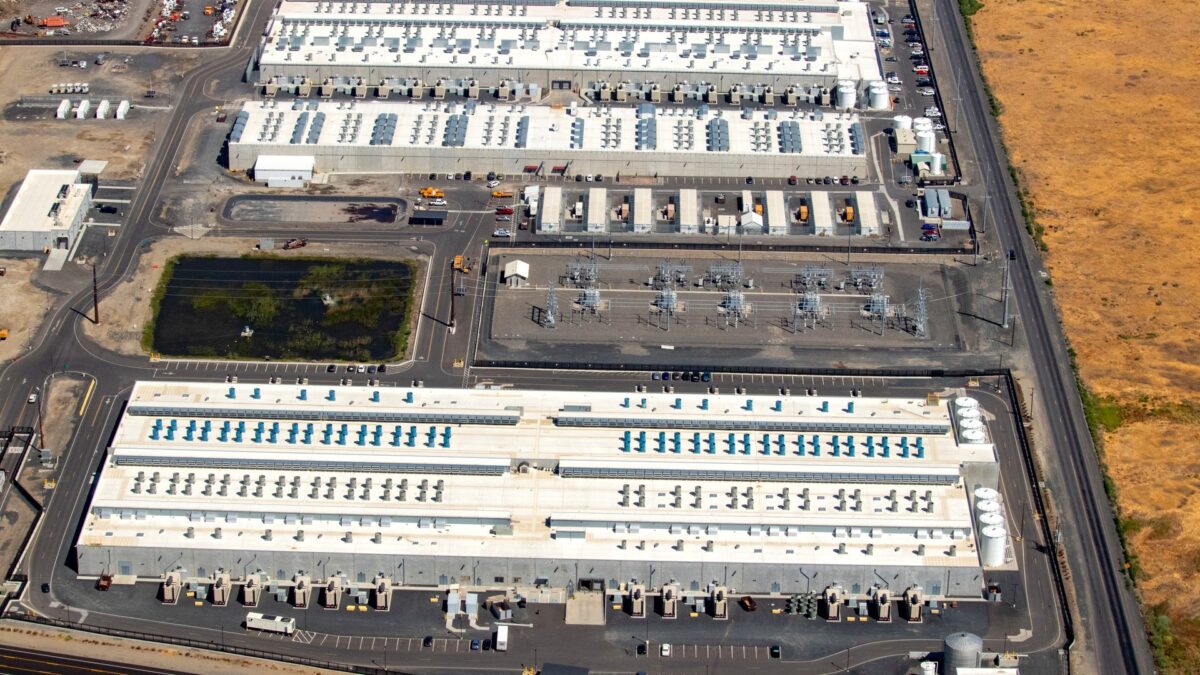
So let me tell you what a data centre actually is, and what it actually does to a town. A data centre is a warehouse full of computers, running day and night, answering the questions we ask our phones. A large one can draw as much electricity as a small city — which is why so many of Tuesday’s measures drew their line at 25 megawatts. These buildings drink power the way a factory drinks power, except that a factory employs a town and a data centre, once built, employs almost nobody. They drink water too, millions of litres of it, to cool machines that never sleep. And because the companies behind them are among the richest the world has ever known, they arrive with lawyers, lobbyists and tax-break demands, and they ask the local council to rezone farmland and the local grid to carry the load.
That is what Ohio voted on. Not the idea of artificial intelligence. The bill.
“Energy is the top concern voters have about data centres, and they’re worried in particular about electric rates,” Darrell West, a senior fellow at the Brookings Institution, told Inc. magazine. “And in a number of states, electric rates have gone up, so voters are merging data centre opposition with their worries about affordability.” He is right, and the merging is the point. In town after town, people looked at two facts side by side — their electricity bills rising, and a billion-dollar company demanding tax breaks to build a power-hungry warehouse on their fields — and they drew the obvious conclusion. The companies aspire to invest about forty billion dollars in Ohio data centres by the end of the decade, according to Inc., and Ohio already ranks fifth in the nation for active data centres, with more than 200 operational sites. The voters of Ohio were not asked whether they liked technology. They were asked whether they would go on subsidising it. They said no.
And here is the detail that turns a local story into a national one: the money did not work. A pro-buildout group called Build American AI spent at least 2.54 million dollars on Ohio television advertisements between 7 September and 21 October. It bought the airwaves. It lost the argument. Across the country, the industry’s biggest bet was on Darline Graham, a Republican Senate candidate from South Carolina and sister of the late senator Lindsey Graham. AI industry groups and pro-data-centre super PACs spent close to five million dollars supporting her. She lost to Democrat Annie Andrews, who had dubbed her “Data Center Darline.” The nickname stuck because it was true, and the money could not wash it off.
Nottinghamshire, 1811: The Mirror
Now let me hold up the mirror, because this is where history stops being a school subject and starts being a warning.
In the early months of 1811, in Arnold, Nottinghamshire, framework-knitters began receiving letters signed by a mysterious “General Ned Ludd” and his “Army of Redressers.” The letters warned employers to remove the new wide stocking frames that were destroying wages and livelihoods, or the frames would be removed for them. On the night of 4 November 1811 — almost exactly 215 years before Ohio voted — knitters forced their way into a hosiery workshop in Bulwell and systematically destroyed six wide stocking frames. Within three weeks, more than two hundred frames had been smashed. In March 1811, several attacks were taking place every night, and the Nottingham authorities had to enrol four hundred special constables to protect the factories.
The movement spread to Yorkshire and Lancashire. On 20 March 1812, the warehouse of William Radcliffe, one of the first manufacturers to use the power-loom, was attacked in Stockport. On 11 April 1812, Luddites attacked Rawfolds Mill near Huddersfield in one of the most violent assaults of the whole rising. The government’s answer was the Frame Breaking Act of February 1812, which made machine-breaking a capital offence — punishable by death. Lord Byron, in his maiden speech in the House of Lords, rose to defend the frame-breakers with furious eloquence, and was ignored. Twelve thousand troops were ordered into the disturbed districts. In January 1813, George Mellor and fourteen others were hanged at York.
And ever since, the word “Luddite” has been used as an insult — a synonym for ignorance, for fear, for standing stupidly in the path of progress. But read the history honestly and the insult collapses. The Luddites were not afraid of machines. They were skilled craftsmen, and they were precise about which machines they smashed: they broke the wide frames used to produce cheap cut-ups and left alone the narrow frames that produced quality goods. They petitioned first. They wrote lawsuits. They demanded a minimum wage and the restoration of customary rates. What they were fighting was not technology. It was the arrangement — the fact that the new machines made a few men rich and many men poor, and that the law existed to protect the machines and hang the men.
Do you see it now? Do you see the mirror?
The voters of Ohio did not smash anything. They did not need to. They had the one weapon the Luddites never possessed: the ballot box. But they were fighting the same fight, over the same question, in the same language. Who pays for progress, and who pockets it? Who decides what gets built on our land, with our water, on our grid? And when the richest companies in human history arrive in a small town and ask for tax breaks, whose side is the law on?
History does not repeat itself, the old saying goes — but it rhymes. On Tuesday night, in Trenton and Wilmington and Ashville, it rhymed in eighty per cent.
The New East India Companies
There is a second mirror to hold up, and it is closer to home for those of us who live in the shadow of empire. When I write about the great companies of our age, I think of the East India Company — a trading firm that became a government, that wrote its own laws, bought its own armies, and told the people it ruled that this was progress. The names have changed. The method has not.
Today’s companies do not arrive with ships and sepoys. They arrive with server racks and tax lawyers. But observe the pattern: a corporation richer than most nations selects a small town, negotiates privately with its council, demands rezoning and tax relief, and consumes the town’s electricity and water at industrial scale while employing a handful of security guards and technicians. The profits flow to shareholders on the other side of the world. The bills flow to the neighbours. And when the neighbours object, they are told they do not understand the future.
This is the arrangement Ohio rejected. And it is no accident that the rejection was led by a state that knows what it means to be used. Ohio is the fifth-largest data-centre state in America, with more than 200 operational sites and forty billion dollars of planned investment. It has given the industry everything — land, labour, grid, goodwill — and watched its electricity bills rise anyway. A statewide poll found 57 per cent of Ohioans would support a constitutional amendment banning data centres over 25 megawatts. That is not a protest vote. That is a people drafting a new settlement.
The industry, to its credit, is beginning to notice. S&P had already tallied more than 145 American data-centre projects delayed or cancelled by early August 2026 — before a single ballot was cast. The market was already whispering what the voters have now shouted: you cannot build the infrastructure of the future on the consent you never asked for.
A Message Election, Not a Money Election
The most important sentence spoken about Tuesday night was not spoken by a candidate. It was spoken by Darrell West of the Brookings Institution, and it deserves to be carved above the door of every political consultancy in Washington: “This turned out to be a message election and not a money election. If people are really upset about something, you can spend however much money you want. It’s not going to change public opinion.”
Consider the scale of the money that failed. Elon Musk personally contributed about half a billion dollars toward Republican candidates, super PACs and conservative groups, making him the largest single-cycle political donor in modern American history, according to the Guardian. He contributed two hundred million dollars to the failed attempt to elect Ken Paxton to the Senate in Texas. Paxton’s rival, James Talarico, defeated him by twelve points — and Talarico had accused Paxton of taking money from pro-AI political action committees and called out data centres for “exacerbating the affordability crisis.” In Ohio, the Democrat Amy Acton defeated Vivek Ramaswamy for governor by 52 per cent to 44.7 per cent — and both candidates had promised tougher conditions on new data centres. Sherrod Brown, the senator-elect, campaigned on eliminating the industry’s tax breaks and forcing companies to pay for their own power, calling the incumbent Jon Husted the “face of data centers.” The voters did not merely reject the data centres. They rejected the politicians who carried the industry’s water, and they did it with the industry’s own money spent against them.
And then, the morning after, came the most revealing moment of all. Elon Musk — the man who had spent half a billion dollars on the election — posted on X that putting data centres in space was looking “appealing.” Read that sentence slowly. The richest man on earth, having watched the people of Ohio vote against his industry’s buildings, responded by suggesting the buildings be moved off the planet. He did not ask what the voters wanted. He did not propose paying for the power, or sharing the profits, or building smaller. He proposed leaving Earth.
There is the whole story, in a single post. When the people say no, the powerful do not listen — they look for somewhere the people cannot follow.
What Comes Next
So what happens now? The honest answer is that nobody knows, and anyone who tells you otherwise is selling something. The industry is already pushing to change the narrative around data centres, and President Donald Trump has historically been a proponent of unfettered data-centre development. The companies will lobby state legislatures to overrule local votes. They will promise jobs, investment, and “community benefit agreements.” Some of them will mean it. Some of them will be back in Ohio within the year, with a new name on the same proposal.
But something has shifted that cannot be shifted back. The voters have discovered that the data centre is on the ballot — not just in Ohio, but everywhere. Twenty of the 36 governors’ races this year featured candidates calling for a moratorium. In Texas, which alone holds a quarter of all planned American data-centre capacity by 2030, the issue decided a Senate race. In South Carolina, it decided another. And as West warned, “The problem with data centers is not just data centers, but people’s worry about AI in general and technology broadly defined. We’ve all seen the headlines about AI taking jobs and AI agents going rogue — those fears drive as much of the opposition to data centers as worries about energy, and those problems are not going to go away.”
He is right. The fear is not going away, because the fear is not irrational. Every week brings a new headline about artificial intelligence taking a job, writing a song, reading a scan, driving a truck. The people of Ohio were not voting against a building. They were voting against a future in which they are the fuel and someone else is the engine.
And here is what I want you, the reader, to carry away from this column. The Luddites were hanged for asking who progress was for. The voters of Ohio asked the same question and were answered with a ballot. That is the difference two centuries of democracy has made — and it is the whole difference. But the question has not changed, and it will not change until it is answered honestly: progress that cannot ask permission is not progress. It is conquest with better branding.
The machines are not the enemy. The machines never were. The enemy is the arrangement — the quiet deal, made in a council chamber, in which the many pay and the few profit, and the people are told to be grateful for the privilege. On Tuesday night, in fourteen small towns in Ohio, the people looked at that arrangement and said the oldest word in the democratic vocabulary.
No. And they said it at eighty per cent. Let the companies go to space if they wish. The Earth, it turns out, still belongs to the people who live on it.
Sources & References
- Inc. — “Voters Rejected Data Centers Across America. This 1 State Just Fired the Loudest Warning Shot” (Chloe Aiello, 4 November 2026)
- Gadget Review — “Voters Across 10 States Just Sent a Message About AI Data Centers” (4 November 2026)
- AI Weekly — “Ohio Voters Reject Data Centers Across 21 Ballot Measures” (4 November 2026, reporting Fortune’s original coverage)
- MadRobot — “Voters reject AI data centres in US midterms, from Ohio to Texas” (4 November 2026)
- NPR / Classical WMHT — “Where voters stand on state ballot measures, from abortion to LGBTQ rights to guns” (4 November 2026)
- OfficeChai — “After US Midterm Election Results Deliver A Blow For Building AI Datacenters, Elon Musk Says Datacenters In Space Looking ‘Appealing’” (4 November 2026)
- BBC History Magazine / HistoryExtra — “Your guide to the Luddite movement”
- Spartacus Educational — “The Luddites”

About the Author — Abdul Mannan
Related Articles

The Night the Map Turned Blue: America’s Verdict and the Lesson History Keeps Teaching
On Tuesday 3 November 2026, the American people delivered a verdict that redrew the map of the most…

The Day the Chequebook Closed: Trump, Netanyahu and the End of America’s $4 Billion Gift to Israel
On Election Day, Donald Trump announced that America will stop paying Israel $4 billion a year. The money…

The Big Show Bows Out: Glenn Maxwell and the Night Cricket Learned to Believe in the Impossible
Glenn Maxwell has retired from international cricket. From the 201 not out at Wankhede to the 40-ball World…