When America Could Not Fly: The Day the Sky Went Silent

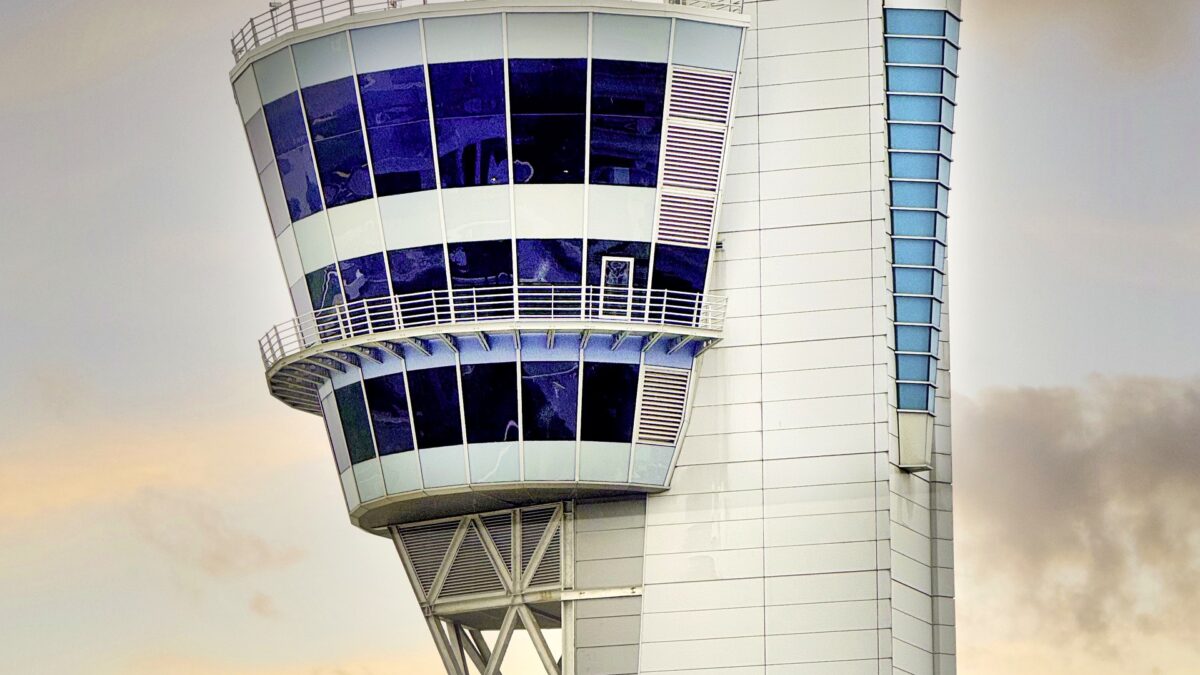
What happens when a nation that can put a spacecraft into orbit cannot put an aeroplane into the air?
Ask the three thousand five hundred people who were sitting in aeroplanes above America at 3:36 in the afternoon on Friday, the 13th of November, 2026, when the voices in their pilots’ ears began to falter. Ask the families who stood at departure boards in Chicago and Dallas and New York and watched the word “delayed” turn to “cancelled” and then to nothing at all. Ask the controllers themselves, staring at radar scopes that no longer agreed with one another, forced to make the only decision a responsible human being can make when the machine in his hands stops telling the truth: stop everything.
For more than four hours, the busiest airspace on Earth fell silent. No departures. Not one. From the Atlantic to the Pacific, from the smallest regional strip to the great hubs of Atlanta and O’Hare, the Federal Aviation Administration ordered every aeroplane to stay on the ground. It was only the third time in American history that the whole sky had been closed in this way, and only the second time since the September 11 attacks. And this time, there was no enemy. No hijacker. No bomb. No storm. The enemy was a wire. A switch. A router. A piece of copper laid down in the 1980s, in a system that the richest nation in human history had simply forgotten to replace.
I have spent my life believing that history repeats itself not as farce but as warning, and that nations, like men, are judged less by the monuments they raise than by the foundations they neglect. What happened above America on Friday was not an accident. It was a verdict, delivered on schedule, after years of warnings that were filed away and forgotten. The sky did not betray America. America betrayed its own sky.
3:36 p.m. — The Moment the Sky Stopped
The trouble began, by the official account, at 3:36 p.m. Eastern Time. At air traffic control centres across the country, the radar and communications systems began to behave strangely. The data coming through the switches and routers no longer matched. One screen said one thing; another said something else. In a profession where a single wrong number can mean two aeroplanes occupying the same piece of sky, inconsistency is not an inconvenience. It is a catastrophe waiting for permission.
Within eighteen minutes, at about 3:54 p.m., the Federal Aviation Administration issued the order that no controller ever wants to hear and no traveller ever expects: a nationwide ground stop. The advisory was blunt, in the clipped language of men who have no time for poetry: “Due to extraordinary circumstances and for reasons of safety. Attention all aircraft operators, by order of the Federal Aviation Command Center all airports are ground stopped. All departing traffic should remain ground stopped until further notice.”
At 4:02 p.m. the FAA told the public what it knew: there had been a temporary telecommunications outage, and flights were being halted out of an abundance of caution. The planes already in the air were allowed to continue to their destinations, because to order thousands of aircraft down at once would have been madness. At the moment the stop was ordered, some 3,500 aeroplanes were airborne over the United States. By the time the ground stop was lifted, fewer than 400 remained. The rest had landed, one by one, into airports that had nowhere left to put them.
The numbers that followed tell the story of a system unravelling in real time. In the first hours, more than 1,000 flights were cancelled and nearly 10,000 delayed, according to the flight-tracking service FlightAware. By late evening, the toll had grown far worse: nearly 10,000 flights cancelled across the country, according to Flightradar24, with more than 2,200 cancellations each at Delta Air Lines and American Airlines and 1,800 at United Airlines. FlightAware counted more than 25,000 delayed flights by 9:30 p.m. The Associated Press reported at least 827 flights diverted mid-journey to airports they had never intended to visit. Air Canada, watching the chaos from across the border, cancelled all of its flights to and from the United States.
It was not until 8:15 p.m. Eastern Time, more than four hours after the trouble began, that the airspace was reopened. The planes began to move again, slowly, cautiously, like a great beast shaking off a stupor. But the officials who stood before the cameras that night were honest about one thing at least: normal service would not return for days. The backlog of stranded aircraft, scattered crews and exhausted passengers would take the whole weekend to clear.
Not an Attack. Something Worse.
In the first hour, the fear was the familiar one. A nation that remembers September 11 does not hear the words “nationwide ground stop” and think of a faulty switch. Homeland Security Secretary Markwayne Mullin moved quickly to calm that fear, telling reporters outside the White House that there was no indication of a cyberattack, no sign of a hostile act, and no danger to the public. “We are wanting to assure all the American people, this isn’t a safety threat to the American people or another 9/11,” he said. “There is no prior indication as of yet that this was nefarious attack against us.”
Later that evening, at the White House briefing, Mullin went further. There was, he said, “zero evidence” so far that the outage resulted from a cyberattack or a rogue artificial intelligence system, though investigators had not ruled out either possibility entirely. “It appears that this was mechanically driven,” he said. The truth, when it came, was in some ways more damning than any attack could have been. Nobody had struck America from the outside. America had been struck by its own decay.
Transportation Secretary Sean Duffy, standing beside him, gave the plainest account. “What we have is an incredibly old air traffic control system,” he said. The switches and routers of the FAA’s ageing telecommunications network had become overloaded with data. “They started to give us inconsistency in the data from those routers, and because of that we shut the system down.” The system, Duffy explained, still relies in part on 1980s copper telephone lines, carrying radar and voice communications on a technology called time division multiplexing, a relic from an era when the mobile phone was a brick and the internet was a rumour.
Here is the detail that should haunt every reader: the new equipment did not fail. “Our new IP switches did not go down,” Duffy said. “It’s the old hardware that went down.” The parts of the system that had been modernised held firm. The parts that had been left to rot collapsed. And in a cruel irony that Mullin himself supplied, the overload appears to have been triggered by the very effort to fix the system. New equipment was being installed, new technology was being patched into the old network, and the old network could not bear it. “They were putting in new equipment and new technology,” Mullin said. “It was overwhelming the older system.” The cure, administered too late and too hastily, overwhelmed the patient.
Two other suspects were swiftly cleared, and both clearances matter. The outage was not connected to the global Microsoft 365 disruption that had begun a day earlier, officials said, and Microsoft itself confirmed it had no indication of any link. Nor was it the fault of SMART, the FAA’s new artificial intelligence traffic-planning tool, which Duffy said is not connected to the core systems controllers use to track flights. The modern world, in other words, was innocent. The guilty party was the past, left too long in charge of the present.
According to two airline officials cited by Reuters, the failure affected a telecommunications network overseen by the contractor L3Harris Technologies, which carries the critical radio frequencies controllers use to speak to pilots. The same company’s name had surfaced before, in a previous failure. Remember it, because it will surface again.
History Has Been Screaming. Nobody Listened.
Here is the part of this story that turns a bad day into an indictment. Friday was not the first warning. It was not the second, or the fifth. The American air traffic system has been crying out for help for years, in a rising voice, and each time the response has been a promise, a press release, and a return to business as usual.
Go back to the 11th of January, 2023. On that morning, the FAA issued the first nationwide ground stop since the September 11 attacks, after contractors accidentally deleted files and crippled the NOTAM system, the messaging network that gives pilots their pre-departure safety information. More than 10,000 flights were delayed or disrupted in a stoppage that lasted about ninety minutes. The nation was shocked, inquiries were held, and the system was declared in need of urgent modernisation. And then, largely, nothing happened.
Go forward to the spring of 2025, to Newark, New Jersey, and the Philadelphia control facility that manages its airspace. Across April and May, repeated telecommunications outages disrupted traffic again and again. On the morning of the 9th of May, a ninety-second outage caused 380 flight delays and 141 cancellations. Ninety seconds. That is all it took. During one of those outages, an air traffic controller told a freighter pilot, in words that should be carved into the wall of every congressional office: “Our radar scopes just went black again. If you care about this, contact your airline and try to get some pressure for them to fix this stuff.” The men in the tower were begging for help, on an open frequency, and the help did not come.
Go forward again to the 19th of September, 2025, to Dallas. A data service outage at the FAA’s Dallas TRACON, the facility that manages aircraft between the airport and high-altitude flight, forced ground stops at two Dallas-area airports. More than 1,800 flights were delayed and hundreds were cancelled. The FAA later said the contractor L3Harris had failed to make sure redundancies were in place. L3Harris answered, with a bluntness that deserves respect, that the outages were preventable and were “a direct result of lack of U.S. government investment to replace legacy, end-of-life analog telecom circuits.” The contractor and the government blamed each other. The copper stayed in the ground.
Go forward once more, to the 21st of September, 2026, less than two months before Friday’s shutdown. The FAA halted flights to airports in New York, Philadelphia, Boston and Washington for eight hours after the Philadelphia facility’s primary and backup data links both failed. About 9,500 flights were delayed or cancelled. The outage coincided with the arrival of 130 world leaders in New York for the annual high-level meeting of the United Nations General Assembly. The world was watching. The system failed anyway.
Four warnings in less than four years, each louder than the last, each ending in the same shrug. And on the very same Friday, as if to underline the point, the National Weather Service reported that it too was experiencing nationwide internet and communications problems. The rot, it seems, is not confined to one agency. It is a condition.
The Human Price of a Silent Sky
It is easy, in writing about systems and switches, to forget the people. But the true measure of Friday is not counted in cancelled flights. It is counted in human beings, stranded in the fluorescent nowhere of airport terminals, sleeping on floors, holding children who did not understand why the holiday was over before it began.
Tens of thousands of travellers were stranded at airports or left scrambling to get home by rental car, Amtrak train and bus, as one report put it. Rental car lots emptied. Train tickets vanished. Families who had saved for months for a weekend away found themselves driving through the night instead, or not travelling at all. The exceptions the FAA made tell their own story: medical evacuation flights, life-saving cargo and law enforcement aircraft were allowed to continue, because even in a shutdown, a civilisation must keep its ambulances flying. Everything else waited.
And here, reader, I ask you to pause and consider something. The people in those terminals were not the rich. The rich have private jets, and private jets have their own arrangements. The people sleeping on the terminal floor were nurses travelling to see their mothers, students returning to university, workers flying home for a weekend they could barely afford. When a nation’s infrastructure fails, it is always the ordinary citizen who pays first and most. The powerful have alternatives. The powerless have only the system, and when the system fails, they have nothing.
This is why the story matters beyond aviation. A ground stop is not a technical event. It is a social event. It is the moment when the contract between a state and its citizens, the quiet promise that the roads will be open and the lights will stay on and the planes will fly, is broken in public, in front of everyone, all at once.
Fifty Billion Dollars and a National Emergency
When the cameras turned to the officials on Friday night, the talk turned, as it always does, to money. Secretary Duffy pleaded with Congress to pass a fifty-billion-dollar funding bill to rebuild the system. President Donald Trump, according to Secretary Mullin, has declared the air traffic control failures a national emergency.
The figures behind that plea deserve a moment of your attention, because they reveal the scale of the neglect. Last year, Congress approved 12.5 billion dollars for upgrading the FAA’s antiquated air traffic control systems and hiring more controllers. The Trump administration wants Congress to approve another 30 billion dollars to finish the job. Duffy is now asking for 50 billion. Three numbers, each larger than the last, each an admission that the previous number was not enough. This is how decay works: the longer you ignore it, the more expensive the repair becomes, until the repair costs more than the replacement would have cost a decade earlier.
And money is only half the crisis. The system is also short of several thousand air traffic controllers, according to Reuters, men and women who sit in darkened rooms and hold thousands of lives in their hands with nothing but a radar scope, a radio and their own judgement. You cannot buy experience with an emergency appropriation. A controller takes years to train. The shortage is not a budget line. It is a generation of neglect, made flesh.
I do not write this to mock America. I write it because I admire what America built, and because admiration without honesty is flattery, and flattery is the enemy of friendship. A nation that could build the interstate highways, land men on the Moon and put a computer in every pocket should not be running its skies on copper wire from the age of the cassette tape. The failure is not of ability. It is of will.
Rome Did Not Fall in a Day
History, which is my constant teacher, has seen this story before. The Roman Empire did not fall because its legions were defeated in a single battle. It fell because, over generations, the roads crumbled, the aqueducts leaked, the granaries emptied, and the men in power found it easier to celebrate the empire’s past glories than to maintain its present foundations. The empire could still stage a triumph. It could no longer repair a bridge.
Consider the Titanic, which the newspapers of its day called unsinkable. The ship was the marvel of its age, the largest moving object ever built by human hands, fitted with luxuries no vessel had ever carried. What it lacked was enough lifeboats, because the men who built it could not imagine a disaster large enough to need them. The arrogance was not in the steel. It was in the assumption. America, on Friday, discovered that its own unsinkable ship has been sailing with too few lifeboats for years, and that the iceberg, when it finally came, was not an enemy at all. It was a switchboard.
There is a lesson here that reaches far beyond aviation, and it reaches directly to you, wherever you are reading this. Every nation, every institution, every family has its copper wiring: the quiet, unglamorous infrastructure that nobody photographs and nobody celebrates, and that everything else depends upon. The school roof. The hospital generator. The water pipe under the street. The trust between a government and its people. These things do not fail dramatically, all at once, with a warning siren. They fail quietly, in small increments, on ordinary days, until one Friday afternoon the whole edifice stops, and everyone asks how it could have happened, and the answer is that it had been happening for years, in plain sight, and nobody cared enough to stop it.
What the Silence Is Really Telling Us
I want to be fair to the people who acted on Friday, because fairness is the duty of any honest column. The controllers who recognised the inconsistency in their data and refused to gamble with human life did their duty. The officials who ordered the ground stop, knowing the chaos it would cause, chose safety over convenience, and that choice was correct. The pilots who brought 3,500 aeroplanes down safely, into airports that were never designed to receive them all at once, performed their duty with a professionalism that deserves more than a passing mention. When the system failed, the human beings inside it did not.
But that is precisely the point, and it is a point that should frighten us more than any failure. A modern civilisation should not depend on the heroism of individuals to compensate for the cowardice of institutions. The controllers saved the day on Friday. They should never have been asked to. A system that requires extraordinary human effort merely to avoid disaster on an ordinary afternoon is not a system. It is a gamble, and on Friday the gamble nearly came due.
And so I ask you, the reader, the question I began with, in a different form. If the richest nation on Earth cannot keep its own aeroplanes in the air, what else is it failing to keep? What other copper wires, laid down in another decade, are carrying loads they were never designed to bear? The power grid? The water supply? The bridges your children cross on their way to school? The ground stop lasted four hours. The question it raises will last far longer.
The sky above America is open again tonight. The departure boards glow. The engines turn. The great machine of flight has resumed its rhythm, and the world will move on, as the world always does, to the next crisis and the next headline. But somewhere in a control room, a switch is still humming on a copper line laid down before most of today’s pilots were born. Somewhere, a controller is watching a scope and hoping it does not go black again. And somewhere, in a committee room in Washington, a fifty-billion-dollar decision is waiting to be made, or postponed, or forgotten.
Nations are not judged by the heights they reach. They are judged by the foundations they maintain. The Romans learned that lesson too late. The passengers of the Titanic learned it too late. On Friday, the 13th of November, 2026, America was given the lesson early, and cheaply, with no lives lost and only hours wasted. Whether it was early enough, and whether it was cheap enough, depends entirely on what happens next. The sky has spoken. The question is whether anyone was listening.
Sources & References
- Reuters — Old air traffic control equipment regularly disrupts US flights
- USA Today — FAA says it has lifted nationwide ground stop that snarled airports
- USA Today — Thousands were stranded at America’s airports. What went wrong?
- GeekWire — Officials blame aging FAA telecom gear as U.S. airspace reopens, see no link to Microsoft or AI
- Reuters via 1049 The Wolf — US to resume flights after air traffic network failure sparks chaos
- Milwaukee Journal Sentinel — Nationwide ground stop lifted at airports as Sean Duffy blames ‘legacy network’

About the Author — Abdul Mannan
Related Articles

Three Men, Twelve Thousand Bombs: The Shenzhen Summit and the Fate of the World
On Thursday, the leaders of the three greatest nuclear powers sit down together for the first time in…
When the World’s Office Went Dark: The Microsoft Outage and the Price of Putting Everything in One Company’s Hands
On Thursday, 12 November 2026, the inbox of the world stopped working. No hacker did it. No bomb…

The King of Chips Has Fallen: Jensen Huang, Nvidia, and the Oldest Lesson in History
On Thursday morning, the most powerful man in artificial intelligence resigned in disgrace. Jensen Huang built Nvidia into…