NTSB: Warning Horns Sounded in Final 29 Seconds Before Fatal LA News Helicopter Crash

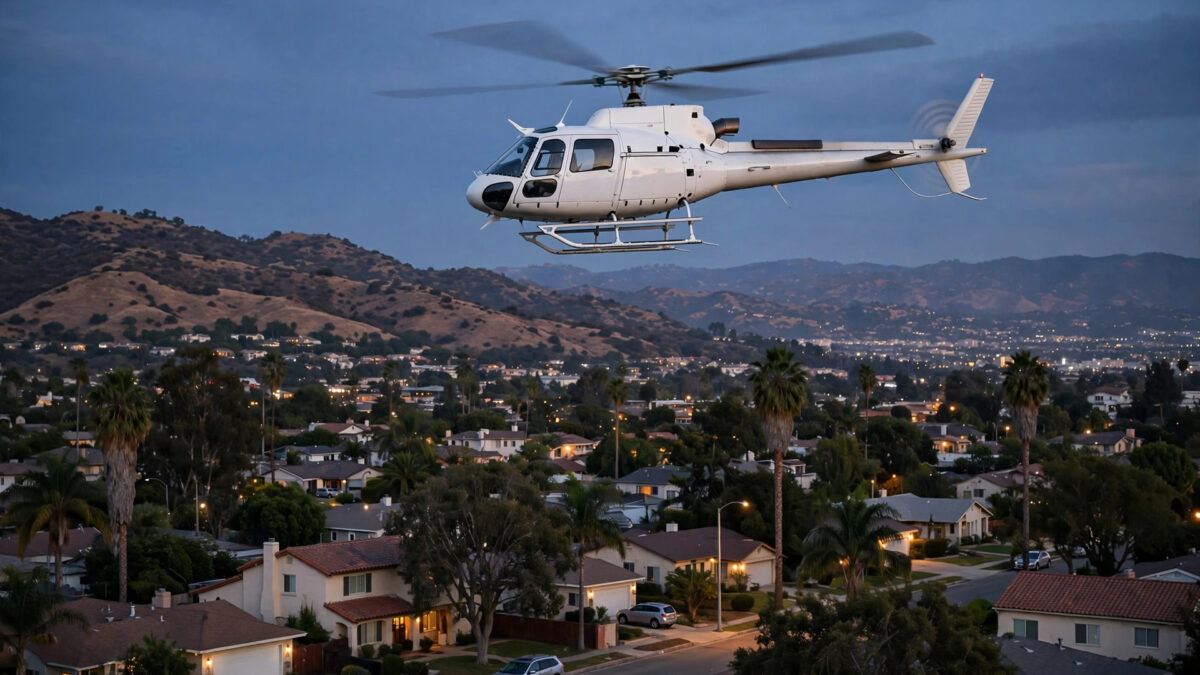
Warning horns sounded inside the cockpit of NewsChopper4 in the final seconds before the television news helicopter crashed into a Chatsworth neighbourhood on September 15, killing three people, according to a preliminary report released by the National Transportation Safety Board on Tuesday.
The Airbus AS350 B2 helicopter, operated by Angel City Air and providing coverage for NBC4 and Telemundo 52, had been orbiting the scene of a deadly Metro bus collision in the San Fernando Valley when it went down just before 7 p.m. local time, the report said. Killed were reporter Eliana Moreno and pilot George Marciniw, both aboard the aircraft, along with 29-year-old Edy Gutierrez Mejia, who was on the ground. A fourth person suffered minor injuries, according to the New York Post’s account of the report.
The aircraft had departed Whiteman Airport and spent about one hour and 24 minutes manoeuvring in the vicinity of the bus crash before the accident, according to the NTSB. During the flight’s final minute, the helicopter was roughly 800 feet above the ground and had slowed to about six knots of ground speed.
Investigators reviewed a four-minute, 21-second video recorded by the onboard reporter’s camera. The report said the “ambient helicopter noise” was consistent with normal operation for most of the recording — but in the final 29 seconds, the audio captured changing engine and rotor sounds along with “intermittent and continuous horns” consistent with “main rotor high rpm, low rotor rpm and other aural advisories.” The report added that the helicopter noise also changed frequency during those final seconds.
ADS-B flight data showed the helicopter “began a rapid descent while turning right,” with the final data point recording a descent rate of 38 knots — roughly 44 miles per hour. The aircraft struck a metal storage container and a post-crash fire broke out. Investigators found a 30-foot debris field; the helicopter lay partially on its right side, with the fuselage largely reduced to ash and thermally damaged metal, though all major components remained attached to the fuselage or within the small debris area, the report said. The NTSB has not yet determined what caused the crash.
Why It Matters
Preliminary reports are deliberately narrow documents — the NTSB is careful to note that this one determines no cause — but this one is unusually revealing because of what captured the aircraft’s last moments: not a flight data recorder, which investigators said the helicopter was not believed to carry, but the reporter’s own camera. That four-minute recording, now heading to the NTSB’s recorder laboratory for sound-spectrum analysis, may let investigators reconstruct exactly which warning advisories sounded and in what order — a second-by-second account of the cockpit’s distress that few preliminary reports can offer.
The final-minute profile the report describes is also the profile that makes this case matter beyond one crash. News helicopters spend their working lives doing exactly what NewsChopper4 was doing: hovering low and slow over a scene, at low altitude and near-zero airspeed — the flight regime in which a loss of rotor energy leaves the least margin for recovery. What the laboratory finds in those 29 seconds will therefore be read closely across the aerial newsgathering industry, where the argument over equipping such aircraft with modern flight recorders has never fully gone away.
What to watch next: the NTSB’s continued examination of the wreckage, the maintenance logbooks, weather reports and the pilot’s training records — and, eventually, the engine teardown. A final report establishing probable cause could take up to 18 months. The families of Moreno, Marciniw and Mejia — and an industry of pilots who fly the same orbits every day — will be waiting for its answer.
Sources

About the Author — Abdul Mannan
Related Articles

Trump Draws Backlash After Suggesting Iran Could ‘Take Out’ Los Angeles and San Diego
President Donald Trump's remarks at a Nebraska rally suggesting Iran could 'take out' Los Angeles and San Diego…

Trump Urges Supporters to Vote by Mail Despite Years of Fraud Claims
Trump told supporters they can vote by mail in the November 3 midterms if they wish, a striking…
Trump Approves Firing Squad Execution for Fort Hood Shooter Nidal Hasan
President Donald Trump has approved a firing-squad execution for convicted Fort Hood shooter Nidal Hasan, which would be…