Trump Approves Firing Squad Execution for Fort Hood Shooter Nidal Hasan

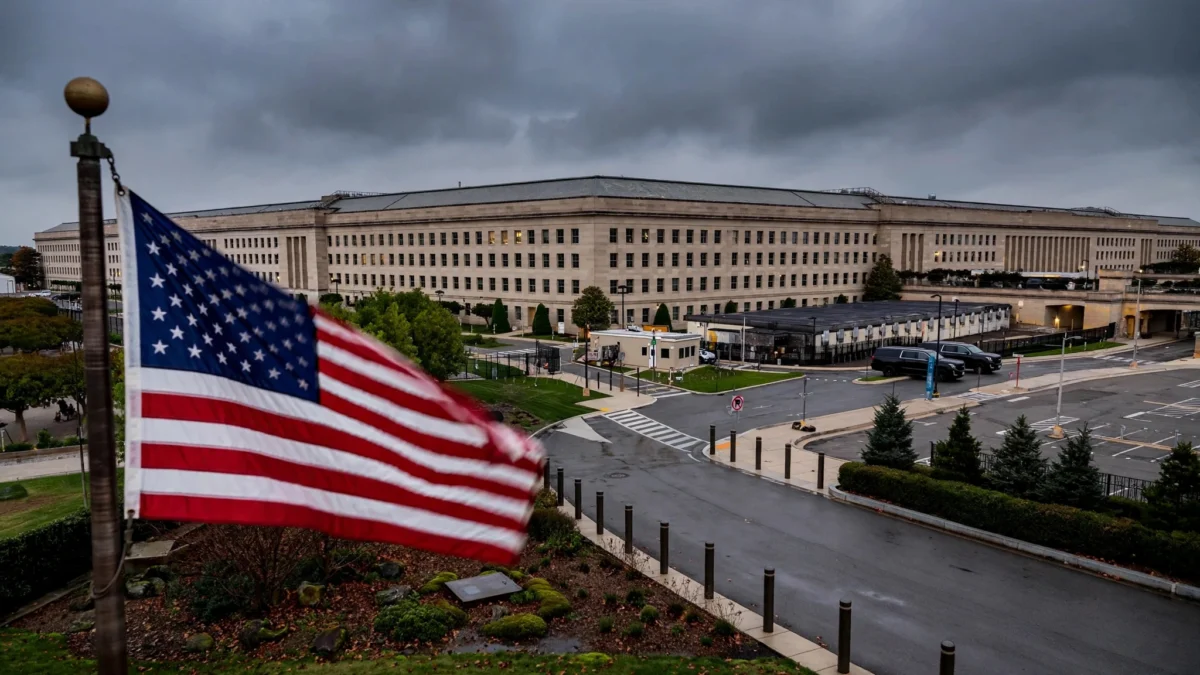
President Donald Trump has approved the execution of former Army psychiatrist Nidal Malik Hasan, the convicted Fort Hood mass shooter, by US Army firing squad — a decision announced by the Pentagon on Monday that would end a 65-year pause in American military executions.
Chief Pentagon spokesman Sean Parnell announced the decision in a post on X on October 5, writing that the recommendation came from Secretary of War Pete Hegseth. “Secretary of War Pete Hegseth has recommended — and President Donald J. Trump has approved — death by U.S. Army firing squad for convicted terrorist Nidal Malik Hasan,” Parnell wrote, according to the New York Post. Hegseth reposted the announcement with a single word: “Justice.”
“The Secretary of the Army will set the time and place of the execution,” Parnell added. According to US Army policy cited by ABC News, the execution must take place within 150 days of the president’s approval, but no sooner than 60 days.
Hasan, now 56, was a US Army major working as a psychiatrist when he opened fire inside a troop readiness centre at Fort Hood, Texas, on November 5, 2009, killing 13 people — 12 service members and one civilian — and wounding 32 others. The Pentagon has characterised the attack as a terrorist act. At his 2013 court-martial, Hasan admitted to the shooting, and he later said he carried out the attack in support of the Taliban, according to the Marine Corps Times. A military jury convicted him of 13 counts of premeditated murder and 32 counts of attempted premeditated murder, and unanimously recommended the death sentence. He is currently held at the US Disciplinary Barracks at Fort Leavenworth, Kansas, and is one of only four inmates on the US military’s death row.
If carried out, it would be the first execution by the US armed forces since 1961, when Army Private John Bennett was hanged at Fort Leavenworth for the rape and attempted murder of an 11-year-old girl, according to data from the Death Penalty Information Center cited by USA Today. It would also be the first US military firing-squad execution since January 31, 1945, when Private Eddie D. Slovik was shot in France for desertion during the Second World War, according to the Marine Corps Times.
The announcement follows months of preparation. In February, Army officials circulated a plan, dubbed “Operation Resolute Justice,” to coordinate with the Federal Bureau of Prisons to carry out the executions of Hasan and the military’s three other death-row inmates, with the prisoners transferred to a facility in Indiana, according to ABC News reporting cited by the New York Post. ABC News further reported in June that the Army was preparing to resume executions if Trump gave his approval.
Analysis: Why It Matters
The method is the message. Of the execution methods available to the military, the firing squad was deliberately chosen — the service’s traditional method, unused for more than eight decades. In American politics, the firing squad carries unmistakable symbolism: swiftness, certainty and martial finality. It is the hardest possible contrast with lethal injection, whose botched procedures have fuelled decades of litigation and moral argument.
The decision also ends one of the longest execution pauses in American history. The US military has not carried out a death sentence since 1961 — a span covering the Vietnam era, the Cold War and both Gulf wars. The system kept handing down death sentences it never carried out. Monday’s approval turns that record from permanent practice into a deliberate choice, and a reversible one: a future president could simply decline the next recommendation.
The mechanics now matter more than the symbolism. The 60-to-150-day window places the execution early next year at the latest, and capital cases of this profile rarely proceed without emergency appeals. While the military appellate path is narrower than the civilian one, Hasan’s case — thirteen years on death row, with the original trial raising hard questions about self-representation and motive — will almost certainly draw fresh legal challenges and clemency petitions.
What to watch: first, when and where the Secretary of the Army schedules the execution; second, any emergency appeal or clemency filing; third, whether the military’s three other death-row inmates move forward under the “Operation Resolute Justice” plan; and fourth, the broader national debate over capital punishment that this decision is certain to reignite.
Sources

About the Author — Abdul Mannan
Related Articles

Two Killed, 35 Injured in Shooting at Georgia Homecoming Block Party
Two young men were killed and 35 people injured when more than 50 shots were fired at a…
Bouquet Fire Near Santa Clarita 40% Contained After Burning Over 1,000 Acres
The Bouquet Fire burning northeast of Santa Clarita has reached 40% containment after scorching more than 1,000 acres,…

Hayride Tractor Crash in Upstate New York Leaves 14 Injured, 3 Critically
A tractor pulling a hayride overturned during a youth outing in Wellsburg, New York, on Sunday, injuring 14…