October Does Not Ask Your Permission: Michael King, Two Days’ Rest, and the Night the Padres Refused to Die

Two On, One Out, and a Season Hanging by a Thread
Have you ever watched a man walk into a burning building of his own choosing?
Bottom of the ninth, Petco Park, a Tuesday night in October. The San Diego Padres are leading the Milwaukee Brewers 4–3 in Game 3 of the National League Division Series. Milwaukee leads the series two games to one. One more Milwaukee win and San Diego’s season is over — packed up, swept into the archive, another year of promises carried out of the building in cardboard boxes.
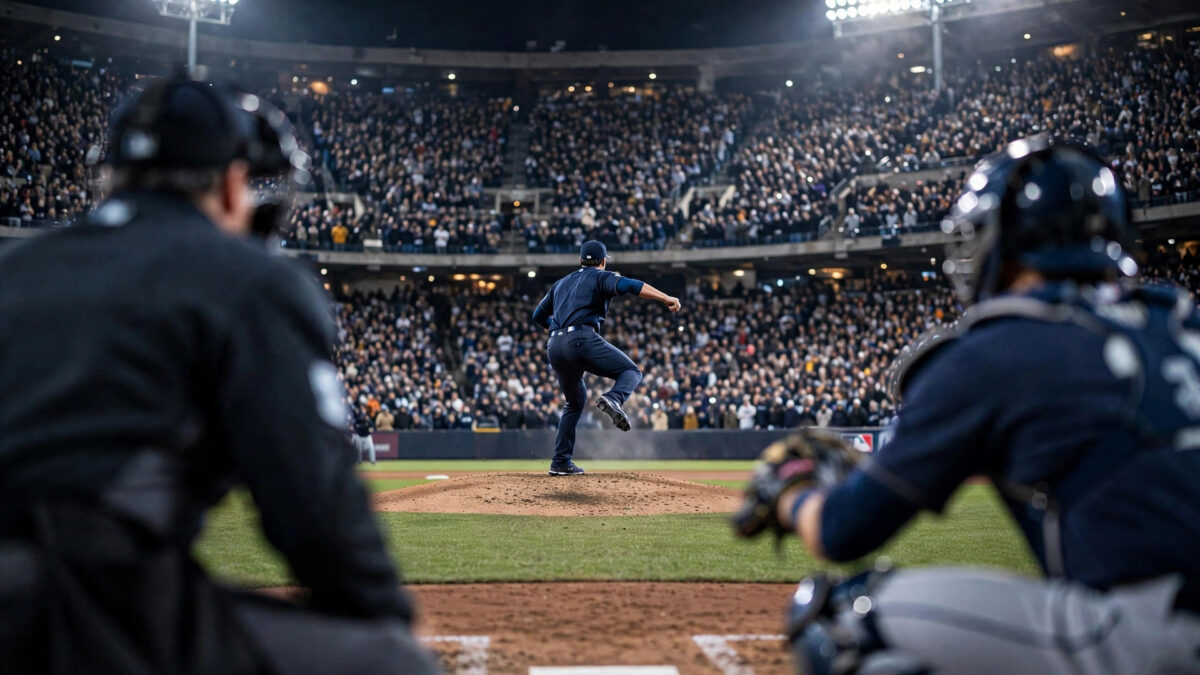
And here come the Brewers. William Contreras walks. Brice Turang walks. Two on, one out. The tying run is ninety feet from home plate, and the man on the mound is Michael King — a starting pitcher, a man who threw 72 pitches as the Game 2 starter two days earlier in Milwaukee, a man whose arm by every rule of the modern game should be nowhere near this mound.
Christian Yelich steps in. The crowd is standing. Forty thousand people are holding their breath at once, and I will tell you honestly — I was holding mine too. Yelich cracks a line drive up the middle. It short-hops. Xander Bogaerts goes down to his knees at shortstop, fields it on the short hop, scrambles to touch second base himself, and throws to first. Double play. Game over. Season alive.
You have to understand something about October to understand why that moment mattered. October does not ask your permission. It simply arrives, and it asks whether you are still playing tomorrow.
The Ghost of October 14, 1965
This is my habit, and I will not apologise for it: whenever the present puts on a costume, I look for the man who wore it first. History is not a museum to me. It is a mirror, and the mirror never lies.
October 14, 1965. The Los Angeles Dodgers are playing the Minnesota Twins in Game 7 of the World Series. Sandy Koufax — the greatest left arm the game has ever produced, and I say that knowing exactly how large the claim is — takes the mound on two days’ rest. Two days. In 1965, that was considered madness. Managers did not do this. Arms were not machines; they were instruments, and you did not play a violin with a cracked neck.
Koufax pitched a complete-game shutout. Three hits. Ten strikeouts. The Dodgers won 2–0 and took the championship, and Koufax’s left arm never truly recovered — he retired a year later, at thirty, one of the youngest retirees in the Hall of Fame. He paid for that October night with the rest of his career, and every baseball man who has lived since will tell you he would pay it again.
Now look at Michael King on Tuesday night. Thrown 72 pitches on Sunday. Standing on the mound on Tuesday with six outs to get and no margin anywhere. Not the same stakes, no — Game 3 of a Division Series is not Game 7 of the World Series, and I will not insult your intelligence by pretending otherwise. But the shape of the act is the same shape. The same silhouette against the same floodlights, sixty-one years apart.
“I made myself available on Sunday,” King said afterward. “I knew that there was a chance it was going to be late in the game.” Read that sentence again and tell me it does not sound like something Koufax would have said — plain, almost bored, as if offering your body to the fire were the most ordinary thing in the world.
It is not ordinary. That is the whole point. October remembers the men who volunteer for the fire.
What Actually Happened at Petco Park
Let me now do the unglamorous work and tell you the game itself, because the drama is worth the details.
The Padres struck early. Fernando Tatis Jr. and Manny Machado — the two names on the marquee, the two salaries that are supposed to justify themselves in exactly these weeks — drove in the early runs. San Diego led, and for once the lead did not feel borrowed.
Milwaukee, the best record in baseball this season, answered the way great teams do: without panic. William Contreras was magnificent — three hits in four at-bats, a home run, a walk. In the seventh, Christian Yelich snapped a nineteen-game postseason streak without an RBI, singling home Contreras to make it 4–3 and ensuring that every remaining pitch would carry the full weight of San Diego’s season.
But the game’s hinge came in the fifth. Jake Cronenworth led off the bottom of the inning and jumped on a first-pitch sweeper from JoJo Romero, sending it over the right-field wall. A 3–2 lead restored. In the sixth, the baseball gods added their own comedy: pinch-hitter Miguel Andújar shattered his bat on a grounder to shortstop, the splintered lumber nearly finding Xander Bogaerts on the basepaths, Brewers shortstop Cooper Pratt’s throw bouncing past first baseman Jake Bauers — and Bogaerts racing home with the insurance run. 4–3. Chaos, gift-wrapped.
And then the bullpen arithmetic that defined the night. Forty-five minutes before first pitch, the Padres lost their star closer, Mason Miller, to the paternity list — a child being born, which is the one excuse in professional sport that no manager, no fan, and no October has ever questioned. Yuki Matsui escaped a bases-loaded jam and was credited with the win after retiring three batters across the fifth and sixth. Bradgley Rodriguez survived the eighth. And then, with the season on the line, manager Craig Stammen reached for the most unconventional fire extinguisher in the building: his Game 2 starter.
King entered in the eighth to face the bottom of the order. He retired four of his first five batters. Then the ninth — the walks, the Yelich line drive, the Bogaerts double play on his knees. His first save since 2023, when he was with the Yankees. His first postseason save. His first as a Padre. One hit, two walks, six outs, and a season still breathing.
“We used a lot of energy today,” Stammen said afterward, “and we’ve got to bring that same energy tomorrow also. It’s going to be another fight just like the first three games.”
He is right. Game 4 is Wednesday night at Petco Park. If the Padres win that, the series goes back to Milwaukee on Friday for a winner-take-all Game 5. The Brewers, for all their excellence this season, have now lost twelve consecutive road playoff games — a streak stretching back to the 2018 National League Championship Series. Twelve. At some point a number stops being a statistic and starts being a haunting.
Analysis: Why It Matters
Now let me put the preacher’s robe aside for a moment and tell you, plainly, why this game will be studied.
First, the Stammen gamble rewrites the modern bullpen bible. The analytics era has taught managers to treat pitchers like assets with depreciation schedules — pitch counts, rest days, leverage indexes, all of it computed and optimised. Stammen looked at a spreadsheet that surely told him Michael King was unavailable and chose the human being instead. There is a lesson here that travels far beyond baseball: the models measure the arm; they do not measure the man. Every organisation in every field eventually faces a moment when the data says no and the moment says yes. October rewards the ones who can tell the difference.
Second, Milwaukee’s road curse is now a strategic fact, not a curiosity. Twelve straight road playoff losses. The Brewers were the best team in baseball over 162 games and may still win this series — they lead 2–1 and need one win in two games. But if there is a Game 5 in Milwaukee on Friday, it will be played at home, and that matters enormously now: this is a team that has forgotten how to win away from home in October. The Padres’ path is brutally simple — win Wednesday at Petco, where the crowd has now tasted blood, and drag the Brewers into a Game 5 where all the pressure sits on the home dugout.
Third, the Padres have discovered something about themselves. This was a team that watched Milwaukee steal both games at American Family Field — including a walk-off single by Jackson Chourio off Mason Miller in Game 2. Teams that lose that way often fold; the psychology of the blown save in October is a documented killer. Instead, San Diego’s unlikely heroes lined up one after another: Matsui out of the jam, Cronenworth’s homer, Bogaerts’ baserunning and his knees-down double play, and King — always King — volunteering for the fire. Resilience is not a word, as Stammen said; it is a roster behaving as one body.
Finally, a note on the wider bracket. In the other National League series, the Dodgers took a 2–1 lead over the Braves behind Yoshinobu Yamamoto’s postseason career-high ten strikeouts over seven innings, with Kiké Hernández and Freddie Freeman homering in the same frame off Atlanta ace Chris Sale for a 3–1 win — Los Angeles now one victory from the NLCS in their bid for a third straight World Series title. In the American League, the Division Series Game 3s arrive Wednesday with the White Sox and Rays each up 2–0 and the Guardians and Yankees on the brink. October is doing what October does: compressing six months of narrative into a single week.
The Padres are still alive. That is the only sentence that matters this morning in San Diego. Everything else is commentary.
Sources & References
Reuters — “Padres come up with clutch efforts, beat Brewers to force Game 4”
Associated Press via theScore — “King gets 6-out save, Padres stay alive with Game 3 win”
New York Post — “Padres refuse to die as unlikely heroes save season against Brewers”
Fox Sports — “MLB Division Series Roundup: Padres Stay Alive, Dodgers Put Braves On Brink”
The Verdict
I will close with the question I opened with, because a column that does not return to its beginning has not earned its end.
Have you ever watched a man walk into a burning building of his own choosing?
Michael King did it on Tuesday night, two days after throwing 72 pitches, because his team had no one else and his season had no tomorrow. Sandy Koufax did it sixty-one years ago and paid with his career. The names change. The arithmetic of rest days changes. The floodlights get brighter and the contracts get larger. But October’s law does not change, and it is the oldest law in sport:
Courage is not a statistic. It is a decision — made in public, paid for in private, and remembered forever.
The Padres play again tonight. So does the law.

About the Author — Abdul Mannan
Related Articles

Coco Gauff’s China Open Ends in Defeat to Elise Mertens a Day After She Condemned ‘Insane’ Racist Abuse
Coco Gauff lost 6-3, 6-3 to Elise Mertens in the China Open fourth round on Wednesday, a day…
Padres Stave Off Elimination: Cronenworth’s Homer and King’s Six-Out Save Edge Brewers 4-3 in NLDS Game 3
Jake Cronenworth's tie-breaking homer and a six-out save from Game 2 starter Michael King kept San Diego's season…
Rays’ Contact Hitting and Four Yankees Errors Add Up to a 5-2 Game 2 Win and a 2-0 ALDS Lead
The Tampa Bay Rays beat the New York Yankees 5-2 in Game 2 of the American League Division…