Pentagon Confirms Fort Hood Shooter’s Firing-Squad Execution Will Be Livestreamed on December 3

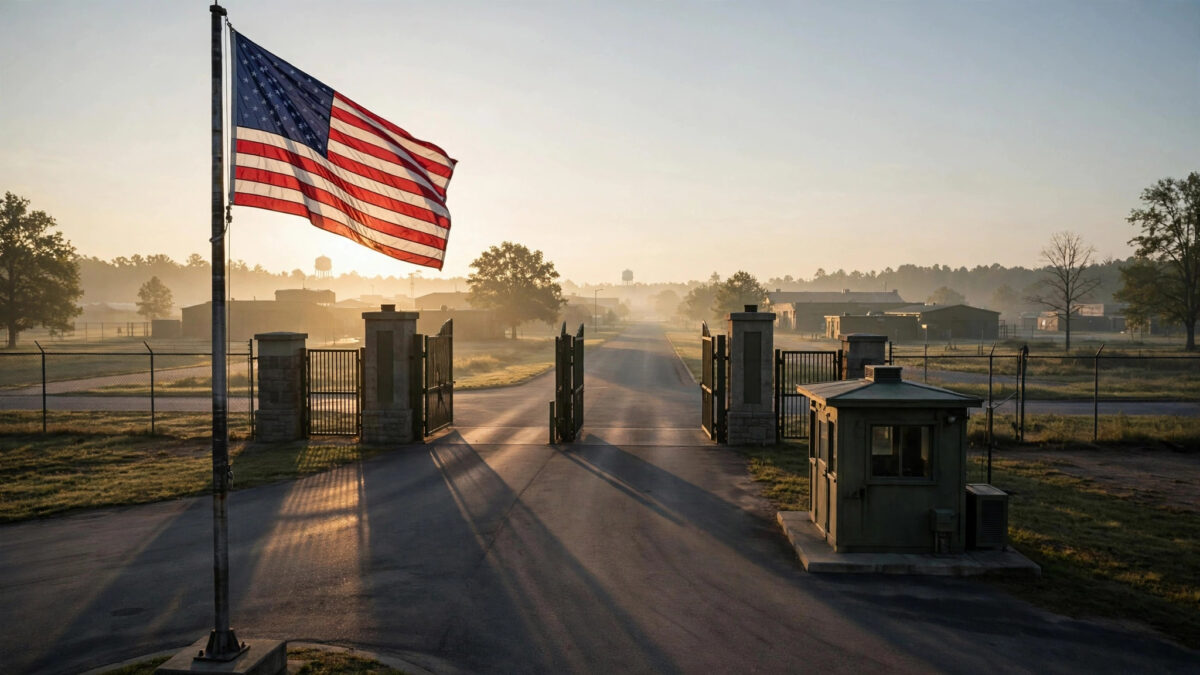
The Pentagon confirmed on Thursday that the firing-squad execution of Nidal Hasan, the former Army major and psychiatrist convicted of killing 13 people in the 2009 Fort Hood massacre, will be livestreamed to the public — a decision that would make it the first execution broadcast to a mass audience in American history.
Defense Secretary Pete Hegseth announced the plan in remarks to conservative media this week, saying the military would ensure the public could watch. “We’re gonna make sure that people are able to watch it, that it’s public, because people need to understand that there’s serious consequences for these types of things,” Hegseth said, according to multiple outlets. A Defense Department official later confirmed to reporters that “it will be livestreamed,” adding that further details would follow, the Associated Press reported.
The execution is scheduled for Thursday, December 3, 2026, at 1 p.m. Central time at Fort Hood, Texas — the same Army base where Hasan opened fire on November 5, 2009, killing 12 service members and one civilian and wounding 32 others. Acting Army Secretary Adam Telle announced the date and location on Wednesday, the Associated Press reported.
The timing is deliberate. Hegseth said the execution would take place on a Thursday at one o’clock — the same weekday and approximately the same hour at which Hasan carried out the shooting nearly 17 years ago. “We’re going to do it on a Thursday. We’re going to do it at one o’clock, which is when he did it. And it’s going to be soldiers with rifles executing the firing squad,” Hegseth said. He called the decision to use a firing squad a “no-brainer.”
“Army major betrays his country, radical Islamist kills a bunch of Americans at Fort Hood. Of course we’re doing it at Fort Hood,” Hegseth added, in remarks reported by the New York Post.
The announcement follows President Donald Trump’s approval of the execution earlier this week. Pentagon spokesman Sean Parnell said Monday that Trump had authorized death by Army firing squad for Hasan on Hegseth’s recommendation. Asked whether Hasan had made any final requests or reached out to the administration, Hegseth replied: “Don’t care. We’ll see him on December 3rd.”
The White House on Thursday referred all questions about the livestream plan to the Pentagon, according to the Associated Press.
A First Since 1945 — and a First Ever Broadcast
If carried out as announced, Hasan’s execution would be the first by a U.S. military firing squad since January 31, 1945, when Private Eddie D. Slovik was shot in France for desertion during World War II — more than 81 years ago. The last U.S. military execution of any kind took place on April 13, 1961, when Army Private John Bennett was hanged, the Associated Press reported.
The livestream element would break an even longer taboo. The last fully public execution in the United States occurred in 1936 in Owensboro, Kentucky, where Rainey Bethea was hanged before a crowd estimated at roughly 20,000 people, according to the Washington Examiner. Public executions were thereafter moved behind prison walls across the country, and no American execution has been broadcast to a general audience since.
Under existing Army regulations, an execution may already be attended by a small number of members of the public, including family members of victims and members of the media. But the proceedings are not witnessed by the broader public — a line the Pentagon now says it intends to cross. The Wall Street Journal noted that the Defense Department has not yet said which platform would carry the livestream, who would be permitted to film inside the execution chamber area, or what restrictions, if any, would apply to the broadcast.
The 2009 Massacre and the Long Road to a Date
Hasan, now 56, was an Army psychiatrist and major when he opened fire inside a crowded readiness processing center at Fort Hood, targeting unarmed soldiers preparing to deploy to Afghanistan and Iraq. Thirteen people were killed — 12 members of the military and one civilian — including a pregnant private who, according to trial testimony, pleaded for the life of her unborn child. Thirty-two others were wounded. Parnell said Monday that Hasan carried out the attack while shouting “Allahu Akbar.”
At his 2013 court-martial, Hasan — who represented himself — acknowledged the killings and said he had acted to protect Muslim insurgents abroad from American aggression. He was convicted on 13 counts of premeditated murder and 32 counts of attempted premeditated murder and sentenced to death. He has been held on military death row at Fort Leavenworth, Kansas, ever since, one of a small number of service members awaiting execution under military law.
For more than a decade, the sentence sat unexecuted: under military justice rules, a death sentence requires presidential approval before it can be carried out. That approval arrived this week, and with it, a timetable measured in weeks rather than years.
Analysis: Why It Matters
Every element of this announcement is designed to be seen — and that is precisely the point, and the problem.
Start with the taboo. The United States ended public executions in the 1930s for reasons that were considered settled: that turning death into spectacle degrades the state that performs it, coarsens the audience, and risks turning the condemned into either a martyr or a prop. Ninety years of American practice held that line even as the death penalty itself survived. A livestreamed firing squad does not merely resume executions; it reverses the century’s direction of travel, from the scaffold in the town square back toward it — except the square is now global, infinite, and replayable.
Then consider the choreography. Same base. Same weekday. Same hour. Soldiers with rifles. Hegseth’s language — “make an example,” “serious consequences,” “don’t care” — frames the execution not as the solemn end of a legal process but as a demonstration. Retribution staged with this level of symmetry is ritual, and rituals have audiences. The administration is being explicit that the audience is the point. Whether that deters future attackers or simply performs resolve for a domestic audience is the question the next two months of debate will have to answer, because the historical evidence on deterrence is, at best, inconclusive — and the Pentagon has offered none.
The method matters too. The firing squad is returning across America at the exact moment lethal injection is in crisis. Tennessee’s botched attempt on Christa Pike — who survived two failed lethal injections and, according to her lawyer, is now walking around her hospital room — exposed how fragile the supposedly clinical method has become. South Carolina has already carried out firing-squad executions this decade. The military’s choice of rifles over drugs is partly practical: it avoids the pharmaceutical supply chains and medicalized protocols that have made lethal injection a litigation magnet. But it is also symbolic. The firing squad is the soldier’s death, and Hegseth is insisting Hasan die as a soldier — the uniform he disgraced, in his telling, supplying the frame for his end.
There is also the calendar. The execution is set for December 3 — exactly one month after the November 3 midterm elections. The White House will call that coincidence; critics will call it choreography. Either way, the livestream announcement lands in a political season in which demonstrations of force play well with the administration’s base, and the “Secretary of War” branding Hegseth has embraced makes the martial framing unmistakable. This is not an execution the Pentagon is carrying out reluctantly and announcing quietly, as has been the modern norm. It is one the Pentagon is advertising.
Finally, the unknowns are substantial, and each is a fault line. No platform has been named. No rules for the broadcast have been published. No one has said whether victim families — some of whom have waited 17 years — want a global audience for the moment, or whether they were consulted at all. Legal challenges are near-certain: military defense counsel, civil-liberties groups, and potentially Hasan himself have weeks to seek stays, and courts have never ruled on a livestreamed execution because there has never been one. International reaction is another variable; allies that abolished capital punishment decades ago will not watch quietly.
What to watch next: first, the Pentagon’s detailed plan — platform, camera placement, and ground rules — which officials promised would follow. Second, the legal docket, where any stay motion could freeze the December 3 date. Third, the response of victims’ families, whose moral authority in this debate exceeds any official’s. And fourth, whether the date holds at all: between now and December 3 lie the midterms, the courts, and the immense logistical and ethical weight of putting a killing on the air.
Sources
The Wall Street Journal — Pentagon Says Fort Hood Shooter Execution Will Be Livestreamed
Army Times — US to livestream Army execution of Fort Hood shooter, Pentagon official says
The Times — Firing squad execution will be livestreamed, Pete Hegseth says

About the Author — Abdul Mannan
Related Articles

Isaias Strengthens Toward Category 3 as Gulf Coast Orders Evacuations and Oil Majors Shut In Platforms
Hurricane Isaias surged toward major-hurricane strength on Thursday, triggering mandatory evacuations in Florida, a quarter of Gulf oil…
Texas Executes Jamaal Howard in Nation’s First Lethal Injection Since Tennessee’s Botched Attempt on Christa Pike
Texas executed Jamaal Howard on Wednesday evening — the first lethal injection in America since Tennessee's botched attempt…
Christa Pike, the Only Person Known to Survive a Lethal Injection, Is Conscious and Speaking as a Tennessee Court Orders Execution Evidence Preserved
Tennessee death row inmate Christa Pike is conscious and speaking six days after surviving the state's failed lethal…