Nvidia-Backed Firmus Scraps Australia’s Biggest IPO in 30 Years as AI Market Jitters Bite

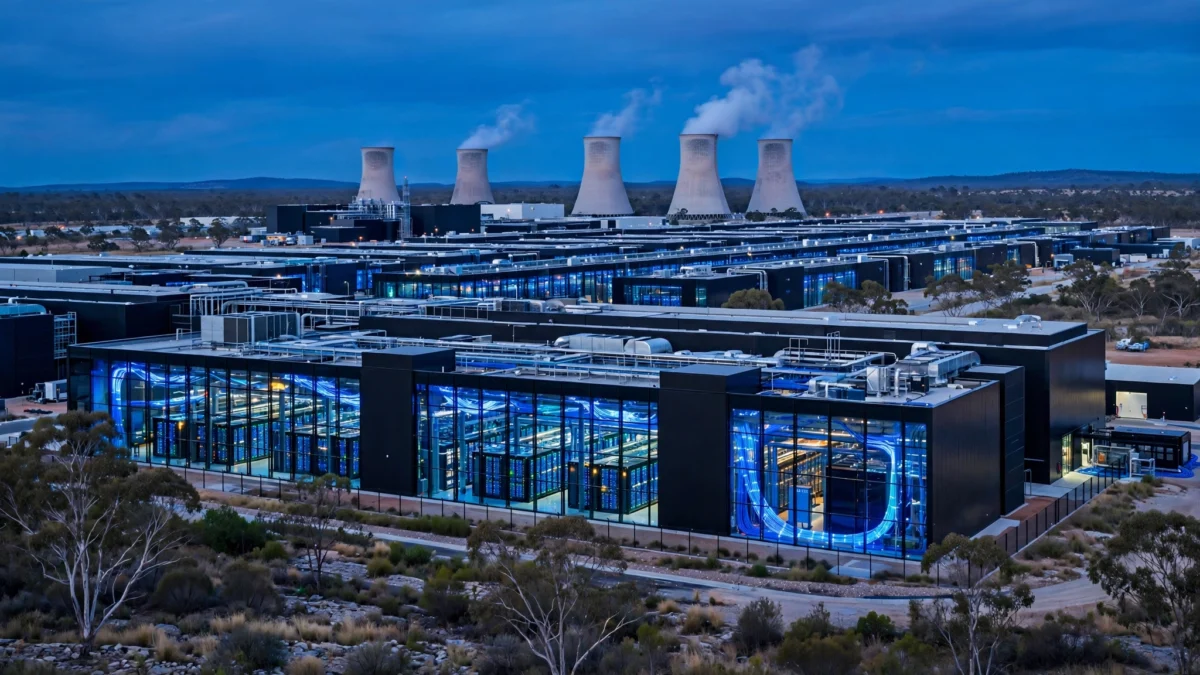
SYDNEY — Australia’s Nvidia-backed AI data-centre operator Firmus withdrew its application to list on the Australian Securities Exchange on Friday, killing what would have been the country’s second-largest share sale on record and its biggest initial public offering in almost three decades — the clearest sign yet that investor patience with sky-high artificial-intelligence valuations is wearing thin.
The company had been aiming to sell shares at A$11 each, a price that would have given it a market worth of almost A$44 billion (about US$31 billion), according to Reuters — and Friday was the day it was due to publish its prospectus. Instead, Firmus walked away from the deal entirely, saying it would seek money in private markets and “consider alternative public and private market options” to fund its next phase of growth.
In a statement reported by Reuters, the company said that “recent market volatility and prevailing market conditions” meant “the terms on which the offer could proceed would not appropriately reflect the strength of the Company’s business and long-term growth outlook.” The board, it added, “concluded that proceeding with the offer was not in the best interests of the company and its shareholders.”
Co-founders Oliver Curtis and Tim Rosenfield elaborated in a letter to shareholders reviewed by Reuters: “Firmus will now pursue capital from the private markets and consider alternative international public market options to support its next phase of growth. We will continue to assess opportunities that provide the best platform to fund growth, create value and position Firmus for success.” A person involved in the transaction told Reuters the company would aim to complete a Nasdaq listing after its next private fundraising round was finalised, though Firmus declined to comment on that plan.
The withdrawal lands like a thunderclap on Australia’s equity markets. The sale would have been the country’s largest IPO since the partial privatisation of telecommunications provider Telstra in 1997, which raised about US$10 billion, according to the Wall Street Journal — the biggest public equity raise in Australian history, a record that still stands nearly thirty years later.
What Firmus is — and what it promised
Firmus is a seven-year-old Sydney company that designs and operates modular “AI factories” using proprietary energy and cooling technology, selling ready-to-use computing power directly to large technology companies including OpenAI — its anchor customer — and Meta, the Wall Street Journal reported. Its investor roster reads like a who’s who of the AI boom: Nvidia, Coatue Management, Blackstone and Jane Street.
The company currently has just two leased data centres online, in Melbourne and Singapore, but told investors it planned to build five more across the Asia-Pacific region. Its draft prospectus projected it would generate $5 billion in annual earnings within five years from the data centres, according to Reuters.
That growth story commanded a breathtaking price. Reuters reported the planned share sale valued Firmus at about $30.6 billion in equity terms — nearly triple the $10.5 billion valuation it secured in a fundraising round at the start of August, barely two months earlier.
The deal was already coming apart before Friday. Bloomberg reported on October 8 that Firmus had shut its bookbuilding process as investor support faltered, and the company had cut its proposed IPO price days earlier in an attempt to keep the offering alive, according to trade coverage. This time, the company said, it did not reprice or delay — it closed the books and walked.
Why investors balked
Prospective investors told Reuters they were concerned about three things: the company’s rapidly rising valuation, its ability to deliver on ambitious expansion plans, and its hefty debt pile.
Firmus has access to a US$10 billion debt facility led by Blackstone, which is also an equity investor, the Wall Street Journal reported — but it will need far more capital to add to the two data centres it currently operates. Reuters also noted that investors were rattled by media reports about a key partner pulling out of an A$73 billion data-centre development deal, and by the fact that the company had no track record of building AI data centres of its own.
The market fallout was immediate. Shares of Australia’s Maas Group — a construction services provider that had pledged an additional A$300 million (US$208.74 million) to Firmus in early August at A$230 a share, lifting its stake to 3.2 per cent — entered a trading halt on Friday pending an announcement on its contractual arrangements with Firmus, Reuters reported. Maas shares had already plunged more than 20 per cent on Thursday on reports Firmus was reconsidering its listing, erasing about A$517 million from its market value and leaving the stock down more than 30 per cent from the record high it reached earlier this month.
A wobbling AI trade
Firmus did not collapse in a vacuum. Its withdrawal follows one of the rockiest weeks the AI trade has endured in years. The Financial Times reported on Thursday that OpenAI had told investors its annualised revenue was approaching roughly US$50 billion at the end of September — about US$20 billion below the US$70 billion figure previously signalled. The disclosure sent the Nasdaq Composite down 1.25 per cent, its worst day since mid-August, and hammered chip stocks: Nvidia fell 2.9 per cent, AMD 3.9 per cent, Intel 5.3 per cent and Broadcom 4.3 per cent.
Reuters Breakingviews, in an analysis published on Friday, framed Firmus’s withdrawal as the moment fear overtook fear-of-missing-out in AI equity markets: investors are now demanding that the sector’s infrastructure builders show proof, not just blueprints.
The pullback is also part of a wider 2026 pattern of listing failures. A Reuters factbox noted that Wall Street brokerage Clear Street withdrew its planned US IPO in February after cutting its target; smart-ring maker Oura postponed its planned Nasdaq listing in September, which could have valued it at up to US$15 billion; nuclear equipment maker Holtec Nuclear withdrew its planned offering in September; and Bamboo Insurance postponed its IPO in late September. “A string of high-profile IPOs have been abandoned, delayed or reworked in 2026 as investors demanded greater valuation discipline,” Reuters wrote.
The Wall Street Journal observed that Firmus’s move “may be another sign that investor appetite for fresh exposure to fast-growing companies could be waning amid surging bond yields, global interest-rate rises, and broader macroeconomic uncertainty” — a backdrop that includes the US 10-year Treasury yield touching 5.36 per cent, its highest since January 2002, and Federal Reserve minutes this week showing officials divided over further rate increases.
Analysis: Why It Matters
The death of the Firmus IPO is not merely one company’s bad week. It is the market’s loudest verdict so far on the central question of the artificial-intelligence boom: what is a compute builder actually worth when the chips, the customers and the debt all belong to the same small club of insiders?
First, velocity is the red flag. A company asking the public to believe it is worth roughly US$31 billion barely a year after being valued at a fraction of that is not selling a business — it is selling momentum. The institutional investors who walked away from the bookbuild were not disputing that data centres are needed; they were disputing that Firmus, with two leased facilities and no completed construction of its own, deserved to be priced as if the next decade of AI compute revenue were already in the bank. When the price of admission doubles in eight weeks, the exit door starts looking attractive.
Second, the anchor-customer problem cuts both ways. Firmus’s pitch leaned heavily on OpenAI as its anchor tenant — yet Thursday’s news that OpenAI’s revenue run-rate is roughly US$20 billion below what investors had been led to expect punctures the certainty that the AI labs’ demand for compute is infinite and unconditional. If the labs themselves are being re-priced, everyone selling shovels to them gets re-priced too. The Firmus board read the room correctly: listing into a week when your anchor customer’s numbers disappointed would have been an invitation to a first-day rout.
Third, this is the infrastructure-financing model under stress. The AI buildout is being funded by a daisy chain: venture and private equity supply the capital, banks and credit funds supply the debt, and hyperscalers and labs supply the demand promises. Firmus’s US$10 billion Blackstone-led debt facility was supposed to be the bridge to a public-market future. Instead it became the evidence — the market looked at a company that would need to borrow its way from two data centres to seven, and decided the equity cushion was too thin at A$11 a share. The draft prospectus’s promise of US$5 billion in annual earnings within five years only sharpened the question: earnings from what, exactly, and when?
Fourth, the private-market escape hatch is the new waiting room. Firmus is not dying; it is retreating to private capital and eyeing a future Nasdaq listing. That has become the standard choreography of 2026: Clear Street, Oura and Holtec all chose delay over a discounted debut. The logic is sound — why accept a public-market haircut when private backers will still pay up? — but it concentrates risk among fewer, less transparent holders. The shareholders of Maas Group, who watched a fifth of the company’s value evaporate in a day because of an unlisted partner’s decision, are the cautionary tale: when the music stops in private markets, the pain still lands in public ones.
Fifth, for Australia, the symbolism stings. The country’s second-largest IPO ever will now read as a footnote rather than a milestone, and Sydney’s ambition to become a financing hub for the Asia-Pacific AI buildout has taken a visible dent. Telstra’s 1997 record survives, untouched, into a fourth decade.
What to watch next is straightforward. First, the terms of Firmus’s private fundraising round: the size of the valuation haircut from A$11 a share will tell the market exactly how much of the AI premium was froth. Second, Maas Group’s trading halt, expected to lift by Monday: any change to its contractual arrangements with Firmus will show how quickly construction partners are repricing their own exposure. Third, Anthropic’s planned mid-November listing — reportedly targeting a valuation of up to US$2 trillion — is now the make-or-break signal for whether public markets will touch AI paper at all. And fourth, OpenAI’s reported US$1.4 trillion fundraising talks: if the labs keep raising, the compute builders keep building; if that money slows, Friday’s withdrawal will look less like an outlier and more like the first domino.
Sources
– Reuters (Breakingviews): “Failed AI IPO puts fear before FOMO”
– Reuters: “Australia’s Maas enters trading halt after Nvidia-backed Firmus shelves $5 billion IPO plan”
– The Wall Street Journal: “Nvidia-Backed Firmus Scraps Australian IPO, Citing Market Conditions”
– Reuters (via LA Post): “Nvidia-backed Firmus scraps $5 billion Australian IPO on poor demand”

About the Author — Abdul Mannan
Related Articles

OpenAI’s $20 Billion Revenue Gap Sends Chip Stocks Tumbling as the AI Trade Wobbles
The Financial Times reported OpenAI's annualised revenue is nearing $50bn — about $20bn below earlier figures — sending…
AI Buildout Turns to Debt: Oracle, Broadcom and SpaceX Line Up Blockbuster Chip Financing
Oracle, Broadcom and SpaceX are lining up blockbuster debt deals — potentially over $130 billion combined — to…

Borrowed Silicon: Who Will Pay When the AI Dream Starts Billing?
This week SpaceX moved to raise $40 billion in debt to buy Nvidia's chips — while Nvidia itself…