Decision on KP Emergency Moves to “Final Stage”: Federal Cabinet Meets Sunday as Parliament Sessions Set for October 13

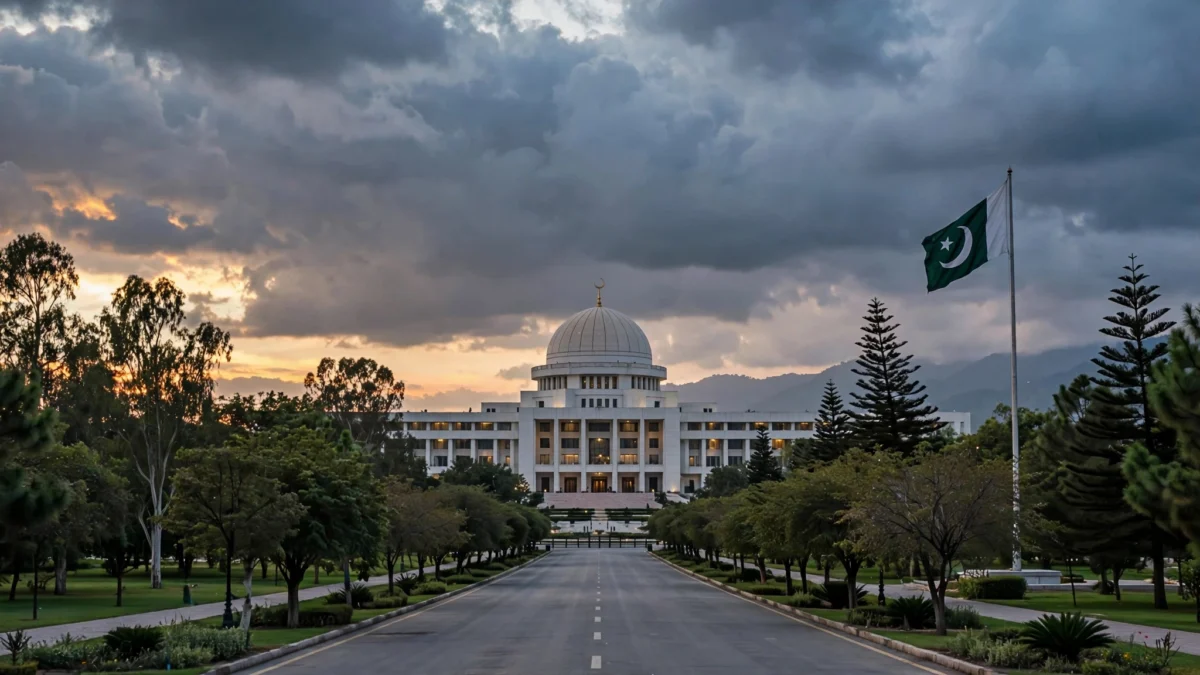
The federal government on Saturday night moved decisively closer to imposing a state of emergency in Khyber Pakhtunkhwa, agreeing the measure at a high-level meeting at Aiwan-e-Sadr and setting a formal constitutional timetable: the federal cabinet is to consider the move at 9:30 AM on Sunday, October 11, while separate sessions of the National Assembly and Senate have been convened for Tuesday, October 13, to seek parliamentary endorsement.
According to SABAH, a Pakistani news agency that reported the decision from Islamabad on Saturday night, the Presidency meeting brought together Prime Minister Shehbaz Sharif, Deputy Prime Minister and Foreign Minister Ishaq Dar, Interior Minister Mohsin Naqvi, Adviser to the Prime Minister Rana Sanaullah, Federal Minister for Law and Justice Azam Nazeer Tarar, Attorney General for Pakistan Mansoor Usman Awan and Federal Minister for Economic Affairs Ahad Khan Cheema. President Asif Ali Zardari was assisted at the meeting by senior Pakistan Peoples Party figures including Senator Sherry Rehman, Naveed Qamar, Senator Saleem Mandviwalla and Dr Asim Hussain, SABAH reported.
Independent reporting corroborates the sequence. Pakhtun Digital, a Khyber Pakhtunkhwa-focused outlet, reported on October 10 that the Presidency meeting had agreed on constitutional measures and that an emergency meeting of the federal cabinet had been summoned for Sunday morning to consider formal approval of the proposed emergency in the province. Capital News Point similarly reported on October 10 that the cabinet session had been called and that constitutional measures were under review.
The October 13 parliamentary sessions are the one piece of the plan already confirmed on the record. A statement issued by the President’s House after Saturday’s meeting said it had been agreed to convene separate sessions of the National Assembly and Senate on October 13 — a formulation reported consistently by SABAH and by the Express Tribune’s October 10–11 coverage, as synthesised in a KhabarWire reporting roundup reviewed on Sunday.
On the record, the government is still speaking in the conditional tense. Minister of State for Interior Talal Chaudhry, talking to a private television channel late on Saturday, said consultations were ongoing and that imposing an emergency was “not a preferred option”. But in the same interview, Chaudhry said detailed discussions of the emergency option had taken place, that “different levels and options of an emergency as well as other constitutional options had been discussed”, and that the situation appeared to be moving towards “the last option” — language the Express Tribune also carried on Saturday night. Chaudhry added that statements against national policy were being made, that people were being incited, and that the PTI’s Khyber Pakhtunkhwa government was not implementing the National Action Plan, according to SABAH’s report.
What has not yet happened is as important as what has. No emergency has been proclaimed under Article 232 of the Constitution, and no governor’s rule order has been issued. Sunday’s 9:30 AM cabinet session is, by all accounts, the first formal cabinet-level consideration of the Khyber Pakhtunkhwa options. If the cabinet approves, President Zardari would still need to act on that advice — and parliamentary endorsement would follow through the October 13 sessions, consistent with the constitutional requirement that an emergency proclamation be laid before parliament.
The Saturday-night sequence unfolded in two venues. After the Presidency meeting, Zardari separately met Khyber Pakhtunkhwa Governor Faisal Karim Kundi and Interior Minister Naqvi, who briefed the president on what the Presidency described as the deteriorating law-and-order situation in the province. In a post on X after the meeting, the governor wrote that “KP has sacrificed enough” and that “protecting lives and defeating terrorism must take precedence over political interests”, according to the Express Tribune’s reporting.
In parallel, at the Prime Minister’s House, Shehbaz hosted Jamiat Ulema-e-Islam-F chief Maulana Fazlur Rehman. The Prime Minister’s Office said the two discussed “important national and political matters”, while JUI-F spokesperson Aslam Ghauri said Fazlur Rehman had remained in regular contact with the PTI leadership and had taken it into confidence as part of efforts to ease political tensions, the Express Tribune reported. PTI Secretary Information Sheikh Waqas Akram, speaking to the Express Tribune, said the party would welcome “a positive and effective role” by Fazlur Rehman and would appreciate his efforts.
That meeting followed a Saturday telephone call in which Shehbaz congratulated the JUI-F chief on performing Umrah and invited him to the Prime Minister’s House, according to SABAH and 10bmnews reporting. In the meeting, insiders said, Fazlur Rehman again suggested resolving the crisis through negotiations rather than imposing governor’s rule or an emergency — reiterating the position he had taken earlier in the week, when he warned against the emergency option while offering mediation between the government and the opposition.
Not everyone in the ruling coalition is talking mediation. Federal Minister for Kashmir Affairs and Gilgit-Baltistan Amir Muqam, speaking on Saturday, called for governor’s rule across Khyber Pakhtunkhwa, citing what he described as the provincial government’s failure to maintain law and order and establish its writ, according to the Express Tribune.
The security backdrop to Saturday’s meetings hardened further during the day. In Tank district, Election Commission of Pakistan Director General Shamshad Akhtar was shot dead by unidentified gunmen on Saturday in what the commission described as a targeted killing, calling on the government to take effective measures to protect government employees, the Express Tribune reported. Hours later, the Khyber Pakhtunkhwa Police issued written operational guidelines warning against participation in “unlawful gatherings”, directing that those involved in vandalism, violence or disrupting law and order be dealt with “strictly in accordance with the law”, with special arrangements ordered for police stations, government buildings, banks, petrol pumps, commercial centres and major roads, and with protest-related activity to be video-recorded. Kashmir English independently carried the police guidelines on its Pakistan desk, and Capital News Point’s live blog listed the “KP police issue stern warning” item alongside the emergency developments.
On the administrative front, the capital’s twin cities moved into lockdown posture. A notification issued by Rawalpindi Deputy Commissioner (retd) Captain Nadeem Nasir imposed Section 144 in Rawalpindi and Murree from October 10 to November 8 — one month — banning public meetings, processions, rallies, sit-ins, protests and gatherings of any kind across the district, Kashmir English reported. Capital News Point separately confirmed that Section 144 had been imposed in Rawalpindi until November 8 with protests and gatherings banned, and also reported Section 144 in effect in Islamabad, with public gatherings banned.
The confrontation has been building since October 4, when the PTI launched its long march from Lakki Marwat demanding the release of jailed party founder Imran Khan. Two rounds of talks between the federal government and the party on Friday and Saturday collapsed without agreement — The News reported earlier this week that the sides disagreed over access to Khan and over military operations in KP’s restive areas, and that Naqvi had accused the KP chief minister of sabotaging a near-final agreement.
The march itself is still moving. The Express Tribune reported on October 10 that the convoy had reached Mardan, that Chief Minister Sohail Afridi rejected governor’s rule and the emergency option as unconstitutional, and that the march was expected to reach Swabi by Sunday, with the next stage to be announced on October 13 — the same day parliament convenes.
The emergency under discussion appears calibrated short of a province-wide proclamation, at least in its first phase. Earlier reporting this week described a proposal for emergency powers in 12 districts, including the former merged tribal districts, with the federal government assuming key powers — and governor’s rule as the alternative instrument. Under Article 232, an emergency must be proclaimed by the president on the cabinet’s advice and laid before parliament; under Article 234, governor’s rule on the president’s advice follows a report from the governor — and in both cases the requirement of parliamentary proceedings explains the October 13 sessions. Geo News earlier reported the “cocktail of constitutional measures” framework the centre is weighing, a detail carried by The News International’s October 9 coverage.
The timeline now points to a decisive 72 hours. The cabinet takes up the matter on Sunday morning. The march reaches Swabi on Sunday, with its next stage announced on October 13. Parliament sits the same day. And between them sits Fazlur Rehman’s mediation channel — the last visible off-ramp before a constitutional instrument is actually invoked.
Analysis: Why It Matters
Three things about Saturday night’s sequence deserve more attention than the headlines give them, because together they define what is actually happening.
First, the sequence itself is the message. Aiwan-e-Sadr meeting, then the Presidency statement on the October 13 sessions, then the Sunday cabinet call, then the governor briefing, then the PM House meeting with Fazlur Rehman: this is choreography, not improvisation. Governments that are genuinely undecided do not publish a parliamentary timetable before the cabinet has even met. By announcing the National Assembly and Senate sessions before Sunday’s cabinet consideration, the government has put the machinery of endorsement in motion while preserving formal deniability — the decision, on paper, is still Sunday’s to make. That choreography serves two audiences at once: the PTI, which sees the clock running down on its negotiating leverage, and the party’s own allies and the courts, which see the constitutional boxes being ticked in order.
Second, Talal Chaudhry’s interview is the most revealing text of the weekend. Read carefully, it is not a denial. A minister who wanted to take the emergency off the table would say it is not happening. Instead, Chaudhry said the emergency is “not a preferred option”, that different levels and options of an emergency have been discussed, and that the situation is moving toward “the last option”. That is a three-step escalation ladder announced on live television: we would rather not, we are planning it anyway, and we are nearly out of alternatives. It also names the government’s public justification in advance — non-implementation of the National Action Plan, statements against national policy, incitement. When a constitutional instrument as heavy as Article 232 is being discussed, the state’s framing of its necessity is half the legal battle; Chaudhry’s framing will be quoted back in court if it ever gets there.
Third, the Fazlur Rehman channel is the piece that decides whether this ends in confrontation or a managed climbdown. Fazlur Rehman’s credentials as a mediator are real — he has done this job before, he leads a religious party with a conservative base that overlaps with PTI’s in the province, and he publicly warned against the emergency option even as the government moved toward it. His spokesperson’s claim that the PTI leadership has been taken into confidence, and Sheikh Waqas Akram’s welcome of his role, suggests the channel is live. But there is a hard limit on what mediation can achieve before Sunday morning: the march’s Swabi timetable and the October 13 announcement date mean the PTI has its own choreography running, and any deal would have to settle the same two questions that killed the Friday-Saturday talks — access to Imran Khan and the military-operation question in the province’s restive areas. Those are not the sort of issues that get resolved in a single night of shuttle diplomacy.
The Tank killing of Shamshad Akhtar sits over all of this as a grim accelerant. Whatever the perpetrators’ motive, an attack on an election-commission officer in a southern district feeds the government’s security narrative and tightens the political space for arguing that the province’s law-and-order machinery is functioning normally. The KP Police’s same-day operational guidelines — video-recording protests, hardening government buildings and petrol pumps — read less like routine preparedness and more like a force positioning for a week that may include both a federal constitutional order and an opposition march on the capital.
Two quieter data points round out the picture. The Section 144 orders in Rawalpindi, Murree and Islamabad are the capital-region ring fence: no gatherings for a month, timed precisely to cover the march’s approach. And the PPP’s PPP-linked Bilawal Bhutto-Zardari — who had earlier in the week called governor’s rule “a last resort” — was conspicuously at the table on Saturday night through Sherry Rehman, Naveed Qamar and others, meaning the coalition partner is inside the decision loop rather than outside criticising it.
The honest reading of where things stand is this: no emergency has been proclaimed, and Sunday’s cabinet could still blink, order talks instead, or choose a narrower instrument — governor’s rule, a district-level emergency, or the previously reported “cocktail of constitutional measures”. But every visible indicator — the parliamentary timetable, the police guidelines, the capital lockdown, the minister’s “last option” language — points the same direction. Pakistan has not seen an Article 232 proclamation over a province in the modern era; if it happens, it will be a constitutional landmark, and everything the government did on Saturday night will be Exhibit A in the litigation that follows.
What to Watch Next
- Sunday, 9:30 AM — the federal cabinet meeting. Whether the cabinet approves an emergency, governor’s rule, a narrower district-level instrument, or defers for talks is the single decisive data point. Watch whether the session happens as announced and what statement follows.
- The language of any order. A whole-province Article 232 proclamation, a 12-district instrument, or an Article 234 governor’s-rule order are legally and politically different animals. The scope chosen will tell you how far the centre is willing to go.
- Fazlur Rehman’s mediation before Sunday morning. If a PTI–government contact produces anything before the cabinet meets, it will surface through the JUI-F channel. Silence from that channel is itself a signal.
- The Swabi timetable and the October 13 announcement. The march’s next stage, due to be announced the same day parliament sits, is the PTI’s countermove. Any escalation at Swabi changes the cabinet’s calculus.
- The October 13 parliamentary sessions. These sessions are where the emergency, if proclaimed, must be endorsed — and where the opposition, including the PPP’s own positioning and the JUI-F’s stance, will be tested on the record.
- The courts. Article 232 proclamations and Article 234 orders are among the most litigated instruments in Pakistan’s constitutional history. Expect challenges the moment an order is gazetted.
Sources
Pakhtun Digital: “Emergency in KP? Federal Cabinet Set to Make Crucial Decision”
10bmnews: “Federal govt decides to impose emergency in KP: sources”

About the Author — Abdul Mannan
Related Articles
Key Decisions on KP Emergency Expected Today as Government Finalises Preparations, Sources Say
The federal government has finalised preparations for a possible emergency or governor's rule in Khyber Pakhtunkhwa, with sources…
Bilawal Warns PTI to Abandon ‘Extremist’ Politics as Federal Government Weighs Emergency or Governor’s Rule in KP
PPP chairman Bilawal Bhutto-Zardari on Friday urged the PTI to abandon what he called "extremist" politics and return…
IMF Reaches Staff-Level Agreement With Pakistan, Unlocking About $1.2 Billion Pending Board Approval
The IMF announced a staff-level agreement with Pakistan on the latest reviews of its lending programmes, potentially unlocking…