Key Decisions on KP Emergency Expected Today as Government Finalises Preparations, Sources Say

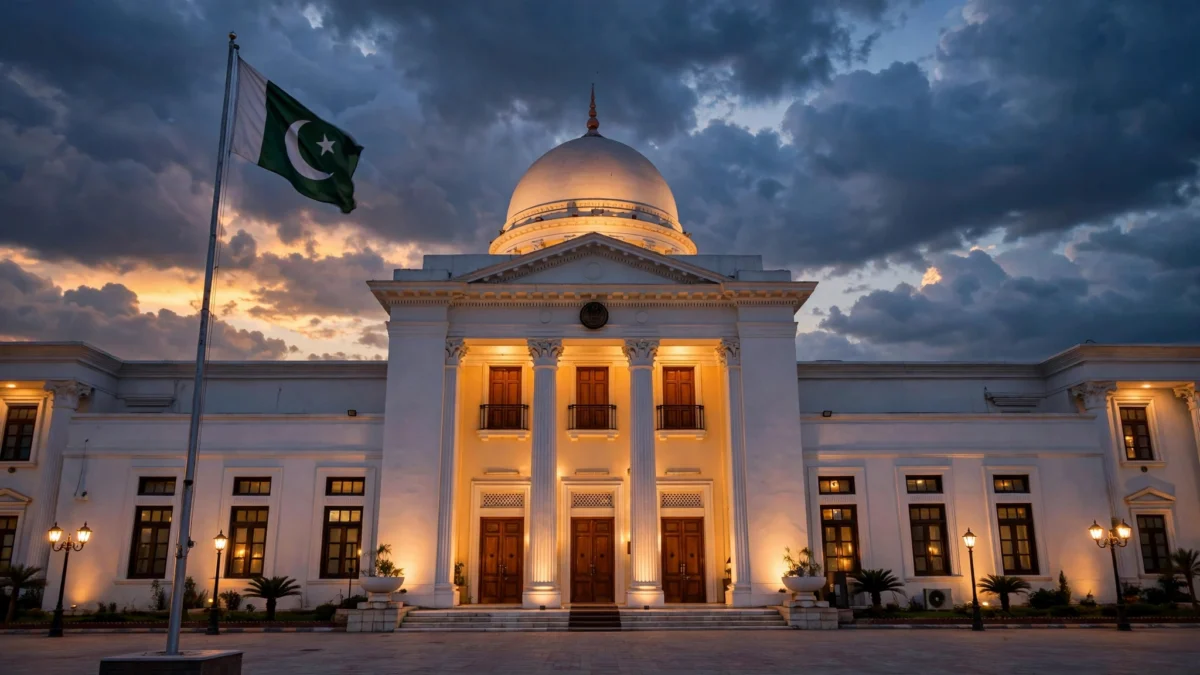
ISLAMABAD — The federal government has completed preparations for a possible declaration of emergency or the imposition of governor’s rule in Khyber Pakhtunkhwa, with key decisions expected as early as today as the Pakistan Tehreek-e-Insaf’s confrontation with the Centre enters its second week, according to Pakistani media reports citing government sources.
ARY News reported on Saturday that the next 24 hours are “crucial” for the province, saying key decisions on the KP situation are expected in a high-level session held today. Separately, Pakistan Observer reported that the federal government has finalised preparations for a possible emergency or governor’s rule in the province, as political tensions and security concerns remain under active discussion.
The emerging detail suggests the groundwork is already being laid. Daily Kiran reported on Saturday, citing sources familiar with the matter, that the federal government has completed preparations to deal with scenarios involving emergency rule or governance by the governor in the province, and that the final decision will depend on ongoing discussions between government and opposition representatives. According to sources cited by Geo News, administrative changes are also being prepared — including potential adjustments at the level of deputy commissioners and secretaries, along with lists of possible appointments for regional and district police officials.
One of the proposals on the table involves imposing an emergency in 12 districts of Khyber Pakhtunkhwa in the initial phase, including areas of the former Federally Administered Tribal Areas that were merged into the province in 2018. A separate proposal reportedly under consideration would see the federal government assume key powers in the province. No final decision has been officially confirmed, and the proposals remain subject to discussion, the reports cautioned.
Speculation about an imminent announcement intensified on Saturday after PML-N leader Danial Chaudhry hinted at significant decisions being made soon in a post on the social media platform X, according to Daily Kiran.
Earlier in the day, a high-level meeting to review the situation in Khyber Pakhtunkhwa was convened at the President’s House, chaired by President Asif Ali Zardari, Pakhtun Digital reported. The meeting was attended by Prime Minister Shehbaz Sharif, Interior Minister Mohsin Naqvi and PPP leaders Sherry Rehman and Naveed Qamar, with deliberations focused on the current situation in the province and possible future steps. Senior military officials were also expected to take part in the day’s discussions, according to separate reporting.
A week of escalating confrontation
The Pakistan Tehreek-e-Insaf launched its long march from Lakki Marwat on October 4, demanding the release of its incarcerated founder Imran Khan and the restoration of what the party calls constitutional supremacy. Party workers have been protesting across the province for a seventh consecutive day, according to Daily Kiran.
A last-ditch effort to avert the confrontation collapsed before it began. The PTI and a government delegation — which included Pakistan Peoples Party representatives — held three rounds of talks, but on the morning of October 4 the negotiations finally broke down. Interior Minister Mohsin Naqvi declared that “talks have collapsed” and blamed KP Chief Minister Sohail Afridi for sabotaging them. PTI Secretary General Salman Akram Raja offered a different account, saying the primary reason for the failure was the federal government’s insistence that the provincial government take ownership of anti-terrorism actions the Centre had unilaterally initiated in Khyber Pakhtunkhwa.
Since then, Islamabad has remained effectively closed for more than a week. Section 144 has been imposed in the federal capital, public gatherings are banned, and containers remain in place at key entry and exit points of Rawalpindi — disrupting traffic, burdening commuters and affecting businesses across the twin cities, according to local reporting.
The rhetoric has sharpened on both sides. Information Minister Attaullah Tarar levelled allegations against the PTI over its handling of militancy. PTI’s Shaukat Yousafzai responded that “raising voice for legitimate rights is not extremism,” ARY News reported on Saturday. Chief Minister Afridi, meanwhile, has pressed ahead with provincial business — launching a Rs6.2 billion Peshawar flyover project while voicing opposition to a military operation in the province.
The constitutional question
The legal scaffolding for what is being contemplated is well established. Law Minister Azam Nazeer Tarar told Geo News that the Constitution was clear regarding the imposition of an emergency, saying that if circumstances reached a point where the Constitution required one to be imposed in Khyber Pakhtunkhwa, “then it should definitely be imposed and it will be imposed.” Parliamentary Affairs Minister Tariq Fazal Chaudhry said earlier this week that the Centre was “seriously” weighing the imposition of an emergency under Article 232 of the Constitution, citing the KP government’s alleged failure to curb terrorism.
KP Governor Faisal Karim Kundi has already signalled readiness. After meeting the interior minister at the Governor House in Peshawar on October 4, the governor’s office said Kundi had agreed to play his full constitutional role if the president and the prime minister considered governor’s rule or an emergency necessary in the province.
The government’s case rests heavily on the security situation. Earlier this week, at least 13 people — including two women and a two-year-old child — were martyred when a suicide bomber rammed an explosives-laden vehicle into an anti-smuggling check post in the Darazanda area of Dera Ismail Khan. Last week, 22 people, including 16 police officials, were martyred and 103 others injured after explosions targeted a mosque inside the Kohat Police Lines during Friday prayers.
Allies hedge, mediators step in
The strongest political resistance to the emergency option has come not from the opposition but from within the ruling coalition’s orbit. PPP Chairman Bilawal Bhutto-Zardari, speaking at a Karachi event on Friday, urged the PTI to abandon what he called “extremist” politics — but also warned that governor’s rule should be a “last resort,” and described terrorism as a “red line” for his party. “If there is an illness in Khyber Pakhtunkhwa, Karachi develops a cough,” he remarked, warning that any escalation in militancy in KP would inevitably affect Sindh and the rest of the country.
A parallel mediation track opened on Friday when Prime Minister Shehbaz Sharif telephoned JUI-F chief Maulana Fazlur Rehman to discuss the political deadlock and the PTI’s long march, ARY News reported, citing sources. During the conversation, the JUI-F chief reportedly emphasised that dialogue and mutual understanding should resolve the issues, and advised the government against imposing an emergency or governor’s rule in Khyber Pakhtunkhwa — warning that such measures could cause political damage to the ruling parties. He also offered to play a role in reducing political tensions through backchannel contacts. The prime minister, according to the reports, reiterated that the government remained willing to negotiate but insisted that the PTI should end its long march and return to the negotiating table, maintaining that a march on Islamabad and talks could not proceed simultaneously. On Saturday, the prime minister invited Fazlur Rehman to the Prime Minister’s House, Capital News Point reported.
Adding to the sense of a government in crisis-management mode, PML-N President Nawaz Sharif departed for London on a week-long visit, Dawn News reported on Friday — a trip whose timing, coming as the long march enters its crucial phase, has drawn attention.
Analysis: Why It Matters
A decision on Khyber Pakhtunkhwa has been “imminent” for the better part of a week — which is precisely what makes today’s reporting significant. The story is no longer that the government is “weighing” options; it is that preparations are finalised, transfer lists are being drawn up, and a decision window of 24 to 48 hours is now being named by the government’s own media allies. When a government starts compiling lists of deputy commissioners and police officials to move, it has passed the talking phase. That is the single most concrete signal in Saturday’s coverage.
The choice the government faces is not binary. A full provincial emergency under Article 232, governor’s rule under Article 234, and the reported 12-district partial emergency are three different instruments with three different political price tags. The 12-district formula — covering the former tribal districts where the security argument is strongest — looks like a designed compromise: it gives the Centre direct control where it claims the terrorism emergency is real, while avoiding the optics of dismissing an entire elected provincial government. Whether the PTI would treat that as a compromise or as a provocation is the gamble.
The political costs are already being priced in. Bilawal Bhutto-Zardari’s “last resort” framing and Fazlur Rehman’s private warning against the move are two sides of the same coin: the PPP, the coalition’s indispensable partner, is publicly building distance from a crackdown, and the JUI-F chief — the establishment’s historic bridge to religious-political constituencies — is advising restraint. Imposing emergency measures without the PPP’s full backing risks the coalition itself; the government would be trading a provincial crisis for a federal one.
There is also the question of what the PTI wants from a crackdown. A federal intervention that dismisses or suspends KP’s elected government would hand the party its most potent narrative since the events of May 2023: an elected mandate crushed by decree. The government’s calculation is that the terrorism statistics — Darazanda, Kohat, the daily toll in the merged districts — provide Article 232 vocabulary strong enough to survive that narrative. But constitutions are not just texts; they are also optics. Tarar’s “it will be imposed” may be legally precise, but every previous use of emergency powers in Pakistan’s history is remembered politically, not juridically.
Finally, the mediation track deserves more attention than it is getting. The Shehbaz–Fazl call is the first concrete sign that the prime minister is building an off-ramp in parallel with the on-ramp to emergency. Fazlur Rehman has mediated Pakistan’s political crises before, and his warning against emergency carries weight precisely because he is not a PTI ally. The invitation to the Prime Minister’s House suggests the government wants him inside the tent. The missing variable is the PTI: no mediation works without the other side’s buy-in, and the party has given no sign that it will call off a march whose entire logic is pressure.
What to watch next
The session’s outcome. A decision, a deferral, or an ultimatum — each sends a different signal. A deferral with a named deadline would confirm the leverage theory; an immediate notification would confirm the preparations theory.
The march itself. The PTI’s protest enters its second week with “final round” rhetoric. Escalation toward Islamabad or a pause for talks will shape the decision in real time.
The 12-district list. Which districts make the first notification will reveal whether this is a counterterrorism operation in constitutional clothing or a political operation in counterterrorism clothing.
Administrative transfers. Watch for the first wave of deputy commissioner and police postings in KP — the earliest public evidence of which scenario the government has chosen.
Fazl’s next move. The Prime Minister’s House meeting, if it happens, and any subsequent PTI response will show whether the mediation track is real or decorative.
The PPP’s stance. Bilawal’s “last resort” line is now the coalition’s tripwire. Any shift in PPP language will be the first sign of whether the government has the political cover it needs.
Sources
- Daily Kiran — “Emergency Preparedness in Khyber Pakhtunkhwa as Political Tensions Rise” (Oct 10)
- Pakhtun Digital — “Emergency or Governor’s Rule in KP? Zardari Chairs High-Level Meeting” (Oct 10)
- ARY News (via Scoop) — “PM Sharif, Fazlur Rehman ‘discuss’ political situation, PTI long march” (Oct 9)
- The News — “Govt ‘holds off on’ emergency, governor’s rule in KP”
- The News — “Governor’s rule, emergency on table for KP: Bilawal”
- Capital News Point — “PM Shehbaz Calls Maulana Fazlur Rehman, Invites Him to PM House” (Oct 10)
- Dawn News — “PML-N President Nawaz Sharif Departs For London” (Oct 9)

About the Author — Abdul Mannan
Related Articles
Bilawal Warns PTI to Abandon ‘Extremist’ Politics as Federal Government Weighs Emergency or Governor’s Rule in KP
PPP chairman Bilawal Bhutto-Zardari on Friday urged the PTI to abandon what he called "extremist" politics and return…
IMF Reaches Staff-Level Agreement With Pakistan, Unlocking About $1.2 Billion Pending Board Approval
The IMF announced a staff-level agreement with Pakistan on the latest reviews of its lending programmes, potentially unlocking…
Sohail Afridi Launches Counter-Offensive Against KP Governor, Calls Kundi’s Security Meeting Unconstitutional
Khyber Pakhtunkhwa's chief minister has rejected the governor's security meeting as unconstitutional and, according to Dawn, wants legislation…