Trump Tells Ukraine to “Get a New President” as Rift With Zelensky Deepens Over Russian Diesel Deal

WASHINGTON — President Donald Trump on Saturday launched his most direct personal attack yet on Ukrainian President Volodymyr Zelensky, telling reporters it was "time for Ukraine to get a new president" as the two leaders sparred publicly over a controversial new American deal to buy diesel fuel from Russia.
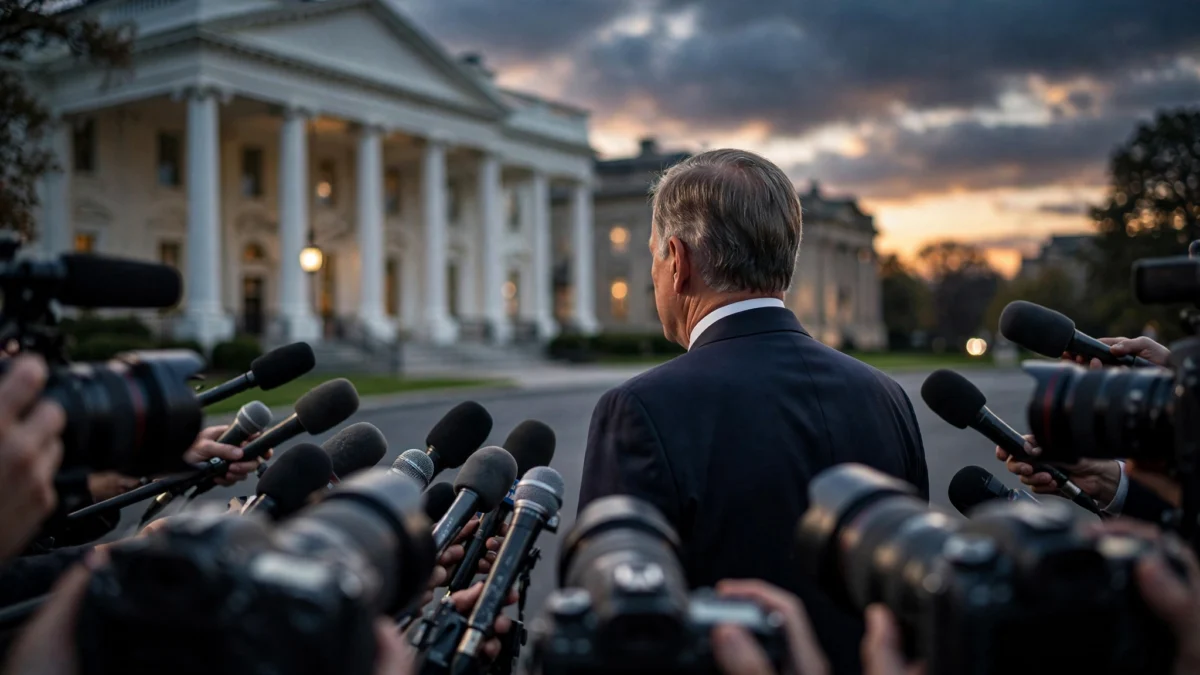
"I suggest they get a new leader who can make a deal because he could have made many deals and for some reason, he never does," Trump told reporters outside the White House on Saturday, according to multiple US news outlets. The remarks came as he departed for a rally in Tennessee, part of a series of campaign trips in the run-up to next month's midterm elections.
The extraordinary broadside — a sitting American president publicly calling for the replacement of a wartime allied leader — marks a sharp escalation in a relationship that, as CNN noted, has long been tumultuous, and lands at a moment when Washington, Kyiv and Moscow are all pulling in sharply different directions.
At the heart of the dispute is Trump's announcement on Friday that he had secured an agreement with Russian President Vladimir Putin for Russia to resume diesel exports to American and global markets. Trump wrote on social media that Putin had agreed in a phone call to "immediately supply" more than 300,000 tons of diesel, with another 500,000 tons promised for November, according to CNN. Together, the two tranches amount to roughly 6 million barrels of diesel — enough to cover about a day and a half of American demand, according to the US Energy Information Administration.
The president framed the arrangement as a direct response to punishing diesel prices at home, which have climbed above $6 per gallon in parts of the United States, squeezing farmers, truckers and consumers. Trump said Saturday that he blamed Zelensky for the price spike, arguing that Ukrainian strikes on Russian oil refineries had tightened global supplies and created what he called "a world problem."
"I said to him: 'do what you want, don't hit refineries,'" Trump told reporters Saturday afternoon, according to the New York Post. "That is a world problem. And he wants to make problems for the world," he said of the Ukrainian president. "He'd better damned well stop."
Zelensky fired back on Saturday, denouncing the US-Russia diesel arrangement as an "investment in a war that must be ended, not prolonged," according to CNN. The Ukrainian leader also described the move as a "gift" to Putin, in remarks cited by The Times, and a "weak decision of strong partners," according to CNN.
Kyiv's fury was compounded by the timing. The diesel announcement came just as a top-level Ukrainian delegation arrived in Miami for talks with US envoy Steve Witkoff and Jared Kushner, Trump's son-in-law, on a potential path toward ending the war. Zelensky made it clear the choreography stung.
"In this exact moment when our team is talking to the American team in Florida, the US president has a conversation with the Kremlin leader, with the leader of this war, the leader of this aggression," Zelensky said, according to CNN.
According to a US official cited by CNN, Trump had been "fuming" at Zelensky over the Ukrainian attacks on Russian refineries before he struck the diesel deal, and the United States had repeatedly asked Ukraine to halt its strikes on Russian diesel refineries — "to no avail." The official added that Ukraine's continued refinery attacks were part of what led Trump to strike the deal in the first place.
Witkoff and Kushner told Ukrainian officials in their Friday meetings that Trump wanted the refinery attacks to stop and that he was preparing to allow Russia to sell its diesel, the US official said.
The fallout extended beyond the two leaders. The British government moved quickly to distance itself from Washington's position. Downing Street said on Saturday evening that it would continue to impose what it described as its "toughest sanctions regime ever" on Russia, making clear that the United Kingdom would not follow the United States in buying diesel from the Kremlin, according to The Times. No. 10 also confirmed that British Prime Minister Andy Burnham had spoken with Zelensky and "reiterated his complete solidarity" with Ukraine, with the two leaders agreeing to meet in person in the coming days, The Times reported.
The timing was especially raw in Ukraine because of events on the battlefield. Hours after Trump's Friday announcement, overnight Russian airstrikes struck the Ukrainian city of Zaporizhzhia, killing at least 15 people, including three children, The Times reported, citing local accounts. CNN, citing local authorities, put the death toll in Zaporizhzhia at 20, also including three children. The past few months have been brutal for Ukrainian civilians, CNN reported, as Russia has taken advantage of Kyiv's critical shortage of air defence missiles to launch near nonstop aerial attacks against Ukrainian cities. One such strike on a bus stop in eastern Ukraine killed more than 30 people on Thursday, according to CNN.
Energy analysts moved quickly to cast doubt on the practical value of the diesel deal itself. Dan Pickering, founder and chief investment officer at Pickering Energy Partners, told CNN that the announced volumes would amount to "perhaps a 5%-6% increase in supply between now and year end," adding: "Bottom line — this is helpful but not a needle mover for global diesel markets."
"Side note — there is a reason Trump talked about volumes in tons instead of barrels," Pickering added. "The tons number looks bigger to a general observer. This is more politics than a game changer."
Former US officials raised a more fundamental question: whether Russia even has the diesel to sell. Moscow banned diesel exports in early July after Ukrainian drone strikes on its refineries triggered widespread fuel shortages across the country, CNN reported — a ban that removed roughly 800,000 barrels per day from the global market at a time when supplies were already tight because of the US war against Iran. According to the Kremlin's own readout of the Trump-Putin call, Putin told Trump that Moscow was "ready to supply oil and petroleum products to the US and global markets," and said he was "confident that this will have a positive impact on the entire global economy."
But former US officials told CNN it was unclear whether Putin even has the amount of diesel Trump cited to sell, given the strain Ukrainian strikes have put on the country's oil supplies. Gregory Brew, an analyst with Eurasia Group's Energy, Climate and Resources team, told CNN the deal would amount to "a Band-Aid, nothing more" even assuming Putin delivered — which, he noted, "would mean reversing the ban on diesel exports that has been in place for several months now."
"I also have a strong suspicion Putin expects Ukraine to cease its attacks on refineries in exchange for doing Trump the favor," Brew said. "I have a hard time seeing Zelensky cooperate on that front."
Others warned of damage beyond the fuel markets. Richard Nephew, a former principal deputy coordinator for sanctions policy at the State Department, told CNN that "the message it sends and the damage it does to the broader sanctions regime is very significant." A former senior State Department official added that it does not matter whether Putin can actually deliver the diesel, because "now he's achieved the result he wants," which is Trump believing he has secured a pre-election bump and a potential impact on the markets. "The timing of the call with the start of the talks with Ukraine is no coincidence," the former official said. "Putin is a lot of things, but he's not stupid."
Political reactions in the United States were sharply divided. Former Vice President Mike Pence weighed in on Saturday, calling the agreement "a betrayal of the legacy and leadership" of the late Senator Lindsey Graham, who had long advocated for the United States to do more to help Ukraine.
"America should not be throwing a lifeline to Putin's war machine," Pence said in a social media post, according to CNN. "Now is the time to stand strong against Russian aggression as we did during the first Trump administration."
Trump, meanwhile, tied the entire episode to the domestic political calendar. The president has been working to bring down costs ahead of the midterm elections, including by temporarily lifting restrictions on "red-dyed" diesel used in farm equipment, CNN reported. He was headed to Tennessee — his latest trip to a red-leaning state — at a time when Republicans are facing tight races in several agricultural states, including Iowa and Kansas, where party operatives attribute voter frustration in part to high fuel costs, the New York Post reported.
The president also blamed the rise in global diesel prices on the Ukraine-Russia war and called on both sides to halt strikes on energy facilities as recently as last month, to little avail, CNN reported. An Associated Press-NORC Centre for Public Affairs Research poll published on October 1 found that Americans disapprove of Trump's handling of Iran and blame him for higher prices, The Hindu BusinessLine reported.
Asked Saturday by CNN's Kevin Liptak about concerns that the diesel deal could prolong the war in Ukraine, Trump dismissed the premise: "Zelensky could've settled this war many times … and he chooses not to."
Trump also suggested that if he had been US president in 2022, the war would never have started. "There was no reason that that war with Ukraine and Russia started," he said, according to The Hindu BusinessLine. "It started due to incompetence."
Trump additionally called for Ukraine to hold elections. Ukrainian law, however, prohibits holding elections during wartime, CNN noted — a constitutional reality the president's suggestion did not address.
Zelensky, for his part, has defended the Ukrainian strikes on Russian refineries, arguing that Russian oil revenues generate money Moscow uses to finance its war against Ukraine. Just this week, Kyiv has claimed strikes on five refineries across Russia, CNN reported — the latest of which were announced by Ukrainian authorities after Trump's Friday announcement. Trump said on Saturday that millions more tons of Russian diesel would be supplied following the first tranches "based on the condition of their Diesel Refineries," according to CNN — effectively making the flow of fuel conditional on the state of Russian refinery capacity that Ukraine continues to target.
For now, the dispute shows no sign of abating. The war that began with Russia's full-scale invasion in February 2022 grinds on, with Russia occupying roughly 20 percent of Ukrainian territory, according to independent estimates cited by The Hindu BusinessLine. And with Washington now publicly questioning the legitimacy of Ukraine's wartime leader while simultaneously purchasing fuel from the country waging war against him, the transatlantic consensus that once backed Kyiv appears to be fracturing in public view.
Analysis: Why It Matters
The most important sentence of Saturday's events may be the simplest one: "I suggest they get a new leader." American presidents have criticised allied leaders before — sometimes sharply — but openly calling for the replacement of a wartime president leading a country under full-scale invasion crosses into territory with little precedent in modern US foreign policy. Zelensky was elected in 2019 and has led Ukraine since Russia's 2022 invasion; under Ukrainian law, elections cannot be held during martial law, which means Trump's demand points at a constitutional impossibility. That mismatch matters, because it signals that the statement may be intended less as a serious constitutional proposal and more as pressure: a deliberate humiliation designed to bend Kyiv toward a settlement on terms Trump prefers.
That is the first thing to understand about the timing. The diesel announcement was unveiled while Ukrainian negotiators sat in Miami talking to Trump's own envoys about a peace framework. Whether by design or by accident, the effect is identical: Kyiv's delegation learned that its most important partner was simultaneously striking an energy bargain with the very country whose oil revenues, in Ukraine's view, fund the bombs falling on Zaporizhzhia. Negotiators cannot be blamed for reading the sequence as a signal about whose interests sit at the centre of the table. The former senior State Department official's observation, carried by CNN, is the uncomfortable gloss: from Moscow's perspective, the deliverable may not be the diesel at all — it is the political theatre of Trump announcing a deal, and the fracture it opens between Washington and its European allies.
The second thing to understand is the economics, because the economics are where the political story wobbles. Six million barrels sounds large until it is set against daily American consumption of roughly four million barrels: about a day and a half of supply, as the Energy Information Administration's arithmetic confirms. Pickering's "5%-6% increase in supply between now and year end" and Brew's "Band-Aid, nothing more" are not partisan dismissals; they are arithmetic. More to the point, Russia banned diesel exports in July precisely because Ukrainian strikes had created domestic fuel shortages. For the deal to work, Putin must reverse that ban — restoring exports while his refineries are still being hit. The scepticism of former US officials is well placed: Moscow may be selling fuel it does not have, in exchange for a political concession it very much wants.
And what might that concession be? Brew's "strong suspicion" is the one to watch: that Putin expects Ukraine to stop hitting refineries in return for doing Trump the favour. This is where the logic becomes genuinely perverse. Ukraine's refinery campaign is one of the few asymmetrical levers Kyiv has developed — it strikes directly at the revenue stream that funds Russia's war effort, at a moment when Ukrainian cities are being pounded. Trading away that lever for a temporary diesel arrangement would be, from Kyiv's perspective, disarmament in exchange for a discount. Zelensky's refusal to comply — "to no avail," in the US official's phrase — is not stubbornness; it is the rational preservation of leverage. Expect the strikes on Russian refineries to continue, which in turn puts the promised diesel tranches in doubt, which in turn exposes the deal's fragility.
The third thing is the domestic American calendar, which explains nearly everything else. Midterm elections are weeks away. Diesel prices above $6 per gallon are visible, painful and politically toxic, particularly in agricultural states like Iowa and Kansas where Republicans are fighting tight races. Trump blaming Zelensky — rather than the US-led war in Iran, which energy experts identify as a major driver of tight global supplies, or his own policies, which the AP-NORC poll suggests voters blame — is classic displacement politics: find a foreign actor, assign them responsibility, announce a decisive deal. The Tennessee rally into which Trump headed on Saturday completes the picture. Whether the diesel volumes are real or the price relief materialises is, in the short term, secondary to the announcement itself.
The fourth is the transatlantic crack, which is now a matter of public record. Britain's Downing Street responded within hours: no Russian diesel for the UK, the "toughest sanctions regime ever" stays, and "complete solidarity" with Zelensky — underlined by a Burnham-Zelensky call and an in-person meeting to come. When the United States and the United Kingdom, the two pillars of the Western response to Russia's invasion, publicly diverge this sharply on both energy policy and the legitimacy of Ukraine's leadership, other allies take note. Moscow certainly does. The sanctions regime's strength has always depended on coordination; Richard Nephew's warning about the "message it sends and the damage it does to the broader sanctions regime" deserves to be taken literally. Each transaction with Moscow that Washington blesses makes the next one easier for everyone else.
Finally, there is the question nobody in Washington seems to be asking: what does this do to the peace process it claims to serve? Trump says Zelensky "could have settled this war many times" but "chooses not to." Yet the Ukrainian delegation in Miami was, at that very moment, doing precisely what Trump claims Zelensky never does — talking to his envoys about a settlement. Humiliating a negotiating counterpart in public rarely accelerates agreement; it hardens positions and deepens mistrust. The Zaporizhzhia strikes on the same night delivered the other half of the message: while leaders trade barbs, civilians keep dying. If Saturday's events are a template for American peacemaking — buy fuel from the aggressor, berate the victim's president, bypass the delegation — then Kyiv's instinct to keep its refinery leverage and look increasingly to London and Brussels will only grow.
What to Watch Next
First, the diesel itself: does any Russian diesel actually ship, and does Moscow formally reverse its export ban? If the first 300,000-ton tranche fails to materialise, the deal's hollowness becomes undeniable — and the political damage attaches to Trump, not Putin.
Second, the Miami talks: what, if anything, emerged from the Ukrainian delegation's meetings with Witkoff and Kushner? A joint statement — or conspicuous silence — will indicate whether the channel survives Saturday's rupture.
Third, Ukraine's refinery campaign: Kyiv announced five refinery strikes this week alone. Any pause would suggest Zelensky is bending to American pressure; continued strikes would signal defiance and simultaneously undermine the diesel deal's premise.
Fourth, allied reactions beyond London: watch for statements from Paris, Berlin and Brussels. The breadth of European pushback — or quiet accommodation — will determine whether this becomes a transatlantic crisis or an Anglo-American footnote.
Fifth, the midterms connection: US diesel and fuel prices in the coming weeks, and whether Republican candidates in agricultural states embrace or distance themselves from the Russian diesel purchase. If prices don't fall, the deal becomes a political liability rather than an asset.
Sources
- CNN — "Trump says Ukraine should get a new leader as he spars with Zelensky over US-Russia diesel deal"
- The Times — "Time for Zelensky to go, Trump tells Ukraine in diesel row"
- USA Today — "Trump calls for leadership change in Ukraine in rebuke to Zelenskyy"
- New York Post — "Trump rips into Volodymyr Zelensky — insisting it's time for Ukraine to 'get a new president'"
- The Hindu BusinessLine — "Trump calls for new Ukraine president as Russia agrees to supply diesel to US"

About the Author — Abdul Mannan
Related Articles
DOJ Opens Antitrust Investigation of Five Major TV Networks Over White House Press-Pool Boycott
The Justice Department says it is investigating whether ABC, CBS, CNN, NBC and Fox News violated federal antitrust…
Trump Says US May Join Saudi Strikes Against Houthis After New Riyadh Airport Attack
President Donald Trump said on Saturday that the United States may join Saudi Arabia's strikes against Yemen's Houthi…
Trump Turns Syracuse Rally Into Midterm Closing Argument: $5,000 ‘Trump Dividend,’ Troop Pledge for New York and a Ban on Sanctuary Cities
At a Friday-night rally in Syracuse, Donald Trump promised a $5,000 payment to every adult citizen if Republicans…