Burnham Tells MPs Rejecting Closer EU Ties Would Be “Dereliction of Duty” as No 10 Insists Brexit Result Stands

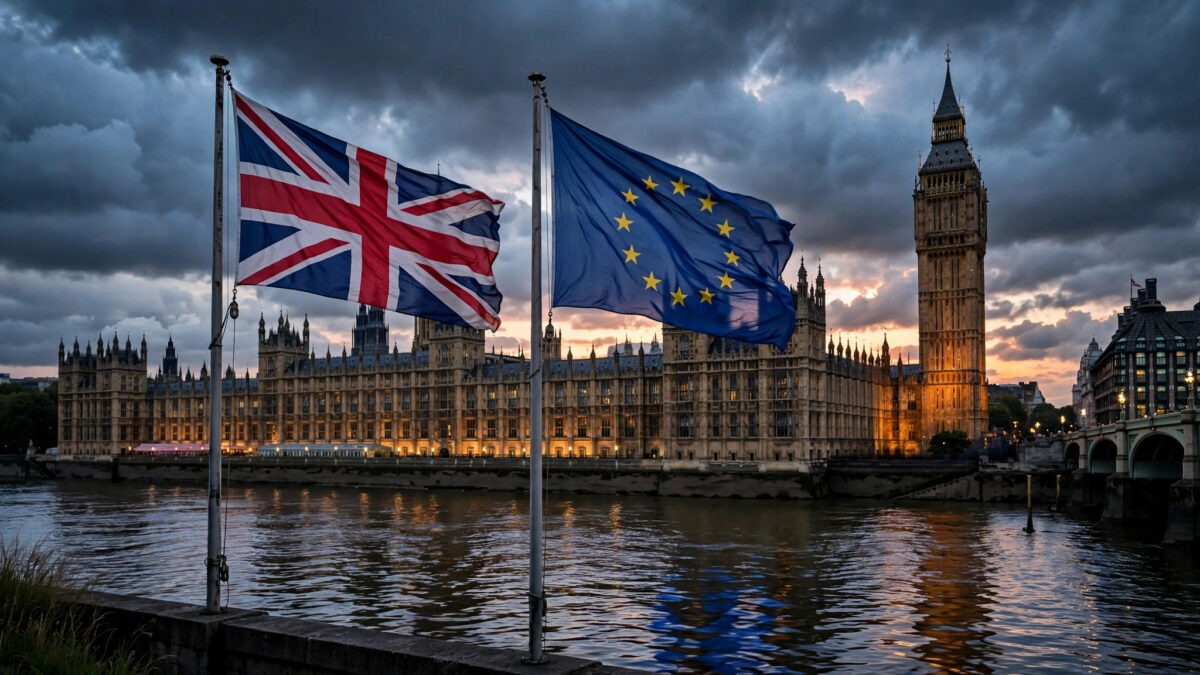
LONDON — Prime Minister Andy Burnham told the House of Commons on Monday that it would be a “dereliction of duty” for MPs not to back the government’s push for a closer relationship with the European Union, sharpening the most direct challenge yet from a sitting prime minister to the post-Brexit settlement, according to The Times and the Press Association.
In a Commons statement on Monday afternoon, Burnham reiterated his argument from last month’s Labour Party conference that Brexit has done “more harm than good” and called on MPs from all parties to support the government’s effort to negotiate a new deal with Brussels, arguing it could lift economic growth and help Britain get a grip on illegal immigration. “The status quo is not good enough for Britain,” the prime minister told MPs, according to The Times.
Downing Street briefed ahead of the statement that Burnham understood why some politicians were reluctant to confront the record of Brexit, but that a new conversation about Britain’s long-term relationship with Europe was now unavoidable. Failing to work relentlessly for a deal that boosts growth, a No 10 source said, would amount to “a major dereliction of duty,” the Press Association reported.
The summit horizon
Burnham’s statement was designed to frame the months ahead rather than to announce a single policy. At the Labour conference in Liverpool last month, he promised to set out the “options” for Britain’s long-term relationship with Europe around the time of a UK-EU summit planned for the end of the year, the Press Association reported — and he has indicated those options could include rejoining the bloc.
That framing matters because it converts what began as conference rhetoric into the official parliamentary record. Monday’s statement was billed as a sweeping update to the Commons on Burnham’s first three months in Downing Street, covering the announcements made at the party conference while Parliament was in recess, according to The Times. But the EU passages were the sharpest — and the most politically charged — of the lot.
Reaction came quickly from the centre. Liberal Democrat leader Ed Davey said ahead of the statement that Burnham should drop Labour’s “red lines” ruling out rejoining the European customs union or the single market. “We are willing to engage with anyone who shares our vision of fixing the broken relationship with Europe so we can strengthen Britain’s economy and defences,” Davey said, according to the Press Association. “Every day and month we delay starting serious talks with the EU, we do more damage to our economy. Let’s restore our trading links, tear down new barriers like Made in Europe and give our economy the growth and jobs boost businesses and people are crying out for.”
A day after the Russia claim
Monday’s statement landed less than 24 hours after another Burnham intervention ignited a political row: his claim, in an interview with The Rest Is Politics podcast released on Sunday, that Russia interfered in the 2016 Brexit referendum. Burnham said he had asked the question on arriving in Downing Street — “was there interference in the 2016 referendum from Russia?” — and been given “the clear answer that yes, there was,” according to Reuters. He became the first sitting British prime minister to state publicly that there was evidence of Russian interference in the vote, warning voters in France and Germany about Moscow-backed efforts to influence their politics.
Burnham offered no explanation of how he believed Russia had interfered and gave no details of the evidence behind the claim, Reuters reported. The Russian embassy in London did not respond to a request for comment.
By Monday, Downing Street was working to steady the row. A spokesman for the prime minister said the government believed the referendum result was legitimate and that Moscow had failed to influence the outcome, Reuters reported. Junior Foreign Office minister Stephen Doughty told Sky News that Russia had not succeeded, adding there was no evidence Moscow had successfully interfered in the referendum.
Doughty took the same line across the broadcast round on Monday. Speaking to Times Radio, he declined to get into the specifics of Russia’s actions against the UK but said it was clear that “Russia is attempting to interfere in democratic processes, not just in the UK but across Europe,” according to the Press Association. He said Russia was spending £1.5 billion on disinformation this year and called for a “whole of society effort” to respond to the threat Moscow poses to British democracy. Asked whether interference could have changed the 2016 result, he replied: “The result is the result.”
The sequence — a bold claim on Sunday, a careful qualification on Monday — did not go unnoticed by Burnham’s opponents.
Farage: “a liar”
Reform UK leader Nigel Farage called Burnham “a liar” at a press conference in Hythe, the Press Association reported, declaring: “There was no Russian interference, and the Russia hoax has run all the way through this.” Farage was speaking at the same event where he unveiled Reform’s sweeping immigration plan — a five-year suspension of the asylum system that would void the roughly 90,000 pending asylum claims — underlining how the Russia row and the EU debate are now colliding on the same political battlefield.
Farage’s intervention was aimed at the nerve Burnham’s podcast remarks had exposed: the legitimacy of the referendum itself. Burnham’s team has clearly decided that the reassurance — the result stands — is the load-bearing wall of the whole argument. A prime minister who wants to reopen the EU question cannot be seen to be questioning whether the original vote was valid.
The consent question Burnham dodged
Over the weekend, Burnham said that any change to Britain’s relationship with the EU would require public consent — but declined to say whether a general election mandate could replace a second referendum, The Times reported. On The Rest Is Politics podcast, he argued that “public opinion has moved more quickly than political opinion. I think the political class is behind the public on this issue.”
That is the formulation he will have to keep returning to. Labour’s own benches are moving: former junior minister Jess Phillips has explicitly backed a manifesto pledge to rejoin, while the prime minister of Estonia has said Britain would be welcomed back into the bloc, according to The Times.
The political backdrop is a prime minister riding high on a successful conference and a by-election victory against Zack Polanski in Holborn & St Pancras, but heading into what The Times described as his most challenging period ahead of a winter expected to be dominated by the cost of living. Energy bills are forecast to hit £2,000 in January, mortgage rates are over 6 per cent, petrol prices have soared and inflation is steadily rising. On Monday, Burnham hosted a cabinet away day at Chequers, telling colleagues that Labour was making “the big arguments” and their opponents were “losing their footing.” Chancellor John Healey, the only minister to wear a suit, urged fiscal restraint — and health secretary Yvette Cooper’s request for extra funding for a nurses’ pay rise was rebuffed, with both Burnham and Healey telling her the roughly £1 billion a year would have to come from within existing budgets, according to The Times.
Analysis: Why It Matters
From conference hall to the Commons record. Burnham’s Labour conference speech could be filed as positioning. Monday’s statement cannot. By placing “dereliction of duty” on the parliamentary record, the prime minister has made the EU relationship a test of parliamentary seriousness — and given every future negotiation, concession or climbdown a line in Hansard to be measured against. That is the point. Conference speeches are forgotten; Commons statements are quoted back at you for years.
The consent-shaped hole. The most important sentence of the weekend may have been the question Burnham declined to answer: whether a general election victory could substitute for a second referendum as the democratic basis for a changed EU relationship. Everything else — the summit, the “options,” the rejoin hints — funnels through that question. A referendum on rejoining would be a national ordeal; a manifesto commitment would concentrate enormous constitutional weight on the next general election, due in 2029. Burnham’s “public consent” formulation papers over the gap for now. It cannot paper it over forever.
The red-line trap. Ed Davey’s challenge exposed the structural contradiction in Labour’s position. A closer relationship that excludes the customs union and single market — the two things Labour’s red lines rule out — risks being a thin harvest: some regulatory alignment, some cooperation, modest growth gains. But dropping the red lines is a political landmine that hands Farage his sharpest weapon. Davey, with nothing to lose, is demanding Burnham pick one. Burnham’s Commons statement was the sound of a prime minister trying to do both at once.
Clarification as containment. The 24-hour arc of the Russia-interference row was as revealing as the statement itself. Sunday’s podcast gave the story its charge: a sitting prime minister publicly saying Moscow interfered in the referendum, breaking the silence his predecessors kept. Monday’s walk-back — the result is legitimate, the attempts failed — was the price of that charge. Watch what Downing Street did: it advanced the substance (interference is real and must be confronted) while insuring the legitimacy (the vote stands). That dual move is the operating system of this government’s Europe policy: push forward, reassure back.
Farage’s counter-frame. By calling Burnham “a liar” and branding the interference claim a hoax, Farage is doing what he has always done: turning an establishment statement into evidence of establishment conspiracy. Reform led the opinion polls until this summer, when police and parliamentary investigations into the party’s funding, combined with Burnham’s takeover of Downing Street in July, pushed it into second place. With the next election not due until 2029, Farage’s game is to keep the EU question framed as the people versus the politicians — and Burnham’s careful, technocratic, “dereliction of duty” register is the perfect foil for it.
What to Watch Next
- The end-of-year summit. Burnham promised the “options” for Britain’s long-term EU relationship would be set out around the UK-EU summit planned for the end of the year. Whether that paper contains a rejoin option — and how far beyond the current red lines it dares to go — will be the first real measure of Monday’s rhetoric.
- Labour’s red lines. Davey’s challenge will not be the last. Every business group, trade body and Labour backbencher with an eye on growth numbers will ask the same question: what exactly is off the table, and why? Watch whether ministers start softening the language around the customs union before the summit.
- The manifesto pressure. Jess Phillips has put the rejoin pledge on the table inside the party. Burnham’s “public opinion has moved more quickly than political opinion” line is a weather vane, not a wall. The question is whether the manifesto for the next election — due by 2029 — carries an explicit rejoin commitment.
- The Scotland front. The Times understands Burnham plans to visit Scotland on Friday, in the middle of the SNP’s three-day conference in Aberdeen — his first major visit north since becoming prime minister in July — for an event expected to focus on devolution. A prime minister making the case for closer European ties while pitching regional devolution to Scottish voters is fighting one argument on two fronts.
- The winter test. All of this plays out against energy bills forecast at £2,000 in January, mortgage rates above 6 per cent and steadily rising inflation. Burnham’s pitch is that a closer EU relationship boosts growth. The winter will decide whether voters credit that argument — or blame the government in the room.
Sources

About the Author — Abdul Mannan
Related Articles
Farage Pledges Five-Year Asylum Freeze, 90,000 Deportations, and Tariffs on Countries Refusing Returns
Nigel Farage has promised to declare a national security emergency, suspend Britain's asylum system for up to five…
UK Prime Minister Andy Burnham Says Russia Interfered in 2016 Brexit Vote, Becoming First British Leader to State It Publicly
In a podcast interview released on Sunday, the prime minister said he had asked for a definitive answer…

Northern Lights Sweep Across the UK Overnight — and May Return Tonight and Monday
Spectacular aurora displays dazzled skywatchers from Scotland to Kent and Surrey overnight — and the Met Office says…