
Russia Says Europe Paid $320.7 Billion for Russian Energy Since 2022 — More Than EU Aid Given to Ukraine

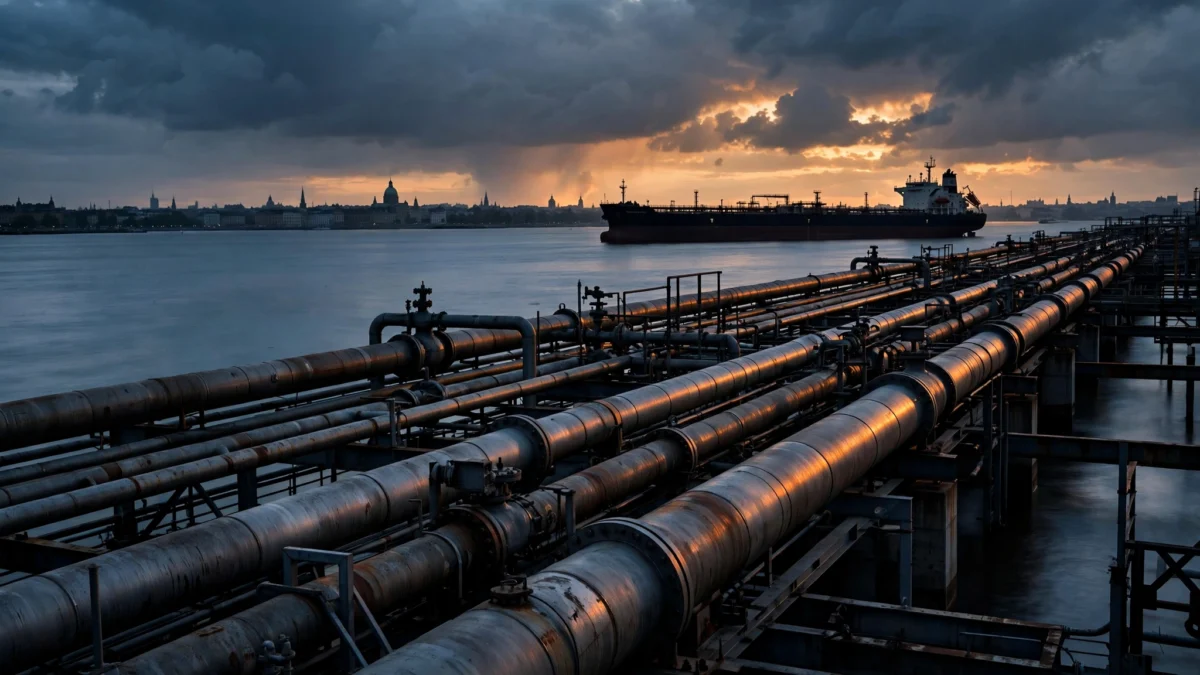
Russia said on Monday that European Union countries have purchased more than $320 billion worth of its hydrocarbons since 2022, despite the sanctions the bloc imposed over the war in Ukraine — a figure that immediately ignited a fierce argument about the credibility of Europe’s entire sanctions regime.
“For the period from 2022 to today, this figure amounts to $320.7 billion,” Russian Deputy Prime Minister for energy Alexander Novak said on television, according to France 24. “This is the volume of energy resource deliveries to European Union countries.”
Novak added that European countries purchased $21.3 billion worth of Russian hydrocarbons in the first nine months of 2026 alone. “In other words, despite sanctions-related restrictions, we continue to supply energy resources in certain areas for which exemptions have been granted,” he said.
He also predicted that Russian oil exports could reach their pre-war levels by the end of the year, according to reporting syndicated by Reuters.
The $320.7 billion figure does not include Russian output reaching Europe indirectly after being processed in third countries such as India or Turkey — which, like China, have massively increased their purchases of Russian crude oil since 2022 — according to multiple outlets carrying the announcement.
Sweden’s response: “We have imported a higher amount than we have given”
The number landed in the middle of a meeting of European Union foreign ministers in Luxembourg on Monday, where Swedish Foreign Minister Maria Malmer Stenergard seized on it to sharpen an argument Stockholm has been making for months.
She contrasted Moscow’s $320.7 billion figure with 218.7 billion euros — roughly $244 billion — in support the EU has sent to Ukraine since the start of the war. “We have imported a higher amount to the EU countries than we have given support to Ukraine,” Malmer Stenergard said as she arrived at the meeting, according to reports.
She then turned the figure into a pitch for the frozen Russian sovereign funds held by the bloc. “If we would use the frozen assets, we would almost double the total support that we have given to Ukraine,” she said. “That would be a game-changer, and a game-changer is exactly what Ukraine needs.”
The European Union has adopted numerous sanctions against Russia since the start of the war in 2022, yet many countries — including France — continue to source hydrocarbons, particularly liquefied natural gas (LNG), from Moscow, the outlets carrying the announcement noted. Several landlocked countries, including Slovakia and Hungary, also benefit from exemptions allowing them to purchase Russian oil transported via pipeline.
Trump’s counterattack and the diesel deal
The timing of Novak’s announcement was not accidental. European countries had criticised a deal announced on Friday under which the United States would import Russian diesel — and on Monday, US President Donald Trump hit back, using his own version of the arithmetic.
“The European Union paid Russia 250 Billion Dollars for Energy, and the Fake News Media doesn’t want to get near that story. I made the right choice for the American People — ALWAYS, AMERICA FIRST!,” Trump posted on Truth Social.
Novak, notably, said the American figure was “significantly” understated — the real number, he told Rossiya-24, is $320.7 billion, according to the Reuters-syndicated report.
Trump announced on Friday that Russia would immediately supply more than 300,000 metric tons — about 2.25 million barrels — of diesel to US and global markets, with another 500,000 tons in November and a further 1 million tons “immediately thereafter,” according to the same report. That is less than a day’s supply for the US transport sector alone, which uses around 2.94 million barrels per day, according to US Energy Information Administration data.
Novak said Russian diesel exports could exceed the volumes Trump announced. He also said that under the deal, Russian diesel supplies would partially balance global supply and demand. “We are already seeing this effect, including in global diesel markets, where prices have fallen by around five to six percent,” he said.
Soaring US diesel prices have been hurting American truckers and farmers, and have become a political concern ahead of the US midterm elections on November 3, the report noted. Trump’s envoys told Ukrainian officials last Friday that the Russian diesel deal was part of an effort to draw Russia back to negotiations after previous efforts to launch sustained talks to end the war failed, three people familiar with the meeting told Reuters.
The deal has triggered a backlash from some US lawmakers, who say it will give Moscow cash to pursue its war without forcing Russian President Vladimir Putin to make concessions. Ukrainian President Volodymyr Zelenskiy has criticised the deal as a reversal of years of Western policy aimed at isolating Russia’s economy. Zelenskiy said on Monday that Russian strikes against at least six energy targets during its latest wave of deadly airstrikes across Ukraine showed Moscow had no interest in an energy ceasefire.
How the purchases survived the sanctions
The persistence of Russian energy flows into Europe is not a mystery — it is a matter of documented exemptions and carve-outs built into the sanctions architecture itself.
France and other EU states have continued buying Russian LNG, which remained largely outside the strictest sanctions. Landlocked countries such as Slovakia and Hungary received explicit exemptions to keep receiving Russian oil through pipelines. And Novak’s $320.7 billion figure excludes the growing gray flow of Russian crude refined in India or Turkey and re-exported as finished products — a trade that has boomed since 2022 and that no sanctions regime has yet managed to choke off.
In short, the money kept moving through three channels: the legal (exemptions), the structural (LNG carve-outs), and the indirect (third-country refining).
Analysis: Why It Matters
This is a story about arithmetic being deployed as a weapon — and the uncomfortable part is that the arithmetic, as far as it goes, is Europe’s own.
Start with the figure itself. $320.7 billion comes from Moscow, from a televised interview with the deputy prime minister in charge of energy. It is not an independently audited number, and treating it as gospel would be naive: Russia has every incentive to maximise the figure, to sow division between Washington and European capitals, and to advertise that its energy leverage survived four years of sanctions. But the order of magnitude has been broadly consistent with Western estimates of Russian energy revenues for years. The embarrassing part is not that Moscow says it — it is that the broad picture was already known, and largely unaddressed.
The real sting is Stenergard’s comparison. She did not dispute Novak’s number; she weaponised it for her own cause. “We have imported a higher amount than we have given support to Ukraine” is a line designed to make EU foreign ministers squirm in their Luxembourg seats — and to drag the frozen-assets debate back to the top of the agenda. The frozen Russian sovereign assets question has been circling for years: seizing them and using them for Ukraine would be legally contentious, economically risky, and diplomatically explosive. Sweden’s “game-changer” framing tries to convert the embarrassment of the $320.7 billion into momentum for that decision.
Then there is the Trump angle, which turns the whole episode into a two-front argument. European governments criticised the US diesel deal as funding Moscow’s war machine — a defensible position. But Trump answered with a number of his own: $250 billion. Novak corrected it upward to $320.7 billion, and in doing so handed Trump the perfect rebuttal: Europe lecturing Washington about buying Russian energy while Europe itself bought $320 billion of it. The irony cuts both ways. Trump’s diesel deal does fund Moscow, as his congressional critics say; Europe’s LNG purchases do too. Both sides are standing on moral high ground that the ledger does not support.
The deeper issue is what the number says about sanctions as a strategy. The sanctions regime against Russia was designed to impose costs without imposing pain on the sanctioners — the exemptions for LNG, for pipeline oil to landlocked states, for “certain areas” in Novak’s phrase, were political necessities to keep the coalition together. Four years later, the coalition is still together, but the ledger now shows the cost asymmetry that critics predicted: Moscow collected hundreds of billions while Kyiv received less than three-quarters of that in aid. That gap is the real story, and it explains why the frozen-assets debate keeps returning. If sanctions cannot stop the money flowing to Moscow, Europe’s only remaining lever over that money is the part it has already seized.
What to watch is whether Stenergard’s push moves the needle. The Luxembourg meeting produced rhetoric, not decisions. The frozen-assets proposal faces resistance from the countries that hold the bulk of the funds and fear the legal and financial precedents. And Novak’s promise that Russian oil exports will return to pre-war levels by year-end — if fulfilled — would mean the sanctions era’s defining economic achievement, the squeezing of Russia’s energy revenues, is effectively over.
Finally, note the diesel price detail: Novak’s claim that global diesel prices have already fallen 5 to 6 percent on the back of the US deal. If true, it gives Trump a tangible, pre-midterm win to point at — lower pump prices — and makes it politically harder for either Washington or European capitals to walk the deal back, whatever their moral objections. Energy, as always, is the vote-getter that sanctions theory cannot beat.
What to Watch Next
- The EU foreign ministers’ follow-through: Whether Stenergard’s Luxembourg intervention produces any concrete movement on frozen Russian assets, or fades into the long record of frozen-asset rhetoric.
- Novak’s export forecast: Whether Russian oil exports actually reach pre-war levels by the end of 2026, as Novak predicted — the key test of his sanctions-busting narrative.
- The diesel shipments: Whether the first 300,000 metric tons of Russian diesel arrive on schedule, and whether global diesel prices sustain the 5–6 percent fall Novak claimed.
- The energy ceasefire: Whether Zelenskiy’s charge — that Monday’s strikes on at least six energy targets prove Moscow has no interest in Trump’s “energy ceasefire” — is confirmed by further overnight attacks.
- European LNG purchases: Whether France and other LNG buyers announce any reduction plans under the pressure of the $320.7 billion headline, or quietly continue.
Sources
- France 24 (AFP): Europe paid Russia US$320b for energy while backing Ukraine, Moscow says
- Reuters (via Devdiscourse): Russia says its diesel exports may exceed volumes announced by Trump
- Sweden Herald: Russia has supplied Europe with energy since 2022, Novak says
- NPR (via WEKU): Trump’s diesel deal with Putin angers Europe
- USAfricaOnline: Russia Reports $320 Billion in Hydrocarbon Sales to Europe Since 2022

About the Author — Abdul Mannan
Related Articles
Drones Hit Two Merchant Ships in the Black Sea Off Bulgaria, Sinking One as Sofia Turns to NATO and the EU
Bulgaria's prime minister says drones hit two merchant ships in the Black Sea on Tuesday, sinking one and…
IMF Lifts Global Growth Forecast to 3.1% on AI Boom as G24 Warns Debt Crisis Is Choking Developing Nations
The IMF has nudged up its 2026 global growth forecast to 3.1% as AI investment blunts the energy…
Britain Sanctions Two Iranian Nationals and Summons Tehran’s Envoy After Blaming IRGC for RAF Fairford Terror Plot
Prime Minister Andy Burnham told Parliament the suspected terror plot near RAF Fairford was "highly likely" coordinated in…