She Left the Most Powerful Chair in Europe to Speak: Christine Lagarde, the Euro, and the Price of Silence

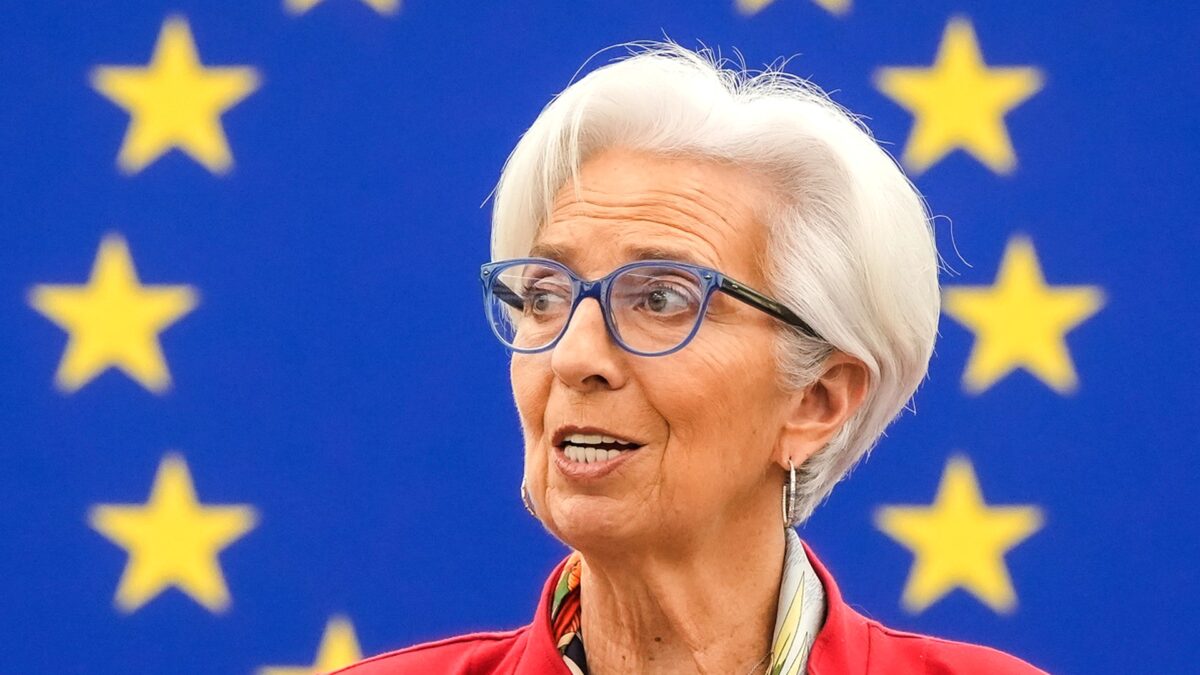
What does it cost a woman to keep silent for seven years? Not in money. In the other currency, the one no central bank can print: the right to say what she actually thinks. On Thursday, 29 October 2026, in Frankfurt, Christine Lagarde answered that question in the plainest language a central banker is ever allowed to use. She was leaving, she said, because she wanted “the freedom of speech, the freedom of expression and the freedom to engage on matters that are not monetary policy matters.” She had guarded the euro through a pandemic, a war in Europe, and the worst inflation shock in a generation. And now, with about nine months of her term still to run, she was walking away from the most powerful chair in European finance so that she could speak. You should sit with that for a moment before you reach for the market reaction. A woman who had everything to lose by talking decided that silence had finally become the greater risk.
I have watched powerful people resign before. Usually they dress the departure in gratitude and leave the truth to be guessed at between the lines. Lagarde did something rarer. She named the cage. “We have an obligation of neutrality, we comment on the situation with the focus on monetary policy,” she told the press conference, calling that obligation “the price we pay for being independent.” Then she added the sentence that will follow her out of Frankfurt and into whatever she does next: “I’m interested in the truth, and I see the truth being very often damaged, contradicted by misrepresentation.” She did not elaborate. She did not need to. In a year when every screen in Europe seems to carry a louder lie than the one before it, a seventy-year-old lawyer stood up and said, in effect, that she could no longer afford to be neutral about the damage. There are things, she said, that she feels she should say, and she cannot say them from where she sits. “Whether people will listen or not is another story.” That is not the language of a retirement. That is the language of a witness who has decided to testify.
Do not mistake this for a small personnel story. The European Central Bank sets the price of money for twenty-one countries and more than 350 million people. Its president leads the Governing Council that decides what a mortgage costs in Madrid, what a factory loan costs in Milan, what a government must pay to borrow in Paris. When that chair empties early, in the middle of a rate-hiking cycle, while French borrowing costs are breaking twenty-four-year records and an oil shock is running through every petrol pump on the continent, it is not a footnote. It is a crack in the one institution Europe built to be above politics — and the crack appeared precisely because politics would no longer stay outside the door.
The Morning Frankfurt Learned She Was Going
The announcement itself was almost indecently brief. In the morning, before the ECB’s rate decision, the bank said Lagarde had informed the Governing Council and the President of the European Council, António Costa, that she would step down on 7 February 2027. Her eight-year term, which began on 1 November 2019, was due to run until the end of October 2027. Costa said the process to appoint her successor would be initiated that same day and would proceed “without delay.” The Governing Council, we are told, thanked her warmly and gave her a long standing ovation as it met to set interest rates. In a video message she said it had been “a great pride and a huge privilege” to serve, and that she left “with a sense of good work done and an ECB that is fit for the future.” She was wearing two plasters on her face, she explained, after a small surgery earlier in the week, and she urged viewers to get their skin checked regularly. It was a small, human detail, and it stayed with me: the most formidable woman in European finance, announcing the end of her tenure, pausing to tell strangers to look after themselves. Power, at its best, has always remembered that it is exercised over bodies, not abstractions.
Hours later, the ECB held its deposit rate at 2.5 per cent. The decision was unanimous, though Lagarde said the Council had debated whether a rise was appropriate. Euro area inflation had reached 3.8 per cent in September, its highest since September 2023, with energy prices up 18.8 per cent on the year as the war involving Iran drove oil prices higher. A quarter-point rise had already been delivered in September, taking the deposit rate to 2.5 per cent, and markets were widely expecting a hold. What made the day historic was not the rate. It was the resignation that arrived on the same morning, and the reason Lagarde gave for it in the afternoon. “There is never a good time to leave,” she said. She chose February all the same, and she chose it, by her own account, so that she could speak. The markets, for once, understood the order of importance. As one economist put it that day, the resignation was the bigger story than the widely expected decision to leave rates on hold. Money can wait a month. A voice that has been held for seven years cannot.
The Price of Independence Is Silence
You must understand what independence costs, or you will misunderstand everything that follows. A central bank is independent so that no politician can order it to print money before an election, debase the currency to pay for promises, and leave the poorest to pay in higher prices. That independence is a kind of sacred trust, and like every sacred trust it demands a sacrifice. The sacrifice is the voice of the people who hold it. They may speak about inflation, about transmission, about the medium-term target. They may not campaign, they may not take sides, they may not warn the public in plain language when they see their own country drifting towards a cliff. Lagarde called this “the price we pay for being independent,” and she paid it for seven years without public complaint. What changed? She did not say, and a columnist should be careful not to put words in her mouth. But the facts around her tell their own story, and you, reader, are entitled to hear them.
Her own country is in fiscal distress that no amount of careful language can disguise. France’s ten-year borrowing cost crossed 5 per cent in October, for the first time since 2002. The premium investors demand to hold French bonds over German ones reached 177 basis points on 22 October, according to LSEG data, its widest since late 2011 — the dark heart of the last euro crisis — and it was still holding at around 154 basis points on the day Lagarde announced her departure. The French finance ministry has projected public debt at 119.3 per cent of GDP in 2026, rising further in 2027, with a deficit of about 5.4 per cent of GDP, far above the European Union’s 3 per cent ceiling. An independent report commissioned by the French government warned in July that, without corrective action, the deficit could widen towards 7 per cent by 2030 and debt could pass 130 per cent of GDP. A fragmented parliament has struggled to pass a budget at all. And all of this is unfolding months before a French presidential election in April and May 2027 in which polls cited by Reuters put Marine Le Pen, a politician hostile to European integration, in front. Lagarde, a Frenchwoman who has spent her life defending the European project, was bound by neutrality to watch this from Frankfurt and say nothing beyond monetary policy. Tell me honestly: how long would you last?
There is a second pressure, quieter but just as real. The ECB is not only fighting inflation. It is fighting it with one hand while the bond market tightens financial conditions with the other. Higher French yields push up borrowing costs for households and businesses across the euro area, and Lagarde herself has said that will curb both growth and inflation. The bank has a backstop, the Transmission Protection Instrument, designed to counter unwarranted, disorderly market moves. But the word that matters there is “unwarranted.” If a country’s borrowing costs rise because its parliament cannot agree a budget and its debt keeps climbing, is that unwarranted, or is it the market doing exactly what markets do — pricing a risk that politicians refuse to price themselves? The ECB cannot rescue a government from its own arithmetic without becoming the government. That is the trap Lagarde leaves behind, and it will be her successor’s trap too. She chose to name a different trap instead: the trap of a public conversation in which truth is, in her words, “very often damaged, contradicted by misrepresentation.” I read that as a warning to all of us, not only to Frankfurt. When the people who know the most are forbidden to speak plainly, the people who know the least speak the loudest. That is how nations lose their bearings.
A Lawyer at the Head of the Tribe
Lagarde was never supposed to be here at all, and that is precisely why she mattered. Born in Paris on 1 January 1956, educated in law at Paris Nanterre and at Sciences Po Aix, she became the first woman to chair the international law firm Baker McKenzie, the first woman to serve as France’s finance minister in a G7 country, the first woman to lead the International Monetary Fund, and the first woman — and the first non-economist — to lead the European Central Bank. She took office on 1 November 2019, succeeding Mario Draghi, vowing to focus on climate change, on the promotion of women, and on better communication from a bank that had often spoken only to markets. Earlier this year, she admitted she had believed she would serve for five years rather than eight when she agreed to the job with President Emmanuel Macron. History had other plans. Within months of her arrival, the pandemic closed Europe. Within two years, Russia invaded Ukraine and energy prices exploded. Within five, a new war involving Iran sent oil surging again. She governed through the worst pandemic in a century, the bloodiest war in Europe since 1945, the biggest inflation shock in a generation, and a trade war with the United States. No ECB president has faced a crueller sequence. None, I would argue, has faced it with less of the usual armour.
She once described economists as a “tribal clique,” a provocation she later softened by saying she hoped to join the tribe. Reuters, in its profile of her departure, put the paradox beautifully: she was an outsider who showed that political diplomacy could steer a central bank through historic shocks, but whose early departure was a final reminder of her political instincts. Unlike Draghi, whose top-down style embittered some of his hawkish northern colleagues, Lagarde worked to build consensus among the twenty-one national central bank chiefs on the Governing Council. She repaired rifts. She listened. And she was willing to wade into politics when silence would have been safer — in January, at Davos, she walked out of a dinner during a speech by the United States Commerce Secretary, Howard Lutnick, that criticised Europe, an episode Reuters noted as a sign of fraught transatlantic relations. A central banker is supposed to be a thermostat, not a weather vane. Lagarde understood that a thermostat that never registers the storm outside the house is not independent. It is merely deaf. Her critics will say she was too political. Her defenders will say she was political in exactly the way the job required, because the euro is not a technical device. It is a political promise made in metal and paper, and promises need guardians who understand politics as well as arithmetic.
Here the history-as-mirror that I have always trusted as a columnist becomes unavoidable. The ECB was created in 1998 as a compromise so delicate that Germany and France, the two pillars of the union, were deliberately sidelined for its first presidency, which went to the Dutchman Wim Duisenberg. Duisenberg left after five years, citing his age, in a political understanding struck at the birth of the monetary union; his successors, Jean-Claude Trichet and Mario Draghi, served full eight-year terms. Lagarde is only the second president in the bank’s twenty-eight-year history to resign early. That matters, because institutions live or die on the stories told about their beginnings. The ECB was founded on the German fear of inflation — the Weimar ghost that still walks through every Bundesbank corridor — and on the French hope that a shared currency would bind Europe so tightly that war between its members would become unthinkable. Every president since has had to hold those two fears in balance. Lagarde held them through shocks her predecessors never imagined. When she leaves, she leaves a bank that is, in her words, “fit for the future.” Whether Europe is fit for the future its bank must now serve is a question no interest rate can answer.
The Monster She Was Sent to Fight
Do you remember March 2020? I do. The streets emptied, the hospitals filled, and the language of economics suddenly sounded like the language of triage. Lagarde blundered in those first weeks, saying it was not the ECB’s role to “close the spread” in sovereign debt markets — a comment that roiled the Italian debt market and taught her, brutally and publicly, how much weight a single sentence from Frankfurt carries. She corrected the mistake within days, and the ECB launched its Pandemic Emergency Purchase Programme, initially worth €750 billion, to lower borrowing costs and increase lending across the euro area. It was, in effect, her “whatever it takes” moment, the echo of Draghi’s famous vow in July 2012, when he promised the ECB would do whatever was necessary within its mandate to preserve the euro, adding, “believe me, it will be enough.” Draghi’s words calmed markets without the bank having to spend a single cent under the bond-buying programme that followed. Lagarde’s programme spent very real money, because a pandemic is not a market panic. It is a plague. And plagues do not respond to rhetoric. They respond to resources, delivered fast, without apology.
Then came the monster. Lagarde once called inflation “a monster that we need to knock on the head,” and the monster arrived in full force after the pandemic. Euro area inflation peaked at 10.6 per cent in October 2022, driven by post-pandemic supply strains and by Russia’s war against Ukraine, which sent energy prices soaring. The Governing Council responded by raising its policy rate by 450 basis points between July 2022 and September 2023, taking the deposit rate to 4 per cent, and inflation came down steadily from its peak. In June 2024 the bank began lowering rates again. The disinflation was real, but it was never complete, and it was never only the ECB’s doing: energy prices fell, supply chains healed, and the lags of monetary policy are long. Now the monster has stirred again. Inflation reached 3.8 per cent in September 2026, energy inflation alone ran at 18.8 per cent, and the ECB raised rates by a quarter point in September before holding at 2.5 per cent in October, warning that risks to inflation were tilted to the upside and risks to growth to the downside, while signalling that another increase, potentially as soon as December, remained likely. The bank, in other words, is caught exactly where Lagarde’s critics always said a political president would be caught: between a fire that needs water and a house whose foundations are shaking. Raise rates too fast and you crush growth and punish France. Hold too long and you let the monster learn that it can return whenever oil spikes. There is no clean answer. There never was. There is only judgement, exercised in public, by people who will be blamed either way. That is why the choice of the next president matters more than any single rate decision, and why Lagarde’s timing — leaving before the French election, leaving while a successor can still be chosen by the leaders now in office — is itself an act of judgement, whether you approve of it or not.
France Is the Shadow in the Room
Let us speak plainly about France, because Lagarde’s neutrality forbade her to do so, and because you deserve the plain version. A nation that borrows at more than 5 per cent for ten years, whose debt is projected at nearly 119 per cent of national output, whose deficit runs at more than double the European ceiling, and whose parliament cannot agree on how to close the gap, is not facing a technical problem. It is facing a moral one: the refusal, across the political spectrum, to tell voters the truth about what the state can afford. The French government has announced a €54 billion fiscal adjustment drive for 2027, aiming to bring the deficit down to 5 per cent of GDP. Economists warn that even that effort may not stabilise the debt, that delay until after the election would require ever larger adjustments later, and that interest payments alone are projected to climb from about €79 billion in 2026 towards €91 billion in 2027. These are not abstract numbers. Every euro spent servicing old debt is a euro not spent on a classroom, a hospital, or a pension. Every point added to the yield is a tax levied silently on every borrower in the country, from the smallest shopkeeper to the largest employer. And when French yields rise, they do not rise alone. They drag the whole euro area’s financing conditions tighter with them, which is why the ECB noted in October that conditions had tightened since September, with the potential to weigh on both prices and growth.
I think of the East India Company when I think of moments like this — not because the comparison is exact, but because history rhymes in the way power always does. A trading company became a government because nobody in London wanted to pay the price of governing India honestly, and so the bill was presented, years later, in blood and bankruptcy. A currency union becomes a fiscal union in the same slow, dishonest way: leaders promise the benefits of shared money without the shared responsibility of shared budgets, and the bill arrives, years later, in bond spreads and broken parliaments. France is not a colony, and the ECB is not a company. But the pattern is familiar to anyone who has studied empires, including the empire of paper that Europe built after the war. Promises deferred do not disappear. They compound. Lagarde understood this better than most, because she had sat on both sides of the table: as the French minister who had to defend a national budget, and as the European banker who had to defend a shared currency against national budgets. She could not say, from Frankfurt, what she plainly believed about France’s arithmetic. Now she can. Watch what she says in the months after February. It may tell you more about France’s future than any budget speech.
The Succession Is a Treaty in Miniature
And so the horse-trading begins, and you should not be cynical about it, because horse-trading is how Europe has always governed itself. Under Article 283 of the Treaty on the Functioning of the European Union, the European Council, in its euro area composition, appoints the ECB president on a recommendation from the Council of the European Union, after consulting the European Parliament and the Governing Council. In practice, agreement between Germany and France has always been decisive, and the choice must command a qualified majority: at least fifteen countries representing more than 65 per cent of the bloc’s population. The frontrunners, by every serious account, are two former national central bank governors: Klaas Knot of the Netherlands, who led De Nederlandsche Bank from 2011 to 2025 and is regarded as the more hawkish of the pair, and Pablo Hernández de Cos of Spain, who led the Bank of Spain from 2018 to 2024 and now serves as general manager of the Bank for International Settlements, the central bankers’ bank in Basel. A Bloomberg survey of economists in October ranked Hernández de Cos first. Spain has never held the ECB presidency. The Netherlands held the first. Germany, remarkably, has never held it at all, and its Bundesbank president, Joachim Nagel, is also in the conversation, as is Nadia Calviño, president of the European Investment Bank. Do not be surprised if an outsider emerges. The ECB has surprised us before.
The negotiation will not be about one chair. It will be about three. Isabel Schnabel, the German executive board member who oversees market operations, leaves on 3 January 2027, almost a year early, to become financial counsellor and director of the monetary and capital markets department at the IMF. Chief economist Philip Lane’s term expires in May 2027. Lagarde’s early departure means three of the six executive board seats will turn over within months, and European leaders are widely expected to settle them as a package, balancing north and south, hawk and dove, large state and small, at the European Council summit of 17 and 18 December, if not before. That is why the calendar matters, and why Lagarde’s February date is not an accident. By leaving early, she allows a successor to be chosen while Emmanuel Macron — who is not eligible to stand again, and whose centrist camp is expected to lose ground — is still in the Élysée Palace, rather than leaving the choice to a successor government that might include the far right. The Financial Times reported that this timing was understood in European capitals; the Guardian’s economics commentators put it bluntly, saying the European Union was trying to guard itself against the risk that Marine Le Pen might win. You may call that prudent. You may call it undemocratic. But do not call it apolitical, because nothing about choosing the guardian of a currency shared by twenty-one democracies was ever apolitical. The only question is whether the politics is done openly, by leaders accountable to voters, or quietly, by markets pricing in their own verdicts while politicians pretend otherwise.
There is one more destination whispered in every corridor, and I will report it as a whisper, not a fact. Months of speculation have linked Lagarde to the chair of the World Economic Forum, the Davos gathering, after its founder Klaus Schwab said she had considered leaving the central bank to lead the forum. Schwab stepped down last year after being accused of financial and ethical misconduct, which he denies. Reuters reported in October that the forum’s board could name its new chair as early as its 2 November meeting, though no decision had been taken. Lagarde has ruled out standing for the French presidency, telling the newspaper La Croix last month that it would “not be a good idea.” A source familiar with the decision told Reuters she wanted greater freedom to engage in political matters in France and internationally, activities constrained by the ECB presidency’s neutrality requirements. I do not know where she will go. I know what she said she wants: the freedom to engage. Davos would give her a stage. French politics would give her a fight. A book, a lecture circuit, a foundation — any of them would give her a voice. The destination matters less than the diagnosis. A woman at the summit of global finance concluded that the summit was the one place from which she could not speak the truth as she saw it. That should frighten us more than any single succession.
Money Is a Promise. Who Keeps It Now?
And now, reader, I turn to you, because this column was never really about Frankfurt. It was about the promise in your pocket. Money is the strangest promise human beings ever invented: a piece of paper, a number on a screen, worth something only because we all agree to pretend, together, that it is worth something. That pretence holds only while the institution behind it is trusted, and trust holds only while the people behind the institution are believed to be telling the truth, even when the truth is uncomfortable. When inflation runs at 10.6 per cent, the promise thins. When it runs at 3.8 per cent and rising, the promise frays at the edges. When the guardian of the promise resigns because she cannot speak freely about the forces fraying it, the promise itself asks a question of all of us: who will keep it now, and on what terms?
I have spent my life as a broadcaster and a writer watching institutions promise more than they can deliver, and watching ordinary people pay the difference. The shopkeeper in Faisalabad who watches the price of cooking oil double does not need a lecture on the deposit facility rate. The mother in Marseille who watches her rent rise faster than her wages does not need a press conference. They need the promise to hold. And the promise holds only if three things remain true at once: that governments live within their means, that central banks tell the truth about prices, and that voters are told the truth about both. Break any one of the three, and the other two will follow, slowly at first, then all at once. Europe is discovering this in real time, and so, in different ways, are we all. The euro’s crisis is not only a European crisis. It is a parable for every country that has mistaken borrowing for wealth, and silence for stability.
Lagarde leaves with her reputation intact and her work unfinished, which is the condition of every honest public servant. She steered the euro through a pandemic without a recession of the kind so many feared, she fought inflation down from double digits without breaking the currency union, and she rebuilt a measure of unity in a council that had been fractured by her predecessor’s methods. She also made mistakes, she also moved too slowly at first, and she also leaves at a moment when her own country needs the very steadiness she embodied. History will judge the balance, as history always does, without asking our permission. But history should also record the sentence she spoke on her last working day as the most important central banker in Europe: that truth is being damaged by misrepresentation, and that she wants the freedom to say so. In an age of manufactured certainty, that is a confession of unusual humility. She did not claim to possess the truth. She claimed only the right to pursue it in public, without the muzzle of neutrality. That is a right every citizen already holds, and most of us surrender daily, for comfort, for safety, for applause. She surrendered the most powerful chair in Europe to reclaim it.
So I will end not with a summary, but with a question, the way a column should end when the future is still unwritten. When the next president of the ECB takes the oath of neutrality in February, and the Governing Council applauds, and the markets move on to the next data release, who will be left to say the things that neutrality forbids? Will it be Lagarde, from whatever platform she chooses? Will it be the voters of France, in April, speaking in the only language that politicians cannot ignore? Or will it be none of us, because we have grown so accustomed to managed language that we no longer recognise the sound of a person speaking plainly? Money, remember, is only a promise. Promises are kept by people who are free to tell the truth about them. Take away that freedom, and you may keep the currency for a while. You will lose the thing the currency was invented to protect: the trust of ordinary people that tomorrow will resemble today, that their savings will still buy bread, that their work will still mean something. Christine Lagarde understood that, and she chose speech over silence. The rest of us should ask ourselves, tonight, what we have chosen — and what it has cost us.
Sources & References
Reuters, “ECB President Lagarde resigns effective Feb 7”, 29 October 2026. Reuters, “Christine Lagarde: The outsider who led the ECB her way”, 29 October 2026. Reuters, “ECB’s Lagarde resigns early so she can speak freely on topics beyond monetary policy”, 29 October 2026 (press-conference quotations). The Guardian, “Europe’s central bank chief Christine Lagarde to step down nine months early”, 29 October 2026. European Central Bank, “Monetary policy decisions”, 10 September 2026 (deposit rate 2.50 per cent). Seoul Economic Daily, “ECB Holds Rate at 2.5% as French Bond Turmoil Offsets Inflation”, 29 October 2026 (inflation 3.8 per cent, energy 18.8 per cent). Morningstar / Dow Jones, “Euro Drops to 17-Month Low Against Dollar, Eurozone Bond Yields Fall After ECB Holds Rates”, 29 October 2026 (French–German spread 177 basis points on 22 October, LSEG). Bloomberg via Moneyweb, “Lagarde to leave ECB early, igniting race to replace her”, 29 October 2026 (successors, French bond premium, WEF). European Central Bank, “Economic developments and monetary policy in the euro area”, 6 November 2024 (inflation peak 10.6 per cent, October 2022; 450 basis points, July 2022–September 2023). Eurostat, “Annual inflation up to 10.6% in the euro area”, November 2022. ING Think, “ECB: Lagarde’s ‘whatever it takes’”, March 2020 (PEPP, €750 billion). Bank for International Settlements, “A retrospective on euro area monetary policy during and after the recent financial crisis” (Draghi, July 2012). Pictet, “The ECB at 25” (“close the spread”, PEPP, inflation as a “monster”). Reuters, “France faces debt surge unless spending curbed, report says”, 15 July 2026 (debt and deficit projections). Natixis CIB, “France at a crossroads”, October 2026 (deficit 5.4 per cent, €54 billion plan). Wikipedia, “Christine Lagarde” (biographical dates and offices held; cross-checked against Reuters and Britannica/Concordia profiles). Wikimedia Commons, “File: Christine Lagarde, 2023.jpg” (featured image source and licence; see caption).

About the Author — Abdul Mannan
Related Articles

The Day Data Became Oxygen: What Jio’s $131 Billion Debut Really Bought — and What It Cost
Jio Platforms opened at Rs 1,358 against an issue price of Rs 1,119 and closed at Rs 1,419,…
Ras Tanura Burns in the Headlines: One Missile, One Refinery, and the Price the Whole World Pays
On 27 October 2026 the Houthis said they had struck Ras Tanura, Saudi Arabia's largest refinery, and Brent…
Work Hard in Silence: Harry Kane, the Ballon d’Or, and England’s 25-Year Wait
Harry Kane won the 2026 Ballon d'Or after scoring 73 goals in 65 games for club and country,…