Work Hard in Silence: Harry Kane, the Ballon d’Or, and England’s 25-Year Wait

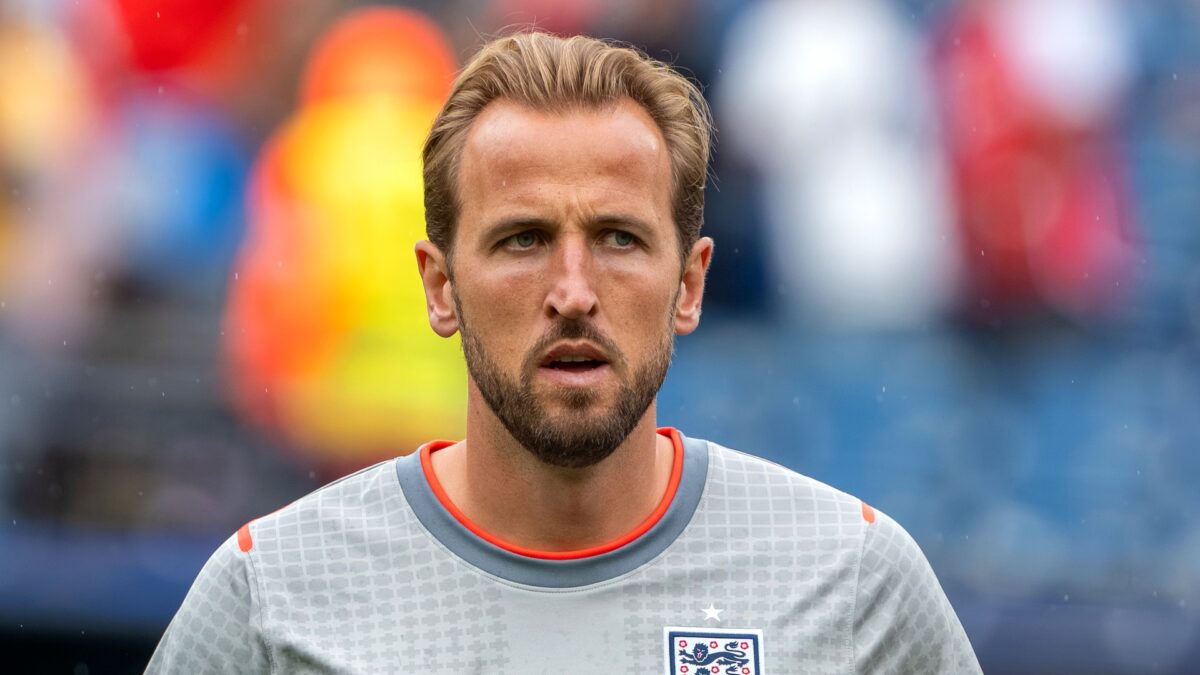
What do you do with a dream that everyone else has already buried?
Not a small dream, mind you. Not the kind you whisper to yourself on a cold morning and then forget by lunchtime. I mean the large, dangerous kind — the dream that makes other people smile politely and change the subject. The dream of a boy who was told, at eight years old, that he was not quite athletic enough. The dream of a young man who was packed off, again and again, to clubs most people could not find on a map, to prove himself in front of crowds that had come to watch somebody else. The dream of a striker who scored goals for a decade and was rewarded with a nickname that was really an insult: the best player never to win anything.
On Monday night, in a rain-slicked London, that dream walked onto a stage at the London Palladium and had a golden ball placed in its hands by Ronaldo — the Brazilian Ronaldo, the original, twice a winner of the prize himself. And Harry Kane, thirty-three years old, captain of England, striker of Bayern Munich, stood there almost speechless, and said the truest thing any winner has said in years. He said it was beyond his wildest dreams. He said his heart was beating fast. He said he only hoped that his journey — the loans, the rejections, the long fight to the top — might give some other boy or girl, somewhere, the courage to believe that anything is possible.
I have watched a great many coronations in my life, in sport and outside it. Most of them are theatre. This one was something rarer. It was a verdict — not only on one extraordinary season, but on patience itself. And patience, my friend, is a subject this world has almost forgotten how to speak about.
Seventy Years, Five Englishmen
Understand first what this prize is, and why the room in London mattered so much. The Ballon d’Or was created in 1956 by France Football, and it is voted for by journalists from around the world — one hundred of them, in this year’s reckoning — who are asked to name the finest footballer on the planet over the past season. It is not a popularity contest decided by clicks. It is not a computer’s cold arithmetic. It is the judgement of people who watched, week after week, and were asked to say who was best. That is why it endures when other awards fade. A golden ball, held up in a darkened theatre, still means something, because the people who gave it had to look you in the eye while they did it.
This year’s ceremony was the seventieth. And for the first time, it was held in London rather than Paris — a deliberate homecoming, because the very first winner, in 1956, was an Englishman: Sir Stanley Matthews, the wizard of the dribble, a man who played top-flight football until he was fifty and was still beating defenders young enough to be his grandsons. London was chosen to honour him. How fitting, then, that on the night English football came home to its own beginning, an Englishman should win the prize again — for the first time in a quarter of a century.
Count them, because the list is short enough to hold in one hand, and every name on it is a chapter of history. Matthews in 1956. Sir Bobby Charlton in 1966, in the year England won the World Cup at Wembley, the year the whole country still measures itself against. Kevin Keegan in 1978 and 1979, the working-class hero with the perm and the ferocious will, who won it twice and carried English football on his shoulders into Europe. Michael Owen in 2001, the boy wonder of Liverpool, the last Englishman to hold the ball aloft — until Monday night. And now Harry Kane, the fifth.
Twenty-five years. Think of everything that has happened in those twenty-five years. Think of the empires that rose and fell inside this one sport. For the best part of two decades, the Ballon d’Or belonged, in practice, to two men — Lionel Messi, with eight wins, and Cristiano Ronaldo, with five — two giants so vast that they bent the entire history of the award around themselves. Generations of magnificent footballers came and went without ever touching the prize, because they had the misfortune to be alive at the same time as the two greatest players most of us will ever see. To win it in the years after them is not to inherit a lesser prize. It is to win it in an age when the throne is finally open again, and every hungry young genius on earth is sprinting for it — Kylian Mbappé, Lamine Yamal, Erling Haaland, all of them. Kane did not win a vacant crown. He won a contested one. He finished ahead of Mbappé, second, and Yamal, third, and the margin of that achievement should not be underestimated.
The night carried grief as well as glory. A tribute was paid to Kevin Keegan, who died in the summer, and I found myself thinking about the strange symmetry of it: Keegan, the man who won the prize by sheer force of refusal to accept his limits, being honoured on the very night another Englishman won it by the same refusal. History, as I have written before in these columns, does not repeat itself. It rhymes. It leans across the decades and whispers to the living: this has been done before, and it can be done again.
The Boy They Sent Away
Harry Edward Kane was born on 28 July 1993 in Walthamstow, in north-east London — not far, in spirit or in miles, from the streets where English football has always renewed itself. He began, as so many London boys do, in the academy of a great club. Arsenal took him at eight years old. And then, after a single season, Arsenal let him go. The story told ever since — and Kane himself has never hidden from it — is that he was judged a little too chubby, a little too slow, not athletic enough for the future the coaches imagined. He went back to his local club, Ridgeway Rovers. He had a brief trial at Watford. And then Tottenham Hotspur took him at eleven, and the long apprenticeship began.
But listen to me carefully, because this is the part of the story that matters most, and it is the part the highlight reels always skip. Tottenham did not hand him anything. Between 2011 and 2013, they sent him away four times: to Leyton Orient in the third tier, where he scored five goals in eighteen games and learned what a Tuesday night in a cold stadium feels like; to Millwall, where he scored seven in twenty-two and was named the club’s Young Player of the Year; to Norwich City, where a broken foot cut his loan almost before it began; and to Leicester City, where he scored twice in thirteen games and watched, from the bench, another young striker named Jamie Vardy beginning his own improbable climb. Four clubs. Four dressing rooms. Four sets of teammates who had never heard of him and owed him nothing.
Most boys do not survive that. Most boys conclude, reasonably enough, that the system has delivered its verdict, and they find another life. Kane did something stranger. He treated every rejection as a classroom. He came back to Tottenham, and when the Argentine coach Mauricio Pochettino arrived in 2014 and began to trust young players, Kane was ready — not because he had been protected, but because he had not been. In the 2014–15 season he scored thirty-one goals in all competitions, was named the PFA Young Player of the Year, and made his England debut in March 2015 against Lithuania, scoring seventy-nine seconds after coming on. Seventy-nine seconds. As if all those years of waiting had been compressed into a single breath.
What followed is the record book, and I will not insult you by pretending the record book is the whole story — but you must know its outlines, because they explain the scale of Monday night. Kane became Tottenham’s all-time top scorer, with 280 goals, passing the great Jimmy Greaves. He became England’s all-time top scorer. He finished as the Premier League’s second-highest scorer in history, with 213 goals. He won three Premier League Golden Boots. He captained England to a World Cup semi-final in 2018, winning the Golden Boot there, and to the final of the European Championship in 2021, England’s first major final since 1966. And through all of it, one accusation followed him like a shadow: that he had never won a major trophy. That the goals were magnificent, but the cabinet was empty. That he was, in the cruel shorthand of the age, cursed.
I have always distrusted that word, “cursed”, when it is applied to a man who keeps showing up. A curse is something that happens to you. Kane’s trophy-less years were not a curse. They were a choice — the choice to stay loyal to the club that raised him, through managers and rebuilds and near-misses, including a Champions League final lost to Liverpool in 2019 — until, in the summer of 2023, he finally allowed himself to leave. He joined Bayern Munich for a Bundesliga-record fee, and the football world held its breath to see whether the move would break the spell or confirm it.
It broke it. In May 2025, Bayern won the Bundesliga, and Harry Kane, at thirty-one, lifted the first major trophy of his career. I remember the pictures of that night: Kane, grinning, beer-soaked, singing with his teammates, a man exhaling after a decade of holding his breath. People called it the end of the curse. I called it something else. I called it the first harvest of a very long sowing.
Seventy-Three
And now we come to the season itself — the season that forced one hundred journalists to write the same name at the top of their ballots. The numbers are so large that they risk sounding like a misprint, so let me lay them out slowly, the way you would count money on a table.
Seventy-three goals in sixty-five matches for club and country, with eight assists. Sixty-one goals in fifty-one matches for Bayern Munich alone — the most any Bayern player has ever scored in a single season, in a club whose history includes Gerd Müller himself, the greatest goalscorer Germany ever produced. Thirty-six goals in the Bundesliga, enough to win the scoring title for a third consecutive season. Twelve goals for England, including six at the 2026 World Cup, where he passed Gary Lineker to become England’s all-time leading scorer at the tournament. And he did it while collecting, on the same Monday night, the Gerd Müller Trophy for the season’s best striker — a double that left no room for argument.
But numbers, on their own, are a poor biography. What did those seventy-three goals do? They carried Bayern Munich to the Bundesliga title and the DFB-Pokal, the German Cup — Kane scored a hat-trick against Stuttgart in the cup final — and to the German Supercup as well. They carried Bayern to the semi-finals of the Champions League, where they fell by a single goal over two legs, 6–5 on aggregate, to Paris Saint-Germain. They carried England, at a World Cup played across North America, past the quarter-finals and into the last four, where they lost 2–1 to Argentina in the semi-final — and then, in the match nobody wants to play and everybody remembers, England beat France to finish third. Third place. England’s best finish at a World Cup since they won the whole thing in 1966. Sixty years of waiting, ended not with a trophy, but with a bronze medal that felt, to anyone who understands this country’s long relationship with disappointment, like the beginning of something rather than the end.
Consider, too, who he beat, because the quality of your rivals is the truest measure of your victory. Kylian Mbappé, the French phenomenon, finished second — the same Mbappé who became the World Cup’s all-time leading scorer during that same summer tournament, and whose season with Real Madrid was magnificent by any measure except the one that mattered. Lamine Yamal, the nineteen-year-old Barcelona genius who helped Spain win the World Cup itself, finished third, and took the young-player award for a third straight year. These are not ordinary rivals. These are the players who will dominate the next decade. Kane beat them not with novelty, not with a single magical night, but with the oldest weapon in football: relentless, remorseless, week-after-week excellence. His tally was nineteen goals higher than any other player in Europe’s top five leagues. Nineteen. That is not a margin. That is a statement.
And there is one more number I want you to hold onto, because it tells you what kind of footballer Kane has become. Eight assists. In a season in which he scored seventy-three times, he still created eight more for others. That is the signature of the mature Kane — the striker who learned, during those lean Tottenham years, to drop deep, to turn, to play the pass that splits a defence, to make his teammates better even when the ball never reaches his own feet. The young Kane was a finisher. The Kane of 2026 is a complete footballer: scorer, creator, captain, compass. His Bayern teammates spoke, in the days after the ceremony, of Michael Olise and Luis Díaz supplying him, of Jude Bellingham and Bukayo Saka doing the same for England. Kane himself was the first to deflect the praise towards them. “As much as this is an individual award,” he said, “I’ll give thanks to them, because it wouldn’t be possible without them.” That is not false modesty. That is a captain speaking the plain truth about a team game, and it is one of the reasons the award felt so right.
Let me also note, briefly, the other half of the evening, because it deserves its own moment in the light. The women’s Ballon d’Or was won for a third time by Alexia Putellas of Spain, who captained Barcelona to a quadruple of trophies before moving to England’s London City Lionesses in the summer. Three times she has now been named the best in the world. In any other week, that would be the story. This week, it is the proof of the depth of the ceremony: two champions, two long journeys, one golden stage. And Bukayo Saka, Kane’s England teammate, received the Sócrates Award for his charitable work — a reminder, on a night of individual glory, that football still knows how to honour what is done away from the cameras.
The Night the Internet Knew First
And yet — and here is the twist that makes this story belong unmistakably to our age — the ceremony very nearly did not happen the way it was supposed to. Hours before the winners were announced, the Ballon d’Or’s own official website published three separate articles, each naming a different winner: one for Kane, one for Mbappé, one for Yamal. Draft profiles, prepared in advance for each contender, had been released simultaneously by a publishing error, and screenshots flooded social media within minutes. The secret was out — or, rather, three contradictory secrets were out, and nobody knew which one to believe. The organisers scrambled to remove the articles and explain the mistake. The ceremony itself began half an hour late, delayed by rain and by the traffic choking the streets around the Palladium. There were even reports of scuffles outside the venue.
I confess I found this chaos strangely fitting. Because it is the perfect image of the world Kane has outlasted: a world that wants everything instantly, that leaks the ending before the story is told, that mistakes the spoiler for the knowledge. The internet knew three winners before the ceremony knew one. And in the end, the internet’s noise did not matter at all. What mattered was a man walking onto a stage, a Brazilian legend opening an envelope, and a room full of people rising to their feet and chanting a single name: “Harry! Harry!” You cannot leak a moment like that. You cannot spoil a life’s work with a content-management error. The golden ball was real, and it was heavy, and it was his.
There is a lesson in that farce for all of us, and it goes beyond football. We live in an age that has abolished waiting. We refresh, we scroll, we demand the result before the match is played. We judge a career by its worst afternoon and a person by their most awkward photograph. Harry Kane’s career is the opposite of all that. It is a rebuke to the age of instant judgement. It says: judge me at the end, not in the middle. Judge the whole harvest, not the first green shoot. Give the work time, and the work will answer you. The website leaked three names because the modern machine cannot bear suspense. Kane won because he could bear it for fifteen years.
What the Golden Ball Cannot Measure
Now, let me ask you the question I promised at the beginning, and answer it honestly. What do you do with a dream that everyone else has already buried?
You do what Harry Kane did. You do not argue with the people who buried it. You do not perform your pain for an audience. You go to Leyton Orient, and then to Millwall, and then to Norwich, and then to Leicester, and you learn your trade in places where nobody is watching. You come home. You wait for your chance. And when it comes, you are so ready that seventy-nine seconds is enough to announce yourself to a nation. And then you do the unglamorous thing, year after year: you score, you assist, you lead, you lose finals, you get up, you score again. You leave the club you love, at twenty-nine, because you understand that loyalty and ambition are not the same thing, and that a man may honour his past best by refusing to let it become his prison. You lift a trophy at thirty-one and weep with relief, and then you go and have the greatest season of your life at thirty-two. You never once, in all those years, become bitter. You never once become small.
That is why this Ballon d’Or matters beyond sport. It is not only a prize for goals. It is a prize for a way of living. The world is full of young people — and not only the young — who have been told, by some coach or boss or algorithm, that they are not athletic enough, not quick enough, not quite the finished article. The world is full of late bloomers, of slow starters, of people whose gifts do not photograph well at eighteen. Kane’s story is their charter. It says that the verdict delivered at eight years old is not the final verdict. It says that the loan spell in the lower leagues is not the end of the road but the road itself. It says that the most radical act in an impatient age is to keep working when nobody is applauding, because the applause, when it comes, will be all the sweeter for having been earned in silence.
Kane said it himself, in the hours after the ceremony, in a message he posted for the millions who follow him: “Work hard in silence. Let success be your noise.” Nine words. Nine words that contain the whole philosophy of his life, and, I would argue, the whole philosophy of any life worth living. I have spent a career writing about power, about treachery, about the Mir Jafars and Mir Sadiqs of this world — the men who take shortcuts and betray trusts and climb by stepping on others. Kane is the opposite archetype, and I find him just as instructive: the man who took no shortcuts, betrayed no trust, stepped on no one, and arrived, at last, exactly where he was always heading. History, as I always say, is a mirror. Hold it up to Kane’s career and you will see the reflection of every honest worker who was ever told to hurry up and be brilliant, and who chose, instead, to be good — and then to be good again, and again, until goodness became greatness.
And what of England, the country that waited twenty-five years? England has spent those years oscillating between euphoria and despair, inventing a new saviour every summer and discarding him by autumn. Kane has been the constant through all of it — the captain who never hid, the scorer who never stopped, the man who took the penalty in the shootouts and faced the cameras after the defeats. On Monday night, England finally had its golden ball again, and it was won by the most English of virtues: not flash, not genius alone, but steadfastness. The country that gave the world the first Ballon d’Or winner, in 1956, has its fifth in 2026. The circle is closed. The drought is over. And the man who ended it did so in London, in front of his own people, in the city where he was born — as if the story had been waiting, all along, to come home.
So I leave you with this, and I address it directly to you, wherever you are reading this — perhaps in Faisalabad or in London, perhaps on a phone on a crowded bus, perhaps at a desk where your own dream feels a little buried this morning. The world will tell you that you are too late, too old, too ordinary, too far behind. The world told Harry Kane that at eight, and again at nineteen, and again at twenty-nine. The world was wrong, three times, because the world judges the seed and Kane judged the harvest. Your loan spells — your rejections, your quiet seasons, your years in the lower divisions of whatever life you are living — are not evidence against you. They are your apprenticeship. Work hard in silence. Let success be your noise. And when your own golden evening comes, as it will for those who refuse to stop, stand on that stage, take a breath, and remember to thank the people who walked beside you. The dream was never dead. It was only waiting for you to grow strong enough to carry it.
Sources & References
- Sky Sports — “Harry Kane wins 2026 Ballon d’Or: Bayern Munich striker becomes first English winner of award in 25 years”, 26 October 2026.
- CNN — “Harry Kane and Alèxia Putellas win men’s and women’s Ballon d’Or awards”, 26 October 2026.
- Seoul Economic Daily — “Harry Kane Wins Ballon d’Or, First for England in 25 Years”, 27 October 2026.
- NBC Sports — “English star Harry Kane wins 2026 men’s Ballon d’Or award”, 26 October 2026.
- BackPage Football — “Harry Kane Career: From Four Loans to the Ballon d’Or”, 27 October 2026.
- Wikipedia — “Harry Kane”, career records and honours (accessed 27 October 2026).
- Wikimedia Commons — featured photograph: “Harry Kane during England v Ghana on 23 June 2026 at the 2026 FIFA World Cup”, by Bryan Berlin / WikiPortraits, CC BY-SA 4.0.

About the Author — Abdul Mannan
Related Articles

The $25 Billion Lie: What Meta’s Record Fine Really Says About Your Life Online
A New Mexico court has ordered Meta to pay $25 billion for systematically deceiving Facebook users about their…

The Students Who Outlasted a Strongman: Serbia’s Night of Reckoning
Sixteen minutes of silence, held every day for two years, became the ballot that ended fourteen years of…

When an Airport Becomes a Battlefield: Riyadh, Yemen and the War the World Stopped Watching
On 25 October, Riyadh's King Khalid airport reopened two terminals — and was threatened again within hours. This…