Elon Musk Says Saving Is Pointless. History Has Heard This Sermon Before.

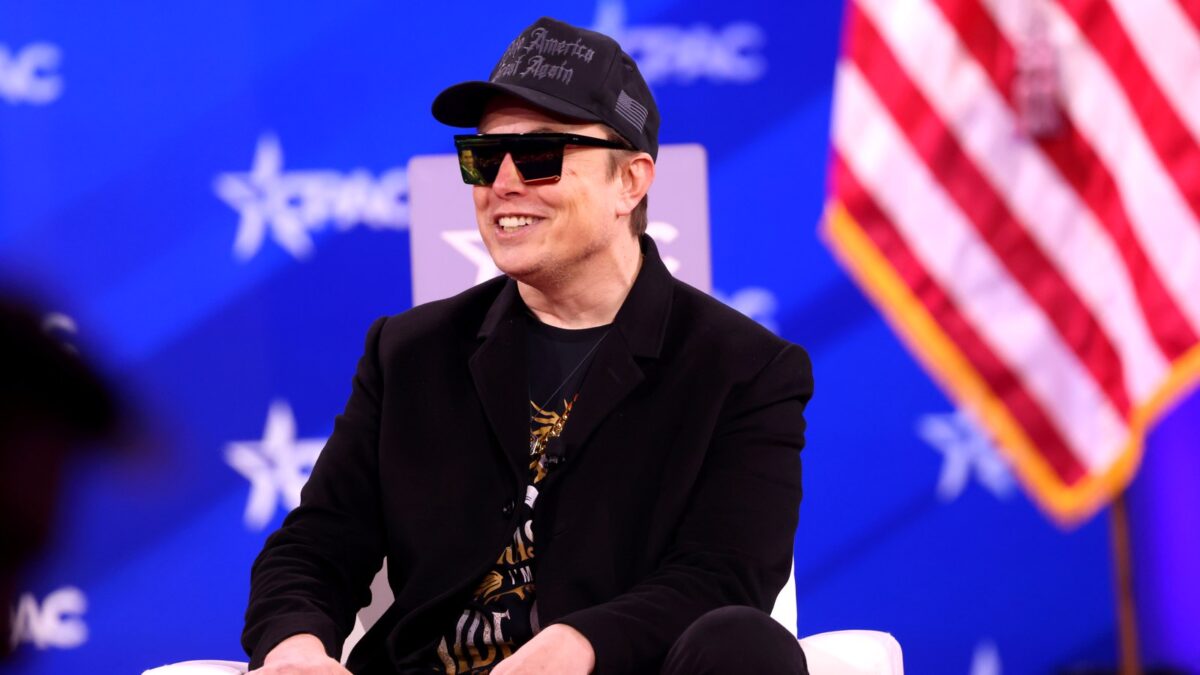
What if everything your father taught you about money was wrong? What if the coins you counted, the rupees you tucked away for a rainy day, the small, stubborn habit of saving that carried your family through hard years — what if all of it was, in the words of the richest man alive, pointless?
On 29 October 2026, Elon Musk posted a single sentence on X: “Saving money for the distant future is pointless with the advent of super intelligent abundance.” Within a day it had been viewed some 2.7 million times. News graphics carried it across Facebook and Instagram; Times Now turned it into a Hindi headline; Business Insider put his face beside the quote; and in the comment sections beneath, millions of ordinary people did what ordinary people always do when a billionaire speaks about their lives — they argued. Some mocked him. Some defended him. Most of them, I suspect, felt something colder than either: a small, quiet fear that he might be right.
And that is why this sentence deserves more than a scroll past. It deserves to be examined the way a columnist examines any great claim — not by the wealth of the man who made it, but by the weight of history behind it. For Musk is not the first prophet to stand before the world and announce that the age of toil is over. He is only the latest. And history, that patient and unforgiving teacher, has heard this sermon before.
What Musk Actually Said — and What He Did Not Say
Let us first be fair to the man, because fairness is the columnist’s first duty. Musk’s sentence did not arrive from nowhere. For three years he has been building, brick by brick, a vision of a world remade by intelligent machines. At the AI Safety Summit in London in November 2023, sitting beside the British prime minister, he said there would come a point where no job is needed — that work would become a choice, pursued for personal satisfaction rather than survival. “We won’t have universal basic income,” he said. “We’ll have universal high income.”
He returned to the idea in April 2026, posting that “Universal HIGH INCOME via checks issued by the Federal government is the best way to deal with unemployment caused by AI,” and arguing that robots and AI would produce goods and services “far in excess of the increase in the money supply, so there will not be inflation.” In July 2026, in an interview with The Economist, he went further still, suggesting that money itself might not matter by 2036. At a White House AI event on 29 September 2026, he promised an “age of abundance” in which AI and robots would deliver universal high income to all. And at the US–Saudi Investment Forum in November 2025, he put a horizon on it: “My prediction is that work will be optional. Maybe it’s 10–20 years, something like that.”
There is a second thing fairness demands I say. Around Musk’s real words, a false one has been circulating — a viral post claiming he warned that salaried work has only three years left and urging people to buy Bitcoin and land. Fact-checkers have examined the footage behind it, from a Forbes interview in May 2026, and found no such deadline in it. What Musk actually said there was that digital intelligence could exceed the combined intelligence of all humanity within about five years, that there could be at least 100 million humanoid robots within five years, and that the global economy could roughly double within five to seven years. The three-year countdown is an invention. A prophet should be judged by his own words, not by the forgeries pasted onto them.
So here is the claim, stripped to its bones: intelligent machines will produce so much, so cheaply, that scarcity itself will end; work will become optional; governments will send everyone cheques; saving — that anxious, prudent habit of the poor and the middle class — will be as obsolete as the candle. It is a beautiful vision. It is also a very old one. And that is where our real story begins.
A Hundred Years Ago, Another Prophet Promised Us Leisure
In 1930, in the black heart of the Great Depression, the greatest economist of the age sat down and wrote an essay for his grandchildren. John Maynard Keynes called it “Economic Possibilities for Our Grandchildren,” and in it he made a prediction that now reads like a message from a lost civilisation. Technical progress, he argued, compounding at just two per cent a year, would multiply our productive capacity many times over within a century. The standard of life in advanced countries would be between four and eight times as high as it was in 1930. And once our needs were comfortably met, we would do the rational thing: we would work less. “Three-hour shifts or a fifteen-hour week may put off the problem for a great while,” he wrote. “For three hours a day is quite enough to satisfy the old Adam in most of us!”
Reader, the year Keynes named is almost upon us. His hundred years end in 2030. And what is the verdict? The United States Bureau of Labor Statistics, reviewing the essay in 2024, put it with brutal economy: Keynes “was right about the large increases in wealth that have occurred, but there has still been no shift in people’s preferences towards increasing leisure and the 15-hour workweek.” The wealth came. The leisure did not.
Think about that for a moment. The machines kept their side of the bargain. Productivity soared beyond anything Keynes imagined — a single worker today, armed with a computer, produces in an hour what a team of clerks produced in a week in 1930. The abundance arrived. It simply did not arrive for everyone, and it did not arrive as time. Instead of taking our gains as freedom, we took them as more things: bigger houses, faster cars, more screens, more stuff to insure, repair and replace. Keynes himself saw the trap coming. The needs of the second class, he wrote — “those which satisfy the desire for superiority” — may indeed be insatiable, “for the higher the general level, the higher still are they.” We did not stop working because we discovered, to our cost, that abundance without wisdom only raises the price of keeping up.
There are glimpses of the road not taken. A British four-day-week pilot put sixty-one companies through six months of full pay for four days’ work; ninety-two per cent of them kept the policy when the trial ended, with revenue holding and burnout falling. It is not a fifteen-hour week. But it is the first credible proof in a century that productivity gains can be taken as time rather than as money — if someone chooses to take them that way. The question Keynes could not answer, and Musk does not answer, is who does the choosing.
The Machines Always Come Bearing Gifts
Every age of machines has opened with a promise and closed with a reckoning. In the winter of 1811, the weavers of Nottinghamshire — the Luddites — rose against the stocking frames that were destroying their livelihoods. They were not fools and they were not enemies of progress; they were skilled men watching their craft, their wages and their dignity being fed into a machine owned by someone else. The frames were smashed. The frames returned. The weavers starved. The machines, you see, were never the enemy. The question was always who owned them.
That is the question Musk’s vision glides past with the smoothness of a man who has never had to ask it. The robots will produce everything, he says. The cheques will arrive, he says. But who owns the robots? Who owns the data centres, the power stations that feed them, the models that run them? In our own history we have seen this play before, and we know how it ends. The East India Company did not arrive in Bengal with an army; it arrived with a ledger, a promise of trade, and a smile. It left owning the revenue of a subcontinent. The new East India Companies of our age do not want your land. They want something more modern: they want the machines that make everything, the data that trains them, and the platforms through which every transaction flows. Abundance owned by a few is not abundance. It is a monopoly with better manners.
Ask yourself the simplest question in economics, the one the comment sections under Musk’s post kept asking in a hundred languages: if the robots do all the work, who pays for the cheques? Musk’s answer is that production will outrun the money supply, so there will be no inflation. When the editor of The Economist put exactly this question to him — where does the money come from? — he replied that deflation was the bigger risk. That is not an answer; it is a change of subject. A government cheque is a claim on real things — bread, medicine, a roof — and those things must be produced by someone, owned by someone, and distributed by someone. Until the world’s richest men explain, in plain language, how the ownership of the machines will be shared, “universal high income” is a slogan, not a plan. And a slogan has never yet fed a family.
The Numbers Behind the Sermon
But let us not dismiss the warning inside the promise. The machines are coming for work — that much is no longer prophecy, it is measurement. At the opening of the International Monetary Fund and World Bank annual meetings in Bangkok on 12 October 2026, the IMF’s managing director, Kristalina Georgieva, warned that artificial intelligence is a “slow-moving tsunami” that will ultimately affect around forty per cent of all jobs worldwide. The Fund’s own research, first published in January 2024, puts exposure at roughly sixty per cent of jobs in advanced economies, forty per cent in emerging markets, and twenty-six per cent in low-income countries. About half of the exposed jobs in rich economies could benefit from AI, the Fund notes — but the other half face lower demand, lower wages, or elimination. Georgieva’s warning was not abstract. Singapore’s president, speaking at the same meetings, said AI was already cutting demand for graduates’ first jobs: just 74.4 per cent of the city-state’s 2025 university graduates in the labour force found full-time work, down from 87.5 per cent of the 2022 cohort, while the share unemployed and looking for work had risen to 10.5 per cent from 3.6 per cent.
The World Economic Forum’s Future of Jobs Report 2025 tells the same story from the other side: by 2030, the transformation of the labour market could create 170 million new roles while displacing around 92 million — a net gain of 78 million, but a churn of almost unimaginable scale, in which the jobs created and the jobs destroyed will not sit in the same towns, the same industries, or the same families. A net gain is cold comfort to the clerk whose job is among the 92 million, and whose retraining is among the promises no one has funded.
These numbers are why Musk’s post travelled so far and so fast. It touched a nerve that was already raw. Millions of people already suspect that the ground beneath their feet is moving. When a man who builds the machines tells them saving is pointless, they hear two messages at once: the future will be wonderful, and your present precautions are useless. The first message is a hope. The second is a trap. And traps, as every colonised people knows, are always baited with hope.
The Cheque That Has Not Arrived
There is, however, one piece of real evidence about what happens when you simply give people money — and it is far more interesting, and far more sobering, than either the prophets or the sceptics admit. Between November 2020 and October 2023, a nonprofit research lab called OpenResearch, founded by OpenAI’s chief executive Sam Altman, ran the largest randomised trial of unconditional cash in American history. One thousand low-income adults in Texas and Illinois, aged 21 to 40, from households earning about $30,000 a year, received $1,000 a month for three years, no strings attached. Two thousand others received $50 a month as a control group. The $36 million study’s results were published through the National Bureau of Economic Research in July 2024.
What happened? The recipients spent the money on the things you would expect: about $67 more a month on food, $52 more on rent, $50 more on transport. They were five per cent more likely to report having a budget. They worked, on average, about 1.3 fewer hours a week — mostly younger recipients going back to education or training, and single parents choosing more flexible work to spend time with their children. There was no mass exodus from the workforce, and no great leap in health: mental-health gains faded after the first year, and there was no significant improvement in physical health. Most tellingly of all, the money did not improve the recipients’ long-run financial position. For every dollar received, their earnings from work fell by at least twelve cents, and total household income fell by at least twenty-one cents. They saved a little more at first. They also took on a little more debt. The researchers’ verdict, in their careful academic language, was that cash “offers flexibility” and “may increase agency” — but it is not a ladder out of poverty. It is a cushion, not a staircase.
Hold that finding beside Musk’s promise and feel the gap between them. A thousand dollars a month — real money, paid for three years, studied with scientific rigour — made life easier without making anyone secure. Now imagine the cheque Musk describes: larger, universal, permanent, paid by governments that have not yet agreed on how to fund it, from abundance that has not yet arrived, produced by machines that are still owned by a handful of companies. The OpenResearch study is the best evidence we have. It says: the cheques help, and the cheques are not enough. Anyone who tells you to stop saving before those cheques exist is asking you to trade a rope you hold for a rope that has not been thrown.
Why Saving Was Never Only About Money
And here, reader, we come to the heart of the matter — the part no economist’s chart can capture. Saving was never only about money. Your grandfather did not save because he had studied interest rates. He saved because saving is dignity in its most practical form. The saved rupee is the difference between asking and choosing; between waiting for a patron’s favour and walking away from a bad bargain; between a daughter’s wedding paid for with pride and a daughter’s wedding paid for with debt. A people that saves is a people that can say no. A people that stops saving becomes a people that waits — waits for the cheque, waits for the scheme, waits for the master’s generosity. And history, from the Company’s Bengal to every patronage machine since, teaches one lesson above all: the waiting never ends well.
Every age has its Mir Jafars — men who sell the keys of the fort for a promise whispered in their ear. But treachery is not always a general opening the gates to an invader. Sometimes it is quieter than that: it is a people persuaded to surrender its own self-reliance, to trade the discipline of generations for the comfort of a promise. I do not accuse Musk of treachery; he believes what he says, and belief is not betrayal. But I do say this: a doctrine that tells ordinary people to stop providing for themselves, while the means of provision gather in fewer and fewer hands, is a doctrine that should be examined with the same suspicion our ancestors learned to aim at every smiling merchant who arrived with gifts.
There is a cruelty, too, in the timing of the sermon. It is easy — it is effortless — to call saving pointless when your own fortune is measured in hundreds of billions, when your children’s children could never spend what you own, when a single one of your companies is worth more than the economies of nations. The commenters saw it at once. “You’re saying this because you have money,” one replied, and millions agreed. The sting of that reply is not envy; it is arithmetic. Advice costs the adviser nothing. It costs the advised everything, if it is wrong.
So What Should You Do on Monday Morning?
None of this means you should ignore Musk. Dismissing him would be as foolish as obeying him. The machines are real. The change is real. The IMF’s forty per cent is real. The honest response to a changing world is not to cling to the old habits out of fear, nor to abandon them out of fashion — it is to adapt them.
Keep saving. Not because the future will look like the past — it will not — but because saving is the one financial act that belongs entirely to you. No platform can deplatform it. No algorithm can demonetise it. It is the seed corn, and a farmer who eats his seed corn because someone promised him a miraculous harvest is a farmer who starves first.
Learn the machines. The workers who survive every technological revolution are not the ones who smash the frames, nor the ones who worship them — they are the ones who learn to operate them. The IMF’s own research says half of the exposed jobs will be improved by AI rather than destroyed by it. The difference between the two halves will be skill, and skill is the one form of saving no inflation can touch.
And own something. In every age, the dividing line has not been between those who work and those who do not — it has been between those who own and those who merely earn. A skill, a trade, a small piece of land, a business of your own, however modest: these are the things that cannot be automated away from you, because they are yours. Keynes imagined a world where abundance would set us free. The world we got instead was one where abundance set prices free and kept people chained. The way out of that bargain is not to wait for the cheque. It is to make yourself the kind of person no cheque can buy and no machine can replace.
The Verdict
A hundred years ago, a great economist promised our grandparents a fifteen-hour week and a world without want. The wealth arrived; the freedom did not — because no one had arranged who would own it. Today, the richest man on earth promises our children an age of abundance and tells them saving is pointless. The machines may well arrive; the abundance may well arrive. But until the day the cheques are actually in the hands of the poor, until the robots are owned by more than a handful of companies, until “universal high income” is a law and not a post — the old virtues stand.
Save. Learn. Own. Endure. These are not the habits of a people afraid of the future. They are the habits of a people determined to meet the future on their own feet, rather than on their knees. The prophets of abundance have come and gone for two hundred years, each one certain that this time the machines would set us free. Perhaps this time they will. But a wise people does not burn its boats while the far shore is still a rumour. Keep your savings, keep your skills, and keep your dignity — and when abundance finally arrives, if it arrives, you will meet it as a free citizen, not as a grateful beggar.
That is the verdict history pronounces on every promise of a painless tomorrow: believe in the future, but never pay for it with the present.
Sources & References
- Hello Entrepreneurs — “Will AI make money and savings irrelevant? Elon Musk’s latest prediction sparks debate” (30 October 2026) — Musk’s 29 October 2026 X post and the 2.7 million views it drew in a day.
- Muskularity — “‘Universal High Income’ Is His Phrase. It Is Not a Program.” — Musk’s April 17, 2026 federal-checks post, his October 19, 2026 correction, and the November 2023 AI Safety Summit remarks.
- Vincy Powa News — “Elon Musk Did Not Say Paid Work Ends in Three Years” — fact-check of the viral “three years left” claim and Musk’s Forbes interview remarks.
- Open Culture — “When John Maynard Keynes Predicted a 15-Hour Workweek” (1930) — Keynes’s “Economic Possibilities for Our Grandchildren” and the Bureau of Labor Statistics verdict.
- Human Resources Director — “Get ready for an AI jobs tsunami – IMF” (13 October 2026) — Georgieva’s Bangkok warning, the 40% / 60% exposure figures, and Singapore graduate employment data.
- RemoRoute — “When AI Changes the Labour Market, Who Captures the Gains?” (13 October 2026) — World Economic Forum Future of Jobs Report 2025: 170 million roles created, 92 million displaced by 2030.
- Economic Security Project / The 19th — “The results of the biggest study on guaranteed income programs are finally in” (22 July 2024) — OpenResearch Unconditional Cash Study design and findings.
- Michigan Ross — “New Study Shows Effects of Guaranteed Income Programs on Health and Poverty” — health and employment findings of the OpenResearch study.

About the Author — Abdul Mannan
Related Articles
Make It So: Patrick Stewart, the Boy from Mirfield Who Taught the World How to Lead
Patrick Stewart died on 28 October 2026, aged 86, at his home in Los Angeles. This column traces…
She Left the Most Powerful Chair in Europe to Speak: Christine Lagarde, the Euro, and the Price of Silence
Christine Lagarde will step down as ECB president on 7 February 2027, about nine months early, saying she…

The Day Data Became Oxygen: What Jio’s $131 Billion Debut Really Bought — and What It Cost
Jio Platforms opened at Rs 1,358 against an issue price of Rs 1,119 and closed at Rs 1,419,…