The Day the Number 7 Shirt Came Home: Cristiano Ronaldo, Portugal, and the End of Football’s Greatest Era

What do you do when a king takes off his own crown — and hands it back to the people?
On Thursday, 5 November 2026, Cristiano Ronaldo sat before a camera, read a letter aloud, and did the one thing the world never believed he would do voluntarily. He gave the shirt back. “To the Portuguese people,” he said, “the day has come for me to hand back the number 7 shirt of our national team.” Not taken from him. Not torn away by injury or defeat. Handed back — by his own hands, in his own words, on his own day.
I have watched this man for twenty-three years, and I tell you plainly: this was not a retirement announcement. It was a coronation in reverse. A king abdicating his throne while he could still walk away from it upright.
And yet, reader, I ask you to sit with me a moment longer, because behind this farewell there is a story far larger than one footballer. It is the story of how empires end — not always with a battle, but sometimes with a letter, read quietly into a camera, while the world that once roared his name falls silent enough to hear it.
The Boy from Madeira Who Became a Country
A journey that began in August 2003, he said, “and changed my life forever has come to an end.” He was eighteen years old when he first wore the red of Portugal, a skinny boy from Madeira with gelled hair and step-overs nobody could read. Within a year, he was weeping on the grass of the Estádio da Luz as Greece — Greece, the rank outsiders — stole the European Championship final from the hosts. I remember that image still: the boy on his knees, tears on his face, the whole of Portugal weeping with him. That was the first lesson this story would teach us, and we did not understand it then: that this man would carry his country’s hopes the way Atlas carried the sky — and that the weight would one day demand its price.
History, as I have always told you, is a mirror, and if you hold it up to this career you will see the shape of an entire age. In 2003, Portugal were contenders — talented, romantic, forever the nearly-men of European football. When Ronaldo arrived, something changed in the air of that small country on the edge of the Atlantic. A nation of ten million people began to believe that it could stand shoulder to shoulder with the giants. And belief, as any student of history knows, is the most dangerous weapon ever invented.
Twelve years after those tears in Lisbon, redemption arrived — and it arrived, as fate so often does, with a cruelty that only a dramatist could have scripted. In the final of Euro 2016, against France in Paris, Ronaldo was injured early and left the pitch in tears. The captain — the man who had dragged his country to the final almost by force of will — watched the greatest triumph of his international life from the sidelines. Éder scored the winner in extra time. Portugal were champions of Europe for the first time in their history. And their king had to receive his crown sitting down, his knee in ice, his face wet with tears that no one could say were of joy or of grief.
Ask yourself, reader: what does it mean to win everything and yet not be on the field when it happens? That night in Paris taught us something about this man that twenty years of goals never could. Greatness is not always holding the sword. Sometimes greatness is trusting others to hold it for you.
The Numbers That Will Outlive Us All
Let me give you the figures, because figures are the one thing no argument can defeat. Two hundred and thirty-four appearances for Portugal. One hundred and forty-six goals. Both are men’s international records, and they are not records that will be broken in your lifetime or in mine. He became the first player in history to score at six World Cups. He won the European Championship in 2016 and the Nations League in 2019 and again in 2025 — three international trophies for a country that had won nothing at all before he arrived.
But numbers, I have learned, are the least interesting thing about a legend. The most interesting thing is what the numbers cannot hold: the fact that for two decades, whenever Portugal played, the entire world stopped to watch one man. Children in Faisalabad and Funchal alike wore his shirt. His celebration — that leap, that turn, that roar of “Siu!” — became a language spoken in every playground on earth. A boy from a poor family on a small Atlantic island became, quite simply, the most famous human being on the planet. And he did it not with inherited wealth or royal blood, but with a ball at his feet and a refusal to accept that his story had already been written.
Five Ballon d’Or awards. Nearly a thousand career goals — 985 at the time of his announcement, the round thousand glinting just ahead of him like a lighthouse. He is not finished with football itself; he will continue with Al-Nassr in Saudi Arabia, where his contract runs until June 2027. But the red shirt — the shirt that made him a son of Portugal rather than merely its most famous export — that shirt is now folded and returned.
The Mountain He Could Never Climb
And yet. And yet. Every great story has its unfinished sentence, and his is written in the one trophy that eluded him until the very end. The World Cup.
He scored at six World Cups — a feat no other man has achieved — and finished with eleven World Cup goals. But look closer at those eleven, and you will see the wound that never healed: ten of them came in the group stage. His only goal in a World Cup knockout match was a penalty against Croatia in the last thirty-two this summer. His final attempt ended the way so many of his World Cup campaigns ended — in disappointment, as Spain beat Portugal in the round of sixteen at the 2026 World Cup, Spain going on to lift the trophy itself.
Here history offers us its cruellest mirror. Think of Alexander, who wept because there were no more worlds left to conquer. Ronaldo’s tragedy is the opposite, and in some ways the sadder one: there was one world left, and it would not be conquered. He chased the World Cup the way Ahab chased the whale — across five tournaments, through heartbreak after heartbreak — and the sea never gave it up. The 2022 World Cup in Qatar had already raised the uncomfortable question in the open: was Portugal’s record scorer still the best man to lead the attack? Euro 2024 sharpened the question further; he did not score a single goal as Portugal fell in the quarter-finals. The debate was no longer about his past. It was about his present. And that, for a man who had built an empire on the present tense, was the hardest question of all.
I say this to you without malice and without pity, because both would be an insult to him: the World Cup was his white whale, and the whale won. That does not diminish him. It completes him. A hero without a wound is a statue, not a man. The missing trophy is what makes this story human — it is the crack in the marble that lets the light in.
Two Farewells, One Summer
Now, reader, look at the other side of the mirror. For nearly two decades, Ronaldo and Lionel Messi invited comparison at every turn — the two suns around which modern football revolved. And in the same year, both have stepped away from international football. But their departures, as Reuters observed so sharply, could hardly offer a greater contrast.
Messi retired from Argentina in July, after his country lost the World Cup final to Spain. His final match came on 7 October, a 3-0 friendly win over Benin, in which he scored a goal and set up two others. The supporters in Buenos Aires celebrated him, embraced him, carried him out of the international game on a tide of love. It was a farewell written by a poet.
Ronaldo’s farewell, by contrast, was written by a dispute. His last match for Portugal came on 24 September 2026, a 1-0 Nations League victory over Wales in Lisbon — a quiet, unremarkable win that nobody knew at the time would be the last. Days later, on 30 September, he walked out of the national team camp after coach Jorge Jesus indicated he would not start the following match against Denmark. The Portuguese Football Federation fined him €255 and suspended him for thirty days — a punishment so light it barely qualified as one, and yet the message was unmistakable. The man who had been untouchable for twenty-three years had been told, in effect, that he was no longer guaranteed his place.
His retirement announcement followed the fallout with Jesus, whose decision not to use him against Norway had brought the tension between Ronaldo’s enduring ambitions and Portugal’s changing needs into the open. In his announcement, Ronaldo did not mention the rift. He did not need to. The whole world had already read it.
Jesus himself said on Thursday that he had been hoping to bring the forward back into the national team setup. Perhaps he was telling the truth. It hardly matters now. What matters is the lesson, and it is a lesson as old as power itself: empires do not fall when they are defeated from outside. They fall when the men inside them can no longer agree on who should sit on the throne.
The Lesson of Leaving
And here, reader, I come to the heart of the matter — the reason this story belongs not in the sports pages but in the pages of history and philosophy.
There are two ways for a great man to leave. The first is to leave too early, while the crowd still begs for more, and be remembered as the one who got away. The second is to leave too late, and be remembered as the one who stayed until the crowd began to look away. Ronaldo, to his credit and to his cost, chose a third way: he left at the exact moment when the argument about his leaving had become louder than the applause for his staying.
Was it the right moment? The argument will endure for years, as Reuters rightly says. Some will say he should have gone after the 2026 World Cup, on his own terms, with the tournament as his final stage. Others will say he should have fought for his place and forced the coach to pick him or drop him in the full glare of the world. But I tell you this: there is a dignity in the letter he read, in the words he chose. “Today the time has come to pass it on to the future.” He did not rage. He did not blame. He handed the shirt back and said, in effect, that the shirt had never been his at all. “I never felt it was exclusively mine,” he said — the number seven shirt belongs to the Portuguese people, and to the future that will wear it next.
That is the language of a man who understands something that many rulers never learn: that the crown is borrowed, and the throne is rented, and the only thing you truly own is the manner of your leaving.
The Portuguese Football Federation has said it “refuses to let this farewell take place without due tribute”, leaving open the possibility of a farewell match on the pitch. Whether that happens remains unclear. If it does, the stadium will roar, and the old man — forty-one years old, still chasing a thousand goals — will walk out one final time in the red shirt, and the tears of 2004 and 2016 will come back to all of us at once. If it does not, then the ending will be as it began: a boy from Madeira, a camera, and words read aloud into the silence.
Either way, the melancholy that Reuters noted is real. There is a particular sadness in an ending played out away from the pitch, away from the warmth of a stadium ovation. A man who gave his country its loudest moments deserved a loud ending. He got a quiet one instead. And perhaps that, too, is a lesson: that history rarely gives us the endings we deserve. It gives us the endings we have earned, in the coin of our own choices.
What Portugal Loses — and What the World Loses
Portugal must now contemplate life without him, and I do not envy them the task. For twenty-three years, the national team was not merely a team; it was a story, and Ronaldo was its narrator. He turned Portugal from contenders into European champions, as Reuters put it, and he did something rarer still: he taught a small country to imagine itself as large. The records and the trophies will endure, the federation’s tribute will come, but the thing that cannot be replaced is the feeling — the feeling, shared by millions, that when the number seven was on the pitch, anything was possible.
And what does the world lose? It loses the last of the twin suns. Messi and Ronaldo together defined an era of football the way Ali and Frazier defined an era of boxing, the way Federer and Nadal defined an era of tennis. Their rivalry was not a war; it was a mirror held up to two different ideas of greatness — one built on genius that looked effortless, the other built on will that looked superhuman. With both men now gone from the international game in the same year, the golden age is over. Not ended by a final whistle, but by two letters, read months apart, in two different languages, saying the same thing: the time has come.
The game will go on, of course. It always does. New stars will rise — they already are rising — and the stadiums will fill again, and the goals will come again. But I tell you honestly, as one who has watched this sport for a lifetime: there will not be another like this. There will not be another rivalry that held the whole planet in its spell for twenty years. There will not be another man who carried a nation’s dreams on his back for twenty-three years and never once set them down.
The Verdict of History
So I ask you, reader, as I close: what will you remember?
Will you remember the goals — the 146 of them, the bicycle kicks, the headers that seemed to defy gravity, the free kicks bent around walls as if the ball itself obeyed him? Will you remember the trophies — the European Championship, the two Nations Leagues, the five Ballon d’Or awards? Will you remember the dispute, the walkout, the fine of €255, the uneasy ending?
Or will you remember something simpler: a boy from Madeira who refused to believe that the world had already decided who he was, and who spent twenty-three years proving it wrong — one goal, one match, one shirt at a time?
History will judge Cristiano Ronaldo the way it judges all kings: not by how they took the throne, but by what they left behind when they gave it back. He leaves behind a country that believes in itself, a sport that was made larger by his presence, and a number — seven — that will never again be just a number in Portugal. He leaves behind, too, the hardest lesson of all: that even the greatest among us must one day hand the shirt back and walk away, and that the measure of a man is not how long he holds on, but how gracefully he lets go.
The day has come, he said. And the day has come for us, too — the day we must learn to watch football without him in the red shirt, and to remember that we were alive when a boy from a small island became the measure of an age. Kings depart. The game endures. But the echo of that roar — Siu! — will not fade from the stadiums of this world for a very long time.
Sources & References
- Reuters — “Ronaldo exits Portugal stage with records intact and farewell clouded by rift”, 5 November 2026
- CNN — “Cristiano Ronaldo retires from international soccer after a record-breaking career with Portugal”, 5 November 2026
- USA Today — “Is Cristiano Ronaldo retiring from soccer? What to know about Portugal retirement”, 5 November 2026
- USA Today — “Why did Cristiano Ronaldo retire from Portugal? Explaining Jorge Jesus feud”, 5 November 2026
- USA Today — “Cristiano Ronaldo vs. Lionel Messi by the numbers”, 5 November 2026
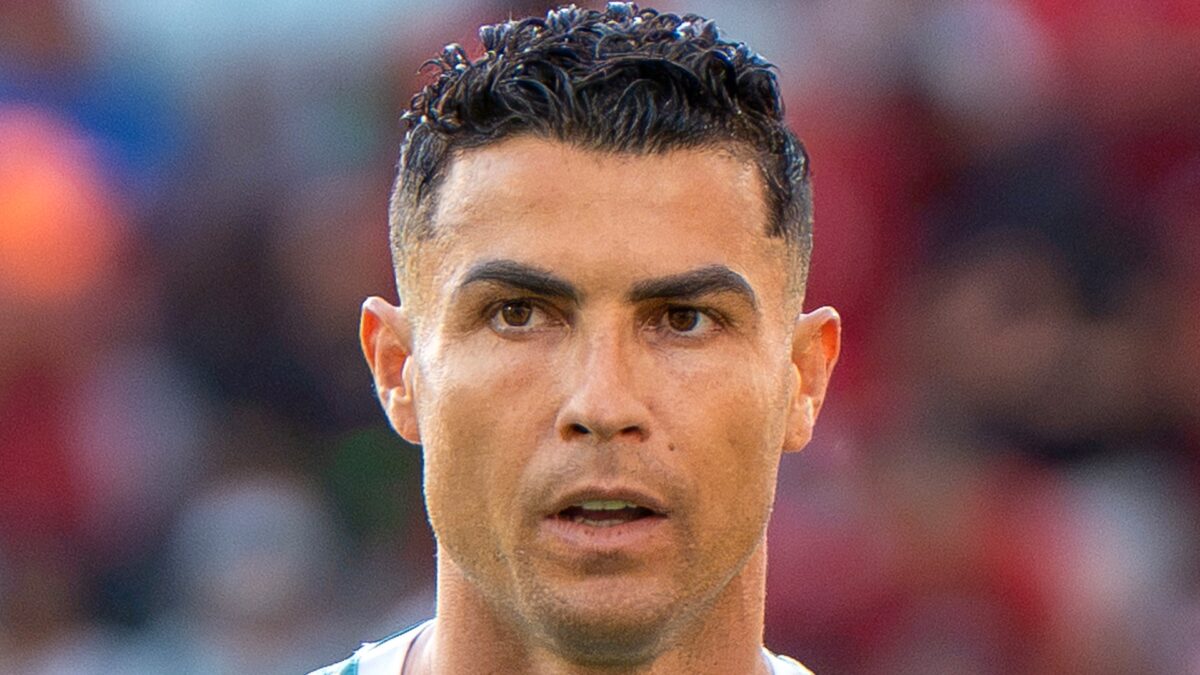
- Wikimedia Commons — Featured photograph: Cristiano Ronaldo during Croatia v Portugal, 2026 FIFA World Cup, 2 July 2026, by Bryan Berlin / WikiPortraits, CC BY-SA 4.0

About the Author — Abdul Mannan
Related Articles
Cristiano Ronaldo Retires From Portugal: The Day the Number 7 Shirt Came Home
After 234 caps and a record 146 goals, Cristiano Ronaldo has handed back Portugal's No. 7 shirt. A…

The Night America Said No to the Machines: Ohio, the Luddites, and the Revolt Against the Data Centres
On Tuesday 3 November 2026, in towns most Americans could not find on a map, the people did…

The Night the Map Turned Blue: America’s Verdict and the Lesson History Keeps Teaching
On Tuesday 3 November 2026, the American people delivered a verdict that redrew the map of the most…