The Jester, the Guru and the Verdict: What Russell Brand’s Conviction Really Means

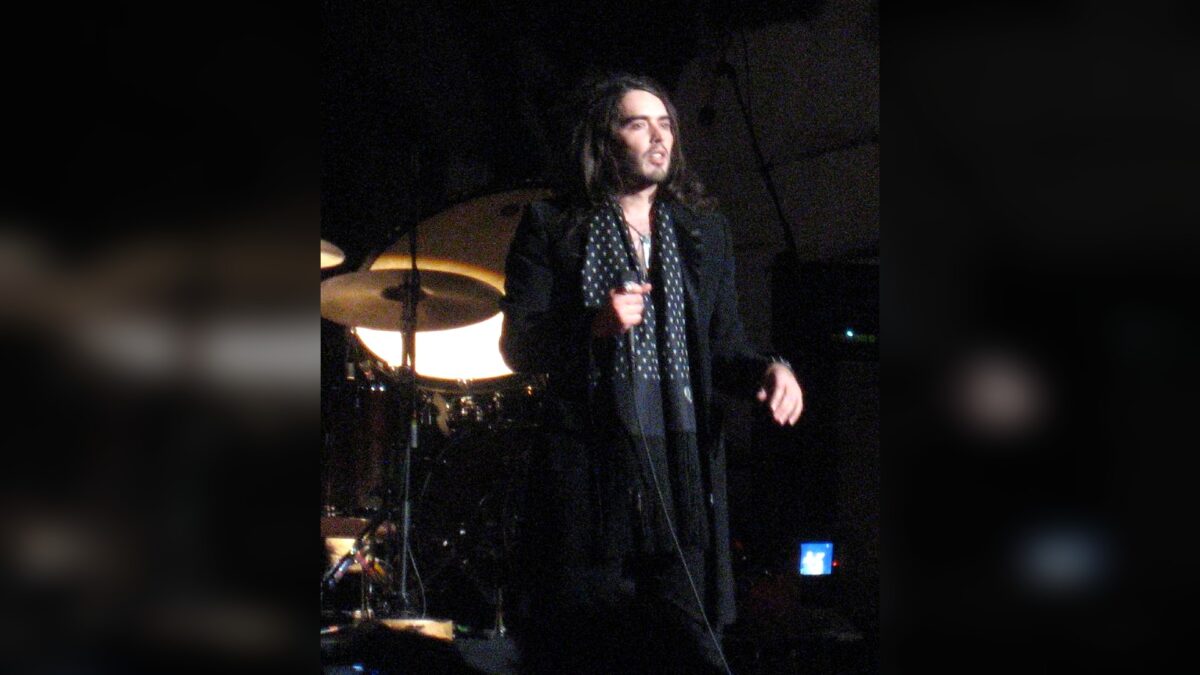
The Silence After the Laughter
Have you ever watched a man fall from a great height and wondered, in the same breath, how he climbed so high — and why nobody stopped him on the way up? That is the question I have been carrying since Thursday afternoon, when a jury of eight men and four women at Southwark Crown Court in London did what no broadcaster, no talent agency, no publisher and no audience had ever managed to do to Russell Brand. They said no.
They said no to the charm. They said no to the fame. They said no to the long hair and the fast talk and the silver cross and the Bible carried into court like a shield. And in that small, fluorescent-lit room, after three weeks of evidence and eight and a half hours of deliberation, they found the 51-year-old comedian guilty of one count of rape and three counts of sexual assault. He was acquitted of two further counts of rape and one count of attempted indecent assault. He was remanded into custody at once, and the judge, Mr Justice Bennathan, told him to expect what he called “a significant custodial term” when he returns for sentencing on Monday, 9 November. Brand mouthed two words to his defence team as he was led away — “I’m good, I’m good” — and then the doors closed, and the laughter, at last, stopped.
I do not write this as a report. The facts are already in the newspapers, and they are grim enough. I write it as a question to you, the reader, and to myself: what does it mean when a man who made his fortune by mocking power is finally brought down by the quietest power of all — the power of women who refused, for years, to be silent?
The Jester Who Believed His Own Act
Every age has its jester. In the medieval court, the fool was the one man allowed to tell the king the truth, because his truth came dressed as a joke. The king laughed, the court laughed, and the fool survived — so long as everyone understood the bargain. The moment the jester began to believe he was the king, the game was over.
Russell Brand was the jester of modern Britain, and he played the part brilliantly. He began in stand-up in 2000, a young man from Grays in Essex with a torrent of words and a body that seemed to be performing even when he was standing still. MTV came calling. Then came Big Brother’s Big Mouth, then BBC radio — first 6 Music, then the Saturday night show on Radio 2 — then Hollywood: Forgetting Sarah Marshall in 2008, Get Him to the Greek in 2010, Arthur in 2011. He married Katy Perry. He divorced Katy Perry. He was everywhere, and he was untouchable, because the joke was always the alibi. Whatever he said, whatever he did, it was only Russell being Russell. The lothario. The libertine. The naughty boy who could not help himself.
We laughed. The BBC laughed. The newspapers laughed. The audiences laughed. And somewhere in that laughter, four women — a 21-year-old fan met after a show at the Hammersmith Apollo in 2009, an MTV worker groped in a Soho bar in 2004, a radio worker kissed and groped in a corridor in 2005, a Channel 4 worker forced to give him a massage in 2009 — carried a different memory, one that did not make them laugh at all.
The Women Who Waited
Let me tell you what the jury actually heard, because the details matter and they have been established in open court. The six women who gave evidence did not know one another. They came forward independently, most of them only after the joint investigation by The Sunday Times, The Times and Channel 4’s Dispatches programme, broadcast on 16 September 2023 under the title Russell Brand: In Plain Sight, gave them a reason to believe they might finally be heard. The Metropolitan Police, under Detective Superintendent Andy Furphy, traced and spoke to more than 100 witnesses, took more than 400 witness statements and reviewed over 1,400 documents. There was no CCTV. There was no forensic evidence. A decade or more had passed. And still the case stood, because six strangers told the same shape of story, and a jury believed four of them beyond reasonable doubt.
Think about what that waiting cost. The offences the jury convicted on span 2004 to 2009. The women waited, in some cases, more than twenty years. Why? Because they knew what would happen if they spoke. They knew the machine that would rise up to meet them: the lawyers, the fans, the headlines, the questions about what they wore and why they went and why they waited. Katherine Ryan, the comedian who had once called Brand a predator to his face on a television panel show and been censored for it, put it better than anyone after the verdict. Speaking on her podcast, she said she was “in awe of the survivors who also had nothing to gain” by coming forward — women who spoke despite Brand’s “fame, power, money, and a legion of fans ready to attack them.” And then she added the sentence that has stayed with me since I read it: “There’s grief alongside relief… I will never be someone who dances on graves.”
Grief alongside relief. Hold those two words together, because they are the whole truth of this verdict. Relief, because a jury has said that the powerful are not above the law. Grief, because it took twenty years, and because the price of justice was paid by women who had to relive the worst nights of their lives in a public courtroom while the man in the dock — who took the witness box on 28 October and answered “no” to every charge — watched them do it.
The Second Act: From Jester to Guru
But the story of Russell Brand does not end with the jester. It has a second act, and the second act is the one that should trouble us most — because it is the act in which the jester put on the robes of the prophet.
When the mainstream turned away — after the 2023 investigation, YouTube suspended advertising on his channels within forty-eight hours, the BBC pulled his archive programmes, his publisher dropped his book, his agency cut ties — Brand did not disappear. He reinvented himself, as he had always done. The lothario became the guru. The comedian became the commentator. On YouTube, where he still holds some 6.6 million subscribers, and then on Rumble, he built a new audience with a heady mixture of wellness, spirituality and anti-establishment fury: the system is corrupt, the media lies, the elites conspire, and only the brave few — only Russell — will tell you the truth.
And millions listened. They listened because some of what he said was true — institutions do fail, the media does lie, power does protect itself — and because a man who has survived scandal can wear his survival as proof of his innocence. He was baptised. He carried a Bible into court. At a hearing in February 2026 he arrived in a leopard-print shirt with a silver cross. A crowd outside the court shouted, “Hold on to Jesus, Russell” and “Hold on to Jesus, warrior.” The jester had become the martyr, and the martyr had become the message: this is not a trial, it is a persecution.
History has seen this trick before. It is the oldest trick in the book of fallen idols. When the evidence turns against you, change the courtroom. Make it about the system, not about you. Make your accusers the villains and yourself the victim. Brand’s barrister, Ian Winter KC, argued in closing that the media had “poisoned the well of justice” — that the 2023 documentary had contaminated the women’s accounts, that they had reimagined or invented consensual encounters under the spell of publicity. The jury was told, in terms, to disregard the documentary. They did. And they still convicted.
The Institutions That Looked Away
But if this column is a moral courtroom, then Brand cannot be the only man in the dock. The institutions that employed him, platformed him and profited from him must answer too — and to the BBC’s credit, it has begun to do so.
Brand worked at the BBC between 2005 and 2008. In January 2025, the corporation published a review by Peter Johnston into how complaints about his conduct had been handled. It looked at eight allegations of misconduct from 2006 to 2008 — including claims that he had sex on BBC premises and exposed himself in the studio — and found that only one of those complaints had been formally made to management at the time. People felt unable to raise concerns, the review found, because of who he was. After the verdict, the BBC apologised again: “There can be no place for the abuse of power,” it said, adding that its thoughts were “with the brave women who came forward and told their stories which led to a conviction in this case.”
Read that sentence again. People felt unable to raise concerns because of who he was. That is the sentence that indicts not one man but a whole culture — the culture of the untouchable star, the culture in which a complaint against a famous name is treated as a career risk rather than a duty, the culture that Britain promised itself it had buried after Jimmy Savile and Harvey Weinstein and all the other names that now read like a roll call of institutional shame.
Weinstein was convicted in New York in 2020 because dozens of women spoke and a jury believed them. Savile was never tried, because he died before the truth caught up with him — and the institutions that had sheltered him spent years apologising afterwards. Brand sits between those two poles: alive, tried and convicted by a court of law, awaiting sentence on Monday. The pattern is the same in every case. The talent is real. The charm is real. The fame is real. And the fame becomes a wall, behind which the powerful do what they like to the powerless, confident that the wall will hold. It held for years. It did not hold forever.
What the Verdict Does — and Does Not — Prove
Let me be precise, because precision is a form of respect — to the jury, to the women, and to Brand himself, who retains the right to appeal and who has always maintained that every encounter was consensual. The jury acquitted him of two counts of rape and one count of attempted indecent assault. Those acquittals matter. They mean that the jury did not simply believe everything it was told; it tested the evidence, count by count, and found some of it wanting. A fair trial is not a show trial, and this was a fair trial — four weeks long, with a defence that was heard in full, and a judge who directed the jury with care.
Nor does the verdict settle everything. The Metropolitan Police has confirmed that it is still investigating rape allegations made by two further women, and has submitted files to the Crown Prosecution Service. One of those allegations, according to earlier court hearings, concerns a 16-year-old schoolgirl. No charges have been announced in those matters, and they have not been tested in any court. I mention them only because they are a matter of public record, and because they remind us that the story is not finished. Sentencing on Monday will close one chapter. It may not close the book.
And there is a larger question that no court can answer. What do we do with the millions of people who followed Brand into his second act — the guru act — and who now face the fact that their prophet has been convicted of rape? Some will say the trial was rigged. Some already have. But I would ask those followers a simple question, the same question I would ask anyone who has ever put their faith in a famous man: if your hero is innocent, why did the jury — eight men and four women, ordinary people, who sat through three weeks of evidence — find otherwise? And if you still believe him, what would it take to change your mind?
That question is not about Russell Brand. It is about us. It is about the age we live in, when a man can lose his television career and gain a larger audience online, when demonetisation is worn as a badge of honour, when every accusation can be reframed as a conspiracy, and when the truth has to compete with a man holding a Bible and telling his followers that he is being persecuted. The verdict at Southwark Crown Court is a reminder that there is still a place where evidence matters more than followers, where a jury of twelve strangers can look at a famous man and say: we believe the women. That place is called a courtroom. We should be grateful it still exists.
The Mirror We Cannot Avoid
So I return to the question I began with. How did he climb so high — and why did nobody stop him on the way up? The answer, I think, is that we were all complicit in the climb. We loved the jester because he said the unsayable and got away with it. We loved the guru because he told us the system was rotten and we suspected he was right. We loved the martyr because we love a man who stands alone against the world. And at every stage, the applause drowned out the voices of the women who were trying, quietly, to tell us something else.
History, as I have written in this column before, is a mirror, not a museum. The jester who believes he is the king, the prophet who believes his own sermon, the star who believes the applause is a verdict — these are not new characters. They are as old as courts and kings. What is new is the speed of the fall: from the Hammersmith Apollo to a prison cell, from six million subscribers to a remand wing, from the man who could make a room laugh to the man who mouthed “I’m good, I’m good” as the doors closed behind him.
On Monday, Mr Justice Bennathan will pass sentence. Rape carries a maximum sentence of life imprisonment in England and Wales; the Sentencing Council’s usual range is four to nineteen years. Whatever the number, it will not undo what was done to four women between 2004 and 2009. No sentence can do that. But a sentence can do something else. It can say, to every woman who has ever been told to keep quiet because he is famous, because he is funny, because he is powerful, because nobody will believe you: we believe you now. It can say, to every institution that has ever looked away: look again. And it can say, to every jester who believes his own act: the laughter ends. The truth does not.
That is the verdict. Not just the jury’s — ours.
Sources & References
- Metropolitan Police — “Russell Brand convicted of rape and other sexual offences” (5 November 2026)
- CNN — “Actor and comedian Russell Brand found guilty of rape and sexual assault” (5 November 2026)
- The Times — “Russell Brand found guilty of rape and sexual assault — as it happened” (5 November 2026)
- LADbible — “Katherine Ryan breaks silence on Russell Brand rape conviction” (6 November 2026)
- HELLO! magazine — “Russell Brand found guilty of one count of rape and three counts of sexual assault” (5 November 2026)
- The Times — “Russell Brand accused of rape, sexual assaults and abuse” (original 2023 investigation)

About the Author — Abdul Mannan
Related Articles
The Day the Number 7 Shirt Came Home: Cristiano Ronaldo, Portugal, and the End of Football’s Greatest Era
On 5 November 2026, Cristiano Ronaldo handed back Portugal's number 7 shirt after 23 years. This is not…

Cristiano Ronaldo Retires From Portugal: The Day the Number 7 Shirt Came Home
After 234 caps and a record 146 goals, Cristiano Ronaldo has handed back Portugal's No. 7 shirt. A…

The Night America Said No to the Machines: Ohio, the Luddites, and the Revolt Against the Data Centres
On Tuesday 3 November 2026, in towns most Americans could not find on a map, the people did…