The World Was Supposed to End Today: The 1960 Science Paper That Named Friday, 13 November 2026

You are still here.
Read that sentence again, slowly, because sixty-six years ago three serious men of science sat down in Illinois, did their sums with the gravity of priests, and announced that you would not be. Today, Friday, 13 November 2026, was the day the world was supposed to end. Not in a holy book. Not in a fever dream. In Science, one of the most respected journals on Earth, under a title that still makes the hair stand up on the back of my neck: “Doomsday: Friday, 13 November, A.D. 2026.”
And here we are. The sun rose. The traffic moved. Somewhere a child went to school, somewhere a farmer watered his field, somewhere a mother scolded her son for leaving his shoes in the doorway. The world did not end. It did what it has always done when a prophet names a date: it carried on, indifferent, almost amused.
But do not laugh too quickly. Before you dismiss this as a curiosity for the internet’s amusement, sit with me a while, because this story is not really about a failed prediction. It is about us. About why we keep needing the world to end, about the seduction of a neat equation, and about the quiet miracle that nobody in the doomsday business ever wants to talk about: humanity changed its own fate, and it did so without even noticing.
The Paper That Named Today
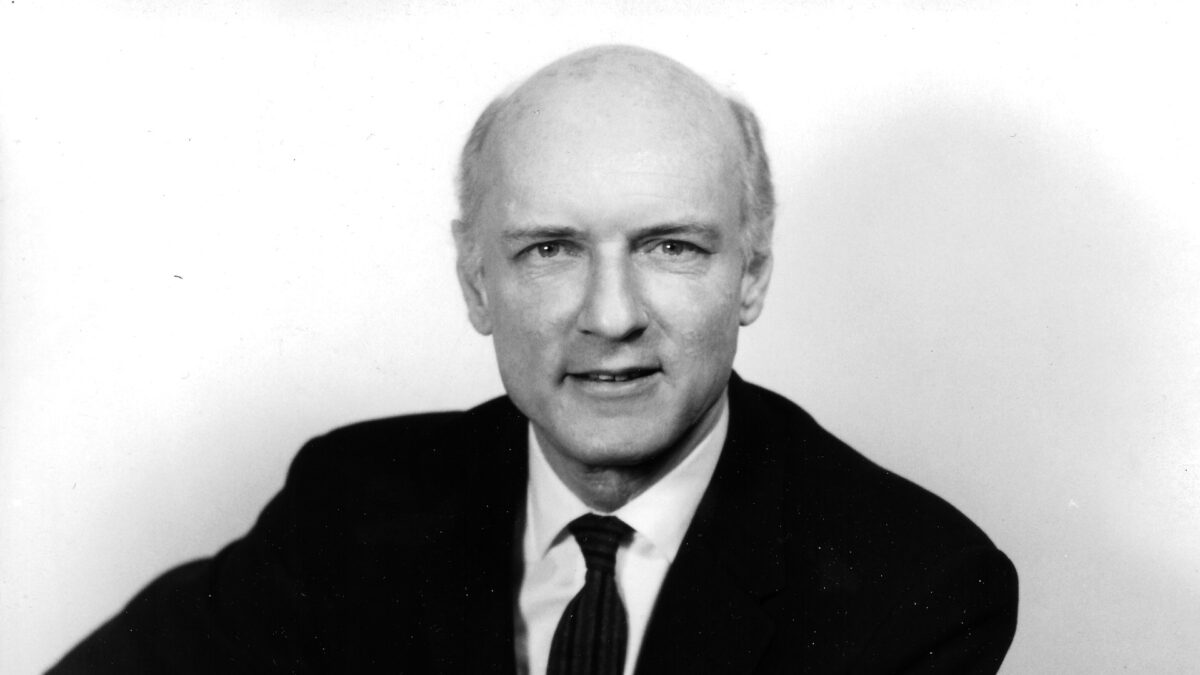
On 4 November 1960, the journal Science published a paper by three researchers at the University of Illinois: the physicist Heinz von Foerster and two of his students, Patricia M. Mora and Lawrence W. Amiot. Its claim was as stark as its title. They had gathered twenty-four estimates of the world’s population, running from the time of Christ almost to 1958, and fitted a curve through them. That curve did not level off. It did not slow down. It rose faster and faster, and when they followed it to its logical end, it reached infinity. The date of that mathematical cliff was 2026.87, give or take five and a half years. Mid-November 2026. Friday the thirteenth.
Understand what they were saying, because the language matters. They did not say a comet would strike or a volcano would erupt. They said that if humanity kept growing the way it had grown for two thousand years, the number of people on Earth would “approach infinity”. Their formula was disarmingly simple: take 179 billion, divide it by the number of years left until doomsday, raised to the power of 0.99. Ten years out from the date, the formula gives 18.3 billion people. One year out, it gives 179 billion. On the day itself, the number becomes infinite, which is to say, impossible, which is to say, the end of the world as a place where human beings can live.
Von Foerster put it in a sentence that has haunted me since I first read it: “Our great-great-grandchildren will not starve to death. They will be squeezed to death.” Not starved. Squeezed. Shoulder to shoulder, elbow to elbow, until there is no room left to breathe. It is a terrifying image, and it was printed in the most sober scientific journal in the world, and the newspapers of the day picked it up and ran with it, and the cartoonists had their fun, and a famous comic strip made jokes about it, and the world moved on.
But the date stayed in the drawer. Sixty-six years is a long time to wait for an appointment with the end of the world. And yesterday, all over the internet, the appointment came due. Videos explaining the paper gathered hundreds of thousands of views. The BBC’s Dari service published a careful fact-check. On Facebook, a single reel about the paper drew eighteen thousand likes and more than six thousand comments in a day, most of them quoting scripture back at the scientists, most of them laughing, some of them afraid. The old paper had become, in the language of our time, viral.
The Man Who Chose His Own Birthday
Here is the part of the story that the viral videos mostly leave out, and it is the part that changes everything. Heinz von Foerster was born on 13 November 1911, in Vienna. The date of doomsday was his birthday. He would have turned one hundred and fifteen today.
Was it a joke? A warning dressed as a joke? A joke dressed as a warning? The historians still argue, and the man himself, who died in 2002, never quite broke character. In a 1960 interview with TIME magazine, he made it plain that he did not really believe humanity would breed itself to infinity in sixty-six years. The historian Alan MacEachern, who has studied von Foerster’s private papers at the University of Illinois, calls the article a device, a deliberate provocation meant to force a complacent world to look at the speed of its own growth. In those papers, MacEachern found that von Foerster and his co-authors had originally planned to say humanity would “choke” to death on 13 November 2026, before settling on the clearer, funnier, more frightening word: “squeezed”.
Think about that for a moment. The man who named doomsday did not believe in it. He named it after himself, on his own birthday, as a kind of dare. And the dare worked, in a way he could never have imagined. His paper became a sensation, was debated in the letters pages of Science for months, was answered by serious demographers, and then, like all sensations, it was filed away and forgotten, until the calendar caught up with it and the internet dug it out of the grave.
There is a lesson in that alone, and it is one I have seen play out in newsrooms and parliaments my whole life: a warning and a prophecy are the same words in a different tone of voice. Say “this will destroy us” with a trembling finger and you are a prophet. Say it with a raised eyebrow and you are a satirist. Von Foerster spoke with a raised eyebrow, and the world heard a trembling finger. We always hear the trembling finger. Fear is louder than irony.
A Long Line of Prophets Who Were Wrong
But von Foerster, knowingly or not, was joining a very old and very crowded profession. Humanity has been setting dates for its own ending for as long as it has kept calendars, and every single date has passed without incident. If history is a mirror, as I have always believed it to be, then hold it up now and look at the faces in it.
In 1844, the Baptist preacher William Miller told as many as a hundred thousand followers that Christ would return and the world would end on 22 October of that year. They sold their possessions. They waited on rooftops and in fields, in their best clothes, through the night. The morning came, ordinary and grey, and the event passed into history under the name it earned that day: the Great Disappointment. Many of Miller’s followers left him. Some stayed, and their movement eventually became the Seventh-day Adventist Church, which exists to this day, a living monument to a failed date.
At the turn of our own millennium, the fear wore a new costume. The Y2K bug was supposed to crash the world’s computers at midnight on 1 January 2000, and with them the banks, the power grids, the aeroplanes. Governments spent billions preparing. People stockpiled food and water. Midnight came, the clocks rolled over, and almost nothing happened. A few minor glitches. The world did not end; it yawned and went back to sleep.
Then came Harold Camping, the American radio preacher who predicted the Rapture for 21 May 2011, with such confidence that his followers bought billboards across the United States and some gave away everything they owned. When the day passed, he recalculated, as they always do, and set a new date, 21 October 2011. That too passed. Camping had predicted the end of the world twelve times in his life, starting in 1994. In 2012 he admitted his predictions had been sinful and stopped. The billboards came down. The followers went home, poorer and quieter.
And who can forget 21 December 2012, when a misreading of the ancient Maya calendar convinced millions that the world would end, by asteroid or earthquake or alien invasion or some unnamed catastrophe? Hollywood made a film about it. Survivalists stocked bunkers. The date passed, the sun rose, and the Maya themselves, whose calendar had simply rolled into a new cycle, must have wondered what all the noise was about.
Do you see the pattern, reader? I ask you directly, because this is the question that matters. Every generation has its Miller, its Camping, its von Foerster. Every generation is told that this time the maths is different, the signs are clearer, the science is certain. And every generation wakes up the next morning to the same world, the same unpaid bills, the same unfinished business. Why do we keep doing this to ourselves?
I believe the answer is simpler and sadder than we like to admit. A date for the end of the world is, strangely, a comfort. It is easier to imagine the world ending all at once than to face the slow, grinding, unglamorous work of fixing it piece by piece. Doomsday lets us off the hook. If everything ends on Friday, nobody has to plant a tree on Saturday. The prophet sells us permission to give up, and we buy it, every time, because giving up is always cheaper than carrying on.
Why the Curve Bent
And yet, here is the twist in von Foerster’s story that makes it worth telling on the very day it was supposed to come true. His equation was wrong, but it was wrong in the most hopeful way imaginable. It was wrong because humanity changed.
Von Foerster’s curve assumed that population growth would keep accelerating forever, that the more people there were, the faster we would multiply, without limit. For a while, the numbers seemed to agree with him. World population growth peaked at about 2.3 per cent a year in 1963, just three years after his paper appeared. The average woman on Earth was having about five children. If you had stood in 1963 and looked at the curve, his doomsday might have looked like simple arithmetic.
But then something happened that no equation could predict: people made choices. Women went to school. Families moved to cities. Children survived infancy, so parents no longer needed to have six in the hope that three would live. Contraception spread. Incomes rose. And the birth rate fell, and fell, and kept falling. By 2023, global population growth had dropped to 0.87 per cent a year, and the average woman was having 2.25 children, barely above the replacement level of 2.1. The curve that was supposed to shoot to infinity simply bent, quietly, without drama, and levelled out.
Look at the numbers as they stand today, on the very day the paper named. The United States Census Bureau’s population clock showed about 8.22 billion people on Earth on 10 November. Von Foerster’s formula, for the same moment, demanded something like 200 billion. Not twice as many. Not ten times as many. Twenty-five times as many human beings as actually exist. The formula had already begun to fail by the early 1990s, when reality fell behind its predictions and never caught up again.
The United Nations, in its World Population Prospects 2024, now expects humanity to peak at about 10.3 billion people in the mid-2080s, and then to begin a slow decline, reaching about 10.2 billion by the year 2100. Nine billion is expected around 2037, ten billion around 2061. More than half of all countries already have fertility below replacement level. Sixty-three countries, home to 28 per cent of humanity, have already passed their population peak. China’s fertility rate has fallen to 1.01 children per woman. South Korea’s is 0.73, the lowest in the world. The species that was supposed to be squeezed to death has, of its own free will, stopped squeezing.
Pause on that, because it is the most important fact in this whole story. No law forced it. No catastrophe imposed it. No prophet commanded it. Billions of individual human beings, making billions of small private decisions about their own lives, bent the curve of history with their own hands. That is not the story of a species hurtling towards infinity. That is the story of a species learning, slowly and imperfectly, to govern itself.
The Warning Inside the Joke
But I would be dishonest with you, and you deserve honesty from me, if I ended the story there, with a laugh and a pat on the back for humanity. Von Foerster’s joke carried a warning inside it, and the warning is still live, even if the date is dead.
He was wrong about the numbers. He was not wrong that a species can outgrow the room it lives in. Eight billion people still press hard upon this Earth. The climate is warming, the forests are thinning, the rivers are running lower than our grandfathers remember, and the same week his doomsday arrived, world leaders were gathered in Antalya, Turkey, for the COP31 climate summit, still arguing over who should pay to keep the planet liveable. The squeeze he imagined has not vanished. It has simply changed its shape. We are not being squeezed by each other’s elbows. We are being squeezed by our own appetites, by the way we consume, by the way we burn and cut and pave and waste.
That is the real doomsday, and it has no date on it, which is precisely why it frightens me more than any prophecy. A dated doomsday can be survived by waiting. An undated one demands action, and action is the one thing we keep postponing. The prophets of 1844 and 2011 and 2012 all gave us the same gift and the same curse: a date we could watch pass, and then forget. The climate gives us no such date. It gives us only a slow rising tide and a slow rising temperature and a slow thinning of the things we need, and asks us to act before the damage has a name and a number.
So let us be fair to von Foerster. His equation failed. His warning did not. He wanted us to look at the curve and ask whether we were in control of it. We answered that question, in the matter of numbers, better than he dared to hope. The question now is whether we can answer it again, in the matter of how we live.
What This Friday Really Teaches Us
So here we are, on Friday the thirteenth, alive, reading, breathing, and the world has not ended. What should we take from this day? I will tell you what I take from it, and I will tell you plainly, because a columnist who hides behind other people’s words is no columnist at all.
First, beware the man with a date. The history of prophecy is the history of disappointment, and the next man who tells you he has calculated the end, whether from scripture or from statistics, is selling you the same old product in new packaging. The future does not come with a calendar attached. It comes with a mirror, and the mirror shows your own face, and asks what you intend to do with the time you have been given.
Second, never underestimate the quiet power of ordinary people making ordinary choices. No summit, no treaty, no revolution bent the population curve. It was bent by mothers and fathers deciding how many children to have, by girls going to school, by doctors keeping babies alive, by families moving to cities and building smaller, better lives. The great forces of history are real, but they are made of small decisions, and small decisions are the one thing no prophet can ever predict. That is why the equations always fail, and why the future always surprises us, and why hope is not a fantasy but a fact of the record.
And third, and last, do not waste this Friday. The world did not end today, and that is not a joke. It is a reprieve. Every morning is a reprieve, every sunrise a second chance that we did nothing to earn. The men who waited on the rooftops in 1844 woke up to a world that had not ended, and most of them went back to their fields and their shops and their lives, a little wiser, a little humbler. We should do the same. Go back to your work. Plant your tree. Teach your child. Forgive your enemy. Mend what is broken in your own house before you worry about the end of the world.
Von Foerster named this day after himself, on his own birthday, and then he died, and the day arrived without him, and without the ending he had sketched in mathematics. The Earth is still turning. The people are still here, all 8.2 billion of them, and the curve has bent, and the squeeze has not come, and the future is still unwritten. That is not a failure of prophecy. That is the greatest good news I know.
The world was supposed to end today. It did not. Now, what will you do with tomorrow?
Sources & References
- Heinz von Foerster, Patricia M. Mora and Lawrence W. Amiot, “Doomsday: Friday, 13 November, A.D. 2026”, Science, Vol. 132, No. 3436, 4 November 1960, pp. 1291–1295
- Alan MacEachern, “Dr. Doom and the Housewife”, Active History, 10 November 2026
- CensusEasy, “A 1960 study predicted population doomsday on Friday, November 13, 2026. Here’s why it missed”, November 2026
- United Nations, World Population Prospects 2024, via Population Matters, 11 July 2024
- Population Connection, “New UN population projections: Where are we headed?”, on World Population Prospects 2024
- Encyclopaedia Britannica, “10 Failed Doomsday Predictions”
- Popfake, “Is it true that scientists have named the date of the end of the world: November 13, 2026?”, fact-check, updated 12 November 2026

About the Author — Abdul Mannan
Related Articles
The Keys in Their Hands: Spain Stopped Work, and a Generation Asked for Its Home Back
On 11 November, four million Spaniards stopped work in the first general strike in 14 years. Their demand…

The War Is ‘Effectively Over’ — But Iran Remains Behind an Iron Gate
The guns have gone quiet over Iran, but the gates have not opened. With Task Force Iron Gate,…
Eighty-One Years to Overnight Success: M. John Harrison, the Booker Prize, and the Revenge of the Patient Writer
On Monday night in London, an 81-year-old writer who spent sixty years outside the literary establishment's favour became…