The War Is ‘Effectively Over’ — But Iran Remains Behind an Iron Gate

What do you call a war that is over, yet never ends?
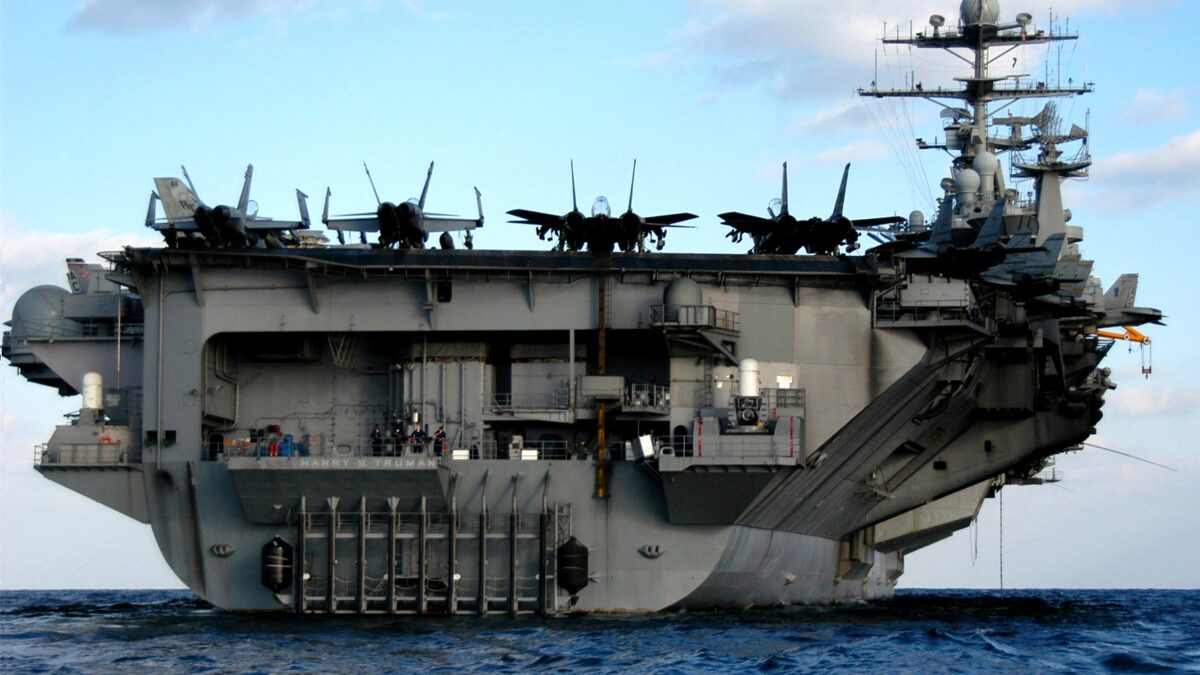
On Monday night, the President of the United States walked into the White House briefing room with five minutes of notice and told the world that the war with Iran was, in his words, effectively over. The guns, he said, had done their work. And in the very same breath, he announced that the blockade would stay. Not only stay, but grow. A new operation, Task Force Iron Gate, would now seal Iran by land as well as by sea, until, in his phrase, very little gets into, or out of, Iran.
Read that sentence again, slowly. A war declared over. A nation declared sealed. If the war is over, why must the gates remain shut? And if the gates must remain shut, in what sense is the war over?
I have spent my life watching power speak in contradictions, and I have learned that the contradiction is usually the truth. The war is not over. It has only changed its shape. The bombardment has given way to the siege, and the siege is the oldest weapon in the history of war. It is also the cruellest, because it does not kill soldiers on a battlefield. It waits. It starves. It grinds a whole people down, day after day, while the besieger keeps his own hands clean and calls it peace.
The Oldest Weapon in War
Before there were aeroplanes, before there were missiles, before there were even cannons, there was the siege. Homer sang of Troy, a city shut behind its walls for ten years while an army camped outside and waited for hunger to do what spears could not. The besieger did not need to break the gates. He only needed to make sure nothing passed through them.
History has never abandoned that lesson. It has only refined it. When Napoleon could not defeat Britain at sea, he tried to defeat her by decree, with the Continental System of 1806, forbidding all of Europe from trading with the British. The blockade was meant to strangle London. Instead, it strangled the blockader. Smuggling boomed, prices soared, allies turned resentful, and the system Napoleon built to ruin his enemy became one of the weights that dragged his empire down. The Continental System is the great warning of history: a siege is a weapon that wounds both hands that hold it.
A century later, Britain turned the same weapon on Germany. The naval blockade of the First World War did not win a single battle, yet by the winter of 1916 it had produced the Turnip Winter, when German civilians ate fodder meant for animals. The blockade helped end that war, and it also poisoned the peace that followed, because a people who believe they were starved into surrender do not forgive easily.
And then there was Cuba, in October 1962, when President Kennedy ringed the island with American warships and called it, very deliberately, a quarantine. He did not call it a blockade, because under international law a blockade is an act of war, and Kennedy wanted the effect of war without the name of it. The words change. The ships do not.
This is the mirror in which I ask you to look at Iran today. A blockade by any other name is still a blockade. A siege by press release is still a siege. And when a president declares the war over while tightening the noose, he is not ending a war. He is renaming it.
A Gate Made of Ships, and Now of Paper
Let me set out the facts as they stand, because a column that does not respect facts is only a sermon, and you deserve better than sermons.
The war began on 28 February 2026, when the United States and Israel launched joint strikes against Iran. Nine months of open war followed. In July, Washington announced a naval blockade of Iranian ports on the Persian Gulf and the Gulf of Oman. United States Central Command says that blockade has already prevented the export of more than 25 billion dollars of Iranian crude oil. That figure comes from the American military itself, and it has not been independently verified. But even if it is only half true, it describes an economic wound of staggering size.
On Saturday 7 November, the commander of Central Command, Admiral Brad Cooper, ordered the creation of Task Force Iron Gate. It is a small thing on paper: about twenty military and civilian personnel, headquartered in Tampa, Florida. Its mission is to coordinate with other American government agencies to stop advanced weapons systems, dual-use technologies, sanctioned materials and illicit revenues from crossing Iran’s land borders and the Caspian Sea. The next day, President Trump announced it on his Truth Social platform: Task Force Iron Gate is in full force and effect in the Islamic Republic of Iran. Coupled with history’s greatest Naval Blockade, very little gets into, or out of, Iran.
Consider the geography that twenty people in Tampa are supposed to seal. Iran shares roughly 5,894 kilometres of land border with seven countries, plus some 740 kilometres of Caspian coastline. Mountains, deserts, rivers, tribal country, smuggling routes older than any empire. A task force of twenty cannot physically close that. It does not need to. Its purpose is not to stand on every mountain pass. Its purpose is to frighten banks, insurers, shippers and traders, to make the cost of touching Iran so high that the world polices itself. That is how a modern siege works. The gate is not made of iron. It is made of fear, and fear is cheaper than steel.
Secretary of State Marco Rubio told the foreign ministers of the G7 that the United States would intensify financial pressure on Iran rather than resume military strikes or accept an unfavourable peace deal. The strategy, he said, has the backing of Treasury Secretary Scott Bessent, the intelligence chiefs and Jared Kushner. The President himself called fresh strikes highly improbable, though he added that Washington had identified potential targets, including 38 bridges, if military action resumed. The message is unmistakable: the bombs may rest, but the pressure will not.
The Market Has Already Voted
If you want to know what the world truly believes, do not listen to the speeches. Watch the price of oil.
On the Friday before the President’s announcement, Brent crude closed at 98 dollars and 32 cents a barrel. On Monday, after the declaration that the war was effectively over, it closed at 92 dollars and 57 cents, down almost six percent in a single day, its lowest since the end of August. During the session it had briefly fallen as low as 89 dollars and 18 cents. The market, that cold and unsentimental judge, had delivered its verdict before the diplomats had finished their sentences: it believed the shooting was over, and it priced peace into every barrel.
But the market believes what it wants to believe, and it has been wrong before. The price fell because traders heard the words effectively over. They did not yet hear the rest of the sentence: the blockade stays. Oil is the lifeblood of the Iranian state, and a blockade that has already, by Washington’s own account, stopped 25 billion dollars of crude exports is not a detail. It is the war itself, continued by other means.
Ask yourself this, reader. If a nation cannot sell what it produces and cannot buy what it needs, if its ships cannot sail and its traders cannot trade, is it at peace? Or is it simply being killed more slowly, and more quietly, so that no one has to watch?
The Other Side of the Gate
A siege has two sides, and the besieged do not sit idle behind their walls. On Tuesday 10 November, the very day after the Iron Gate announcement, Iran’s Revolutionary Guards unveiled what they called a new underground missile city. State television showed the armed forces chief of staff, Major General Ali Abdollahi, and the aerospace force commander, Brigadier General Majid Mousavi, touring tunnels packed with ballistic and cruise missiles on mobile launchers. Independent experts who studied the footage noted a warhead developed for the Fattah-1 missile mounted on a Kheibar Shekan missile, and signs that Iran is working to reduce the radar signature of its missiles, making them harder to detect and intercept. The location of the facility was not disclosed, and nothing in the footage can be independently verified. The Jerusalem Post itself noted that the complex cannot be verified and may or may not be brand new.
Yet verification is almost beside the point. The unveiling was a message, and the message was legible: you may seal our ports, but you cannot seal the earth beneath our feet. The Guards have announced that missile and drone production is moving deep underground, into what they call missile production cities, built to survive sustained bombardment. On the same day, Al Jazeera reported that Iran has lifted its self-imposed 2,000-kilometre limit on the range of its ballistic missiles. Bloomberg, citing an unnamed Western official, reported that Iran is now producing about fifty missiles a month. An Israeli security assessment published on 3 November put Iran’s stockpile of ballistic missiles able to reach Israel at more than 1,700.
And here is the fact that should humble every general in Washington. American intelligence sources told The New York Times in May that after three months of high-intensity hostilities, Iran had retained approximately seventy percent of its missile arsenal, and had restored operational access to thirty out of thirty-three missile facilities along the Strait of Hormuz. Nine months of war, the most advanced air forces on earth, and seven in ten missiles survived. The mountains kept what the skies could not take.
This is the eternal arithmetic of the siege. The besieger believes that time is his ally, that hunger and isolation will do his work for him. The besieged believes that endurance is his weapon, that every day he survives is a defeat for the besieger. Both can be right, and both can be wrong, and the people caught between them pay the price in either case.
The Mediator in the Middle
Between the two walls stands a mediator, and his name is Qatar. On Monday, the President sat for forty-five minutes with Vice President J.D. Vance and the Prime Minister of Qatar, Sheikh Mohammed bin Abdulrahman Al Thani, the man carrying Iran’s latest proposal. When the meeting ended, there was no deal and no breakthrough. That is the White House’s own word.
What was Iran offering? According to diplomatic sources quoted in the press, Tehran would reopen the Strait of Hormuz within two days if the war ends on all fronts. In return, America would lift the blockade and release eight billion dollars of Iranian money frozen in Qatar. Neither government has confirmed any of this. Iran’s foreign minister, Abbas Araghchi, says the two-day proposal still stands, and that Tehran will not negotiate unless America meets seven conditions set out in an earlier agreement: lift the naval blockade, release the seized assets, lift the sanctions.
Four of the President’s own cabinet members, Bessent, Lutnick, Rubio and Hegseth, are reported to oppose a deal on these lines. The President himself said a resumption of strikes was largely unlikely if negotiations made progress and the parties signed a strong agreement. So the door is open, but only just, and the men guarding it disagree about whether anyone should be allowed to walk through.
I look at this scene and I think of every negotiation in history that failed not because the terms were impossible, but because neither side could afford to be seen accepting them. The Iranians cannot be seen surrendering to a blockade. The Americans cannot be seen lifting a blockade for nothing. And so the gate stays shut, and the mediator carries proposals back and forth like water in a leaking bucket, while ordinary Iranians, who have no say in any of this, wait to see whether their country will be allowed to breathe.
Meanwhile, in Israel, the politics of war continue their own uneasy dance. In late October, Channel 12 reported that Prime Minister Benjamin Netanyahu had sought to order military preparations for a possible strike on Iran just days before Israel’s elections, and that the armed forces chief of staff, Lieutenant General Eyal Zamir, had resisted, demanding further deliberations and signed legal authorisation. The defence minister, Israel Katz, called the reports completely baseless and false, and Netanyahu dismissed them as nonsense. American officials were reported to have intervened to prevent any strike before the vote. Netanyahu has also said publicly that he instructed the army and the Mossad to work towards the overthrow of the Iranian regime. Whatever the truth of the October quarrel, it reveals something important: even among allies, the appetite for another round of bombing is not what it was. The war has tired its own makers.
What a Siege Does to the Besieger
Now I come to the question that matters most, and it is not a question about Iran. It is a question about America.
History teaches that a siege always costs the besieger something, and the cost is not measured only in ships and money. Napoleon’s Continental System did not only fail to ruin Britain. It corrupted France. It turned allies into smugglers, merchants into criminals, and whole nations into resentful subjects. The British blockade of Germany did not only starve German civilians. It planted a bitterness that poisoned European politics for a generation. The sanctions decade on Iraq in the nineteen-nineties, the siege without soldiers, did not only immiserate Iraqi families. It stained the reputation of the United Nations itself, and the argument over who was responsible for the suffering of Iraqi children has never truly ended.
A siege is seductive to the powerful because it looks clean. No flag-draped coffins come home. No burning cities appear on the evening news. The violence is slow, statistical, deniable. A child who dies because medicine cannot cross a border does not make the front page. A family that cannot afford bread because its currency has collapsed does not get a state funeral. The besieger can tell himself that he has not killed anyone, because he has only closed a gate.
But the world is watching, and the world is learning. The American midterm elections on 3 November delivered a decisive victory to the Democrats, and analysts on all sides have linked that result to public opposition to the war against Iran and dissatisfaction with its consequences. The people of the country that built the gate have begun to ask what the gate is for. That is how sieges end, not with a breach in the wall, but with a change of heart in the camp outside it.
And there is a deeper danger still. A nation that learns to solve its problems by sealing other nations behind walls will eventually begin to seal things at home. The habit of the gate spreads. The language of the blockade, the language of total lockdown, of nothing getting in or out, is the language of a prison. A great power that speaks of other peoples the way a jailer speaks of prisoners has already begun to lose the argument for its own greatness.
I say this not as an enemy of America. I say it as a student of history who has watched empires mistake their power for their wisdom, and who knows how that story ends. The British thought the blockade would make Germany docile. Napoleon thought the Continental System would make Europe obedient. Both were wrong, and both paid for it.
The Verdict of History
So what is the truth of this moment? The war, the President says, is effectively over. The blockade, the President says, will stay. Iran shows the world its underground cities and lifts the limit on its missiles. Qatar carries proposals that no one will confirm and no one will accept. The oil price falls, the generals wait, and behind the iron gate, ninety million people get on with their lives as best they can.
I have read this story before. I have read it in the siege of Troy, in the Continental System, in the Turnip Winter, in the quarantine of Cuba, in the sanctions on Iraq. And in every version, the ending is the same. The siege does not decide who is right. It decides only who can endure longer. And endurance is not a virtue that belongs to the powerful. It belongs to the people who have no choice but to endure.
A gate can be built in a day. Trust, once broken, takes a generation to rebuild. The guns have gone quiet over Iran. That is a mercy, and I will not pretend otherwise. But do not call it peace. Peace is not the absence of bombing. Peace is the opening of the gate.
Until that gate opens, the war is not over. It is only waiting, behind iron, for its next name.
Sources & References
- The Hindu BusinessLine — Trump announces Task Force Iron Gate to restrict Iran’s land supply routes, 9 November 2026
- Terror Monitor — Task Force Iron Gate announcement and CENTCOM details, November 2026
- InShorts — Trump picks economic squeeze over war or deal with Iran; Rubio briefs G7 foreign ministers, 11 November 2026
- National Security Journal — Iran unveils underground missile city, 11 November 2026
- Wikipedia — Iranian underground missile bases, updated 11 November 2026
- Press TV — Iron Gate, paper walls: why America’s new pressure campaign faces geographic and logistical limits, 10 November 2026
- The Media Line — US thwarted Netanyahu’s planned Iran strike ahead of Israeli elections, 7 November 2026

About the Author — advmannan1
Related Articles

Eighty-One Years to Overnight Success: M. John Harrison, the Booker Prize, and the Revenge of the Patient Writer
On Monday night in London, an 81-year-old writer who spent sixty years outside the literary establishment's favour became…

The Night America Changed Its Mind: What the 2026 Midterms Really Mean
On 3 November 2026, American voters delivered a verdict that rewrote history: Democrats retook Congress and elected the…
The Earth Has Stopped Whispering: 2026 and the Warning We Can No Longer Ignore
The WMO's new report lands on COP31's opening day: 2026 will be one of the four warmest years…