Amazon in Talks to Acquire AI Chip Startup Decart for About $7 Billion, Wall Street Journal Reports

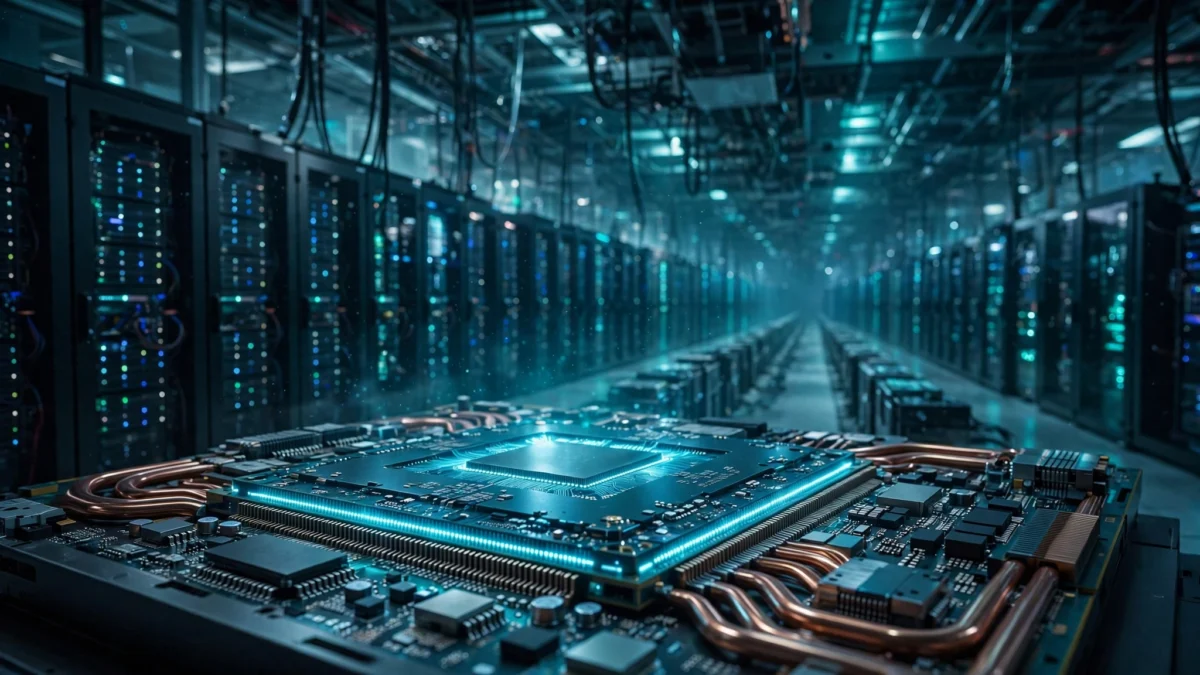
Amazon is in talks to acquire the artificial-intelligence startup Decart in a deal that could be valued at around $7 billion, according to the Wall Street Journal, which reported on Sunday that the negotiations are advanced and a deal could come together soon. The report, citing people familiar with the matter, cautioned that the talks could still fall apart or that another suitor could emerge.
If completed at that price, the acquisition would be one of the largest in Amazon’s corporate history, and it would nearly double the startup’s valuation from just months ago. PitchBook data cited by the Journal puts Decart’s value at nearly $4 billion in May, after the company raised more than $400 million in venture funding from investors including Sequoia Capital, Benchmark and Radical Ventures.
Neither company has commented publicly on the talks. The Journal’s reporting is the first to name Amazon as the bidder in a sale process that has been the subject of weeks of speculation in Israeli and American tech media.
The deal on the table
Decart, a San Francisco-based startup founded in 2023 by three Israeli engineers — brothers Dean and Orian Leitersdorf and Moshe Shalev — has been at the centre of a quiet bidding war for much of the past month, according to the Journal. Israeli business outlet Calcalist reported earlier this month that the company was in advanced negotiations to be sold to a major international technology company, with deal drafts already at an advanced stage and an agreement potentially signable within days.
According to Calcalist, the original negotiations were with chip giant Nvidia, and the two sides were close to an agreement before a competing major technology player entered with a higher offer. The startup’s founders then decided to pursue the rival bid. Industry reporting has floated several other potential suitors, including Elon Musk’s SpaceX and the cloud computing company Nebius, alongside Amazon. Decart has declined to comment on the reports, according to Calcalist.
The Journal’s account adds that AWS, Amazon’s cloud division, gave Decart early access to its custom Trainium3 AI chip in 2025 after meeting the company’s founders and being impressed by them — a detail that suggests the courtship between the two companies predates any formal acquisition discussions by many months.
What Decart actually makes
Decart’s business sits in one of the most strategically contested layers of the AI stack: the interface between AI software and the chips that run it. According to the Journal, the company’s software makes it easier for developers to switch between different AI chips — a capability that is becoming increasingly important as companies race to secure more computing power and reduce their dependence on any single supplier.
That single-sentence description understates the scale of the problem it addresses. For most of the AI boom, Nvidia’s graphics processing units have been the default hardware for training and running large models, and Nvidia’s CUDA software platform has made it painful for customers to move workloads elsewhere. Software that can transparently run the same AI models across Nvidia GPUs, Amazon’s Trainium chips and Google’s TPUs without rewriting code is, in effect, a portability layer — and whoever controls it gains leverage over the entire hardware market.
Decart is also developing what the AI industry calls world models — systems that can generate and simulate realistic three-dimensional environments in real time. Its two named products, Lucy and Oasis, belong to this category, according to the Journal. The company demonstrated the technology’s mass appeal in 2024 when it released Oasis, a video game built on its world-model technology that generates its world in real time rather than loading pre-rendered graphics. According to Calcalist, the game reached one million users within three days and briefly outpaced ChatGPT in download charts, prompting Musk to post “wow” on X after trying it. The outlet reported that Musk and Dean Leitersdorf have stayed in regular contact since.
Nvidia’s own relationship with Decart is close enough to complicate the bidding picture: the chipmaker has participated as an investor in the startup’s funding, according to Israeli reporting, which helps explain why Nvidia was the first party at the negotiating table before Amazon’s entry changed the arithmetic.
Why Amazon wants it
For Amazon, the logic of a Decart acquisition runs through three linked ambitions. The first is silicon. Amazon has spent years developing its own custom AI chips, culminating in the Trainium3, in an effort to compete with Nvidia, which continues to dominate the market for the graphics processing units powering the AI boom, according to the Journal. But custom chips are only as useful as the software that runs on them. A startup whose core product is making models portable across chips would accelerate Trainium adoption among AWS customers — and, just as importantly, make it easier for those customers to stay inside Amazon’s cloud rather than drifting toward Nvidia-aligned rivals.
The second ambition is cost. As AI workloads scale, the economics of inference — the running of models in production, as opposed to training them once — are becoming the decisive battleground in cloud computing. Any technology that squeezes more performance out of the same hardware directly improves AWS’s margins and lets Amazon price AI services more aggressively against Microsoft and Google. Decart’s optimisation technology sits precisely at that point of leverage.
The third is talent. Decart was founded less than three years ago and has already built technology that giants are willing to pay billions for. In an industry where top AI engineers are scarcer than compute, acquiring the team that built world models like Lucy and Oasis is a strategic prize in itself. It is a pattern Amazon has repeated across its AI buildout: the company has invested heavily in Anthropic, committed billions to data-centre infrastructure, and rebuilt its Alexa voice assistant around large models — each move aimed at ensuring Amazon owns more of the AI stack rather than renting it.
Amazon’s biggest deals, revisited
A $7 billion Decart acquisition would slot in among Amazon’s largest deals ever, behind only its $13.7 billion purchase of Whole Foods in 2017. The company’s other sizable acquisitions in recent years include the $6.5 billion deal for the MGM movie and television studio in 2022 and a roughly $11 billion deal for the Starlink rival Globalstar announced earlier this year, according to the Journal.
The comparison is instructive. MGM bought Amazon a content library; Globalstar bought it a satellite network. Decart would buy it something arguably more durable than either: a foothold in the software layer that decides which chips the AI industry can use, and a team that builds the world models that are increasingly seen as the next frontier after language models. It is the kind of acquisition that only makes sense if Amazon believes the current chip order — with Nvidia at the centre — is going to be renegotiated, and wants to be holding the contract when it is.
Analysis: Why It Matters
The Decart talks are worth reading as more than a big number. They are the clearest signal yet that the AI industry’s consolidation phase has reached the infrastructure layer — the unglamorous plumbing beneath the chatbots and image generators that capture public attention.
The first generation of AI deals was about models: startups with impressive demos were absorbed by the labs that had the compute to train them. The second, which we are now watching, is about everything around the models. Chip-switching software, inference optimisation, world simulation — these are the technologies that determine who profits when AI goes from research curiosity to industrial utility. That the bidding involves Amazon, Nvidia, SpaceX and Nebius simultaneously tells you that this layer is now seen as contested strategic ground, not commodity tooling.
There is also a valuation story here that should give observers pause. A company valued at nearly $4 billion in May is reportedly fielding offers of around $7 billion five months later — a near-doubling with no intervening product launch of comparable scale reported publicly. The premium partly reflects a genuine bidding war, which always inflates prices. But it also reflects how little optionality the giants feel they have left: each believes it cannot afford to let a rival own this technology. When every bidder is afraid of losing more than it is excited about winning, prices detach from fundamentals. That is not necessarily a bubble in the classic sense — the strategic value is real — but it is the dynamic that has defined every technology land grab from railways to mobile spectrum.
The world-model dimension deserves separate attention. Language models learn patterns in text; world models learn patterns in how the physical world behaves. That makes them potentially foundational for robotics, autonomous vehicles, simulation for scientific research, and the next generation of interactive media — all markets Amazon touches, from warehouses to Prime Video to its rumoured robotics ambitions. Buying Lucy and Oasis would be a bet that the future of AI is not just models that talk, but models that simulate. It is a bold bet for $7 billion; it is also, notably, the same bet several of Amazon’s rivals are quietly making.
For Israel’s technology sector, the deal — if it closes — would be another validation of the country’s deep-tech pipeline. A startup founded by Israeli engineers in 2023, still in its third year of existence, commanding a multi-billion-dollar exit to the world’s largest cloud provider would rank among the most significant Israeli tech exits in recent memory, and would intensify the global hunt for Israeli AI talent. Calcalist has already noted that an acquisition by SpaceX instead would have given Musk his first Tel Aviv research centre; an Amazon victory would more likely anchor Decart’s team to AWS’s existing infrastructure organisation.
Finally, there is the question the talks pose for Nvidia. The chipmaker dominates AI hardware today, but Decart’s entire value proposition is premised on a world where customers are not locked to a single vendor. Nvidia participated in Decart’s funding and negotiated to buy the company — and then lost the lead to Amazon, a customer-turned-competitor. Whether Nvidia responds with its own portability play or by doubling down on the CUDA moat will shape the chip market for years.
What to watch next
- Does the deal close? The Journal’s sources emphasise the talks could still collapse or be overtaken by another suitor. In a bidding war this public, the gap between “in talks” and “signed” is where most deals die.
- The final price. Around $7 billion is the reported figure, but rival bids have already pushed the number up once. If SpaceX or Nebius re-engages, the premium could climb further.
- Regulatory scrutiny. Large technology acquisitions are attracting heavier antitrust review worldwide. A $7 billion deal by the world’s largest cloud provider for AI infrastructure technology will not sail through unexamined.
- Nvidia’s response. Having come close to owning Decart, the chipmaker must now decide whether to build, buy or block — none of which are cheap options at this scale.
- What happens to Trainium. Watch for AWS announcements about chip-portability tooling and customer adoption of Trainium in the months after any deal — that is where the strategic payoff will show up first.
Sources

About the Author — Abdul Mannan
Related Articles

Satya Nadella Urges AI “Emergency Brake”: Assume Every Advanced Model Is Compromised
Microsoft's chief executive says companies must treat powerful AI models as potential insider threats and build "emergency brakes"…
Yandex Shuts Down Third Data Centre in Four Days After Ukrainian Drone Strike Hits Vladimir Facility
Yandex said its Vladimir-region data centre has been completely shut down after a drone attack on Sunday, the…

Ten Minutes With an AI Assistant Is Enough to Erode People’s Persistence at Hard Problems, Major Study Finds
A peer-reviewed study of 1,222 people found that just ten minutes with an AI assistant measurably reduced persistence…