Brewers Rally Past Dodgers 7–4 in Game 2 to Seize 2–0 NLCS Lead

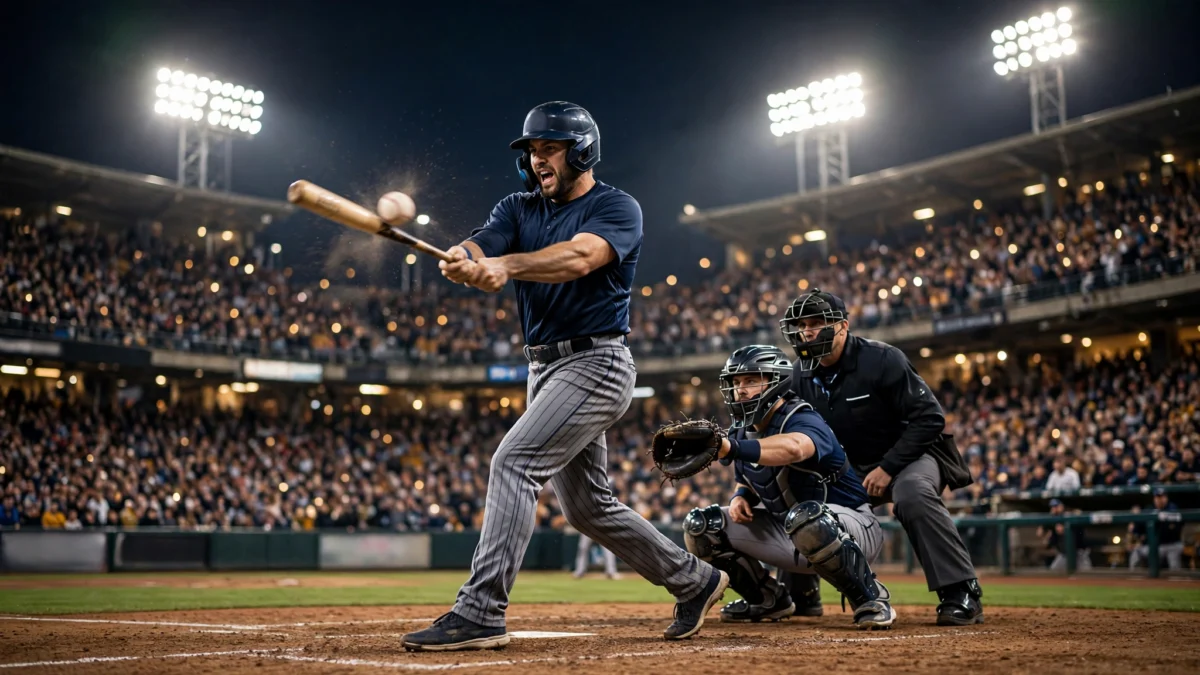
MILWAUKEE — William Contreras crushed a game-tying home run in the fifth inning and singled home the go-ahead run an inning later, and four Milwaukee relievers combined to retire all 15 batters they faced, as the Brewers defeated the Los Angeles Dodgers 7–4 on Monday night in Game 2 of the National League Championship Series at American Family Field, taking a 2–0 lead in the best-of-seven set.
It was the sixth straight nail-biter of Milwaukee's postseason — and the strangest formula yet. The Dodgers took the lead on three separate occasions in the first five innings, and the Brewers answered every single time, before two eighth-inning insurance runs finally opened up a lead in what has become this October's signature Milwaukee recipe: shaky defence, timely hitting, and a bullpen that simply refuses to bend.
How Game 2 unfolded
The Dodgers struck first. Mookie Betts singled, and Teoscar Hernández lifted a sacrifice fly to centre that scored Betts for a 1–0 lead in the first inning. Milwaukee answered immediately: Brice Turang scored on a William Contreras RBI single in the bottom half, knotting the game at 1–1.
Los Angeles went back in front in the third on a Brewers mistake. With Tommy Edman on third, Brewers starter Logan Henderson made a wild pickoff throw to first, allowing Edman to stroll home for a 2–1 lead. The Brewers responded with their biggest rally of the night against Dodgers ace Yoshinobu Yamamoto. Jake Bauers worked the ace for a 12-pitch walk — the longest at-bat Yamamoto has faced in his brief major-league career — to load the bases with two outs. Christian Yelich then lined a two-run single to centre on the second pitch he saw, scoring Turang and David Hamilton for a 3–2 Milwaukee lead.
The chaos continued in the fifth. Henderson's throw to first on a Tommy Edman bunt sailed wild, allowing Kyle Tucker to score the tying run. Later in the inning, Freddie Freeman lifted a sacrifice fly that put Los Angeles ahead 4–3.
The lead lasted exactly half an inning. Contreras tied the game with a towering 436-foot home run to centre off Dodgers reliever Kris Bubic in the bottom of the fifth. An inning later, he came through again: with David Hamilton on base, Contreras singled to give Milwaukee a 5–4 lead it would never relinquish.
Milwaukee added breathing room in the eighth. Turang singled home Hamilton, and Bauers followed with an RBI single of his own that was compounded by a fielding error from Dodgers outfielder Andy Pages, allowing Turang to score for a 7–4 cushion. It was, remarkably, the first time in six Brewers playoff games this October that either team had led by more than two runs.
Contreras takes over
Contreras finished 3-for-4 with a home run and three RBIs, according to Reuters, driving in the tying run, the go-ahead run, and then contributing to the insurance rally. His fifth-inning blast tied Jackson Chourio for the most home runs in Brewers postseason history, according to USA Today — a fitting milestone for a player Milwaukee acquired in a three-way trade with Atlanta and the Athletics at the 2022 winter meetings that has increasingly looked like a franchise-altering steal.
Brewers manager Pat Murphy has seen Contreras's evolution up close. As USA Today reported, when the Brewers made the deal, Walt Weiss — then Atlanta's bench coach — told Murphy he was getting something special. Four Octobers later, with the biggest hits of the franchise's biggest game in years, that scouting report has held up.
Turang reached base four times and scored three runs. Hamilton scored three times. Yelich's two-run single in the third was the hit that ended Yamamoto's night. The Brewers piled up 12 hits and 19 baserunners against the toughest October pitcher in the game — their best offensive output of the postseason since Game 2 of last year's Division Series, according to the Milwaukee Journal Sentinel.
Yamamoto chased: the shortest postseason start of his career
Yoshinobu Yamamoto entered the night as the most decorated postseason pitcher of his generation. He was 8–1 with a 2.14 ERA across 11 career playoff appearances, per the Associated Press, and had won World Series MVP in 2025 — a résumé that had Bleacher Report mentioning him in the same breath as Curt Schilling and Madison Bumgarner.
Monday was a bump in that road. Yamamoto lasted just two and two-thirds innings, allowing three runs on four hits with two walks and one strikeout over 75 pitches — the shortest postseason start of his career. Milwaukee's approach was relentless: long, grinding at-bats that drove his pitch count to 75 before he could record the ninth out. Hamilton led off the third with a single on the sixth pitch of his at-bat. Turang drew a walk on six pitches. Contreras made Yamamoto throw seven more pitches before flying out. And then Bauers's 12-pitch walk loaded the bases and set up Yelich's knockout single.
As Bleacher Report noted, Yamamoto remains a peer of the game's great October arms — his career postseason ERA stands at 2.47 across 12 outings. But for one night, against the most persistent lineup in baseball, he looked mortal.
A bullpen for the record books
The game became a battle of bullpens after the starters departed, and it was not close. Dustin May, JoJo Romero, Abner Uribe and Aaron Ashby combined to shut down the Dodgers across the final five innings, retiring all 15 batters they faced in order. The bullpen recorded seven of Milwaukee's nine strikeouts on the night.
Romero earned the win with a clean sixth inning, and Ashby picked up his first save of the postseason with one and two-thirds scoreless frames. According to USA Today, the Brewers' bullpen now carries a 0.31 ERA this postseason — the third-lowest ERA through six games of a postseason since the divisional era began in 1969.
The unit has become the defining feature of this Milwaukee team. Night after night, through six consecutive close games, the relievers have held every late lead. As USA Today columnist Bob Nightengale wrote, it is outrageous — but it is the Brewers.
Henderson's costly errors
Lost in the celebration was the shaky line from Brewers starter Logan Henderson, whose glove undid much of his work on the mound. Henderson committed two throwing errors that each led directly to Dodgers runs — the wild pickoff throw that scored Edman in the third, and the wild throw to first on Edman's bunt that scored Tucker in the fifth.
According to ESPN Insights, Henderson became only the second pitcher in Major League postseason history to make errors on two different run-scoring plays in the same game. The other was Cardinals pitcher Max Lanier — in Game 1 of the 1942 World Series, more than 80 years ago.
Henderson's final line: four innings, three hits, four runs (two earned), two walks, two strikeouts. Milwaukee's seventh error of the playoffs. The offence bailed him out, but the Brewers' defence remains the one part of this machine that keeps misfiring — a fact the Dodgers will surely try to exploit when the series resumes.
Dodgers' offence goes quiet
For all the drama, the Dodgers managed only three hits on the night. They went 0-for-4 with runners in scoring position and dropped to 2-for-26 in those situations this postseason, according to the Associated Press. Not a single Dodgers run came with the aid of a base hit — Freeman and Hernández each had a sacrifice fly, and the other two runs scored on Henderson's throwing errors.
Los Angeles is trying to become the first National League team to win three consecutive World Series. But the defending two-time champions now trail 2–0 and must win four of the next five games — starting on the road, at Dodger Stadium, where the Brewers have already shown they can handle hostile environments.
The Dodgers have been here before: they rallied from a 2–0 deficit against the Atlanta Braves in the 2020 NLCS before going on to win the World Series. But that comeback happened six years ago, with a different team, against a different opponent — and it remains one of the few historical comforts available to them right now.
Analysis: Why It Matters
Baseball's October has a way of redistributing power. The Dodgers were built to be inevitable: the sport's deepest roster, its most decorated ace, a lineup full of former MVPs. The Brewers were built to be annoying: a grinding lineup, aggressive baserunning, and a bullpen that treats late innings like a locked door.
Through two games, annoying is winning.
The deeper truth of Game 2 is not that Yamamoto failed — it is how Milwaukee made him fail. The Brewers did not ambush him with home runs. They wore him down with attrition: 12-pitch walks, six-pitch singles, foul ball after foul ball. They made a 75-pitch outing out of two and two-thirds innings. That is a team with a plan, executing it against the one pitcher who was supposed to be plan-proof. If the Dodgers cannot find a starter who can get through the middle innings against this lineup, the series math gets brutal quickly — because Milwaukee's bullpen, statistically one of the great postseason units of the modern era, turns every game into a five-inning contest the Dodgers have not yet been able to solve.
There is also the psychological weight of the 2–0 hole for the defending champions. Teams that take a 2–0 lead in a best-of-seven series win the series the large majority of the time — and the Dodgers' path now requires beating a team that has won six straight one-run-or-tight games while believing, correctly, that every close game belongs to them. Milwaukee's nickname this month — the "Cardiac Crew" — is not just branding; it is a self-fulfilling prophecy. Teams that expect to win the tight ones usually do.
For Milwaukee, the stakes are historic. The Brewers are chasing their second pennant and their first in the National League. Their only World Series appearance came in 1982, when they were still an American League club. Forty-four years of waiting now stands two wins from its end. That kind of drought does not just motivate a fan base — it removes the pressure valve. This team plays like it has nothing to lose because, in a sense, it has already waited longer than almost anyone alive can remember.
The Dodgers, meanwhile, face a different kind of pressure: the pressure of expectation. A three-peat was the stated goal. A 2–0 deficit to a small-market team in the NLCS was not in the script. How the clubhouse responds — whether the quiet bats wake up, whether the pitching staff can cover for a short Yamamoto start — will define not just this series but the legacy of this Dodgers era.
One more quiet storyline deserves attention: Logan Henderson's errors. Milwaukee survived them this time. But a team does not commit seven errors in six playoff games by accident. Sloppy defence is the one crack in the Brewers' armour, and against a team with Los Angeles's talent, cracks have a way of widening at the worst possible moment.
What to Watch Next
- Game 3 on Wednesday: The series shifts to Dodger Stadium for Game 3 on October 14 at 8 p.m. ET. Los Angeles will start Blake Snell; Milwaukee counters with Robert Gasser. The Dodgers need a stopper performance in the worst way.
- The Dodgers' bats with runners on: 2-for-26 with runners in scoring position this postseason is a number that cannot survive contact with Milwaukee's bullpen. Betts, Freeman and Hernández must start driving runners in, or the season ends.
- Milwaukee's bullpen workload: Five scoreless innings in Game 2, on top of a heavy October load. At some point the arithmetic of relief pitching catches up — unless the starters start going deeper.
- Contreras's October: He now sits tied for the most postseason homers in franchise history. A catcher carrying an offence in October is the oldest story in baseball — and it is happening again.
- The other bracket: Across the American League, the Cleveland Guardians and Tampa Bay Rays opened their ALCS on Monday as well. Whoever survives that set will face a Brewers team that suddenly looks very hard to beat — or a Dodgers team fighting for its dynasty.
Sources
- Reuters — William Contreras sparks Brewers' Game 2 rally against Dodgers
- Associated Press (via theScore) — Contreras delivers and Milwaukee's bullpen shines
- USA Today / Bob Nightengale — Believe in the Brewers yet? Milwaukee in dreamland, Dodgers desperate after wild Game 2
- Milwaukee Journal Sentinel — Brewers offense ignites, bullpen locks down for 2-0 NLCS lead
- Sports Illustrated — The Good, the Bad, the Ugly from Brewers Game 2 win
- Sportradar — Brewers vs Dodgers NLCS Game 2 box score, Oct 12, 2026

About the Author — Abdul Mannan
Related Articles

Giants and Commanders Play Out 27-27 Overtime Tie After Skattebo Fumble and Botched Clock Management
A strip by Daron Payne and a clock that ran out on Jayden Daniels turned a winnable overtime…
Manchester City Silence Hostile Anfield as 3-0 Win Over 10-Man Liverpool Keeps Perfect Start Alive
Manchester City beat 10-man Liverpool 3-0 at Anfield to make it six wins from six, holding their nerve…
Rangers Stay Perfect at Home, Beat Canucks 6-2 in First Game Without Injured Shesterkin
Tye Kartye and Will Cuylle each scored twice as the Rangers won 6-2 over the Canucks at Madison…