
MI5 Chief Warns of ‘New Era’ of Threats as Iran and Russia Ramp Up Hybrid Attacks on Britain

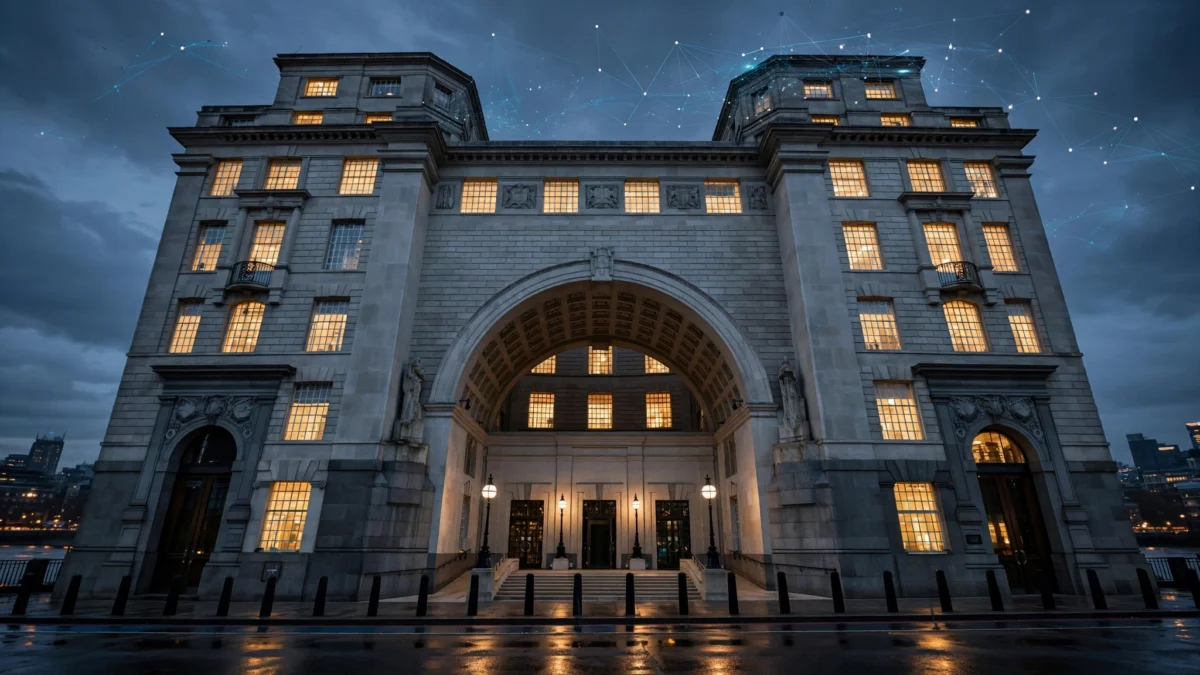
Britain’s domestic spy chief has used his annual public address to deliver the most far-reaching warning of his tenure: the country’s security service is confronting what he called a “new era of national security” — a moment he placed on the same level as the September 11 attacks a quarter of a century ago.
Sir Ken McCallum, Director General of MI5, told journalists at the service’s Thames House headquarters in central London on Tuesday that MI5’s caseload of state threats had quadrupled over the past decade — and that the organisation was now devoting more resources to countering hostile states than it did at the height of the Cold War.
His speech landed a day after Prime Minister Andy Burnham told the House of Commons that Iran was “highly likely” behind last month’s suspected terror plot targeting RAF Fairford in Gloucestershire, an air base used by American bombers that carried out strikes on Iran. The Prime Minister said the plot was “almost certainly” directed by Iran’s Islamic Revolutionary Guard Corps, prompting the Foreign Office to summon Tehran’s ambassador and impose sanctions on two Iranian nationals.
Iran Turns to “Harder Targets”
McCallum told his audience there had been a major shift this year in what he described as “Iranian ambitions to come at harder targets, like military sites”. He declined to speak in detail about the Fairford case, citing an ongoing investigation, but said the suspected plot was far from an isolated event. “The RAF Fairford incident … is not unique,” he said. “There have been other examples, not just in the UK but around the world,” according to Reuters.
The MI5 chief revealed that the service had made more than 50 arrests over the past 12 months connected to Iran-linked activities, and said Tehran was attempting to expand its hybrid campaign in Britain — much of it aimed at Jewish communities through arson and violence, alongside the newer push toward military targets.
The comments add a sharper intelligence assessment to the government’s position. On Monday, Foreign Secretary Ed Miliband’s office confirmed that the Iranian ambassador had been summoned for a meeting with Foreign Office minister Stephen Doughty, and that two Iranian nationals had been sanctioned under the 2023 Iran Sanctions Regulations: Ruhollah Bazghandi, described by the government as the IRGC’s head of counterespionage operations, and Shahram Ali Reza Tamarzadeh Jakki, described as a facilitator for the Zindashti criminal network accused of organising plots against dissidents. The designations impose an asset freeze, a travel ban and a director disqualification.
Home Secretary Shabana Mahmood has told MPs that a known but unnamed individual based in Iran is believed to be behind the Fairford plot. Five men in their early twenties were initially arrested near the base on suspicion of terrorism and explosive offences; they were later released without charge and remain on bail while counter-terrorism police continue their investigation. British security officials have also acknowledged that US intelligence was the original source of the warning about a suspected Iranian drone plot against the base — a plot that prompted President Trump to withdraw American bombers from Fairford last week.
Iran has denied any involvement. Its ambassador to London, Seyed Ali Mousavi, rejected the British claims, and Iranian state media dismissed the allegations.
Russia Remains “Aggressor Number One”
McCallum said Russia remained Britain’s leading state adversary, describing the Kremlin’s campaign as hybrid warfare deliberately calibrated to stay just below the threshold of a conventional NATO response — a line, he said, Moscow would be “foolish to cross”.
He echoed warnings issued by other European intelligence agencies that Russia is operating just short of open conflict, and pointed to two recent examples: an attempted drone attack on a cargo plane at a German airport and a cyber attack on Polish energy infrastructure.
The MI5 chief also made the case that Russia’s covert machinery has been hollowed out by Western pressure. With almost 1,000 expulsions of Russian spies since the invasion of Ukraine, he said, the Kremlin’s traditional covert networks in Europe have been “eviscerated” — forcing Moscow to pay criminals and other proxies to carry out operations on its behalf instead. “These are not the actions of a great power with the strategic upper hand,” he said.
“It’s no accident that Russian aggressors are trying to unsettle other European homelands at a time when their military progress in Ukraine is minimal and horrifically costly,” he added, according to Reuters.
The AI Warning: A New Bioweapon Risk
Some of the most striking passages of the speech concerned artificial intelligence. McCallum said AI was already “supercharging” the contest between attackers and defenders in cyberspace — used to produce propaganda and radicalising material tailored to individual targets, and increasingly to improve the planning of physical attacks.
He said MI5 had caught terrorists seeking to exploit AI to improve their reconnaissance and attack methodologies, with AI-enabled drones adding what he called “a new twist”.
But the danger he said he weighed most heavily remains one that has not yet materialised: the possibility that AI fundamentally changes the balance on biological weapons. Terror groups, he said, “would dearly love” to possess chemical, biological or radiological weapons, but such weapons have been difficult to obtain. AI, he warned, could change that in two ways. First, it could put dangerous knowledge into the hands of people “we would all rather didn’t have that knowledge”. Second, and more alarming, it could generate entirely novel pathogens not previously seen.
“Not yet realised – but the misuse case to which I’d attach greatest weight – is AI’s potential to change the stakes on existing or even new bioweapons,” he said, according to The Times.
To get ahead of that risk, MI5 announced the creation of a new dedicated branch — the AI Threat Assessment Centre, or AITAC — tasked with tracking how Britain’s enemies use artificial intelligence. It is a rare public acknowledgement that the intelligence world now treats AI not only as a tool it uses, but as a threat surface it must defend.
Extreme Right-Wing Terrorism on the Rise
McCallum also pointed to a “significant” increase in extreme right-wing terrorism, which he linked to the migrant crisis. The most marked trend over the past year, he said, had been cases in which extremist versions of anti-immigration and anti-Muslim grievance were tipping into terrorist intent — including would-be attackers aspiring to strike mosques and venues connected to immigration and asylum.
In one striking disclosure, he said MI5 had recently investigated a radicalised 13-year-old in Britain. “Believe me, we wish we didn’t have to,” he said, according to The Times. The investigation, he added, generated intelligence that enabled one of Britain’s international partners to prevent a lethal attack on its own soil — a sign, he suggested, of how radicalisation now crosses borders even among the very young.
China, the 2023 Act and an “Unflinching Response”
Beyond Russia and Iran, McCallum warned of the continuing espionage threat from China, and said the National Security Act — the 2023 law designed to target people working against UK interests on behalf of foreign powers — was now “in heavy use” against threats from China as well as Iran and Russia.
He closed with a direct warning to the proxy networks the service believes are doing the bidding of hostile states: “Those who seek to cause mayhem on British streets – whether hired thugs here or their paymasters overseas – will meet an unflinching response.”
Analysis: Why It Matters
The 9/11 framing is the speech’s loudest signal. MI5’s director generals choose their words with unusual care in these annual addresses, because every phrase is read in Moscow, Tehran and Beijing as well as in Whitehall. By comparing today’s threat picture to the September 11 attacks, McCallum is telling the public — and, just as importantly, the government holding the purse strings — that the security landscape has not merely intensified but structurally changed. State threats are no longer an occasional counter-espionage file; they are, by his account, now the dominant claim on MI5’s resources, bigger than the Cold War footprint that once defined the service.
Attribution is itself the weapon. Notice the choreography: Monday brought the Prime Minister’s Commons statement, the sanctions and the ambassador’s summons; Tuesday brought the spy chief’s speech confirming the same intelligence judgment in his own voice. Public attribution of covert plots is a policy choice, not an information leak. By naming the IRGC’s handler-and-intermediary doctrine — spies hiring criminals, criminals hiring thugs — Britain is trying to burn the networks’ deniability while deterring the next attempt. The cost of that strategy is that Tehran can now measure exactly what London knows — which is why McCallum’s refusal to discuss Fairford in detail matters as much as what he did say.
The proxies-as-weakness argument deserves scrutiny. The most important strategic claim in the speech is that Russia’s shift to paying criminals is evidence of a degraded covert capability, not an expanded one. That is a sophisticated pitch — it reframes nearly 1,000 expulsions as a success story rather than a sign of how deeply Russia had penetrated European institutions in the first place. It is plausible, but worth remembering that a weaker, more improvisational adversary is not necessarily a less dangerous one. Amateurs with drones and arson kits can still kill people.
The AI-bio warning is unusually honest — and unusually early. What makes McCallum’s bioweapons passage striking is not the alarm but the candour: he explicitly said this threat has not yet been realised. Intelligence chiefs rarely spend their scarcest public capital warning about things that have not happened. The calculation is that AI moves too fast for the traditional posture of waiting for a first incident and then legislating. Whether the new AITAC unit is adequately resourced — and whether its findings are ever shared beyond government — will determine whether this is doctrine or theatre.
The domestic front may be the hardest test. The radicalised 13-year-old and the mosque-attack aspirations point to a threat that is home-grown as well as foreign-directed. Foreign plots can be met with sanctions, summonses and expulsions. A child radicalised online in his bedroom cannot. McCallum’s disclosure that the teenager’s case helped prevent an attack abroad suggests the intelligence dividend of investigating the very young — but it also raises the hardest question in counter-terrorism: where the line falls between prevention and prosecution.
What to Watch Next
- The Fairford investigation. Whether charges follow against the five men released on bail, and whether counter-terrorism police name further suspects or networks.
- The AITAC unit’s first moves. What powers and resources the new AI Threat Assessment Centre receives — and whether any of its findings are ever made public.
- Further sanctions designations. Whether more IRGC-linked figures are sanctioned after Monday’s two names, and how Tehran responds diplomatically.
- The right-wing terrorism response. How the government answers the rise McCallum described — and the debate over how to treat underage radicals.
- Diplomatic fallout with Tehran. Whether Iran escalates its rhetoric or retaliates after the ambassador’s summons and the new sanctions.
Sources
- Reuters — Iran and Russia ramping up hybrid campaigns in Britain, UK spy chief says
- The Times — MI5 chief: AI ‘supercharging’ terror threats against Britain
- AP (via NewsBeep) — MI5 chief says Iran targets military sites, RAF Fairford ‘not unique’
- PA (via The Sun) — Iran-hired thugs to be met with unflinching response, MI5 boss says

About the Author — Abdul Mannan
Related Articles
IMF Raises UK Growth Forecast for 2026 but Warns Energy Prices and High Borrowing Costs Will Drag on 2027
The IMF lifted its 2026 UK growth forecast to 1.3% but cut 2027 to 1.2%, warning that higher…
Burnham Tells MPs Rejecting Closer EU Ties Would Be “Dereliction of Duty” as No 10 Insists Brexit Result Stands
Andy Burnham told the Commons it would be a "dereliction of duty" not to pursue a closer relationship…

Farage Pledges Five-Year Asylum Freeze, 90,000 Deportations, and Tariffs on Countries Refusing Returns
Nigel Farage has promised to declare a national security emergency, suspend Britain's asylum system for up to five…