Yemeni Government Forces Claim Recapture of Bab el-Mandeb Strait in Saudi-Backed Offensive

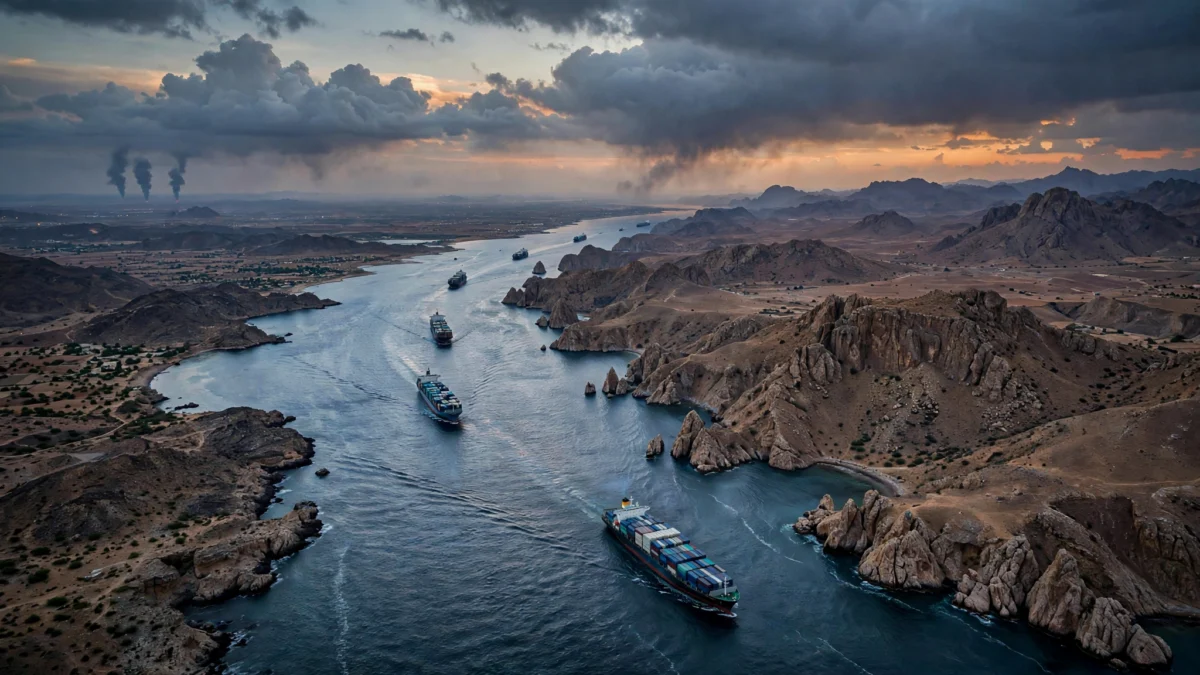
Saudi-backed Yemeni government forces said on Monday they had retaken key positions around the Bab el-Mandeb Strait from the Houthis, claiming a major breakthrough in their new offensive to reverse the rebel group’s grip on one of the world’s most important shipping lanes.
According to Reuters, which cited three military sources and one government source, government troops seized large parts of Dhubab district, which overlooks the narrowest point of the strait, and were moving to assert full control with heavy air support from a Saudi-led coalition. Yemen’s Information Minister, Moammar al-Eryani, told Reuters the forces had secured “effective control” of the strait, though he acknowledged fighting was continuing in the area.
CNN separately reported the claim through a military spokesperson, Majid al-Nuzaili, who said on X that government forces had “succeeded in controlling Bab al-Mandeb” and had regained a key road linking Dhubab district to the port town of Mocha.
The advance comes one day after Yemen’s internationally recognised government announced its offensive. President Rashad al-Alimi declared the launch of the “Dawn of Yemen” operation in a televised address on Sunday, vowing to fight “until the country is liberated from the grip of the terrorist militia”, according to Reuters. The stated objective goes beyond the strait: al-Alimi framed the campaign as a drive to ultimately recapture the capital, Sanaa.
Houthi-aligned media rejected the government’s account. The Houthi-run Saba News Agency described reports of government gains as “completely untrue”, and a Houthi-run maritime body warned airlines against flying in Saudi airspace, saying it was “unsafe” while Saudi Arabia’s “aggression” continues, CNN reported. The US Embassy in Saudi Arabia issued a security alert on Monday urging American citizens to remain vigilant because of the “ongoing security situation” and the potential threat of drone or missile attacks.
The picture on the ground remains contested. While the government claimed rapid gains along the coast, the heaviest fighting continued elsewhere in the southwest: the Houthis themselves made advances near the city of Taiz, gaining sections of a mountain road in a move that left government forces there besieged, according to five military sources cited by Reuters — although one government source denied the road had been cut.
The fighting is the latest turn in a dormant civil war that reignited as a spillover from the US-Iran conflict, with the Houthis seeking control of the Bab el-Mandeb Strait and firing missiles and drones at Saudi cities and infrastructure, Reuters reported. The Houthis seized the entire Red Sea coast last month, a move that sent shockwaves through energy markets already strained by Iran’s closure of the Strait of Hormuz. The Red Sea has since become an increasingly important alternative export route for Gulf oil, according to CNN.
Why It Matters
The Bab el-Mandeb is not just a Yemeni battlefield — it is a global pressure point. The strait, barely 30 kilometres wide at its narrowest, connects the Red Sea to the Gulf of Aden and carries a significant share of world trade between the Mediterranean and the Indian Ocean. With Hormuz closed and Gulf energy exports restricted, whoever controls Bab el-Mandeb holds leverage over the second great artery of the global oil market. That is why energy prices have risen on every twist of this fight.
The claim also marks a potential turning point in Yemen’s war. A month ago the Houthis appeared to be on the advance, sweeping the Red Sea coast and threatening shipping outright. A genuine recapture of the strait — backed by what reports describe as intensive Saudi air power — would be the government’s first major reversal of the rebels since the offensive began, and would strengthen al-Alimi’s claim to be fighting a winnable war all the way to Sanaa.
But the word “claim” does the heavy lifting here. Houthi denials, continued fighting in Dhubab and Taiz, and the rebels’ demonstrated ability to strike ships with drones from inland positions mean control of the coastline does not automatically mean safe passage. Three things to watch now: whether government forces can consolidate their hold on Dhubab and Mocha; whether commercial shipping actually returns to the strait; and whether the offensive’s stated aim of Sanaa turns a coastal campaign into a wider war that pulls in still more of the region.
Sources

About the Author — Abdul Mannan
Related Articles

ICC Chief Warns Hormuz Gridlock Risks Global Food Crisis as Fertilizer Trade Stalls
The International Chamber of Commerce's secretary-general warns that months of disruption to shipping through the Strait of Hormuz…
Renewed Attacks on Vessels Near Strait of Hormuz Threaten Oil Export Recovery
Seven strikes on vessels near the Strait of Hormuz since 28 September, plus an IRGC warning to avoid…

Yemen Government Launches Major Offensive Against Houthis, Al-Alimi Declares
Yemen's Saudi-backed government has launched a major military campaign to retake Houthi-held territory, as the Houthis claim retaliatory…