Zelensky Rallies European Leaders as Burnham Pledges ‘Complete Solidarity’ After Trump’s Diesel Deal With Putin

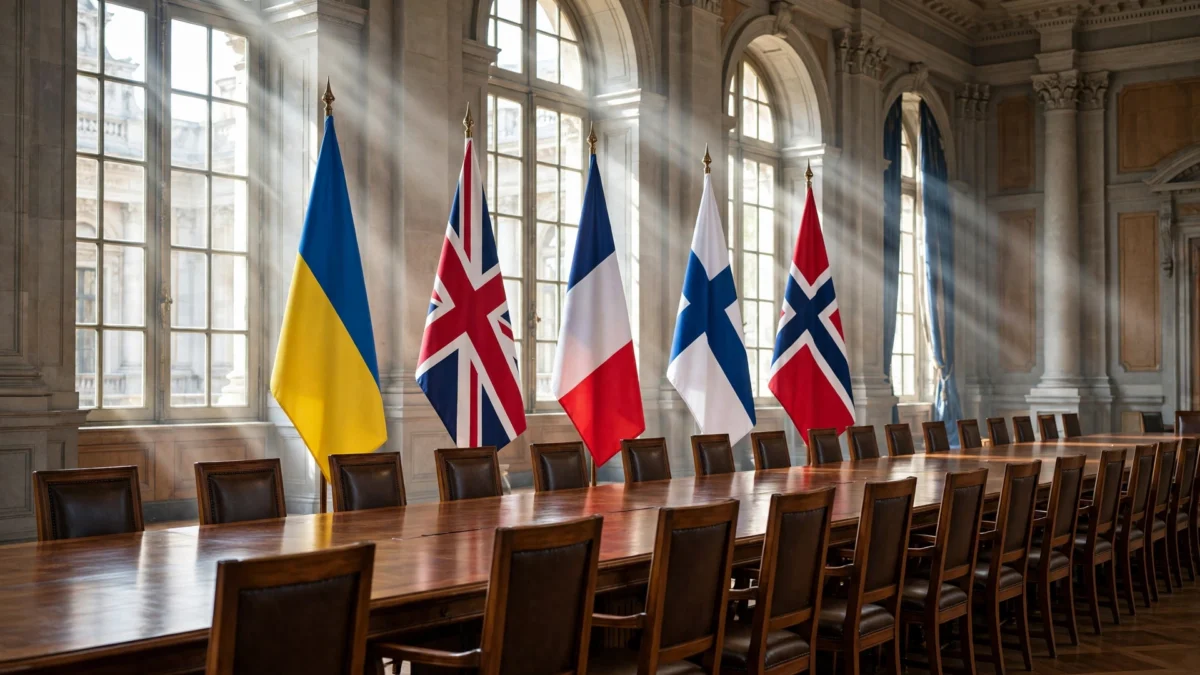
Volodymyr Zelensky held phone calls with Britain’s Andy Burnham, France’s Emmanuel Macron, Finland’s Alexander Stubb and Norway’s Jonas Gahr Støre on Saturday, rallying European support hours after Donald Trump suggested Ukraine needed a new president — and as Brussels prepares its largest sanctions package against Russia since the full-scale invasion began.
Ukrainian President Volodymyr Zelensky spent Saturday on the phone with Europe, rallying support from four continental leaders as the fallout from Donald Trump’s diesel agreement with Vladimir Putin deepened into one of the sharpest transatlantic rifts of the war.
According to Zelensky’s own account on social media, he held phone discussions with Finnish President Alexander Stubb, French President Emmanuel Macron, Norwegian Prime Minister Jonas Gahr Støre, and British Prime Minister Andy Burnham, informing them of the latest developments in the conflict and urging more aid for Ukraine and stiffer sanctions against Russia.
The calls came hours after Trump told reporters outside the White House that it was “time for Ukraine to get a new president”, accusing Zelensky of failing to settle the war and blaming Kyiv’s long-range strikes on Russian oil refineries for driving up American diesel prices.
The deal that detonated the row
On Friday, Trump announced an agreement under which Russia would immediately supply 300,000 tonnes of diesel, followed by a further 500,000 tonnes in November, with additional tranches — one of one million tonnes “immediately thereafter” and three million tonnes “within a short period of time” — to follow, according to reports of his Truth Social announcement. Washington also moved to ease sanctions on Russian petroleum-product trade, ending a measures regime designed to starve Moscow’s war machine of revenue.
Zelensky responded furiously. In a lengthy statement on X, he called the arrangement a “gift” to Putin, writing: “Gifts to Putin will not bring peace or any benefit to the civilised world.” Allowing Russia to generate revenue through petroleum exports, he argued, would strengthen the Kremlin’s ability to keep fighting rather than encourage an end to the conflict — an “investment in a war that must be ended, not prolonged”.
Putin, for his part, said in a statement that he was ready to supply oil to the US and global markets, believing it would help the global economy. His envoy Kirill Dmitriev was quoted by People’s Daily as describing Trump’s intervention as “iconic and historic”, saying Ukraine needed “leadership actually focused on peace”.
Trump’s broadside
The US president’s Saturday remarks were among his most personal attacks on the Ukrainian leader. According to The Times, Trump told reporters: “Zelensky could have settled this war multiple times, but he chooses not to. We said, ‘You can do whatever you want to Russia, don’t hit the refineries, because that’s a world problem.'”
“And he [Zelensky] wants to make problems for the world. He wants to make problems for our farmers, our ranchers with diesel fuel because Russia supplies a large portion of the diesel fuel throughout the world … So he better damn well stop,” Trump said. “I suggest they get a new leader who can make a deal.”
The Times reported that the deal is aimed at lowering energy costs before next month’s US midterm elections, after fuel prices surged during America’s war with Iran — a conflict that, according to reports from the region, began in February and has strained household budgets and driven across-the-board inflation.
Burnham’s “complete solidarity”
The most consequential of Zelensky’s calls was with Britain’s new prime minister. According to a statement from 10 Downing Street reported by IANS, Andy Burnham acknowledged that the past 24 hours had been difficult for Ukraine and reiterated his “complete solidarity” with Zelensky.
Burnham said Britain would continue to strengthen its sanctions against Russia, making clear that London would not follow Washington in agreeing to buy diesel from the Kremlin. The British government said it would continue to impose its “toughest sanctions regime ever” on Russia, The Times reported.
The two leaders also agreed to meet in person in the coming days to continue their discussions, Downing Street said. A spokesperson added that they had underlined that Russia should agree to “an immediate energy ceasefire”, ending its strikes on Ukrainian infrastructure and its attacks on shipping in the Black Sea, which “would immediately release more energy and food supplies into the global market”.
Macron, Stubb and Støre
Zelensky’s call with Macron focused on the military consequences of the row. According to The Hindu BusinessLine, the Ukrainian president said he had spoken to the French president about shoring up air defences, warning of an increased risk of further Russian missile strikes in the coming days.
He also said he had discussed the developments with Finland’s Alexander Stubb, and that Ukraine would receive ammunition in the coming days for the F-16 jets it uses to intercept Shahed drones — a detail that underscores how the diplomatic fight is playing out against an active air-defence race.
With Norway’s Jonas Gahr Støre and Finland’s Stubb, the conversations centred on coordinating response measures and preparing follow-up meetings, as Europe scrambles to present a united front at a moment when its most important security partner is pulling in the opposite direction on energy trade.
Brussels moves to tighten
The European Union moved to fill the gap Washington opened. According to a BBC report, the EU’s foreign affairs chief Kaja Kallas echoed Zelensky in saying that suspending sanctions “provides Moscow with more revenues to wage war”, adding: “This is not the time to ease pressure on Russia, and Europe won’t.”
Kallas said European foreign ministers intended to approve the biggest set of sanctions on Russia since the start of its full-scale invasion when they meet on Monday — a deliberate show of resolve timed against Washington’s easing.
The Zaporizhzhia strikes
The row unfolded against continued bloodshed. Hours after Trump announced the deal, overnight Russian airstrikes killed at least 15 people in the Ukrainian city of Zaporizhzhia, including three children, according to The Times.
Zelensky wrote on X that Russia had expressed its thanks for the lifting of sanctions on diesel exports by dropping five glide bombs on residential buildings in the city — a claim presented in his own words that directly links Moscow’s battlefield escalation to its diplomatic windfall.
In Kyiv, people gathered at a memorial to fallen soldiers on Independence Square greeted the deal with a mix of anger and resignation. “Trump has once again shown his true face,” Oleksandr Petrenko, 26, told The Associated Press. “He didn’t care about the situation, the shelling or the destruction of our homes. All he’s interested in is oil or the fuel prices and how much Americans have to pay.”
“Knowing Trump, he tries to manipulate the markets. He’s got an election coming up soon,” Petrenko added. “So he needs to emphasise to his voters that gasoline will be cheap. But it won’t be effective.”
For Oksana Yakunina, a financial adviser from the central city of Kropyvnytskyi, the announcement “didn’t really come as a surprise.” “Trump has been working with Putin for a long time,” she told the AP.
Analysis: Why It Matters
This is the moment the West’s sanctions architecture stopped being one architecture. For nearly four years, American and European sanctions policy moved, however imperfectly, in the same direction: tighten the screws on Russian energy revenue until the cost of the war became unbearable. This weekend, that consensus visibly fractured — Washington easing while London tightens and Brussels prepares its largest package since 2022. The question now is not whether sanctions still exist, but whether two opposing sanctions regimes can coexist without cancelling each other out.
The mechanics matter. If Russian diesel flows freely into American and global markets while Europe adds names and entities to its lists, the revenue channel simply re-routes around the pressure. Sanctions are a plumbing system: pressure released at one valve eases everywhere. Brussels can announce the biggest package since the invasion, but if the world’s largest economy is buying Russian fuel again, the marginal bite of each new European listing shrinks. That is the structural risk Kallas and Burnham are now racing to contain with rhetoric — and it is not clear rhetoric is enough.
Burnham’s handling of the call is worth studying because it was his first major foreign-policy test. The new British prime minister said two things at once: absolute solidarity with Zelensky, and a substantive policy position — keep tightening, refuse the diesel route. The “immediate energy ceasefire” line is the cleverest piece of it. It reframes Ukraine’s refinery strikes, which Trump casts as reckless price-gouging, as leverage toward a mutual halt: Russia stops hitting Ukrainian infrastructure and Black Sea shipping, and in return energy and food flow more freely into global markets, easing the very prices Trump wants down. Whether Moscow bites is doubtful. But as a diplomatic construct, it puts the burden of refusal on the Kremlin and gives European leaders a constructive proposal to carry into Monday’s foreign ministers’ meeting.
The Macron detail — ammunition for Ukraine’s F-16s arriving “in the coming days” — is the quietest and possibly the most important fact of the day. It suggests European capitals are not merely issuing statements; they are quietly accelerating the air-defence race ahead of what Zelensky warns is an increased risk of missile strikes. The diplomacy and the war are moving on parallel tracks, and the Europeans are betting on both: talk ceasefire, prepare for bombardment.
Trump’s “new president” jibe also deserves to be read for what it is: an attempt to personalise a strategic disagreement. By framing the row as Zelensky’s stubbornness, the White House avoids defending the substance of easing sanctions on Russia’s energy trade. Zelensky’s answer — four phone calls, four European leaders, a wall of solidarity statements — is the classic counter: make it about the alliance, not the man. The Burnham in-person meeting in the coming days will be the test of whether that counter holds, or whether it dissolves into photo opportunities while Russian diesel tankers sail.
Finally, the midterms clock. The Times reports the deal is aimed at lowering energy costs before next month’s vote. That makes the diesel agreement a domestic political instrument with foreign-policy shrapnel — and it means the row’s timeline is not measured in diplomatic summits but in weeks to an election. Zelensky’s job is to survive that window without the transatlantic architecture collapsing beneath him. Monday’s EU sanctions package is his best chance to show it won’t.
What to Watch Next
- Monday’s EU foreign ministers’ meeting — whether Kallas delivers the promised largest sanctions package since the full-scale invasion began, and how far it goes on energy enforcement.
- The Burnham–Zelensky meeting — the in-person talks agreed for “the coming days” will show whether Britain’s solidarity translates into concrete new commitments.
- The diesel delivery timeline — whether the 300,000-tonne first tranche arrives on schedule and how global diesel prices respond.
- Trump’s next move — whether the “new president” rhetoric escalates into pressure on Kyiv’s allies or on Ukraine’s American aid pipeline.
- The energy ceasefire proposal — whether Russia responds to the Burnham–Zelensky call for an immediate halt to strikes on energy infrastructure and Black Sea shipping.
Sources
– The Times — “Time for Zelensky to go, Trump tells Ukraine in diesel row”
– IANS — “British PM reiterates solidarity with Zelensky amid US-Ukraine tensions”

About the Author — Abdul Mannan
Related Articles
After Deadly Riyadh Airport Strike, Trump Signals US Response as Houthis Warn Airlines of More Attacks
Donald Trump said the United States "may" join Saudi strikes against the Houthis and vowed to call Crown…
Houthi Missile Strikes on Riyadh Airport Kill Three as Regional War Escalates Into Its Deadliest Phase
Three Saudis were killed and a Saudia aircraft struck in two Houthi missile attacks on Riyadh's King Khalid…
Ukraine Hits Russian Oil Terminal in Rostov Hours After Trump’s Diesel Deal With Putin
A fire erupted at the Yug Rusi oil-loading terminal in Rostov-on-Don overnight amid a reported Ukrainian drone attack,…