Sánchez Calls Snap Spanish Election for 29 November After Housing Defeat in Parliament

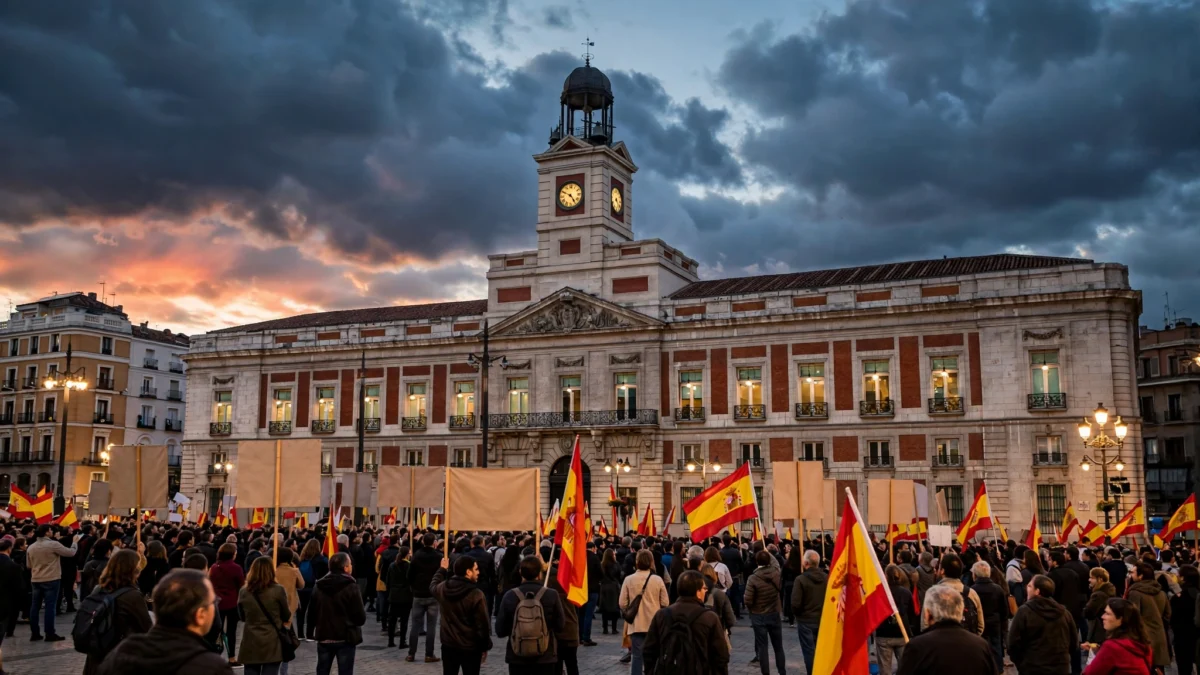
Pedro Sánchez has called a snap general election in Spain for 29 November, staking his eight-year premiership on a high-risk gamble that public anger over the country’s housing crisis can revive his struggling left-wing government.
The Spanish prime minister made the announcement in a televised address from the Moncloa Palace on Monday, after Spain’s Congress rejected two emergency housing decrees last Friday, according to the Wall Street Journal, CNN and The Times. The decrees, which would have strengthened protections against evictions and restricted speculative purchases of homes, were defeated when the conservative People’s Party (PP), the hard-right Vox, and the right-wing Catalan separatist party Junts combined forces to vote them down, The Times reported.
“We need to renew people’s support,” Sánchez said, according to international wire reporting. “We need to mobilise and win a much larger progressive majority in parliament, one that will allow us to overcome vested interests, deliver new social advances and continue transforming Spain.”
The call cuts short a legislature that Sánchez, a Socialist prime minister since 2018, had intended to run until 2027. His minority government has been unable to pass a budget and has enacted only a handful of laws since 2023, even as Spain’s economy outperformed the rest of the developed world, according to Reuters.
The trigger has been building for weeks. Tens of thousands of people took to the streets across Spain last week to protest over rents, evictions and the difficulty of buying a home, while a protest camp in Madrid’s Puerta del Sol became a symbol of the anger, The Times and CNN reported. Public fury intensified after the eviction on 23 September of Maricarmen Abascal, an 87-year-old disabled woman, from her rent-controlled Madrid flat when she could not afford a rent increase, Reuters reported.
Sánchez framed the election as an ideological choice. “Whether you wish to join the far-right wave that rolls back progress wherever it governs, or whether you want Spain to remain a bastion of openness, social justice and environmental responsibility,” he said, according to The Times.
The opposition responded quickly. PP leader Alberto Núñez Feijóo called the vote “a choice between corruption and decency, between decline and prosperity,” The Times reported, and pledged to almost double homebuilding to 200,000 units a year while cutting taxes, according to Reuters.
Opinion polls suggest the gamble is steep. A Sigma Dos poll published in El Mundo projected the PP and Vox would win a combined 203 seats in the 350-member lower house — a comfortable majority — while the Socialists and their junior coalition partners Sumar would manage only 112, Reuters reported. A separate 40db poll for El País put the PP on 31.6 per cent, the Socialists on 27.4 per cent and Vox on 18.4 per cent.
If the timetable proceeds as expected, the decree dissolving parliament will be published on Tuesday, opening the 54-day period required by electoral law before the 29 November vote, according to The Times.
Analysis: Why It Matters
This is not the first time Pedro Sánchez has rolled the dice — and he has made a career of winning when the odds said otherwise. In May 2023, after a crushing defeat in regional and municipal elections, he dissolved parliament and called a snap vote; the PP won the most seats but failed to assemble a majority, and Sánchez negotiated his way back into office with Catalan and Basque support, The Times reported. The analyst Pablo Simón of Madrid’s Universidad Carlos III told The Times the current move is “an early election whose aim is to minimise the risk of what, according to the polls, is a more than foreseeable defeat” — Sánchez is seizing, in Simón’s words, “the best window of opportunity available to him.”
Housing is genuinely that window. It is the one issue on which Sánchez can campaign as an attacker rather than defending eight years in power. But the same issue cuts both ways: rents and prices have risen sharply during his tenure, and Feijóo’s counterattack — that after eight years a prime minister cannot blame others for what he failed to do — is brutally simple, as Reuters reported. Housing could damage Sánchez as well as help him.
The stakes reach far beyond Spain. A PP–Vox victory would usher a far-right party into central government for the first time since the return of democracy after the death of dictator Francisco Franco in 1975, and would end one of Europe’s last remaining left-leaning governments at a moment when the far right is topping polls in Germany and France, the Wall Street Journal noted. Sánchez is currently the only left-wing leader running a major EU country — and his government has become Washington’s most vocal European critic, opposing Israel’s campaigns in Gaza and Lebanon and even denying the US military use of joint Mediterranean bases for operations against Iran, according to the Journal. A rightward turn in Madrid would reshape the EU’s internal balance and its posture toward the White House.
What to watch next: whether the dissolution decree is published on Tuesday as expected, how the campaign’s housing debate unfolds, and whether Sánchez’s reported plan to force the rejected decrees through parliament’s standing legislative body holds up. Polls open in 54 days — this could be the election that ends the Sánchez era, or the third act of Spain’s great political survivor.
Sources

About the Author — Abdul Mannan
Related Articles

Fifteen-Year-Old Injured by Police Grenade as France’s School Protests Enter Third Week
A 15-year-old student was seriously injured in Lens on Monday as France's school protests over underfunding and teacher…

Two Dead as Fire Engulfs Turkish-Owned Grain Ship Off Romania; Ukraine Blames Russian Drones
Two crew members died and 11 were rescued after a fire on the Turkish-owned grain ship Royad Mammadov…

Flávio Bolsonaro Beats Lula in First Round as Brazil Heads to October 25 Runoff
Right-wing senator Flávio Bolsonaro finished ahead of incumbent President Lula in Brazil's first round on Sunday, defying final…