Fed Minutes Reveal Deep Split Over September Rate Hike as Most Officials Signal Another Move This Year

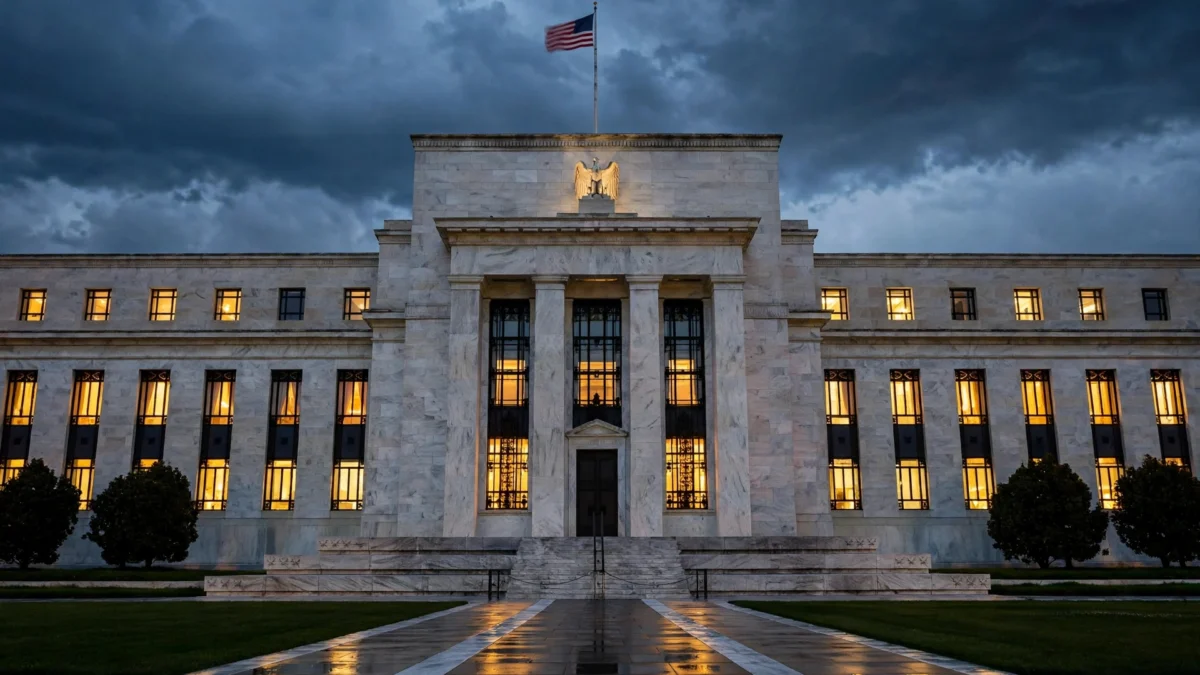
The September interest-rate increase that ended three years of Federal Reserve patience was unanimous — but the logic behind it was anything but. Minutes of the central bank’s September 15–16 policy meeting, released on Wednesday, reveal a committee united on the vote and divided on what the vote meant, according to Reuters.
At that meeting, the Federal Open Market Committee voted to raise the federal-funds target range by a quarter of a percentage point to 3.75%–4.00%, the first increase in the Fed’s benchmark rate since July 2023, as reported by Barron’s. All 19 policymakers backed the move. But the minutes show they disagreed sharply about whether the hike was largely precautionary or the opening step of a genuine tightening campaign.
According to the minutes, “many” officials viewed a higher rate path as prudent on risk-management grounds — essentially insurance against inflation staying above target if energy or other supply shocks proved persistent. Others, however, supported the hike because their economic outlook called for it: a hawkish core worried that inflation is taking on a broader, demand-driven character that must be actively fought. A smaller group framed their support differently still — some saw the hike as a way to keep recent energy and other price shocks from infecting broader prices, while “a couple” said it simply matched their estimate of a higher neutral rate of interest, according to Reuters.
The competing rationales matter because they point to different futures. If the hike was mostly precaution, the bar for a second move is high. If a meaningful faction already believes demand-driven inflation is underway, the bar is much lower — and the October 27–28 meeting could turn contentious.
On that score, the minutes leaned hawkish. “Most participants assessed that another increase in the target range for the federal funds rate would likely be appropriate by year end,” the minutes said, as reported by Barron’s. The Fed’s summary of economic projections, released alongside the September decision, pencilled in a median federal-funds rate of 4.1% at the end of both this year and next — implying one additional increase in 2026 and then no net change in rates in 2027. Of the 18 officials who submitted projections, 16 expect rates to rise again.
Still, the minutes offered no urgency about acting at the very next meeting. As The Wall Street Journal noted, the record “didn’t show that policymakers made an urgent case” that the follow-on move should come in October — an outlook that lines up with recent comments from key officials suggesting a further increase can wait until December. “Participants emphasized… that they approached each meeting with an open mind and decisions at future meetings would depend on incoming information,” the minutes said.
Fed officials have been telegraphing that patience publicly. New York Fed President John Williams said last week that he expected just one additional rate increase this year, likely in December, according to Barron’s. Dallas Fed President Lorie Logan, at the hawkish end of the spectrum, has called for raising the rate by another half a percentage point. Chair Kevin Warsh, who took office in May, described September’s hike as removing “some accommodation” from monetary policy — a remark that drew close attention on Wall Street as a possible signal that further increases could follow.
September’s increase followed what The Wall Street Journal called a “frustrating summer” for the Fed, in which inflation defied officials’ hopes that it would cool on its own. To shoppers, a bumpy rise in fuel costs — driven by the Iran conflict — has been one of the most painful examples of ongoing price increases. The central bank also ran short on patience with broader inflation trends, bolstered by the AI investment surge and the Trump administration’s tariffs.
Officials discussed the reasons behind the sharp rise in long-term bond yields, linking it to growing expectations for higher interest rates, increased artificial-intelligence-related investment and continued strength in economic growth. A Federal Reserve Bank of New York survey released on Wednesday showed consumers’ expectations for price increases over the coming year had reached their highest level since May 2023.
Markets took the minutes as mildly dovish relative to fears. Stocks cut their losses after the 2 p.m. release: the Dow Jones Industrial Average closed down less than 0.7%, about 341 points, at 51,179, after sliding more than 550 points in the morning, according to Investor’s Business Daily. The S&P 500 shed 0.2% to end at 7,801 and the Nasdaq composite also lost 0.2%, closing at 27,538. But bond-market pressure did not let up: the 10-year Treasury yield touched 5.36%, its highest level since January 2002, before settling around 5.27%.
The tightening theme went global on Wednesday. India’s central bank raised its benchmark repo rate by 25 basis points to 5.5% — its first increase in nearly four years — and shifted its stance to “calibrated tightening,” citing inflation that its governor said is projected to average 5.8% in the coming fiscal year, according to Reuters. IMF Managing Director Kristalina Georgieva warned on Wednesday that an energy shock, growing debt burdens and AI-related risks threaten global growth.
Derivative markets are pricing in more tightening than the Fed itself projects: traders see roughly three more quarter-point hikes by next June, which would take rates to 4.5%–4.75%, according to MarketWatch. The odds of a move this month have collapsed, though — markets now assign only about a 22% probability to an October hike, down from around 70% at the start of last week, according to LSEG data reported by Morningstar.
The higher-for-longer reality is already biting the real economy. US mortgage rates have climbed to their highest since 2023, and mortgage applications have fallen for five consecutive weeks. The dollar has climbed back to a 17-month high, the euro is at a 17-month low, and smaller companies — the Russell 2000 fell 1.3% on Wednesday — are feeling the squeeze of higher borrowing costs more acutely than large caps.
Analysis: Why It Matters
The most important sentence in the minutes is not about the rate path at all — it is the admission of the split. “United yet divided,” as Reuters’ trading-day commentary framed it: 19 policymakers agreed to raise rates and then disagreed about what they had just done. That is not a cosmetic detail. It means the Fed’s unanimity was procedural, not analytical, and the same committee that voted 19–0 in September could fracture quickly if incoming data forces a harder choice. As the minutes themselves imply, there will be “less certainty and unanimity at upcoming decisions, starting with the October 28–29 meeting.”
Strip the jargon and there are really two Feds in that boardroom. The first is a risk-management Fed: many officials see the hike as insurance against supply shocks — energy, tariffs, the aftershocks of the Iran conflict — keeping prices elevated. For this camp, tightening is a precaution; if those shocks fade, the case for more hikes fades with them. The second is a diagnosis Fed: a hawkish core that believes inflation is becoming demand-driven — powered by resilient consumer spending, the AI investment boom and a labour market still close to full employment — and must be actively suppressed. For this camp, one hike is a down payment, not a hedge.
Watch what happens to energy prices, because that is the wedge that splits the two camps. If oil stays near triple digits — Brent traded above $101 a barrel on Wednesday — the insurance camp’s nightmare materialises and it starts voting like the hawks. If energy shocks recede, the hawks lose their cleanest argument for acting quickly. This is why the October meeting is set up to be the most consequential in months: it will force officials to declare, with new data in hand, which inflation story they actually believe.
There is also a quiet message from the bond market that the Fed may be reading gratefully: long-term yields are doing the tightening for it. A 10-year yield above 5.3%, the highest in nearly 25 years, is a form of policy restraint that arrives without a vote — squeezing mortgage borrowers, corporate issuers and small businesses automatically. Part of that rise reflects AI-related corporate borrowing demand and sheer Treasury supply, but whatever the cause, its effect is the same: it gives the cautious camp an argument that financial conditions are already tight enough, and it gives the hawks an argument that the economy is strong enough to absorb more. The same number, opposite conclusions — welcome to the October debate.
The global context strengthens the tightening case, and it arrived on the very same day. India’s first rate hike in nearly four years, the IMF chief’s warning about energy shocks and debt, and accelerating inflation in the eurozone all point in one direction: the easy-money era is not just over in Washington, it is over almost everywhere. Central banks are discovering simultaneously that the last mile of inflation is the hardest. That synchronisation matters because it removes the dollar-weakness escape valve that a lone tightening cycle would create — instead, the dollar is at a 17-month high, compounding the pain for dollar borrowers worldwide.
The gap between the Fed’s own forecast and the market’s is the final thing worth watching. The Fed’s median official sees one more hike and then a long hold; derivative traders see three more by next June. One side is wrong about how stubborn inflation is. The minutes just told us that a “most” of the committee believes the answer is “one more this year” — but they also told us the committee cannot agree on why. In markets, conviction about the destination is only as strong as the shared reasoning behind it. Right now, that reasoning is split down the middle, and the next data releases will decide which half was right.
Sources
- Reuters — Fed policymakers divided over rate-hike logic in September, minutes show
- Barron’s — Most Fed Officials See Another Rate Hike This Year but Leave Timing Open
- MarketWatch — Fed’s minutes show no appetite for a series of interest-rate hikes
- The Wall Street Journal — Fed Minutes Signal Further Rate Increase This Year, but No Urgency for October Hike

About the Author — Abdul Mannan
Related Articles
Wall Street Drops as 10-Year Treasury Yield Hits Highest Since 2002, With Fed Minutes in Focus
US stocks fell on Wednesday as the 10-year Treasury yield touched its highest level since 2002, with Brent…
S&P 500 Closes at First Record Since August as AI Rally Broadens — but 5.3% Bond Yields Flash a Warning
The S&P 500 and Nasdaq closed at records on Tuesday as the AI trade broadened into power stocks…
Google Strikes 3.6-Gigawatt Power Deal With Constellation Energy in Latest Big-Tech Nuclear Push
Google has contracted 3,590 megawatts of power from Constellation Energy — including 890 megawatts of new nuclear capacity…