Google Strikes 3.6-Gigawatt Power Deal With Constellation Energy in Latest Big-Tech Nuclear Push

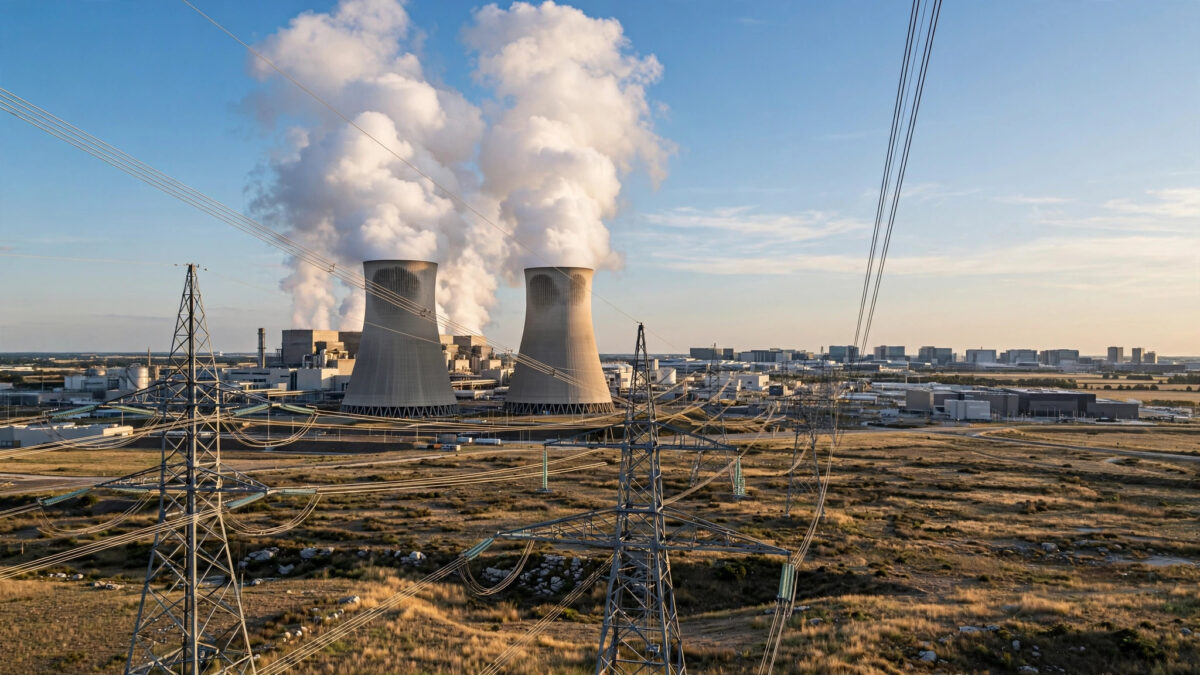
Google has contracted 3,590 megawatts of electricity from Constellation Energy, the largest nuclear power plant operator in the United States, in a sweeping deal that deepens Big Tech’s bet on atomic power to feed its artificial-intelligence data centres, the companies announced on Tuesday.
At the heart of the arrangement is a 20-year power purchase agreement covering 890 megawatts from Constellation’s nuclear fleet — enough electricity, according to Barron’s, for about 800,000 households. Rather than building new reactors, Constellation will upgrade turbines, steam generators and digital control systems at 11 existing plants in Illinois, Pennsylvania and New Jersey, squeezing more capacity out of reactors that are already running. The first upgraded plants are expected to deliver electricity in 2028.
The 20-year deal unlocks more than $4.3 billion of new investment by Constellation in its fleet, the companies said, sustaining 4,400 existing jobs and adding around 7,200 construction jobs during the project, according to Investor’s Business Daily.
On top of the nuclear agreement, Google signed a separate 15-year supply arrangement for another 2,700 megawatts of power from Constellation’s broader fleet across the PJM grid — the power network serving 13 states that is the largest in the country. That portion is not tied to any single generation source and, as Reuters reported, gives Constellation long-term revenue certainty for its operating plants.
“We’re committed to meeting our growth responsibly by actively investing in clean, reliable power that brings new capacity to our nation’s grids,” said Amanda Peterson Corio, Google’s global head of energy and power, in a statement reported by Reuters.
Investors welcomed the news. Constellation’s shares surged more than 13% on Tuesday to $304.04 by mid-morning, making it the fastest-moving stock on the S&P 500 in early trading. The jump followed a rough run for the shares, which were down 24% for the year through Monday’s close. The rally also helped the S&P 500 touch a fresh record high on Tuesday, with the index’s utilities sector rising 2.5%, according to MarketWatch.
The deal is the latest in a frantic land-grab for electricity by the world’s largest technology companies. Over the past two years, Constellation agreed to restart the shuttered Three Mile Island reactor in Pennsylvania to supply Microsoft’s data centres, while Google separately contracted to restart NextEra Energy’s nuclear plant in Iowa.
Constellation’s latest agreement follows hot on the heels of another Big Tech nuclear pact struck just last week: Amazon signed a 20-year deal on September 30 for 690 megawatts of power from Constellation’s Calvert Cliffs plant in Maryland, including 190 megawatts of new capacity, backed by more than $3 billion of infrastructure investment, Investor’s Business Daily reported.
Analysis: Why It Matters
The striking thing about this deal is not the headline number — 3.6 gigawatts — but where the power comes from. Upgrading existing reactors is far faster than the alternative: new large plants take the better part of a decade to build in the United States, and the much-hyped small modular reactors are still years from commercial deployment. Constellation’s upgrades could deliver the equivalent of a brand-new reactor by 2028, which in energy-planning terms is tomorrow morning. For Google, that speed is the entire point: data centres cannot wait.
There is a second, quieter logic at work. Google’s emissions have been rising because its data centres consume so much electricity, straining its climate commitments. Nuclear power — always-on, carbon-free — lets the company square that circle in a way wind and solar alone cannot, since data centres need power around the clock. The 2,700-megawatt conventional tranche, meanwhile, looks less like green theatre and more like balance-sheet hedging: a 15-year fixed claim on power in a grid where prices have been climbing.
For Constellation, the deal is arguably even more important. This is a regulated-utility business that has found a way to turn its ageing nuclear fleet into a growth story — not by building anything new, but by selling decades of guaranteed revenue to the deepest-pocketed buyers on earth. A second mega-deal within a week, after Amazon, suggests the market’s earlier pessimism — the stock was down a quarter this year — misjudged how eagerly Big Tech would pay for certainty.
What to watch next: the companies said they will explore further clean-energy deals, so expect more announcements. Regulators will also matter — uprating reactors still requires approvals, and grid interconnection queues are slow. And the deeper question is whether America’s power grid can keep pace with an AI boom that keeps adding gigawatts of demand; Tuesday’s deal suggests Big Tech has decided not to wait for an answer.
Sources
- Reuters: “Google enters massive 3.6-GW power deal with Constellation Energy”
- Barron’s: “Constellation Energy Seals Google Nuclear Deal. It Can Keep Powering the Stock Higher.”
- Investor’s Business Daily: “Google Nuke Deal Jolts Constellation Energy To Top Of S&P 500”
- MarketWatch: live market coverage (S&P 500 record context)

About the Author — Abdul Mannan
Related Articles

S&P 500 Sets Its First Record Since August as AI Rally Broadens Beyond Tech
The S&P 500 closed Tuesday at a record 7,819.04, its first record since August, powered not by Big…

Paramount Completes $110 Billion Warner Bros Takeover, Creating Hollywood Powerhouse Skydance
Paramount Skydance closed its $110 billion takeover of Warner Bros Discovery on Tuesday, forming a new company called…

Nasdaq Hits Record High as AI Rally Brushes Off 24-Year-High Treasury Yields
The Nasdaq Composite closed at a record high on Monday as a tech-led rally, driven by Nvidia's $5.76…