South Korea Recalls Ambassador to Ukraine as Russian Fuel-Shipment Row Deepens

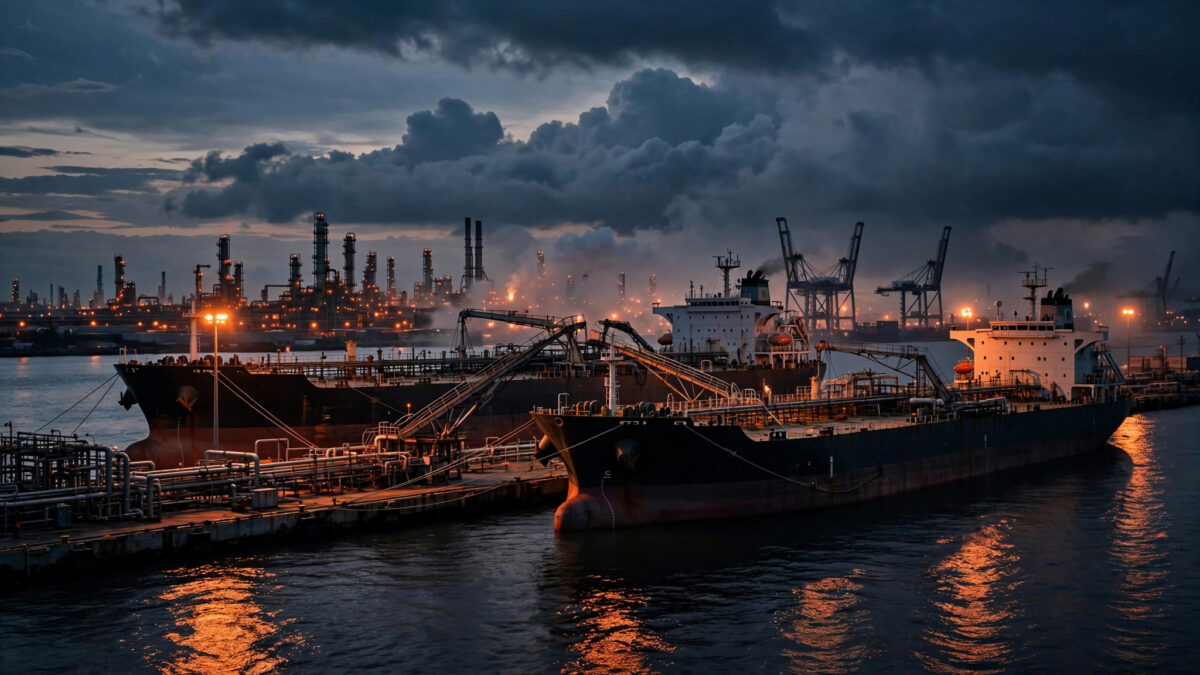
South Korea has recalled its ambassador to Ukraine and threatened legal action over allegations that fuel loaded at its ports ended up in Russia, in a row that has become the most serious stress test yet of Seoul’s standing in the Western sanctions coalition.
The diplomatic escalation, announced by Seoul’s foreign ministry on Thursday, lands amid a furious exchange between the two countries over a report that more than 176,000 tonnes of fuel, mostly diesel, was shipped from South Korean ports to Russia’s Far East in July and August aboard seven tankers — including three vessels under British and European Union sanctions.
Ukraine’s presidential commissioner for sanctions policy, Vladyslav Vlasiuk, seized on the report to accuse Seoul of undercutting Kyiv’s campaign to choke Russia’s fuel supply, saying the shipments began at the very moment Ukrainian drone strikes were hammering Russian refineries. South Korea has rejected the claim as “inaccurate and inappropriate,” insists no fuel officially cleared customs for Russia, and is now demanding that Kyiv stop making public allegations it says damage international trust.
The spat marks a remarkable rupture between two countries that were, until recently, deepening cooperation over shared intelligence on North Korean troops fighting for Russia in Ukraine.
The investigation that started it all
The row was triggered by an investigation published by The Guardian on Tuesday, which combined port records with vessel-tracking data to trace the movements of the seven tankers. According to the report, the vessels carried the fuel — more than 176,000 metric tonnes — on 14 voyages from South Korean ports, including Ulsan and Yeosu, to Russia’s Far East, principally Vladivostok.
The report detailed evasion tactics that have become familiar in the shadow-fleet trade: one tanker took on about 26,000 tonnes of fuel through a ship-to-ship transfer at an anchorage off the southern port of Yeosu, a manoeuvre designed to obscure where the cargo came from. In at least two cases, sanctioned tankers that loaded fuel at South Korean ports declared destinations such as Japan or Singapore, only to sail to Vladivostok instead. The Russian-flagged Aram Khachaturian, which is not under Western sanctions, loaded fuel at Ulsan three times, each time declaring a destination other than Russia before sailing there.
Crucially, The Guardian itself noted that the trade does not appear to breach South Korean law. The shipments, the newspaper wrote, nevertheless risk making Seoul look like “a weak link in western efforts to pressure Russia.”
Kyiv’s accusation — and Seoul’s anger
Hours after the report appeared, Vlasiuk condemned the shipments on Facebook, saying they stood in “stark contrast to South Korea’s sanctions policy” toward Russia. “[South Korea’s] shipments [to Russia] began precisely when Ukrainian strikes reduced refining volumes in Russia, causing fuel shortages,” he wrote. “Imports from South Korea effectively helped offset the impact of Russia’s loss of domestic refining capacity.”
The claim struck a nerve in Seoul for an obvious reason: South Korea has positioned itself as a responsible sanctions enforcer since Russia’s invasion of Ukraine. Its exports to Russia have collapsed from $10 billion in 2021 to $4 billion in 2025, the government says, as it joined international export controls “despite the economic burden” on its companies and public.
The presidential office in Seoul issued a sharp rebuttal on Wednesday, calling Vlasiuk’s claims “inaccurate and inappropriate.” “Since Russia invaded Ukraine, our government has consistently implemented sanctions and export controls against Russia in close coordination with the international community,” presidential spokesperson Kang Yu-jung said, according to Yonhap news agency.
Seoul’s complaint was procedural as much as political: it asked Ukraine to “refrain from distorting the relevant policies of the Republic of Korea without sufficient verification of the facts and making public remarks that can damage international trust,” arguing that key facts — the parties involved, the origin of the products, and the final buyers — had not been established.
On Thursday, the foreign ministry, together with the Ministry of Trade, Industry and Resources and the Korea Customs Service, issued a joint statement spelling out Seoul’s legal position. It said the government was checking additional information about the loading cases reported by The Guardian and that “if the verification establishes that our laws and regulations have been violated, it plans to act in accordance with the law” — the threatened legal action. It stressed that refined petroleum products were simply not covered by South Korea’s export controls on Russia, which target strategic items plus 1,402 other products with potential military use subject to case-by-case approval. No diesel, jet fuel or gasoline had cleared customs for Russia at any point from last year through August, the government said.
The admission cuts both ways. It rebuts the accusation of illegality, but it confirms the existence of a sanctions gap — a lawful channel through which fuel could reach Russia from a G7-aligned democracy’s ports without violating a single domestic law.
The recall
On the same day, the foreign ministry announced it would recall its ambassador to Ukraine. “The government has decided to recall its ambassador to Ukraine,” the ministry said in a statement. “It hopes that all pending issues between the two countries will be resolved smoothly and will continue consultations with the Ukrainian side to achieve that end.”
The recall is an unusual and deliberately sharp signal. Ambassadors are not usually withdrawn over an investigative report; the move reflects how deeply Seoul believes Kyiv crossed a line — not only with the fuel allegations, but with an earlier disclosure that had already poisoned the relationship.
A second front: the prisoners of war
Tension between the two countries first flared last month, when Ukrainian President Volodymyr Zelenskyy revealed during a speech at the United Nations General Assembly on September 23 that two North Korean soldiers captured by Ukraine in the war with Russia had been repatriated to South Korea.
Seoul accused Kyiv of breaching an agreement to keep the transfer confidential and demanded an official apology. Kyiv denied any such agreement existed. On Wednesday, Ukrainian foreign ministry spokesperson Heorhii Tykhyi said the two sides had agreed on the transfer’s details but clashed over differing interpretations of confidentiality, according to Ukrainian outlet RBC-Ukraine. Tykhyi said Kyiv carried out the legal and administrative procedures based on the prisoners’ written consent and an agreement in principle between the two countries’ leaders, describing the transfer as a friendly gesture. The remarks stopped short of the admission and formal apology Seoul has demanded.
The prisoners’ story is itself geopolitically loaded: according to Ukrainian and South Korean estimates, some 14,000 to 15,000 North Korean soldiers were sent to support Russia’s war effort against Ukraine under a mutual defence treaty Pyongyang and Moscow signed in 2024.
The fuel crisis behind the row
The dispute cannot be understood without Russia’s deepening fuel crisis. Ukrainian strikes on Russian refineries — part of a deliberate campaign to degrade Moscow’s war economy — have knocked out a significant share of the country’s refining capacity. According to the International Energy Agency, refinery throughput fell in June to its lowest level in more than 20 years, and diesel output was down nearly 30 percent on the previous year, as reported by the Centre for Research on Energy and Clean Air. This week alone, Ukraine struck the Omsk refinery — Russia’s largest, some 2,500 kilometres deep inside the country.
It is against that backdrop that 176,000 tonnes of imported diesel becomes strategically significant. Russia is one of the world’s great oil producers, but crude is not diesel: when refineries burn, refined fuel becomes the bottleneck. A country that cannot turn its own oil into fuel at home must import it — a vulnerability Ukraine is explicitly targeting.
That vulnerability was underlined, ironically, by another story breaking in the same 24 hours: US President Donald Trump announced on Friday a deal under which Russia would supply up to 4.8 million tonnes of diesel to the global market, claiming it would bring fuel prices down. The contrast is telling — Moscow selling diesel abroad to earn revenue while struggling to supply its own domestic market, a paradox produced by the refining crunch.
Isaac Levi, an analyst at the Centre for Research on Energy and Clean Air, said the South Korea trade “undermines the sanctions regime and South Korea’s support for Ukraine” — a view that has clearly registered in Kyiv.
Analysis: Why It Matters
The legal loophole is the story. The most consequential fact in this dispute is the one South Korea itself has volunteered: refined petroleum products are not on its Russia export-control list. The 1,402 controlled items cover strategic and potentially military goods — machinery, electronics, vehicles — not diesel. Seoul’s own statement, while denying wrongdoing, concedes the sanctions architecture has a fuel-shaped hole in it. That hole is not theoretical: the reporting shows sanctioned vessels loading at major South Korean ports with misdeclared destinations, entirely outside any export-control tripwire. The question now is whether Seoul closes the gap. If it does, the row will have produced a real sanctions tightening. If it does not, every future tanker will be an invitation to repeat the episode — and every repetition will be politically costlier than the last.
Ukraine is using exposure as enforcement. Kyiv’s strategy here is not legal but reputational. Vlasiuk’s Facebook post was a deliberate act of naming and shaming: by publicly tying South Korea — a country that prides itself on sanctions discipline — to Russia’s fuel supply, he forced Seoul to respond on his timetable. It is the same playbook Ukraine has run against companies and countries throughout the war: make the allegation public, let the reputational damage do the work, and dare the accused to prove a negative. The tactic worked in the narrow sense — Seoul is now investigating and threatening legal action — but it has come at a diplomatic cost: a recalled ambassador and a relationship in its worst state since the war began. Kyiv has evidently decided the leverage is worth the frost.
Seoul is fighting on two credibility fronts. The fuel row and the POW disclosure are, on the surface, separate disputes. Politically, they are one: both are about whether South Korea can trust Ukraine with sensitive cooperation. The North Korean prisoners — intelligence gold, given Seoul’s hunger for insight into Pyongyang’s expeditionary deployment — were transferred as a confidential favour; Seoul says Kyiv broke the confidence for a UNGA applause line. Now Seoul is being publicly accused of aiding Russia. From the presidential office’s perspective, Kyiv has been an unreliable partner in both directions within the space of two weeks. The ambassador recall is Seoul’s way of saying the relationship is under review until the pattern stops.
The diesel paradox reveals the war’s new front line. This row sits at the centre of a striking symmetry: Ukraine is attacking Russian refineries to create a fuel shortage, while importing countries — and now the United States — are negotiating over Russian diesel exports. The 176,000 tonnes at issue in South Korea is small against Russia’s total fuel balance, but in a market where diesel is the binding constraint, marginal tonnes have outsized strategic value. That is precisely why Vlasiuk framed the shipments as offsetting Russia’s refining losses. The war’s economic front has moved downstream, from crude sanctions to the refined-fuel bottleneck — and the countries with the refining capacity, from South Korea to India to Turkey, are becoming the new contested ground.
What to watch next: first, the outcome of Seoul’s legal verification — if it finds actual violations of domestic law, such as false declarations or customs fraud, prosecutions would convert embarrassment into a show of enforcement. Second, whether South Korea adds petroleum products to its Russia export-control list, closing the loophole the row exposed. Third, the ambassador: a recall is reversible, and its duration will signal how hard a line Seoul intends to hold. And fourth, whether Kyiv delivers the apology over the POW disclosure that Seoul has demanded — the precondition for normalising a relationship that both countries, whatever their frictions, still need.
Sources
- Reuters: South Korea denies Ukrainian report that it eased Russia’s fuel crisis
- Korea JoongAng Daily: South Korea denies fuel exports to Russia amid Ukraine sanctions dispute; to recall ambassador to Ukraine
- The Insight International: South Korea says it will act if fuel shipments to Russia broke its laws
- IB Times Singapore: South Korea investigates fuel shipments to Russia over suspected destination loopholes

About the Author — Abdul Mannan
Related Articles

US Sanctions the International Criminal Court as an Institution, Hours After Its Former Judge Wins the Nobel Peace Prize
The Trump administration has imposed sweeping financial sanctions on the International Criminal Court itself — the first time…
Navi Pillay, 85-Year-Old Anti-Apartheid Jurist, Wins 2026 Nobel Peace Prize as Trump Misses Out Again
The Norwegian Nobel Committee has awarded the 2026 Nobel Peace Prize to 85-year-old South African jurist Navi Pillay…
Malaysia Closes Schools Across Four States and Its Two Capitals as Indonesian Wildfire Haze Smothers Southeast Asia
Schools across Johor, Malacca, Negeri Sembilan and Selangor, plus Kuala Lumpur and Putrajaya, were ordered shut on Friday…