US Sanctions the International Criminal Court as an Institution, Hours After Its Former Judge Wins the Nobel Peace Prize

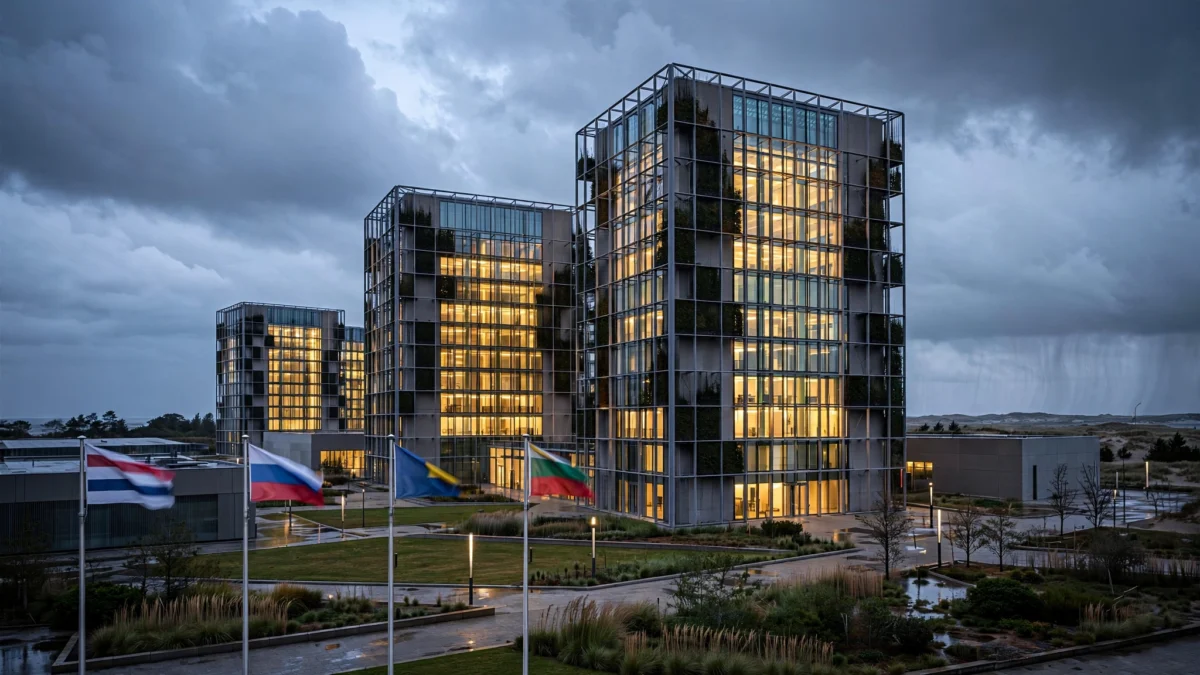
The United States on Friday imposed sweeping sanctions on the International Criminal Court as an institution, dramatically escalating a years-long confrontation with the war crimes tribunal just hours after one of its former judges was awarded the 2026 Nobel Peace Prize, according to Reuters.
Secretary of State Marco Rubio announced the move in a statement, declaring that the United States would “ban transactions with this rogue court, cutting off their resources and crippling its ability to operate,” according to Reuters, which reviewed the statement ahead of its official release. “President Trump will never allow the International Criminal Court to prosecute Americans,” Rubio said.
The action, taken under Executive Order 14203, blocks the court’s property and interests in property within US jurisdiction, according to coverage of the announcement. It marks the first time Washington has gone after the institution itself. Until now, the Trump administration’s campaign had been aimed at individuals: according to US officials, 17 people connected to the court — including judges and prosecutors — had already been sanctioned under the order, as reported by Fox News.
Alongside the designation, the Treasury Department issued a series of general licences that give the court breathing room. A six-month, 180-day grace period covers activities needed to keep the court’s operations running, with further exemptions for telecommunications, cloud computing and software services, pension payments, and activities related to detainees, according to IANS. The State Department framed the 180-day window as an opportunity for a diplomatic settlement, with one US official quoted by Reuters saying the period “creates scope for dialogue.”
A court under fire
The Hague-based court’s response was swift and defiant. In a statement issued on Friday, the ICC denounced the sanctions as “an assault on the rule of law and on the very foundations of the international legal order,” according to Reuters, and warned that the measure threatened international efforts to prosecute war crimes and other grave offences.
“This is not just about defending a single institution, but about safeguarding the international order grounded upon the rule of law. History will judge this moment,” the court said, calling on its 125 member states to act in its defence. “The Court cannot stand alone. Its fate now rests also in the hands of the states that created it,” the statement continued, according to The Hindu BusinessLine’s account of the announcement.
ICC President Tomoko Akane — herself a citizen of US ally Japan who was personally placed under US sanctions in August — said the court would “continue to fully discharge its mandate, with independence and impartiality, acting only on the basis of the law and the evidence, for the sake of the countless victims of grave crimes,” according to Reuters. She appealed to member states for support.
Allies break ranks with Washington
The announcement put the United States on a diplomatic collision course with its closest allies. In a joint statement, the foreign ministers of the United Kingdom, Canada, France, Germany, Italy, Japan, the Netherlands and Denmark said they “regret and strongly disagree with” the sanctions, according to Reuters, which published the full text of the reactions.
“We remain both united in our support for the ICC and committed to engaging in constructive and inclusive dialogue with non-States Parties,” the ministers said. They acknowledged that while the court had taken steps to keep operating, the sanctions would “have a significant impact on the court’s work, its dedicated staff and their families,” who “work every day to bring those accused of the most serious international crimes to justice and to support their victims.”
The joint rebuke carried an edge: it was issued a day after Rubio had demanded that America’s allies “rein in” the court, threatening that otherwise Washington would “continue its campaign” to “end the ICC,” according to the Oldham Times. German Justice Minister Stefanie Hubig invoked history in her criticism, noting that the United States itself championed the Nuremberg trials of Nazi leaders after the Second World War and “thereby laid the foundations for international criminal law.” “It is utterly staggering that the US, of all countries, is now setting out to destroy this idea once and for all,” she said, according to Reuters.
In the United States, Democratic Senator Jeanne Shaheen, the top Democrat on the Senate Foreign Relations Committee, called the move “unfortunate and short-sighted,” arguing it would isolate the US and make it harder to bring perpetrators of atrocities to justice “for victims in places like Ukraine and Darfur,” according to Reuters.
Rights groups joined the condemnation. “This existential attack must fail,” said Erika Guevara Rosas, a senior director at Amnesty International. “States must take concrete action to resist the imposition of these measures and actively protect the court.”
Why the timing matters
The sanctions landed within hours of one of the most striking moments in the court’s recent history. On Friday morning, the Norwegian Nobel Committee awarded the 2026 Nobel Peace Prize to Navanethem “Navi” Pillay, the South African jurist and former UN human rights chief who served as a judge on the ICC’s Appeals Chamber from 2003 to 2008, according to USA Today. In its citation, the committee said it had sought to “issue a reminder” of the importance of international law at a time when “judges and institutions of international law are under political attack,” according to Reuters.
The timing immediately raised questions about whether Washington was retaliating against the court after the Nobel Committee honoured one of its former jurists instead of President Trump. Trump has long coveted the prize and has openly campaigned for it, arguing that he deserves recognition for his efforts to resolve conflicts around the world, according to USA Today, which noted that the White House did not immediately respond to a request for comment.
The administration’s hostility toward the court long predates the Nobel announcement. Washington was angered by ICC arrest warrants issued for Israeli officials, including Prime Minister Benjamin Netanyahu, over alleged war crimes in Gaza, and by a past investigation into the actions of US soldiers in Afghanistan, which the court has since closed, according to Reuters. Neither the United States nor Israel is a party to the court, and both reject its jurisdiction over their citizens.
Trump had already told the UN General Assembly last month that the ICC was a “rogue institution” run by an “evil group of people,” and urged member states to resign from it, according to Reuters. In September, his administration pressured several small states to withdraw; Burkina Faso, Mali and Niger had announced their exits the previous year, denouncing the court as an instrument of “neocolonial repression,” according to Reuters.
A two-decade rift
The International Criminal Court was founded in 2002 to prosecute war crimes, crimes against humanity and genocide, and today counts 125 member states, including every EU country and all NATO members except the United States and Turkey, according to Reuters. A US delegation took part in the 1998 negotiations that produced the court’s founding Rome Statute, but Washington never ratified the treaty and has always opposed ICC jurisdiction over US nationals. In 2002, Congress adopted legislation nicknamed the “Hague Invasion Act,” authorising the president to use “all means necessary” to free any US citizen or US ally held by the court, according to Reuters.
Sanctions are not new in this standoff. During Trump’s first term in 2020, Washington imposed sanctions on the court’s then-chief prosecutor and another official over the Afghanistan investigation; the Biden administration lifted those measures a year later, according to Reuters. In early 2025, after the court issued arrest warrants for Netanyahu and his former defence minister Yoav Gallant, Trump signed Executive Order 14203 authorising economic and travel sanctions against ICC officials targeting the US and its allies. Washington has since imposed sanctions on ICC officials including nine judges, according to Reuters.
What is new is the target. By sanctioning the court itself rather than its personnel, the United States is moving from punishing judges and prosecutors to strangling the institution — potentially forcing international banks, insurers and vendors that provide services to the court to cut ties in order to avoid secondary exposure to US sanctions.
Analysis: Why It Matters
On paper, Friday’s announcement is a single sanctions designation. In practice, it is the most serious attack the International Criminal Court has faced in its 24-year history — and its significance lies less in the legal paperwork than in the pressure it puts on the court’s day-to-day existence.
Targeting individuals was disruptive; targeting the institution is existential by design. Judges and prosecutors can be replaced, but a court that cannot hold a bank account, renew a software licence or pay its staff cannot function. The administration’s own language makes the intent explicit: not merely to punish, but to cripple. The 180-day grace period softens the immediate blow, but it also functions as a countdown — and as leverage in the “dialogue” Washington says it wants. European officials, notably, read the licence as an opening rather than a concession, which is why Belgium has put concrete protection measures on the agenda of Monday’s EU foreign ministers’ meeting.
The timing — hours after the Nobel Prize announcement — deserves careful reading rather than a rush to judgment. The sanctions had been prepared for weeks; the Netherlands, the court’s host country, had been braced for them. But the symbolism is impossible to ignore, and symbolism is doing real work here. The Nobel Committee chose this of all years to honour an international-law jurist and to warn, in its citation, about political attacks on international justice. The administration’s response arrived the same day. Whether or not retaliation was the motive, the sequence will be read around the world as one — and that reading itself becomes a fact in the diplomacy that follows.
Consider the allies’ dilemma. Eight foreign ministers issued a statement of “unwavering support” for the court, but support is easy to declare and hard to deliver. The real test is the European Union’s so-called “blocking statute,” which would prohibit European companies from complying with the US measures — a step the Dutch foreign minister has described as the “nuclear option.” Invoking it would protect the court, but it would also open a transatlantic trade-law confrontation with the United States that European capitals would rather avoid. Monday’s EU meeting is the first moment that lofty solidarity meets concrete cost. Watch whether the statement hardens into regulation or dissolves into diplomacy.
There is also a deeper credibility story that cuts both ways. Germany’s justice minister reached for Nuremberg — the reminder that the United States invented modern international criminal justice before it began dismantling it. That history is why the administration’s campaign lands so hard on European ears. But the court’s own standing is not unblemished: African states have long accused it of selective justice, and the withdrawals of Burkina Faso, Mali and Niger, whatever Washington’s role, signal genuine discontent beyond American pressure. The sanctions debate is therefore not only about one court’s survival; it is about whether the post-1945 architecture of accountability can survive its own members’ defections.
What to watch next: first, Monday’s EU foreign ministers’ meeting and whether the blocking statute moves from threat to activation. Second, how the court’s vendors and banks behave once the Treasury’s general licences expire — the sanctions bite only if third parties comply. Third, whether any further states parties withdraw under US pressure, or whether the opposite happens and the attack galvanises a defensive coalition. And fourth, the Nobel subtext: whether Pillay’s prize becomes the banner under which the court rallies, or merely a footnote to its strangest week.
For now, the world’s permanent war-crimes court remains open — defiant, backed by its members, and under a clock that expires in 180 days.
Sources
- Reuters: US imposes sanctions on International Criminal Court, hours after former judge wins Nobel
- Reuters: Reactions to US imposing sanctions on International Criminal Court
- Reuters: What is the International Criminal Court?
- USA Today: US sanctions the ICC after former judge wins the Nobel Peace Prize
- Fox News: Marco Rubio announces sweeping financial sanctions against the International Criminal Court

About the Author — Abdul Mannan
Related Articles
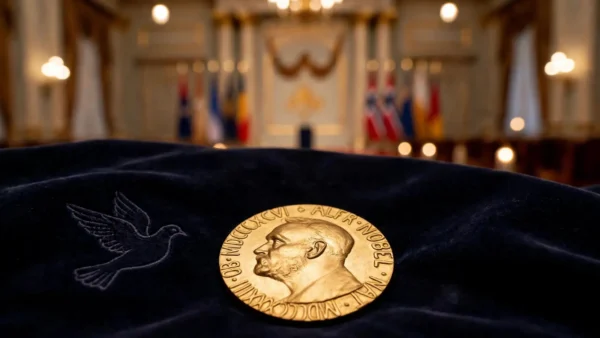
Navi Pillay, 85-Year-Old Anti-Apartheid Jurist, Wins 2026 Nobel Peace Prize as Trump Misses Out Again
The Norwegian Nobel Committee has awarded the 2026 Nobel Peace Prize to 85-year-old South African jurist Navi Pillay…

Malaysia Closes Schools Across Four States and Its Two Capitals as Indonesian Wildfire Haze Smothers Southeast Asia
Schools across Johor, Malacca, Negeri Sembilan and Selangor, plus Kuala Lumpur and Putrajaya, were ordered shut on Friday…
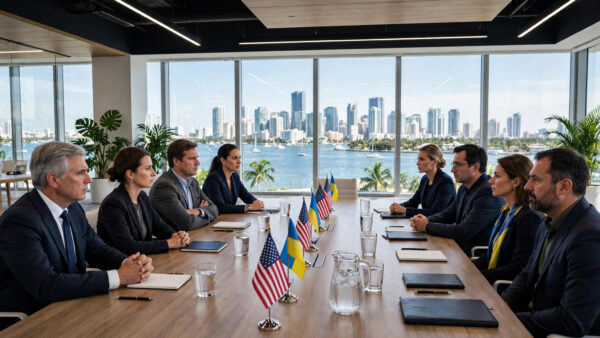
Witkoff and Kushner to Present New Ukraine Peace Plan in Miami as Kremlin Agrees War Is a “Stalemate”
Trump's envoys Steve Witkoff and Jared Kushner will meet a Ukrainian delegation in Miami on Friday to discuss…