Trump Declares ‘Effective Immediately’ Energy Ceasefire Between Russia and Ukraine; Zelensky Says It Was “News for Me”

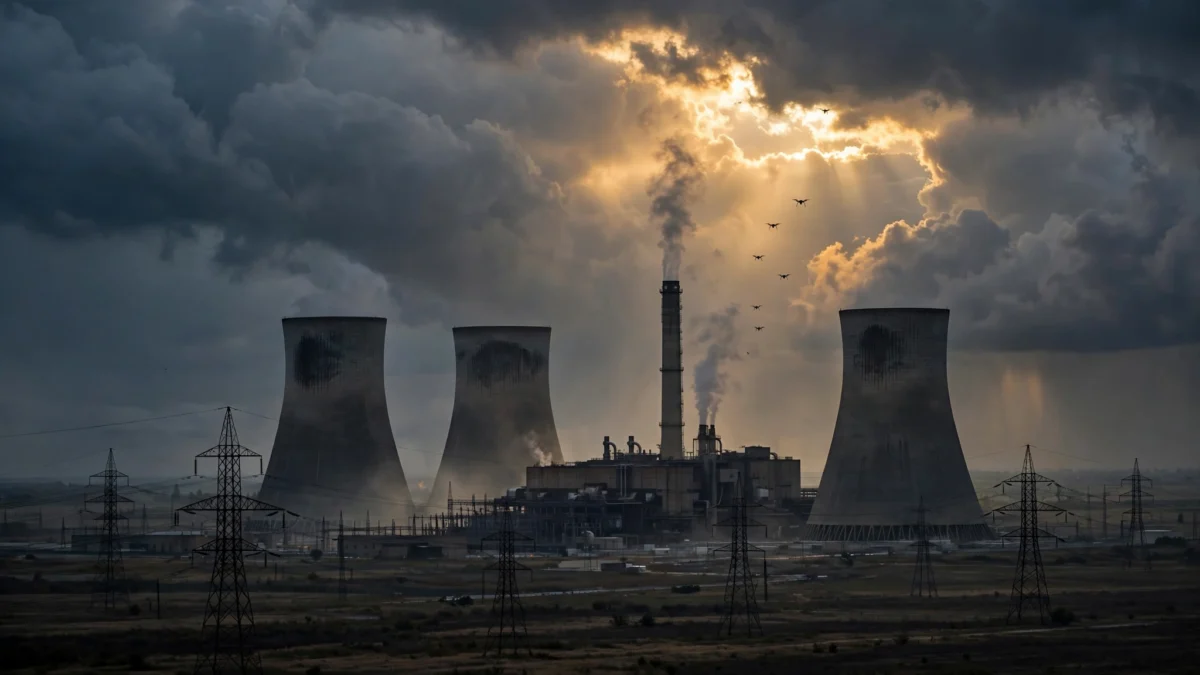
Donald Trump has announced that Russia and Ukraine have reached an “energy ceasefire” that is “effective immediately” — even as Ukrainian President Volodymyr Zelensky said the announcement came as news to him, and neither the Kremlin nor Kyiv has formally confirmed any agreement, according to reports from The Times, the New York Post and the IANS wire service on Sunday.
“Effective immediately, there is an ENERGY CEASEFIRE in the War between Russia and Ukraine,” the US president wrote in a post on Truth Social on Sunday. “Both parties have agreed. Do not break it! Thank you for your attention to this matter.” The White House repeated the announcement on X about 20 minutes later, according to IANS: “Effective Immediately: An Energy Ceasefire in the War between Russia and Ukraine.”
What the announcement did not say may matter as much as what it did. Trump did not say when the truce was agreed, which facilities it covers, how long it is supposed to last, or how compliance would be monitored, IANS reported. In the hours after the post, neither the Kremlin nor the Ukrainian government issued a formal statement confirming the arrangement.
Zelensky’s own reaction, conveyed to the US outlet Axios shortly after the announcement, undercut the claim that both sides were on board. “The ceasefire announcement was news for me. But if Russians agree to an energy ceasefire, Ukraine will agree,” he said, according to IANS. “If President Trump negotiated it with Putin — please tell us when the ceasefire begins — we are ready and we will accept it.”
A senior Ukrainian official told the Kyiv Independent that Kyiv had no information about any ceasefire and doubted that Russia had even been informed, IANS reported.
Zelensky’s own Sunday offers
The announcement landed on a day when Zelensky had already been talking publicly about pausing the energy war. Earlier on Sunday he had repeated his offer that Ukraine would stop its attacks on Russian refineries if Russia ceased its strikes on Ukrainian energy infrastructure.
On X, he framed the condition in blunt terms: “The real cause of the war in Europe is Russia and Russia alone. It is possible to stop strikes on energy infrastructure as early as today, but Putin does not want to do so,” he wrote. “Any de-escalation steps must be reciprocal and backed by real guarantees,” The Times reported.
And in an interview with ABC’s This Week broadcast on Sunday, Zelensky made a separate, striking offer: he said he would hold elections in Ukraine if Putin agreed to a 60-day ceasefire. “Please tell Putin, give us two months, 60 days of total ceasefire, 60 days, and we will organise elections,” he said, according to The Times. He made a similar offer back in February, telling Axios he would hold elections in exchange for a 60-day ceasefire. “With all respect to President Trump, it’s up to our society, up to our people to choose one or another leader,” he told ABC.
This has happened before
The Sunday announcement is not the first time an American-declared energy truce has failed to materialise on the ground. Last month, Trump claimed that Russia and Ukraine had agreed to an energy truce, but Zelensky said Kyiv would support it only if Moscow genuinely committed to stopping its attacks, and the Kremlin did not confirm that any agreement had been reached, The Times reported. Reuters reported on September 15 that the Kremlin had welcomed a US proposal for a Russia-Ukraine moratorium on attacking each other’s energy infrastructure — while calling for sanctions removal and saying Russia would “stay in touch” with the Americans — but nothing firm followed. The very next day, Russia struck petrol stations in Kyiv and Ukraine said it had hit a Russian oil refinery, according to The Times.
Zelensky raised the proposal again later in September in talks with Trump, and back in April he said Ukraine had conveyed an offer of a reciprocal ceasefire on energy infrastructure to Moscow through US mediators. Russia’s answer at the time was that it favoured an overall peace deal instead, The Times reported.
The diesel backdrop
The announcement arrives at the most strained point in months in the Trump-Zelensky relationship. On Friday, following a phone call with Vladimir Putin, Trump announced that the US planned to buy vast amounts of Russian diesel — 300,000 tons immediately, 500,000 tons in November and a million tons afterward, according to the New York Post. The deal opened a fresh rift with Kyiv, with Zelensky blasting it as a “betrayal”, according to the Post.
The administration’s stated logic runs through American fuel prices. High diesel prices, sitting at $6.28 a gallon nationally according to American Automobile Association data cited by the Post, have become a midterm headache for Trump. Energy Secretary Chris Wright has claimed that Ukraine’s attacks on Russian refineries have squeezed global diesel supply and thereby raised American prices, the Post reported. Critics of the diesel deal argue Trump cannot legally purchase Russian diesel without congressional approval because of the Ending Importation of Russian Oil Act of 2022, according to the Post.
On Saturday, after Zelensky condemned the diesel arrangement, Trump told reporters it was “time for Ukraine to get a new president”, according to The Times. Zelensky’s Sunday response — that it is up to Ukrainians, not Washington, to choose their leader — landed as a direct answer.
The energy war on the ground
The campaign Trump says he has paused has been one of the most consequential fronts of the war. Kyiv has been carrying out strikes on Russian energy infrastructure, particularly oil refineries, in retaliation for the attacks the Kremlin has carried out against Ukraine’s own power grid, according to the New York Post.
That energy war continued even as the announcement rippled through Sunday’s news cycle. In Kharkiv on Sunday, a car burned following a Russian strike on a residential neighbourhood, in an AP photograph published by the New York Post, and Reuters images showed an injured man standing amid rubble as firefighters worked at a house hit by a Russian air strike.
Analysis: Why It Matters
A ceasefire announced by neither combatant. The most remarkable feature of Sunday’s declaration is that both parties it names appear to have learned about it after the fact. Zelensky’s “news for me” response and the senior Ukrainian official’s doubt that Moscow was even informed point to an announcement driven by Washington’s internal logic rather than by negotiation. A ceasefire is a contract; this one, so far, has only one signature — and it belongs to a third party.
The September precedent is the control group. Trump’s announcement last month followed exactly the same script: a claim of agreement, no Kremlin confirmation, and strikes the next day on both sides. Analysts and diplomats will therefore treat Sunday’s post as a hypothesis to be tested by the night’s drone-and-missile log, not as a fact. The speed with which that test arrives — overnight strikes are routine on this front — means the claim’s credibility has a shelf life measured in hours.
The details gap is the real tell. A genuine ceasefire specifies scope, start time, duration and verification. Sunday’s post specified none of those. That matters because “energy infrastructure” is a fuzzy category: Ukrainian refinery strikes have been aimed at cutting Russian revenue, while Russian strikes on Ukraine’s grid have been aimed at civilian endurance. Different motives, different target sets, different incentives to cheat. Without defined terms, any pause is unfalsifiable — each side can claim compliance while interpreting the rules its own way.
Diesel prices are doing diplomatic work. The sequence is impossible to miss: Friday’s diesel deal, Saturday’s “new president” remark, Sunday’s ceasefire claim. The administration’s argument is that Ukrainian refinery strikes inflate global diesel prices and therefore American pump prices weeks before the midterms. Whether the causality holds — Russia had already restricted diesel exports earlier this year amid its own shortages — the politics are legible: a halt to refinery strikes would be the first dividend of Trump’s Putin engagement, and announcing one creates pressure on Kyiv regardless of Moscow’s position.
Zelensky’s counter-offers keep him in the game. The Ukrainian president did three things on Sunday: accepted Trump’s truce conditionally, offered a reciprocal halt on his own terms, and threw the 60-day-ceasefire-for-elections challenge back at Putin. Each move converts Trump’s unilateral announcement into a negotiating position that puts the burden of refusal on the Kremlin. It is a deft piece of diplomatic judo — and a reminder that Zelensky’s core objection is not to pauses in the fighting but to terms dictated without Ukraine.
Europe is pulling the other way. While Trump advertises de-escalation, Brussels is moving toward its biggest sanctions package since the full-scale invasion, with EU foreign ministers meeting on Monday. Britain’s prime minister has reaffirmed “complete solidarity” with Zelensky and plans an in-person meeting. A ceasefire that exists only on Truth Social gives European capitals cover to say nothing has changed — which, on the sanctions calendar, is exactly what they intend.
What to Watch Next
- The overnight strike logs. Whether drones and missiles hit energy targets on either side tonight and Monday will be the first real test of whether anything changed. Watch Ukrainian and Russian official channels and independent monitoring.
- The Kremlin’s response — or silence. Moscow’s refusal to confirm last month’s truce killed it. A Peskov statement would be the minimum signal of seriousness; silence would repeat the September pattern.
- A start time. Zelensky has asked, politely, for one: “Please tell us when the ceasefire begins.” Until a start time exists, the claim is a sentiment, not an agreement.
- Monday’s EU foreign ministers’ meeting. If Europe proceeds with its biggest sanctions package since 2022, it will signal that Trump’s ceasefire theatre has not shifted the alliance’s direction of travel.
- Diesel prices and the midterm clock. The administration has tied this whole sequence to American fuel costs. AAA’s national diesel figure, currently $6.28 a gallon, is the number that makes the politics legible — and the number Kyiv’s critics say Russian diesel cannot move.
Sources
- The Times, “Donald Trump claims Ukraine and Russia agree ‘energy ceasefire'” (October 11, 2026)
- New York Post, “Russia, Ukraine reach energy cease-fire ‘effective immediately,’ Trump announces” (October 11, 2026)
- IANS (via hi INDiA), “Trump declares Russia-Ukraine energy ceasefire” (October 11, 2026)

About the Author — Abdul Mannan
Related Articles
Pope Leo XIV to Undergo Lung Surgery This Week After Doctors Find Small Early-Stage Nodule
Pope Leo XIV told pilgrims in St. Peter's Square that doctors found a small, localized nodule in his…
After Deadly Riyadh Airport Strike, Trump Signals US Response as Houthis Warn Airlines of More Attacks
Donald Trump said the United States "may" join Saudi strikes against the Houthis and vowed to call Crown…
Zelensky Rallies European Leaders as Burnham Pledges ‘Complete Solidarity’ After Trump’s Diesel Deal With Putin
Volodymyr Zelensky held phone calls with Britain's Andy Burnham, France's Emmanuel Macron, Finland's Alexander Stubb and Norway's Jonas…