Governor Kundi Chairs First Advisory Council Meeting in Peshawar, Makes Security and Anti-Corruption Top Priorities

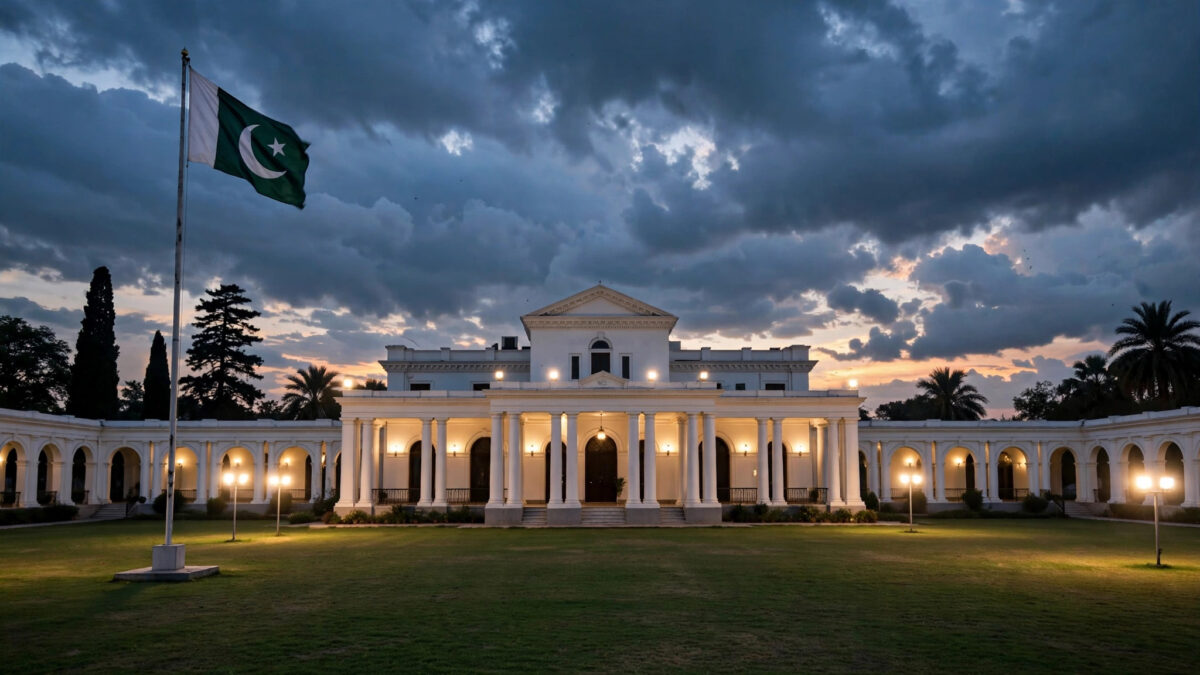
PESHAWAR — Khyber Pakhtunkhwa Governor Faisal Karim Kundi on Sunday chaired the first meeting of the province’s newly formed 11-member Advisory Council in Peshawar, a day after the federal government imposed an emergency and governor’s rule that suspended the elected administration led by the Pakistan Tehreek-e-Insaf (PTI).
The governor, addressing the inaugural session, vowed to restore peace, security and stability in the province, declaring that the time had come to make Khyber Pakhtunkhwa a “cradle of peace”, according to a statement carried by state-run Radio Pakistan and reported by WE News English.
Restoring law and order and eliminating terrorism were identified as the administration’s foremost priorities, the governor said. He stressed the need to strengthen the operational capacity of the provincial police and the Counter-Terrorism Department (CTD) so the province’s security forces could confront militant threats more effectively, according to reports of the meeting.
Kundi also announced a zero-tolerance policy toward corruption, calling for greater transparency and accountability across all government departments. He directed council members to ensure that decisions taken by the council were implemented within established timelines and to deliver what he described as tangible improvements in governance, according to WE News English.
The council is expected to focus on improving service delivery in education, healthcare and justice, while also exploring ways to promote tourism and economic development in a province whose image has been battered by years of militant violence, according to Bloom Pakistan, which covered the meeting in detail.
In a notable remark, the governor called for the adoption of successful governance practices from Punjab, Sindh and Balochistan, saying effective initiatives should be replicated regardless of which province they originated in, according to WE News English. He highlighted that lasting peace would help attract tourists and investors and unlock the province’s economic potential, citing its resources in oil and gas, minerals, water, electricity and tourism.
Addressing the council members, Kundi acknowledged the significant challenges facing the province and urged them to perform their responsibilities with dedication and diligence, presenting practical proposals for improving governance and public services, according to Bloom Pakistan. The members introduced themselves and their respective portfolios at the start of the inaugural session.
The 11-member council brings together prominent figures from the country’s administrative, economic, legal, political and medical sectors. According to Bloom Pakistan, the members are Dr Syed Amir Abdullah, Tariq Mahmood Pasha, Lieutenant General (retired) Nigar Johar Khan, Usman Saifullah Khan, Amir Javed, Samar Haroon Bilour, Dr Muhammad Irshad, Maulana Muhammad Tayyab Qureshi, Kifayatullah Khan, Asif Rafiq Afridi and Dr Sarfaraz Ali Shah.
The council’s composition includes two former chairmen of the Federal Board of Revenue (FBR), a former senator, a former advocate general, a former inspector general of police and a former surgeon general of the Pakistan Army, WE News English reported, adding that the advisers represent the sectors of finance, energy, minerals, law, industry, interior affairs, information, education, health and development.
The meeting followed the federal government’s imposition of emergency and governor’s rule in Khyber Pakhtunkhwa on October 11, after President Asif Ali Zardari signed the proclamation on the advice of Prime Minister Shehbaz Sharif, invoking Articles 232 and 234 of the Constitution. Federal Law Minister Azam Nazeer Tarar said the provincial government’s executive powers had been transferred to the governor under the new arrangement, with the advisory council assisting in the administration of provincial affairs, according to The News. Tarar said the arrangement would initially remain in place for six months, according to reporting by The News.
The President Secretariat’s media wing said the decision followed recommendations from the federal cabinet, formal advice from the prime minister and law-and-order reports submitted by relevant security institutions, The News reported. The statement also cited the breakdown of negotiations between the government delegation and the provincial leadership over the deteriorating security situation, and the centre’s allegation of shortcomings in the provincial government’s counterterrorism efforts.
The emergency decree suspended the PTI-led provincial government of Chief Minister Sohail Afridi, stripping Imran Khan’s party of the only province it governed. PTI rejected the move as unlawful; party spokesman Zulfikar Bukhari called it a “ridiculous decision” and said Khyber Pakhtunkhwa had the country’s “only legitimately elected government”, according to Reuters. PTI chairman Barrister Gohar Ali Khan termed the imposition a “grave political mistake” and pledged to challenge it through constitutional, legal and democratic means, according to Dawn.
Separately, cabinet ministers authorised the deployment of the Pakistan Army under Article 245 of the Constitution to assist the civil administration in maintaining law and order across the province, according to reporting summarised by Particle News. An apex committee meeting has also been scheduled for Monday, according to coverage of the security arrangements.
The imposition came amid a weeks-long confrontation between the federal government and PTI, which began a long march in Lakki Marwat on October 4 demanding the release of jailed former prime minister Imran Khan, after two rounds of negotiations between the two sides collapsed. The federal government has cited a surge in militant attacks in the province by the Tehrik-e-Taliban Pakistan, arguing that the provincial administration had disengaged from the national counterterrorism framework — a charge PTI rejects.
The governor told the council that the hardships faced by the province’s residents because of terrorism could not be ignored, and said there could be no compromise on restoring peace, pledging full support for the police, the army and other law enforcement agencies, according to WE News English. He assured the council members of his full support in their efforts to improve governance and promote public welfare, urging them to work diligently.
The fast-moving administrative machinery did not go unchallenged. Within hours of the emergency’s imposition, the federal government issued a gazette notification under the constitutional articles cited, according to Pakistani media reporting, and began placing new officials — including a new chief secretary — at the province’s disposal.
The National Assembly and the Senate are scheduled to meet on October 13 for the parliamentary endorsement process the Constitution requires for emergency proclamations, according to earlier reporting on the emergency decision. Meanwhile, PTI has signalled it will unveil the next stage of its long march at the Swabi Interchange on October 13, setting up a day on which the federal parliament and the province’s streets could move in opposite directions.
Analysis: Why It Matters
The speed of Sunday’s first advisory council meeting is the real message. Within roughly 24 hours of the presidential proclamation, the governor had not only taken charge but convened a full inaugural session of a named 11-member council, complete with portfolios, timelines and a public pledge to make Khyber Pakhtunkhwa a “cradle of peace”. This is the choreography of permanence: everything about the meeting — the careful composition of the council, the six-month horizon cited by the law minister, the administrative contingency work done in advance — says the federal government intends this arrangement to last and to look like governance rather than an occupation.
That choreography serves a legal and political purpose at the same time. Legally, the emergency under Articles 232 and 234 must be laid before parliament and withstand the scrutiny of the courts; a technocratic council of retired bureaucrats, generals and experts projects competence rather than coercion. Politically, it counters PTI’s framing of the emergency as a crude power grab: the governor’s council is designed to look like exactly the kind of “good governance” body that opinion-makers might welcome, even as it governs a province whose elected assembly and cabinet have been suspended.
The credibility of the entire enterprise, however, rests on a single test the federal government has set for itself: security. The stated justification for the emergency — that the provincial government had “deliberately disengaged” from the fight against terrorism — is only as strong as what happens next in the districts where the militant threat is real. The governor’s emphasis on strengthening the police and the CTD is therefore not rhetoric; it is the hinge of the whole argument. If security visibly improves, the federal government can claim the emergency worked and the critics were wrong. If attacks continue at the same pace, the security justification will look increasingly like a pretext, and PTI’s “political vendetta” narrative will write itself.
The council’s composition tells its own story. A retired lieutenant general, a former FBR chairman, a former inspector general and a former surgeon general of the army is not a roster of democratic politicians — it is the classic Pakistani formula of the “competent administrator” wielded as a substitute for elected government. That formula has one obvious risk: it can run a province’s machinery, but it cannot manufacture a mandate. PTI’s charge that the only legitimately elected government in the country has been removed at gunpoint-of-the-pen will land harder the longer the technocrats sit where elected ministers once did, particularly in a province where the party still commands a passionate support base.
The governor’s remark about replicating successful practices from Punjab, Sindh and Balochistan is worth reading twice. On the surface it is an appeal to best practice. Beneath it lies a claim that the province’s problems were, at least partly, problems of will rather than resources — the suggestion that what other provinces can manage, Khyber Pakhtunkhwa could not. That framing reinforces the federal narrative but will grate in a province that sees itself as having borne the heaviest burden of the war on terror, with thousands of security personnel and civilians killed over two decades.
The tourism-and-investment pitch faces a similar circularity problem. The governor is right that peace is the precondition for investment in a province rich in minerals, hydropower and scenic valleys. But peace is not an input the council can decree; it is an output of security operations, political reconciliation and economic inclusion working together. Selling an economic vision to a province under emergency rule risks sounding like a promise built on sand — unless the security dividend actually arrives.
Then there is the military dimension, which neither side discusses frankly. A retired lieutenant general on the council, a former surgeon general of the army, and a concurrent Article 245 deployment of the armed forces to aid civil administration mean the new civilian-sounding setup sits atop a substantial military footprint. This is consistent with a wider pattern — field marshal Asim Munir’s command over all three services until 2030 and the military’s direct steering of the Saudi troop deployment without a parliamentary vote, as Reuters reported last week — but it sharpens the opposition’s core accusation: that emergency rule is less about terrorism than about extending an already-dominant security establishment’s control over the last pocket of PTI power.
The coming week will decide whether this becomes a constitutional precedent or a political wound. On October 13, both houses of parliament are expected to take up the emergency proclamation — the constitutional endorsement that the government needs — while PTI unveils the next stage of its march at the Swabi Interchange. Two rival centres of legitimacy, the parliament and the street, moving on the same day: that is the week’s defining collision. And PTI’s promised legal challenge will test the Article 233 question the government deliberately left open — whether the emergency’s powers stop short of suspending fundamental rights, a restraint the federal government built in as a courtroom shield.
For the ordinary resident of Khyber Pakhtunkhwa, the immediate question is narrower and more urgent: does any of this change who shows up when violence strikes? The governor’s promise of a “cradle of peace” will be judged not in council minutes but in the districts where people, in the interior minister’s words, will not come out after evening. That is where this story will be won or lost.
What to Watch Next
- The October 13 sittings of the National Assembly and Senate, where the government will seek parliamentary endorsement of the emergency proclamation — the constitutional step that determines whether the measure survives its first legal-political test.
- PTI’s planned unveiling of the next stage of its long march at the Swabi Interchange on October 13, and whether supporters mobilise despite Section 144 orders and the security crackdown.
- PTI’s promised constitutional, legal and democratic challenge to the emergency, including whether the courts examine the government’s decision not to invoke Article 233, which covers the suspension of fundamental rights.
- The scheduled Monday apex committee meeting and the rollout of the Pakistan Army’s Article 245 deployment — the first operational test of whether the new security machinery delivers visible results.
- Whether the governor’s council announces concrete measures on policing, the CTD and service delivery — and whether any of them differ materially from what the suspended elected government was doing.
Sources
- KP Advisory Council Holds First Meeting | Security Priorities — Bloom Pakistan
- Khyber Pakhtunkhwa Governor Vows To Restore Peace, Security In Province — WE News English
- Govt imposes emergency, governor’s rule in KP amid security concerns — The News
- Pakistan president imposes emergency in province ruled by ex-PM Imran Khan’s party — Reuters

About the Author — Abdul Mannan
Related Articles
President Zardari Imposes Emergency and Governor’s Rule in Khyber Pakhtunkhwa, Suspending PTI-Led Government
President Asif Ali Zardari has imposed emergency rule and governor's rule in Khyber Pakhtunkhwa under Articles 232 and…
Decision on KP Emergency Moves to “Final Stage”: Federal Cabinet Meets Sunday as Parliament Sessions Set for October 13
The federal government has decided to impose emergency in Khyber Pakhtunkhwa following a Saturday-night meeting at the Presidency,…
Key Decisions on KP Emergency Expected Today as Government Finalises Preparations, Sources Say
The federal government has finalised preparations for a possible emergency or governor's rule in Khyber Pakhtunkhwa, with sources…