President Zardari Imposes Emergency and Governor’s Rule in Khyber Pakhtunkhwa, Suspending PTI-Led Government

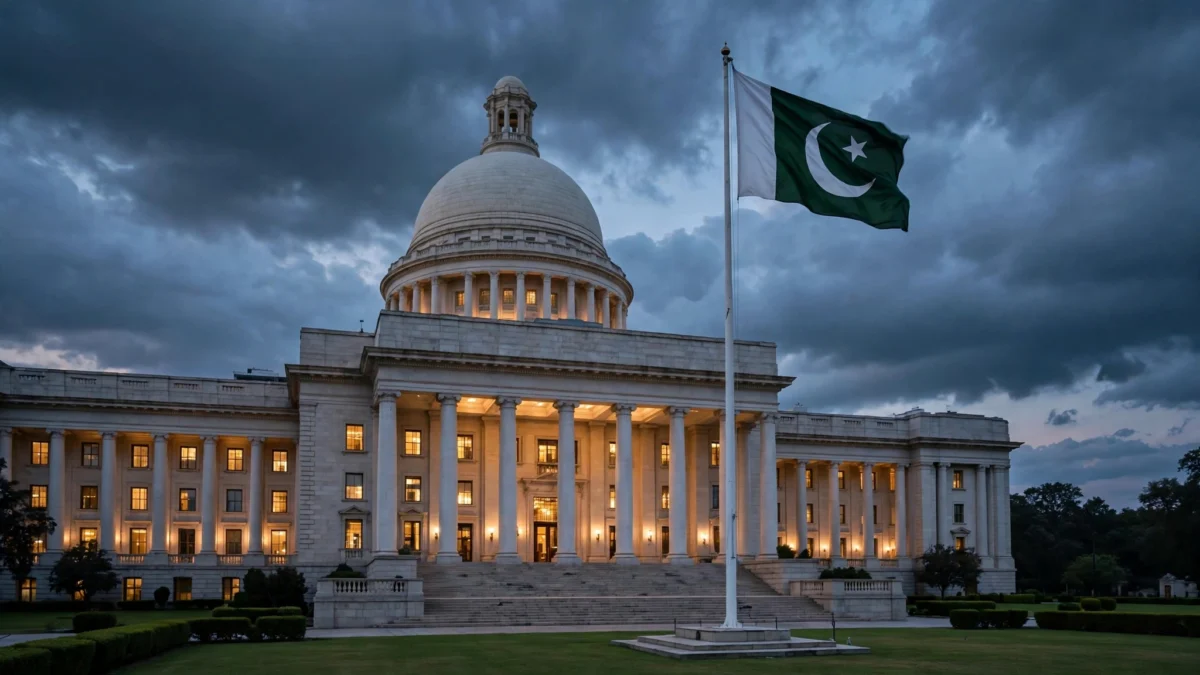
Pakistan’s federal government has moved from threat to execution: on Sunday, President Asif Ali Zardari imposed a state of emergency in Khyber Pakhtunkhwa and placed the province under governor’s rule, suspending the elected administration led by Imran Khan’s Pakistan Tehreek-e-Insaf (PTI). According to statements from the President’s House and the Prime Minister’s Office, the proclamation was signed on the advice of Prime Minister Shehbaz Sharif following an emergency meeting of the federal cabinet chaired by the premier on Sunday morning, during which ministers reviewed what they described as the province’s deliberate disengagement from the fight against terrorism.
The measures rest on two constitutional provisions: Article 232, which allows a proclamation of emergency where the security of Pakistan or any part of it is threatened by war, external aggression, or internal disturbance beyond a provincial government’s power to control; and Article 234, which governs the imposition of governor’s rule where a province’s constitutional machinery is considered to have failed. The President’s House said the proclamation took effect immediately.
Under the governor’s-rule arrangement, the provincial governor — PPP leader Faisal Karim Kundi — will take charge of the province with an advisory council, Federal Law Minister Azam Nazeer Tarar told a news conference in Islamabad, adding that the arrangement would initially run for six months, according to reporting by Reuters. The Constitution itself provides that a proclamation under Article 234 must be laid before a joint sitting of Parliament within two months for approval, and cannot remain in force beyond six months in any case, according to Dawn’s reporting.
A notable constitutional detail, reported by Dawn, is what the proclamation left out: Article 233, the provision that empowers the president to suspend certain fundamental rights during an emergency, was not mentioned in the summary signed by President Zardari. Its absence means the intervention stops short of the most extreme instrument available to the presidency, at least for now.
The federal government’s justification, carried in the Prime Minister’s Office statement, was that the provincial government had shown a “deliberate disengagement from the fight against terrorism”. Interior Minister Mohsin Naqvi said the law-and-order situation in parts of the province had deteriorated so badly that residents would not leave their homes after evening in some districts, according to Reuters. Islamabad has also accused neighbouring Afghanistan of harbouring Islamist militants who launch attacks inside Pakistan, and alleged that Khan’s party had sympathised with the Taliban in Kabul and their affiliates at home — accusations that both the Afghan Taliban and Khan’s party have denied, Reuters reported.
The bureaucratic takeover began almost immediately. According to an official notification reported by Dawn, the federal government appointed Dr Muhammad Fakhr Alam Irfan, a Grade 22 officer of the Pakistan Administrative Service previously serving as secretary of the Power Division, as the new chief secretary of Khyber Pakhtunkhwa with immediate effect and until further orders. Irfan hails from Mardan. In a separate notification, Muhammad Yahya Akhunzada, a Grade 20 officer who had been serving as an additional secretary at the Prime Minister’s Office and previously served as commissioner of Dera Ismail Khan and in health, information and education departments in KP, was placed at the disposal of the KP government with immediate effect, Dawn reported.
The path to the proclamation
Sunday’s move was the culmination of a confrontation that has been building for weeks. PTI launched a long march on October 4 from Lakki Marwat, demanding the release of party founder Imran Khan, who has been in jail for more than three years. The convoy has been moving toward Islamabad in stages, with the next major announcement expected at the Swabi Interchange on October 13. Three rounds of talks between the government and the opposition collapsed on October 4, with Interior Minister Naqvi blaming Chief Minister Sohail Afridi for their sabotage, while PTI’s Salman Akram Raja said the federal government’s insistence that all its unilateral anti-terrorism actions in the province be owned by the provincial government was the breaking point.
In the week before the proclamation, the federal government’s warnings grew sharper. On October 5, Dawn reported the government was “seriously considering” governor’s rule, with an unnamed official calling the imposition of emergency “imminent”. Governor Kundi said that if imposing emergency became necessary to save the province, the province’s governor would certainly do so. The killing of the Election Commission’s director-general in Tank, the imposition of Section 144 in Rawalpindi, Murree and Islamabad, and the KP Police’s guidelines against “unlawful gatherings” all fed a picture of a state preparing for confrontation.
A final diplomatic strand ran through the weekend. A Saturday-night meeting at Aiwan-e-Sadr between President Zardari and senior cabinet figures agreed on the emergency route, and the federal cabinet was called for Sunday morning at 9:30 to formalise it. According to reporting carried by several outlets, the cabinet gave the province one last opening through Maulana Fazlur Rehman, the JUI-F chief: Deputy Prime Minister Ishaq Dar contacted Fazlur Rehman for consultation during the meeting itself, but the final mediation effort failed. Fazlur Rehman had earlier suggested negotiations as an alternative to emergency and governor’s rule, and Prime Minister Sharif had met him at the Prime Minister’s House on Saturday.
PTI’s defiance
The PTI rejected the proclamation outright. Party chairman Barrister Gohar Ali Khan called it “an extremely alarming and grave political mistake” and an undemocratic measure in a post on X, saying there was still time for the decision to be withdrawn. He argued that “peace cannot be established, nor stability brought, by ignoring this mandate, weakening provincial autonomy, and creating conflict between the federation and the province”, and pledged to challenge the decision on every constitutional, legal and democratic forum, Dawn reported. Gohar insisted there was no disagreement on eliminating terrorism, but warned that counterterrorism could not be used as a justification to suppress the people’s voice or achieve political objectives.
Zulfikar Bukhari, a close aide to Imran Khan and PTI spokesman, told Reuters the decision was “ridiculous”, describing Khyber Pakhtunkhwa as the country’s “only legitimately elected government”, and warned it would “only lead to further bloodshed, instability and collateral damage”. He said there had always been room for talks, but that the decision showed negotiations were never the government’s intention.
Before the proclamation, Chief Minister Afridi had dared the centre to act openly and ordered the provincial police chief and chief secretary to ignore “unconstitutional or illegal” orders from Islamabad, while the PTI’s core committee formally rejected the move. Following the proclamation, PTI figures claimed that Afridi had been taken into custody while leading the party’s long march — a claim that had not been independently confirmed at the time of publication and is presented here only as the party’s assertion. Dawn reported mobile network and data services throttled in selected urban pockets of the province, though not a province-wide blackout, alongside container barricades around Peshawar and heightened security in Islamabad, including additional deployments on Shahrah-e-Dastoor.
Governor Kundi, now the central figure of the new arrangement, struck a conciliatory note. In a statement carried by Dawn, he said the decision was made for “establishing peace in Khyber Pakhtunkhwa, the prosperity of its people, and the development of the province”, and addressed the province’s people directly, describing himself as a servant of the province and a protector of their rights, calling on all to “come together to bring peace to Khyber Pakhtunkhwa and begin a new chapter of our province’s development”. The PPP leader urged the public to set aside political differences and not let them become “an obstacle in the path of our province’s common interests”.
Prime minister’s address
Addressing the cabinet meeting, Prime Minister Sharif framed the move partly in economic terms, saying the PTI-led provincial government could not be allowed to derail the stabilising economy. “I will not allow them (PTI) to destabilise the economy,” he said, according to Dawn. He recalled the recent staff-level agreement with the International Monetary Fund, expressing hope that Pakistan would unlock the $1.2 billion tranche within the year after his meeting with IMF Managing Director Kristalina Georgieva on the sidelines of the UN General Assembly, and commended the political and military leadership for working together “day and night” on fiscal discipline.
Shehbaz Sharif also reiterated Pakistan’s solidarity with Saudi Arabia in the wake of the deadly Houthi attack on Riyadh’s airport, calling any aggression against the kingdom a “red line” for Pakistan, and said Pakistan’s only goal was that “peace should be restored in the region”, Dawn reported.
Analysis: Why It Matters
The imposition of emergency and governor’s rule in Khyber Pakhtunkhwa is the most consequential constitutional move in Pakistan in years, and its significance runs on several tracks at once. First, the scale of the instrument matters. Article 232 emergency plus Article 234 governor’s rule together amount to the federal government taking over a province wholesale: the chief minister, ministers, advisers and the advocate general relinquish their offices immediately, the governor runs the province on federal direction, and Parliament can legislate on provincial matters. Pakistan has a long history of governor’s rule — but deploying it in a province where an opposition party holds an elected mandate, in the middle of that party’s march on the capital, transforms a security argument into a democratic legitimacy fight that will dominate the country’s politics for months.
Second, the omission of Article 233 is a telling choice. By not suspending fundamental rights, the government has preserved a legal distinction that keeps the intervention one rung below the maximum. That distinction matters for court challenges: PTI has already pledged to fight on constitutional, legal and democratic forums, and the courts will test whether the Article 232 threshold — internal disturbance “beyond the power of a provincial government to control” — was truly met when the province’s police and departments were still functioning. Constitutional analysis published days before the proclamation argued exactly this: a government that is fighting terrorism is not a government that has failed. The government will now have to prove the opposite, on the record, in a parliament whose joint sitting must approve the proclamation within two months, and ultimately before judges.
Third, the timing reveals the leverage logic. The proclamation landed as PTI’s march was paused between stages, with the Swabi Interchange announcement expected October 13 and National Assembly and Senate sessions set for the same date. Emergency converts the march from a pressure campaign into a direct confrontation with a federally administered province — every roadblock, container and deployment is now backed by a proclamation. Whether that deflates the march or gives it a martyrdom narrative is the gamble at the heart of this decision. PTI’s warning of “bloodshed” and the centre’s warning of “no room left” are mirror images of the same bet: each side believes escalation will break the other first.
Fourth, the bureaucratic surgery signals intent beyond a symbolic move. Installing a new Grade 22 chief secretary from the federal Power Division and a Grade 20 officer with deep KP and former FATA credentials is not the staffing of a brief caretaker interlude; it is the staffing of an administration meant to hold. That makes the October 13 parliamentary sessions and the march’s next stage the immediate pressure points: if the proclamation survives its first legal and political tests, the province could be under federal rule for up to six months.
Fifth, the economic framing in the prime minister’s remarks exposes a second theatre of the crisis. By linking the emergency to protecting the “stabilising economy” and the IMF tranche, the government is telling markets and international lenders that political order in KP is a macroeconomic variable. It is a plausible argument — prolonged marches, containers and uncertainty have repeatedly dented investor confidence — but it also means the emergency’s success will be judged not only on security but on whether the economy stays on the path the prime minister promised.
Finally, the failure of the Fazlur Rehman channel closes the last door the government left open. When even the JUI-F chief, the establishment’s traditional mediator, could not bridge the gap between the centre’s demand for counterterrorism ownership and the PTI’s demand for Khan-related concessions, the conflict became structural rather than transactional. A structural conflict resolved by constitutional emergency is a precedent: the next time a province governed by the opposition resists a federal security policy, the template from October 11, 2026 will be on the table.
What to Watch Next
- The joint sitting of Parliament: the Article 234 proclamation must be approved within two months, and the NA and Senate sessions convened for October 13 will be the first test of whether the government holds its numbers.
- The courts: PTI’s pledged challenge will put the Article 232 “beyond provincial control” threshold under judicial scrutiny for the first time at this scale in years.
- The long march: whether the Swabi Interchange announcement on October 13 proceeds, and how a federally administered province’s police respond to it.
- The detention claims: whether the claim that Chief Minister Afridi was taken into custody is confirmed, denied or walked back — and who is physically governing the province day to day.
- Article 233: whether the government ever reaches for the fundamental-rights suspension it deliberately left out of this summary.
- The streets of Peshawar: container barricades, throttled networks and deployments suggest the security posture is already being enforced — the question is whether calm returns or confrontation spreads.
Sources
- Reuters — “Imran Khan’s party’s provincial government suspended by Pakistan president” (Oct 11, 2026)
- Dawn (via mirror) — Syed Irfan Raza, “Emergency, governor’s rule imposed in KP as president approves cabinet decision” (Oct 11, 2026)
- Devdiscourse (citing Dawn) — “Pakistan imposes emergency, Governor’s rule in PTI-led Khyber Pakhtunkhwa” (Oct 11, 2026)
- Lahore Times — “Why Only KP? The Case Against Governor’s Rule And Emergency” (Oct 4, 2026)

About the Author — Abdul Mannan
Related Articles
Decision on KP Emergency Moves to “Final Stage”: Federal Cabinet Meets Sunday as Parliament Sessions Set for October 13
The federal government has decided to impose emergency in Khyber Pakhtunkhwa following a Saturday-night meeting at the Presidency,…
Key Decisions on KP Emergency Expected Today as Government Finalises Preparations, Sources Say
The federal government has finalised preparations for a possible emergency or governor's rule in Khyber Pakhtunkhwa, with sources…
Bilawal Warns PTI to Abandon ‘Extremist’ Politics as Federal Government Weighs Emergency or Governor’s Rule in KP
PPP chairman Bilawal Bhutto-Zardari on Friday urged the PTI to abandon what he called "extremist" politics and return…