The Gun Returns to Bollywood: Tiger Shroff, the Bishnoi Gang, and the Disposable Shooters

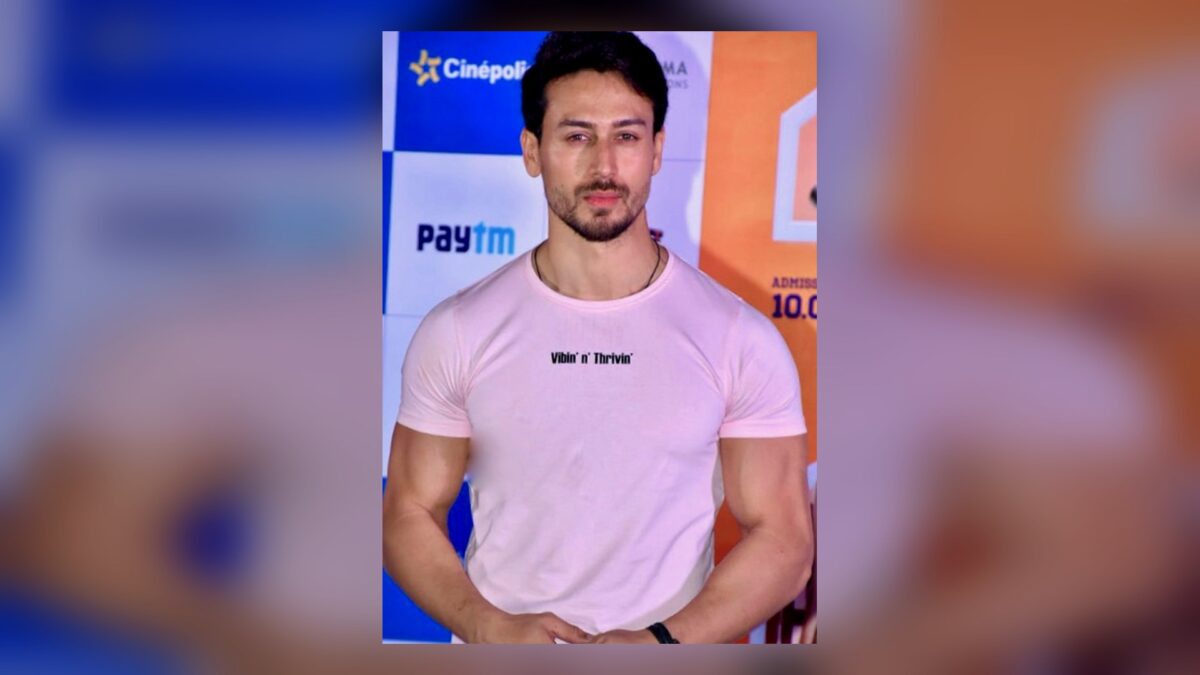
Picture the scene. Seven o’clock on a Sunday evening in Juhu, Mumbai, the light over the Arabian Sea doing that soft, forgiving thing it does before the city hardens into night. A football ground is emptying — young men walking to their cars, kit bags and laughter, the good tiredness of a game well played still warm in their shoulders. Among them is a man whose fame was built on flying kicks: Tiger Shroff, climbing into his car as the evening settles.
Then the evening splits open. Five shots. Not one, not a warning — five. Gunpowder and glass explode into the car. When the echo dies, the star stands with burnt hands, his driver Firdos is bleeding from the hand, and an autorickshaw driver nearby has been hit too. Somewhere in the dark, two young men are already running toward an abandoned motorcycle near Andheri West railway station — running toward a train they believe will carry them to Delhi, and from Delhi toward Nepal.
You have read this scene before, dear reader. Mumbai has been here; Bollywood has been here. The gun, that old uninvited guest of the film industry, has come back through the window — carrying an invoice for fifty thousand rupees, payable to a Rapido bike-taxi driver, two labourers, and a seventeen-year-old boy.
That is not the detail you expect in a gangland attack. But it is the detail that tells you everything.
What We Know — And What Was Claimed
Let us anchor ourselves in the facts, because in stories like this the rumours breed faster than the bullets. On Sunday, October 18, at around 7:00 PM, five rounds were fired at Tiger Shroff’s car in Juhu as he left a football club after playing football. Tiger escaped with minor gunpowder burns to his hand — India Today reported, through News89, that gunpowder and glass fragments struck his left hand. His driver Firdos was injured in the hand, and an autorickshaw driver was also reportedly hit in the firing.
Then came the claim — and here I must be careful, because a claim is not a conviction. A social-media post in the name of the Lawrence Bishnoi gang took responsibility, Filmibeat reported, citing PTI — alleging the gang had tried to contact Tiger with a warning he had ignored, and warning Bollywood actors who work with Salman Khan. The Mumbai Police have not verified the post’s authenticity. Hold that uncertainty in your hand like a live thing: this age has taught gangs that a social-media account can fire louder than a pistol.
Within fifteen to twenty minutes of the Mumbai Police sharing CCTV footage with their Rajasthan counterparts, three suspects were detained at Kota railway station, pulled from the general compartment of the Pune–Jaipur Express — a joint operation of the Mumbai Police, Rajasthan Police and railway police. The trail ran through CCTV from outside Andheri West railway station, where the shooters had abandoned their motorcycle; the police seized that bike. Kota SP Tejaswini Gautam confirmed the arrests to the Hindustan Times, as reported by The Business Standard. Mumbai Police deployed fifteen teams; Crime Branch officials travelled to Kota for transit custody. No firearms were recovered at the time of detention.
The suspects are not the hardened killers of cinema. Daily Prabhat reported that the three — Rehan, eighteen, from Sonipat in Haryana; Ritik, twenty-two, from Begusarai in Bihar; and a minor, also from Haryana — were paid Rs 50,000 collectively for the attack. One is a Rapido bike-taxi driver; the other two worked as labourers in Sonipat. Investigators allege Anil Pandit, an aide of gangster Lawrence Bishnoi, ordered the attack; he was in contact with Rehan, who arranged the juvenile shooter. India Weekly reported that all three are now in custody, and Maharashtra’s Deputy Chief Minister Eknath Shinde visited Tiger’s residence on Sunday night, declaring that strict action would be taken and that threats against public figures would not be tolerated.
This is not the underworld your fathers feared. A Rapido driver, two labourers, and a minor, for fifty thousand rupees — this is something the twenty-first century has invented, and it deserves a name.
The Ghost of August 1997
You want to understand what just happened in Juhu? Then you must go back twenty-nine years, to a temple in Mumbai, to a morning in August 1997, when the city learned what the underworld’s return really costs.
Gulshan Kumar — the juice-seller’s son who built T-Series into a music empire — was shot dead in broad daylight outside a temple, a henchman of the Dawood Ibrahim gang emptying his pistol into a man whose real offence was refusing, or failing, to keep paying. The whole of Bollywood understood the message that morning, because the message was not really for Gulshan Kumar. It was for every producer, every star, every moneyed name in the industry: you are in business with us whether you signed anything or not.
The 1990s were the decade when the underworld ran Bollywood’s shadow economy. Protection was the product. Producers paid, or they bled. The threatening telephone calls came in voices everyone recognised — Abu Salem’s name hung over the industry like monsoon cloud. Stars took the calls. Some paid quietly. And when producer Bharat Shah was arrested in 2001 over the financing of films with underworld money, the whole country finally saw the ledger: the glitz of the screen and the grime of the gun were entries in the same account book.
So when five shots rang out in Juhu on October 18, the echo the industry heard was not from October 2024, when Baba Siddique was gunned down, nor from April 2024, when shots were fired at Salman Khan’s Galaxy apartment in Bandra — though those are part of the same gathering storm, and I will come to them. The echo the industry heard was from August 1997. The same script, the same stage directions: a famous name, a public place, five shots, a message written in gunpowder. The underworld does not innovate its theatre. It repeats it, because the theatre worked.
The Older Ghost — The Company That Sold Protection
But I promised you I would go deeper than 1997, and I keep my promises to you, dear reader, even when the digging hurts.
Long before Dawood Ibrahim’s men collected their dues from Bollywood, another organisation ran the same business on a grander scale. In eighteenth-century Bengal, the East India Company perfected the protection economy: merchants paid “presents” to trade safely, rulers paid tribute to rule undisturbed, and the Company’s agents collected with one hand while keeping private armies with the other — sepoys, Indian soldiers in Company uniforms, raised cheaply, drilled cheaply, and spent cheaply in wars that were never theirs.
Consider the architecture of that business, because it is the exact architecture of what you saw in Juhu. At the top: the principals, who never dirty their hands and never face the gallows. In the middle: the fixers, who arrange the deals and take their cut. At the bottom: the disposable muscle — young men from villages, hired for a pittance, sent into the fire, abandoned to the hangman the moment the job is done. The Company called them sepoys. The Bishnoi network, if the investigators’ account holds, calls them Rehan and Ritik and a seventeen-year-old whose name the law will not print.
The Uberization of the Underworld
And now, dear reader, we come to the fresh wound in this story — the thing that separates October 2026 from August 1997, and the thing that should frighten you more than the bullets did.
In the 1990s, the underworld sent killers — hardened men, professionals of violence, instruments of an empire that invested in them. What was sent to Juhu on October 18? A Rapido bike-taxi driver — a young man who by day ferried strangers through Mumbai’s traffic for app-dispatched fares — two labourers from Sonipat, and a minor. The Daily Jagran’s account of their identities reads less like a gang dossier and more like a census of India’s precarious young.
Do you see what has happened? The underworld has been Uberized. Crime has become gig work: no payroll, no pensions, no loyalty, no training — just a job posted to the desperate, a payout of Rs 50,000 split three ways, and labour instantly replaceable when arrested, which it was, within a day, on a railway platform in Kota, because disposable labour leaves disposable trails.
Fifty thousand rupees — split three ways, less than a month’s rent in the city they shot in. It is the price the market has discovered for a young man’s future when he has no future to sell by honest means — and that is the most damning indictment in this story: not of the gang, which was always in the business of damnation, but of an economy that produces eighteen-year-olds for whom fifty thousand rupees is worth pointing a gun at a film star.
There is a terrible symmetry here the old dons would not recognise. In 1997, the shooter was valuable — a professional, hard to replace, worth protecting. In 2026, the shooter is the cheapest input in the operation. The gang’s real assets are the phone, the social-media account that claims responsibility, and the fixer who arranges the boys. The boys are single-use: they fired, they fled, they were caught on CCTV within hours, their motorcycle seized, their Nepal plan collapsing on a railway platform. And somewhere tonight another Rehan is waiting for the call, because the supply of desperate young men has never once run short in this subcontinent.
The Vendetta and the Warning
You cannot write about the Bishnoi name without writing about the blackbuck. In 1998, Salman Khan was accused in the blackbuck poaching case, and for Lawrence Bishnoi — who belongs to a community that reveres the blackbuck — that case became a blood vow. Everything since has been chapters of that vow: the firing at Salman’s Galaxy apartment in Bandra in April 2024, the murder of Baba Siddique in October 2024, the attacks on singer AP Dhillon. The gang’s alleged post about Tiger Shroff carried the same signature — a warning to Bollywood actors who work with Salman Khan.
Notice the strategy, because it is ancient. The vendetta is personal, but the business is general: a blood feud against one star becomes a protection franchise over an entire industry. The feud is the advertisement; the fear is the product. Gulshan Kumar’s killers understood this in 1997. The Company understood it in Bengal. And somewhere in a cell tonight, three boys who cannot afford lawyers are beginning to understand that they were never the business — they were the advertising.
What This Means — For Bollywood, and For You
So what does the gun’s return mean for Bollywood? It means the industry must learn, again, the lesson it learned in the nineties and then allowed itself to forget in the years of multiplexes and hundred-crore clubs: that fame in Mumbai has always been a joint venture with fear. The stars will hire more guards, the producers will take the calls, the police will deploy their fifteen teams — and all of it is necessary, and none of it sufficient, because the supply chain of this crime is not guns or gangs. It is desperation, and desperation is manufactured daily, in bulk, by an economy that has no use for its young.
But I did not write this column for Bollywood, dear reader. The film industry can afford its guards. I wrote it for you — and here is the question the Juhu firing asks of every one of us, and it is not about film stars at all:
What kind of country produces eighteen-year-olds who will shoot at a man for sixteen thousand rupees?
Not a country at war. Not a country in famine. A country with smartphones in every pocket and gig-work apps on every screen — a country where a young man can deliver food all day on a bicycle and still not earn enough to marry, to rent, to dream. The underworld did not create Rehan and Ritik and the boy whose name we may not print. The underworld merely found them, the way a vulture finds what the desert has already killed.
The Verdict
I will not end with policy prescriptions, because columns that end with bullet-pointed solutions are confessing that they never understood the disease. This disease is not a policing problem. Fifteen teams can catch three boys on a train to nowhere; fifteen thousand teams cannot catch the next three, because the next three are already waiting — in Sonipat, in Begusarai, in every town where a young man does the maths of his life and finds that honesty pays less than a pistol.
A civilisation is judged not by how it punishes its criminals but by what it pays its young to become. When the price of a boy’s soul falls to sixteen thousand rupees and a train ticket to Nepal, the gang pulling the trigger is only the symptom. The disease is an order of things in which a Rapido driver, ferrying strangers safely through traffic by day, can be hired to ferry death by night — and finds the offer reasonable.
Gulshan Kumar died on temple steps in 1997 so that Bollywood would learn to pay for its safety. Tiger Shroff’s car took five bullets in 2026 so that Bollywood would learn the lesson again. But the real tuition was not paid by the star who walked away with burnt hands — it was paid by three boys on a railway platform in Kota, who sold their futures for the price of a second-hand motorcycle and will now learn what the sepoys learned two centuries ago: in the protection business, the protector never protects the muscle — the muscle is the thing being spent.
The gun has returned to Bollywood — cheaper, younger, more disposable than ever. Pray, if you still pray, not only for the stars in their guarded cars, but for the boys on the platforms: the ones the economy threw away and the underworld picked up. They are the truest victims of Sunday evening’s five shots. The bullets missed Tiger Shroff. They did not miss them.
Sources & References
- The Business Standard — “Three suspected shooters who fired at actor Tiger Shroff arrested” (October 19, 2026)
- India Weekly — “Tiger Shroff firing: Bishnoi gang aide allegedly ordered attack, 3 arrested in Rajasthan” (October 19, 2026)
- News89/India Today — “Tiger Shroff Firing: 3 Suspects Nabbed In Kota, Bishnoi Gang Link Emerges” (October 19, 2026)
- The Daily Jagran — “Rapido Driver, Minor Labourer: What We Know About Shooters In Tiger Shroff Firing Case” (October 19, 2026)
- Filmibeat — citing ANI and PTI (October 19, 2026)
- Daily Prabhat — “3 shooters with links to Lawrence Bishnoi gang arrested for attack on Tiger Shroff, planned to escape to Nepal” (October 19, 2026)

About the Author — Abdul Mannan
Related Articles
Three Days Blind: How Ukraine Discovered Its Sky Has an American Switch
For three days, no American warnings of Russian ballistic-missile launches reached Kyiv. Satellites slowed. Sanctions softened. And a…

The Treasure That Never Was: Hormuz, the AI Shipwreck, and the Death of “Seeing Is Believing”
The GFS Pride sank in the Strait of Hormuz on October 14. Within days, videos showing Iranians hauling…
The Day the Lie Learned to Swim: What the Strait of Hormuz Taught Me About Truth
The viral videos of fishermen hauling iPhones from the sea in the Strait of Hormuz were watched by…