The Forest Cannot Vote: Brazil’s Runoff, a Dynasty’s Second Act, and the Choice the Whole World Is Watching

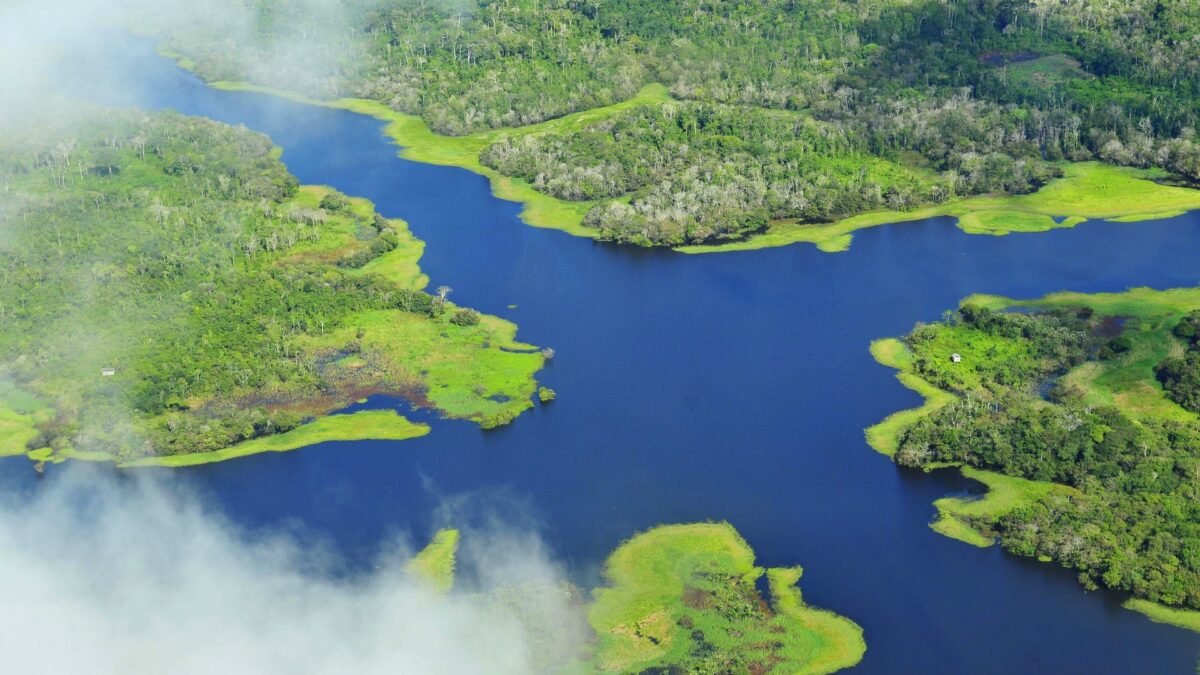
What does a forest do when it is put on a ballot? It cannot queue at a polling station. It cannot argue on television. It cannot defend itself against the men who promise to protect it while sharpening the axe behind their backs. And yet today, in the largest democracy in Latin America, the fate of the greatest forest on earth is, quite literally, on the ballot — along with the future of a dynasty, the memory of a dictatorship, and the question of whether a son can inherit his father’s army of voters the way a prince once inherited a crown.
Today, Sunday, October 25, 2026, Brazil votes. Some 160 million Brazilians are eligible to choose between two men who could hardly be more different, and yet who are bound together by the same iron thread of history: Luiz Inácio Lula da Silva, the 80-year-old incumbent, a former metalworker who rose from poverty to the presidency three times; and Flávio Bolsonaro, the 45-year-old senator, the eldest son of Jair Bolsonaro, the former president now serving a 27-year prison sentence for plotting a coup after losing the last election. The polls open at 8 in the morning in Brasília and close at 5 in the afternoon, and the electoral court will begin publishing the national count as soon as the last ballot boxes close. By tonight, the world will know. But this morning, nobody — not the pollsters, not the pundits, not the presidents watching from Washington and Beijing — nobody knows.
That is the first thing you must understand about this election. It is not a contest. It is a coin, spinning in the air.
A race too close to call
Three weeks ago, on October 4, Flávio Bolsonaro shocked the country by finishing first. He took 47.03 per cent of the valid votes; Lula took 45.16 per cent. The gap was about 2.2 million votes. Neither man cleared the 50 per cent needed to win outright, so the constitution sent them to a second round — and ever since, every serious poll has told the same story: a dead heat.
Read them in sequence and you will feel the ground shifting under your feet. A Quaest poll in mid-October put Bolsonaro at 46 per cent and Lula at 44. A week later, Quaest had it 45 to 44. Datafolha, Brazil’s most watched pollster, measured a 50–50 tie in valid votes in its final survey. A Vox Brasil poll gave Lula the narrowest of edges, 50.6 to 49.4. A CNT/MDA poll published on Saturday put Bolsonaro marginally ahead, 46.3 to 45. Every one of these leads sits inside the margin of error. Every one of them is, statistically, a tie. As the analyst Pedro Doria put it with admirable bluntness: it is really a toss of a coin.
And here history leans in with its cold whisper. No candidate who finished second in the first round has ever gone on to win a Brazilian presidential runoff since the country’s return to democracy in 1989. If that law of history holds, Lula survives. If the polls’ faint lean toward the challenger means anything at all, the son of the jailed president takes the palace. One of these two truths will be broken tonight, and Brazil will live with the breakage for four years. The winner takes office on January 5, 2027.
There is a third figure in this race, and it is the one that should frighten both camps most: the absent. More than 33.4 million registered Brazilians stayed home in the first round — the highest first-round abstention rate since 1998. One voter in five did not bother. The two campaigns have spent three weeks hunting those ghosts, because in a race this tight, the people who stayed home are the election. Whoever persuades the weary, the disgusted and the undecided to walk to a polling station today will be the next president of Brazil.
The son carrying his father’s sword
Now let me tell you the thing that makes this election different from an ordinary changing of the guard, and why it has seized the imagination of the whole world. Flávio Bolsonaro is not merely a candidate. He is an heir.
History, my reader, is a hall of mirrors, and every age walks into it believing it is the first to see its own face. Brazil has seen this face before. It saw it in the empire, when Dom Pedro I handed a continent-sized throne to his son, Dom Pedro II. It saw it in the long shadow of Getúlio Vargas, the strongman whose ghost haunted Brazilian politics for a generation after his death. It saw it in the generals who ruled from 1964 to 1985 and believed the country was their barracks. And my own part of the world knows this mirror all too well: in South Asia we have watched sons inherit parties the way other sons inherit shops — the Bhuttos, the Sharifs, the Gandhis — and we have learned, sometimes to our cost, that a famous name is both a blessing and a cage.
Flávio Bolsonaro carries his father’s name, his father’s party, his father’s voters — and, according to an analysis of campaign finance data, a strikingly large share of his father’s donors. Thirty-four per cent of his donors also funded Jair Bolsonaro in 2022. He campaigns on his father’s themes: cut public spending, crack down on crime, and — the promise that draws the loudest cheers at his rallies and the sharpest gasps abroad — free his father. His opponent’s camp calls it a campaign to pardon a coup plotter by ballot box. His supporters call it justice for a persecuted patriot. You, the reader, must decide what you call a son who runs for president on the promise of opening his father’s prison cell, but you cannot pretend the question is ordinary. No election is ordinary when one of the candidates is, in effect, asking the voters to overturn a 27-year sentence.
Lula, for his part, is no stranger to the inside of a prison cell either, nor to the bitterness of political resurrection. He has been convicted, imprisoned, and then freed; he has been written off more times than any living politician on earth, and he keeps returning, like a tide that refuses the shore. At 80, he is asking Brazilians for one more act of faith: that the old metalworker who lifted millions out of hunger still has one more chapter in him. His government points to falling deforestation, to a new law giving workers the right to two days off per week without a pay cut, and to welfare programmes that keep food on the table. His critics point to rising living costs and rising taxes, and to a frustration that has curdled, in many households, into something harder than disappointment.
So this is the choice, stripped of its slogans: a man asking to be trusted a fourth time, against a son asking to be trusted for the first time — on his father’s name.
The forest that cannot vote
But there is a third candidate in this election, and it has no party, no slogan, and no vote. It is the Amazon.
Understand the scale of what is at stake, because numbers, for once, are not abstractions. The Amazon spans 6.9 million square kilometres — about 40 per cent of the entire South American continent. It holds the greatest biodiversity on earth, it is home to some 300 Indigenous groups, and it stores and breathes carbon on a scale that steadies the climate of the whole planet. Scientists warn, in language that grows more frightened by the year, that the forest is approaching a tipping point: past it, the rainforest could dry, degrade and collapse into savanna within a decade, and the damage to the world’s climate would be irreversible in any timeframe that matters to our children.
Under Jair Bolsonaro, Amazon clearing rose by roughly 60 per cent. Official data record more than 45,000 square kilometres destroyed between 2019 and 2022, while environmental fines collapsed and carbon emissions from Amazonia nearly doubled. Under Lula, deforestation has fallen by roughly 45 per cent, to its lowest level in more than a decade. Those are not opinions. Those are satellite measurements, and satellites do not vote for anyone.
Both men, on paper, promise to end deforestation. Lula promises net-zero deforestation by 2030. Flávio promises zero illegal deforestation by 2029. Read that one word — illegal — the way a lawyer reads a contract, because the whole election may hide inside it. The younger Bolsonaro’s platform calls for an “agile, modern” environmental licensing process that, in its own words, will no longer serve as a way to block those seeking to invest and create jobs. In plain language: what is legal today may not be what is legal tomorrow, and a forest can be destroyed entirely lawfully if the law is rewritten first. Climate scientists are not mincing words. Carlos Nobre, of the University of São Paulo’s Institute for Advanced Studies, has said plainly that if Flávio wins, deforestation will increase, and “we are in a very serious situation.”
I ask you, my reader, a question in the spirit of this column: if a forest could speak in a courtroom, what would it say about a ballot paper? It would say what every voiceless thing has said since the beginning of history — that the powerful always promise to protect what they intend to consume, and that the only protection that has ever worked is the kind written into law and guarded by people who cannot be bought. The Amazon will not march on Brasília. It cannot. It is depending, today, on strangers in distant cities who have never seen a kapok tree, deciding that its survival is worth more than a cheaper cut of beef or a faster soy harvest. That is a strange way to run a planet. It is also the only way we have.
The screens that whisper
There is another battlefield in this election, and it is the one inside every Brazilian’s pocket. Brazil is one of the most connected countries on earth, and this campaign has been fought, viciously, on WhatsApp, Instagram and Facebook.
The electoral court has been dragged into the fight. Meta, the owner of Facebook and WhatsApp, acknowledged what it called an “unintended deactivation” of Lula campaign advertisements, blaming technical incidents and denying that it meddles in the campaign — but the denial itself tells you how large the suspicion has grown. A pro-Lula WhatsApp channel created by a deputy, André Janones, and styled the “Army of Lula,” grew from 50,000 subscribers to almost 8 million between the first and second rounds. That is not a campaign. That is a mobilisation.
And yet, for all the noise of the screens, the loudest sound of this campaign may have been made by feet on pavement. On October 11, an estimated one million people marched for democracy on São Paulo’s Avenida Paulista — one of the largest democratic demonstrations in Brazil’s recent history. A million people do not march for a slogan. They march because they can smell something in the air, and they do not like the smell. Whether you read that march as a warning against the far right or as proof that democracy is alive and kicking, you cannot read it as indifference. Brazil is awake. Brazil is arguing with itself, loudly, in the streets and on the screens, and today that argument becomes a decision.
Why the world is holding its breath
You may be sitting in Faisalabad, or London, or Lagos, and asking a fair question: why should I care who governs Brazil? Let me answer it plainly, because the answer is the reason this column exists.
Brazil is not a faraway country. It is the largest economy in Latin America — roughly 2.28 trillion dollars, about 31 per cent of the region’s entire output. It is the world’s great pantry: a dominant exporter of soy, beef and iron ore, and the source of about 93 per cent of the world’s niobium, a metal without which modern steel and modern rockets are both harder to make. When Brazil sneezes, the price of your bread, your cooking oil and your car may catch cold. When Brazil changes direction, the whole Western Hemisphere feels the turn: analysts on both sides agree that a Bolsonaro victory would draw Brazil closer to Washington and to President Donald Trump, expanding American influence across Latin American trade and security networks, while a Lula victory would revive Brazil’s “South-South” diplomacy — closer ties with Africa, Asia and the developing world, and a louder voice for the Global South in climate negotiations.
And then there is the question that dwarfs all the others, the one I keep returning to because it will not let me go: the climate. The Amazon is not Brazil’s property in any moral sense, whatever the maps say. It is the inheritance of all of us, and the debt of all of us. If the forest tips into savanna, the rains of South America falter, the carbon escapes, and the weather of continents shifts — and the farmer in Punjab, the fisherman in Sindh, the family in a Karachi heatwave will pay a price for a ballot they never cast. That is the brutal arithmetic of the modern world: the decisions of one country’s voters now fall on the heads of people who never voted. Which is why a Brazilian election is, whether we like it or not, a world election.
The verdict the mirror gives
So here we are, at the hour of decision, and I will not insult you by pretending neutrality. A columnist who has no convictions is a weather vane, not a writer. But my conviction today is not, in the end, about one man or the other. It is about something older and harder than both of them.
History teaches — and it teaches the same lesson in every language, in every century — that nations are not destroyed by their enemies half as often as they are destroyed by their own forgetfulness. Brazil has lived under an empire, under a strongman, under generals, and under democrats, and each time it has had to decide, again, whether power belongs to a family, to a uniform, or to the people. The ballot paper today asks that question once more, in its bluntest form: does a name inherit a nation, or does a nation choose its name?
The old Greeks, who invented the word democracy, had a word for what happens when a son inherits his father’s power without earning it: they called it the shadow of the tyrant, and they feared it more than any foreign army. The Romans knew it too — every dynasty that began in glory ended, sooner or later, in a palace full of frightened men guarding a throne nobody respected anymore. Brazil’s voters know their history better than any outsider does. They lived the dictatorship. They buried its victims. They built, painfully, a democracy that counts votes in hours while older democracies take weeks. Today they will decide whether that democracy is a habit or a conviction.
And what of the forest? I began with the forest, and I will end with it, because the forest is the only party in this election that cannot lie. Trees do not make promises. They either stand, or they fall. Whoever wins tonight — the old metalworker or the young heir — will inherit, along with the presidential palace, the stewardship of a green ocean that keeps our planet breathing. If he treats it as a warehouse, we will all pay. If he treats it as a trust, we may all yet be saved. The choice is Brazil’s. The consequence is everyone’s.
So I say to you, my reader, wherever you are: watch Brazil tonight. Not because a distant election is entertainment, but because it is a mirror. In that mirror you will see your own country’s temptations — the pull of the famous name, the whisper of the screen, the promise that a strong hand can cut through every knot. And you will see, if you look carefully, the one question every generation must answer for itself: when history hands you the ballot, do you vote for the past that flatters you, or for the future that needs you?
The forest cannot vote. But you can learn from its silence. It has stood for millions of years, waiting to see whether the cleverest animal on earth is also, at last, a wise one. Tonight, Brazil answers — for all of us.
Sources & References
- Reuters — Bolsonaro’s lead over Lula narrows ahead of Brazil runoff, Quaest poll shows
- Reuters — Flavio Bolsonaro slightly leads Lula in Brazil runoff, Quaest poll shows
- Aalimi Nation — Brazil run-off: Lula and Flavio Bolsonaro near-tied on Sunday
- Votendi — Brazil election 2026: Vox puts Lula at 50.6%, Flávio at 49.4% after Datafolha tie
- Grist / Agência Pública — Brazil’s election could determine the fate of the Amazon
- SphereNexus — Amazon’s fate at stake as Brazil prepares for pivotal presidential runoff
- Particle News — Bolsonaro tops first round, forcing Oct. 25 runoff that could reorient Brazil toward the U.S.
- The Left Chapter — Democracy, the Amazon and human dignity are at stake in Brazil’s election
- Newscord / EFE / NPR — Lula and Flavio Bolsonaro seek ineligibility as Brazil runoff nears
- BBC News (Instagram) — Brazil’s presidential election preview, October 24, 2026

About the Author — Abdul Mannan
Related Articles
They Shot at a Funeral: The Karak Church Massacre and the War on Grief Itself
Gunmen opened fire on mourners at a Greek Orthodox funeral in Karak, Jordan, killing seven. Why this unprecedented…
Twenty Minutes in Hebron: Two Soldiers Dead, 3.4 Million Under Lockdown, and an Election Built on Fear
Friday morning, 7:30 a.m., Yehuda Junction near Hebron. Twenty minutes of gunfire left two Israeli soldiers and two…
The Earth Spoke at 10:33 PM — and the World Kept Scrolling
On 22 October 2026, a magnitude-7.0 earthquake struck Nagqu, Tibet, killing 16. As the world queued for a…