The Streets Have Learned to Speak Again: Europe’s Autumn of Anger — and What It Is Really About

When Did You Last Hear a Continent Clear Its Throat?
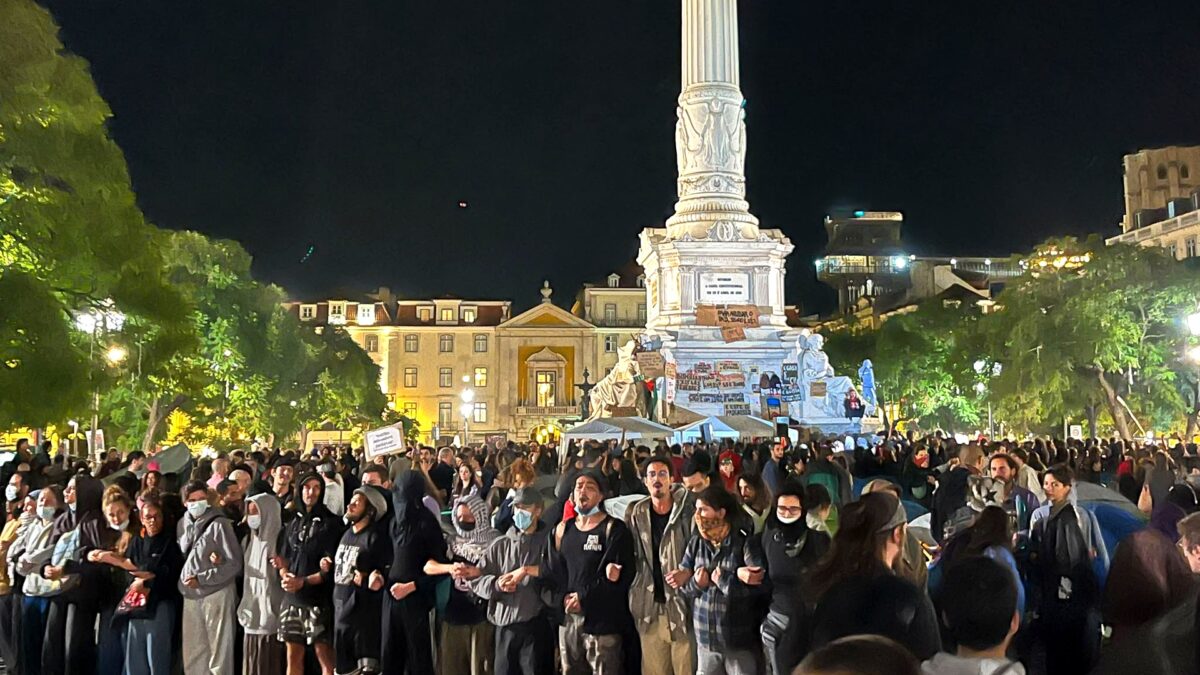
Listen. Not to the newsreaders, not to the ministers with their prepared lines — listen to the sound underneath them. On Saturday, 24 October 2026, it rose at the same hour from Paris and Tirana, from Milan and Madrid, from Brussels and Lisbon: the sound of a continent clearing its throat, and discovering that it has something to say. Governments counted the crowds and argued about the numbers, as governments always do. France said 410,000; the organisers said nearly 800,000. But the numbers were never the story. The story is that the streets of Europe, which were supposed to have grown quiet and comfortable and old, are full again — full of schoolchildren and pensioners, of tenants sleeping in tents in public squares, of teachers marching beside their own daughters for the very first time.
And I ask you, reader, the question I always ask when history starts repeating itself in front of our eyes: are we watching a riot, or are we watching a diagnosis?
One Saturday, Six Capitals, Six Different Wounds
Understand this first, because every lazy summary will get it wrong: Europe is not having one revolution. There is no single flag, no single leader, no single manifesto travelling from capital to capital like a parcel. What happened on Saturday was something stranger and, for those in power, something more frightening — six different countries, each nursing a different wound, all crying out on the same day.
In France, it began, as these things so often do, in a classroom. In mid-September, school staff and students in Paris began protesting against poor school conditions and staff shortages, and the protest spread until it swallowed the whole country. By Saturday, the Yellow Vests — that fluorescent ghost of 2018, which the commentators had pronounced dead a dozen times — had returned to the streets alongside high-school and university students, marching against the cost of living and rising fuel prices. The government deployed around 70,000 police officers and gendarmes. In Paris, the demonstration was dispersed along the Cours de Vincennes after clashes; water cannon and tear gas answered projectiles; a gendarmerie helicopter circled overhead hunting for what the prefectural police called “more than 500 rioters” still on the streets at the end of the night. Interior Minister Laurent Nuñez announced nearly 1,000 arrests and warned, in the flat tone of a man reading a weather forecast, that the figure would “increase significantly.” The previous Saturday, at the same hour, there had been 385. The arithmetic of anger is accelerating.
And yet, among the tear gas, there was a scene that no statistic can carry. Bénédicte Pittion, a 46-year-old teacher, marched in Paris with her 16-year-old daughter Garance — their first protest together. “The young people who have been demonstrating have not been heard,” the mother said, “and as a parent and as a teacher, I stand with them.” The daughter, who had watched the previous weekend’s violence and been, in her own words, “really scared,” came anyway, because staying away, she felt, would hand the government a victory. Hold that image in your mind. A mother and daughter, hand in hand, walking towards the very thing that frightens them. That is not hooliganism. That is citizenship remembering itself.
In Tirana, the capital of Albania, students rallied outside the Ministry of Education demanding lower tuition fees, greater state investment in education, and the resignation of Prime Minister Edi Rama. More than 2,500 police officers were deployed; water cannon turned on the crowd; dumpsters and couch cushions burned — and here is a detail so absurd it could only be true: those very couch cushions had been placed there by Rama himself, as a symbolic invitation to dialogue with students. The students set fire to the invitation. When a government offers furniture instead of answers, do not be surprised when the furniture burns.
In Brussels, police fired water cannon and tear gas to break up student barricades built from bicycles and scooters, barricades raised against university registration fees. In one incident witnessed by reporters, an officer kicked and hit a demonstrator who had fallen during a chase. A rally speaker, Celia Ponce, told the crowd they were there “for young people’s future, for better work,” and accused governments of wanting to “destroy public services.” In Italy, shops across Naples, Rome, Turin, Bologna, Florence and Milan boarded up their windows in anticipation of looting; Prime Minister Giorgia Meloni deployed 500 soldiers into Milan along with drone surveillance, railway station checks and rapid-response units. The Italian marches carried an explicit political banner — “A Day Without Meloni” — and a demand for the government’s resignation.
In Madrid, around 25,000 people marched for something quieter and, in its own way, more devastating: a pension. They demanded that pensions keep pace with inflation, that the gender gap in retirement income be closed, and — listen to the modesty of this demand, and then ask yourself what kind of continent makes it necessary — that no pension should fall below the minimum wage. “A lifetime of work deserves a dignified retirement,” wrote Emilio Delgado, deputy spokesperson for the Más Madrid party. A lifetime of work. A dignified retirement. These are not the slogans of revolutionaries. They are the terms of a contract, and the people marching believe the contract has been broken.
And in Lisbon, the wound has a roof over it — or rather, it does not. Portugal’s housing prices have risen 180 per cent since 2015, and 70 per cent since 2021 alone; rents for new leases have nearly doubled since 2017. In Rossio Square, in the heart of the capital, protesters have pitched tents and slept under the statue of King Pedro IV, because, as their slogan puts it, “We have no home, so we set up tents!” On 20 October, police cleared the camps before dawn and arrested 55 people. The protesters came back the same evening. On 24 October, organisers counted around 130 tents in Rossio and said some 300 people intended to spend the night there. In the early hours of this very morning, 25 October, police moved again in Lisbon and in Porto, surrounding squares, forming lines with shields and canine teams, dismantling camps in operations lasting minutes — and the people, as people do, moved to the city hall and kept chanting. In Porto, on 15 October, police had intervened at three in the morning against a peaceful human chain singing an old protest song, injuring 37 people, two of them seriously. The Porto marchers answered with a slogan that should be carved above every parliament door in Europe: “Menos bastão, mais habitação.” Less batons, more housing.
1848 Is Knocking, and It Has Not Come Alone
Now let me do what I always do, and hold the present up to the past — because the past is the only mirror honest enough to show us our own face. In 1848, the year Europe calls the Spring of Nations, barricades rose in Paris, Vienna, Berlin and Milan within weeks of one another. There was no internet, no social media, no group chat coordinating the continent — and yet the same cry travelled from capital to capital: bread, dignity, a voice. Historians still argue about whether 1848 was one revolution or many. It was many grievances wearing one season. Sound familiar?
The parallels do not stop at the barricades. In 1848, the rulers of Europe first dismissed the crowds, then feared them, then promised them everything, then shot them. In 2026, the script is being read in a softer voice but with the same lines. Portugal’s Parliamentary Affairs Minister, Carlos Abreu Amorim, said on Friday that the government “will not yield to shouts from the street.” Portugal’s Prime Minister, Luís Montenegro, told housing protesters, “Don’t be selfish” — a remark that detonated across the country when it emerged that the Prime Minister himself owns 55 properties. A man with 55 roofs telling the roofless not to be selfish: history does not repeat itself, my friends, but it certainly knows how to rhyme, and sometimes the rhyme is so cruel it sounds like satire.
And what of the other ghosts walking these streets? In Paris, on 17 October, protesters draped a yellow vest over the statue of Marianne in the Place de la République — the very symbol of the French Republic, dressed in the uniform of its discontents. The vest bore a slogan linking 1961, when police drowned Algerian protesters in the Seine, to 2026, when, the slogan charged, police mutilate high-school students. Whether you accept that charge or not, understand what it means: the young are no longer arguing about this year’s budget. They are placing themselves inside the long story of their country, and finding the state on the wrong side of it. When a generation starts writing its slogans in the language of history, a government should tremble — because that generation has stopped asking for favours and started demanding a verdict.
There is one more ghost, and it is the most recent. In 2018, the original Yellow Vests rose over a fuel tax and became a movement that shook France for a year. The commentators buried them; the movement buried the obituaries. What returned in October 2026 is not a copy of 2018 — it is its child, younger, angrier, and joined by schoolchildren who were barely ten years old the first time the vests appeared. Movements do not die when you ignore them, reader. They go home, they grow up, and they come back with their children.
What the Crowds Are Really Saying
So let us strip away the smoke and the slogans and listen, properly, to what is being said — because the crowds, for all their noise, are saying something remarkably precise. They are saying that the basic bargain of European life has quietly been rewritten while nobody was looking. Work no longer guarantees a roof. A lifetime of work no longer guarantees a dignified old age. A classroom no longer guarantees a teacher. A university degree no longer guarantees a future that can pay for itself.
Consider the numbers as a doctor considers symptoms. Portugal’s largest trade union federation, the CGTP, marched tens of thousands through Lisbon demanding a general wage increase of at least 15 per cent, with no increase below €150, and a minimum wage of €1,100 by 2027. Italy’s harmonised inflation rate reached 4.2 per cent year-on-year in September 2026. Italy’s largest trade union, the CGIL, has called a general strike for 20 November; Portugal’s housing movement has called one for 11 November. These are not the gestures of people who want to burn the house down. They are the gestures of people who have read the calendar and decided that November must be different from October — or December will be worse than both.
And here is the part the television cameras miss, because it does not photograph well: most of these protests were peaceful. The violence, real as it was, was the fringe of the story, not the story. In France, the left-wing leader Jean-Luc Mélenchon accused the police of provoking disorder and the television channels of filming the confrontations while overlooking the peaceful demonstrators — and whatever you think of Mélenchon, he named a real sickness of our age: we have built a media machine that films the burning dumpster and misses the mother and daughter holding hands. A continent is not radicalised by the cameras. It is radicalised by the rent, the pension slip, the classroom with no teacher — and then the cameras arrive, late, to film the smoke.
I say this to the governments of Europe, and I say it plainly, because flattery has never saved a single regime: you cannot water-cannon a housing market. You cannot tear-gas a pension. You cannot arrest a rent increase. Every time the state answers a social question with a police answer, it teaches its citizens a lesson it will regret: that the street is the only parliament that listens. France deployed 70,000 officers and still counted 410,000 marchers by its own reckoning, 800,000 by the organisers’. Milan deployed soldiers and drones and still boarded up its luxury shops. Tirana deployed 2,500 police and still watched the Prime Minister’s own dialogue cushions go up in flames. Force, applied to a grievance, does not dissolve the grievance. It advertises it.
But Fire Is a Faithless Servant
And now I must say something harder, and I say it as a friend of every young person sleeping in a tent in Rossio Square and every student behind a barricade in Brussels: fire is a faithless servant. It warms the house it was lit to save, and then it eats the house. The looting that scarred Paris on the previous Saturday, the shop windows shattered in Milan, the fires set in Tirana and Brussels — these do not frighten governments half as much as you think. Governments know how to fight fires. They have helicopters and water cannon and budgets for broken glass. What governments do not know how to fight is a crowd that refuses to be frightening: the mother and daughter, the pensioners with their modest banner, the tenants singing in a square at midnight. The moment a movement hands the state a burning dumpster, it hands the state its excuse. Do not give them the excuse. The most dangerous thing a crowd can do is remain peaceful while the state runs out of explanations.
History is full of movements that won the street and lost the argument in the same week, because they let the fringe write the headline. Do not let the fringe write yours. The young people of Europe have something rarer than anger: they have a case. The rent figures are on their side. The pension arithmetic is on their side. The empty classrooms are on their side. A case like that does not need a petrol bomb. It needs patience, discipline, and the refusal to be turned into a photograph of a fire.
The Verdict I Leave With You
So I return to the question I opened with, because it is the only question that matters. Are we watching a riot, or a diagnosis? I believe we are watching a diagnosis — and diagnoses, unlike riots, do not end when the police go home. The crowds will disperse; the tents will be folded or seized; the soldiers will leave Milan; the helicopters will land. But the rent will still be due on the first of the month. The pension will still fall short of the minimum wage. The classroom will still be short of teachers. The question that rose from six capitals on one Saturday will still be waiting on Monday morning, in every ministry inbox, in every cabinet meeting, in every quiet moment when a minister wonders why the numbers on the street keep growing no matter how many officers are deployed.
Europe has been here before — in 1789, in 1848, in 1968, in 2018 — and each time, the continent faced the same fork in the road. One path leads to reform made in time: wages that rise with prices, houses built faster than they are speculated upon, pensions protected like the promises they are, classrooms staffed like the futures they hold. The other path leads to the long, slow education of a generation in the belief that nothing changes except by force — and that is an education no country can afford, because its graduates never unlearn it.
The streets have learned to speak again. The only question left is whether anyone in power still knows how to listen. History is watching, as it always does, with its notebook open. And history, my friends, has never once recorded that a people who asked for a roof, a pension and a teacher were asking for too much.
Sources & References
- ANI via LatestLY — Europe swarmed by wave of protests as people march in France, Albania, Italy, Spain, Portugal (25 October 2026)
- New York Post — Europe falls under siege as demonstrators battle police, set fires in cities across continent (24 October 2026)
- Bytes Europe (Euronews) — From France to Albania, protests sweep Europe over living costs, pensions (25 October 2026)
- Europe Says — Protests erupt across Europe over cost of living, pensions, and housing (25 October 2026)
- Wikipedia — 2026 Portuguese housing protests (Lisbon and Porto encampments, 24–25 October police interventions)
- Wikipedia — 17 October riots (France, October 2026)
- The Bull Post (Reuters reporting) — More than 400,000 protest across France, challenging Macron as Paris clashes erupt (24 October 2026)
- Eastora News — Why are protesters taking to the streets across Europe? (October 2026)
- The Laborecon — Europe’s cost-of-living crisis fuels protests (October 2026)
- International Affairs — Europe: A hot autumn 2026
- Press TV via Postgoo — Thousands march across Europe against inequality and ‘for young people’s future’ (24 October 2026)

About the Author — Abdul Mannan
Related Articles

The Forest Cannot Vote: Brazil’s Runoff, a Dynasty’s Second Act, and the Choice the Whole World Is Watching
Today Brazil votes in a runoff too close to call — an 80-year-old incumbent against the 45-year-old son…
They Shot at a Funeral: The Karak Church Massacre and the War on Grief Itself
Gunmen opened fire on mourners at a Greek Orthodox funeral in Karak, Jordan, killing seven. Why this unprecedented…
Twenty Minutes in Hebron: Two Soldiers Dead, 3.4 Million Under Lockdown, and an Election Built on Fear
Friday morning, 7:30 a.m., Yehuda Junction near Hebron. Twenty minutes of gunfire left two Israeli soldiers and two…