The $25 Billion Lie: What Meta’s Record Fine Really Says About Your Life Online

When was the last time you believed a promise made to you by a screen?
Not a promise made by a person, mind you, but by a platform. A neat little sentence in pale grey text, tucked beneath a blue button, telling you that you were in control. That your photographs were yours. That your friendships were private. That your mind, in short, belonged to you. You clicked “I agree” because everyone clicked “I agree”, and you carried on with your life, never suspecting that the promise itself was the product — and that you were the price.
On 21 October 2026, a judge in New Mexico said out loud what millions of us have felt in our bones for years. “Facebook promised users that they controlled their data,” wrote State District Court Judge Francis J. Mathew. “This was false.”
Read that sentence again, slowly. It is not the language of regulators. It is the language of a verdict on a betrayal. And it came with a number so large that it briefly broke the internet’s sense of scale: twenty-five billion dollars, ordered to be paid by Meta, the company behind Facebook, Instagram and WhatsApp, for systematically deceiving its users about their privacy. It is the largest penalty ever imposed on the company, and one of the largest ever imposed on any corporation in American history.
But I want to tell you, plainly and at the start, that the money is not the story. The sentence is the story. Because a court has now, after a jury trial and not a negotiated settlement, declared that the central promise of the social media age was a lie — told deliberately, repeatedly, and from the very top.
The Company That Came Trading
History, if you listen to it closely, does not repeat itself. It rhymes, and sometimes it rhymes so cruelly that you wonder whether we learned anything at all.
When the East India Company first arrived on the shores of the subcontinent, it did not arrive with an army. It arrived with a warehouse, a charter and a promise: we are here only to trade. We want nothing but your goods, and we will pay a fair price for them. The rulers of the time believed it, or found it convenient to believe it, and by the time the truth became visible — that the Company was not trading in the country but trading the country itself — it owned the ports, the revenue and the guns.
I am not saying that Facebook is the East India Company. I am saying that the method is the same, and the method is what we must learn to recognise. A great power never announces itself as a conqueror. It announces itself as a convenience. It offers you connection, and it takes your attention. It offers you a free service, and it takes the raw material of your inner life — your friendships, your fears, your politics, your children’s photographs — refines it, and sells predictions about you to the highest bidder. The old Company took spices and cloth. The new companies take something far more intimate: they take you.
That is why the New Mexico case matters more than the number attached to it. This was not a fine negotiated in a back room between lawyers, where a company pays a sum, admits nothing, and issues a press release about “moving forward”. This was a trial. A jury in Santa Fe sat through two weeks of evidence and found, on 25 September 2026, that Meta had committed 43,899,725 violations of New Mexico’s Unfair Practices Act — one for, in effect, every misleading promise multiplied by every person it reached. Twenty-six of the company’s public statements about privacy were found to be wilfully misleading, covering the years from May 2010 to August 2021. The judge’s order described “a systematic pattern of deception at the core of Facebook’s business model” and called the company’s much-vaunted internal investigation into app developers, launched after the Cambridge Analytica revelations, “willfully ineffective”.
Do you hear the weight of that phrase? Not a mistake. Not an oversight. A pattern. At the core. Of the business model itself.
How the Harvest Worked
Let us be precise about what actually happened, because precision is the enemy of the shrug. The case grew out of the Cambridge Analytica scandal of 2018, in which a British political consulting firm harvested Facebook data tied to as many as 87 million users. The mechanism was almost insultingly simple: a personality quiz app collected data not only from the people who took the quiz, but from their friends as well — friends who had never consented, never been asked, and in many cases never even heard of the app. That data was then used to build psychological profiles for targeted political advertising during the 2016 American presidential election.
But here is the part that the New Mexico trial forced into the open, and the part you must not let slip past you: the scandal was not only the harvest. It was the reassurance that followed the harvest. After the revelations, Facebook told the world, in statement after statement, that users controlled their data, that third-party access was being tightened, that the problem had been investigated and fixed. The jury found that those reassurances were themselves deceptive. The company promised control while withholding it, and it did so, the judge found, with the involvement of its senior leadership — including its chief executive, Mark Zuckerberg, and his then deputy, Sheryl Sandberg.
I ask you, reader, to sit with that for a moment. The people who built the machine that holds your memories told you that you held the keys. The court has found that you did not. And the machine kept running, kept growing, kept posting record revenues, all the while.
There is a nuance here that honesty demands I record, and it makes the verdict stronger, not weaker. The jury did not accept everything the state claimed. It rejected, for instance, the claim that Facebook made false statements about removing harmful content, including misinformation about Covid-19. The state had to prove its case statement by statement, audience by audience, and on some counts it failed. That is what a trial is. And it is precisely why the counts on which the state succeeded — 43.9 million of them — carry a weight that no press release ever could.
The Arithmetic of Impunity
Now let us talk about the number, because the number is a riddle, and riddles deserve to be solved rather than admired.
Under New Mexico law, each violation can carry a civil penalty of up to 5,000 dollars. Multiply that by 43.9 million violations and you reach a statutory ceiling of roughly 219.5 billion dollars — a figure so large it ceases to be money and becomes a kind of poetry. Judge Mathew did not impose the ceiling. He imposed 25 billion dollars, with interest accruing at 15 per cent a year until the sum is paid — roughly 3.75 billion dollars in the first year alone, if payment is delayed.
The state had asked for between 35 and 40 billion dollars. Meta’s lawyers had argued for a cap of about 3.45 billion, warning that anything higher would make operating in New Mexico “economically unviable”. The judge landed between the two, at more than seven times what Meta wanted and somewhat below what the state demanded. New Mexico’s Attorney General, Raúl Torrez, called the judgment “an unambiguous message to Silicon Valley”, declaring that no corporation is too powerful to be held accountable. “We may have paid for the construction of schools for the next 100 years,” he told reporters — a pointed remark, because under New Mexico’s constitution, consumer protection penalties of this kind flow to public education.
Think about that for a second. The money harvested from the attention of ordinary people — their scrolling, their liking, their late-night confiding — may end up building classrooms for children. There is a rough, almost biblical justice in that: the generation whose childhoods were mined for data may get schools from the mine’s owners.
And yet — and yet. On the day the order was announced, Meta’s shares rose by about two per cent. The company is valued at roughly 1.8 trillion dollars and took in more than 200 billion dollars in revenue last year; its operating income in a single quarter of 2026 was reported at nearly 23 billion dollars. Twenty-five billion is, for Meta, approximately one quarter’s profit. It is a record fine and, at the same time, a rounding error. That is the paradox at the heart of this story, and it is the paradox you must carry with you: a punishment can be historic and inadequate in the same breath.
Meta, for its part, has said it will appeal. Its chief legal officer, C. J. Mahoney, said the ruling “makes it all but impossible to do business in the state of New Mexico” and accused the state of imposing “a tax on speech”. The company is confident, it says, that it will prevail on appeal. The money may therefore be tied up for years. That is not a reason for cynicism; it is a reason for patience. Appeals are part of justice, not a refutation of it. But it is also a reason to ask the harder question, the one the fine alone cannot answer.
What Punishment Actually Changes a Company?
Here is the question I want to put to you directly, because this column has never been a place for comfortable conclusions. If a company can absorb a 25-billion-dollar penalty the way a desert absorbs rain — visibly, briefly, and then as if nothing happened — what, then, actually changes it?
The answer, I believe, lies not in the cheque but in the injunction. Judge Mathew has, notably, reserved his decision on injunctive relief — a court order that could require Meta to change how it actually behaves, not merely to pay for how it has behaved — pending further briefing from the parties. Watch that space more closely than you watch the appeals. A fine punishes the past. An injunction governs the future. If the court orders real changes to how Facebook collects, shares and describes user data, that will matter more to your life than any number of billions.
And there is a second answer, closer to home, and it belongs to you. Every system of extraction in history has depended on one thing above all: the consent, or at least the acquiescence, of the extracted. The East India Company needed local rulers to sign its treaties. The data economy needs you to keep scrolling, keep posting, keep clicking “I agree” without reading. The most radical act available to an ordinary person in 2026 is not to delete an app in a fit of anger — though you may, if you wish — but to read before you agree, to ask what a “free” service is selling, and to teach your children that their attention is property, and that property given away carelessly is rarely returned.
Consider, too, the wider map. New Mexico stood alone in taking this case to trial. Nearly every other American state settled its Cambridge Analytica claims — six states for about 459 million dollars — and in August 2026 Meta reached a multistate settlement of roughly 17 billion dollars over separate claims about harm to young users, a settlement from which New Mexico and Florida stood apart. Taken together with the New Mexico order, Meta’s recent legal exposure now totals roughly 42 billion dollars. One small, poor state, refusing the easy settlement, has produced a verdict that the richest states did not. There is a lesson in that for every small country, every small newsroom, every ordinary person who has ever been told that the giant is too big to fight: the giant is not too big. The giant is only too big for those who agree not to try.
That, I think, is the true legacy of this case, and it reaches far beyond New Mexico, far beyond America, far beyond Facebook. We live in an age when a handful of companies know more about the citizens of Pakistan, of Britain, of Nigeria, of Brazil, than their own governments do — and they know it without ever having stood for election. The New Mexico verdict is the first great judicial statement that this knowledge was not always honestly obtained, and that dishonesty has a price. Other courts, in other countries, will read it. Other regulators, with weaker laws and smaller budgets, will take heart from it. And other companies, watching Meta’s shares rise two per cent on the day of its greatest humiliation, will learn a darker lesson too — unless the injunction, and unless we, teach them a better one.
The Verdict We Must Pass on Ourselves
So I return to where I began, to the promise on the screen. “Facebook promised users that they controlled their data. This was false.”
A court has now said it. But courts can only say what societies are willing to hear. The deeper verdict must be passed by us, in our own lives, every day, in the small choices that feel too small to matter. Do we treat our attention as treasure, or as litter? Do we demand that the companies which profit from our friendships behave as friends would — honestly, transparently, with loyalty — or do we accept that in the digital age, betrayal is simply the business model, and the fine is simply the cost of doing business?
The judge in Santa Fe has done his part. He has named the lie, priced it, and directed its proceeds towards the education of children. It is now our part to refuse the next lie before it is told — to read the small print, to guard the inner life, to remember that nothing offered to you for free has ever truly been free, and that the most valuable thing you own is not in your wallet or your bank account at all.
It is the quiet, unharvested space of your own mind. Guard it as your ancestors guarded their land — for they, too, were once told that the strangers at the shore had come only to trade.
Sources & References
- TechCrunch — Meta ordered to pay $25B in case related to Cambridge Analytica scandal
- The Associated Press, via First Amendment Watch — Meta ordered to pay New Mexico $25 billion for deceiving users about privacy on Facebook
- Tech Times — New Mexico wins $25B from Meta in Cambridge Analytica case
- NeoTeo — Meta’s New Mexico privacy penalty: $25 billion
- Unbiased Headlines — Meta faces about $42 billion in penalties and settlements as it appeals New Mexico’s $25 billion order
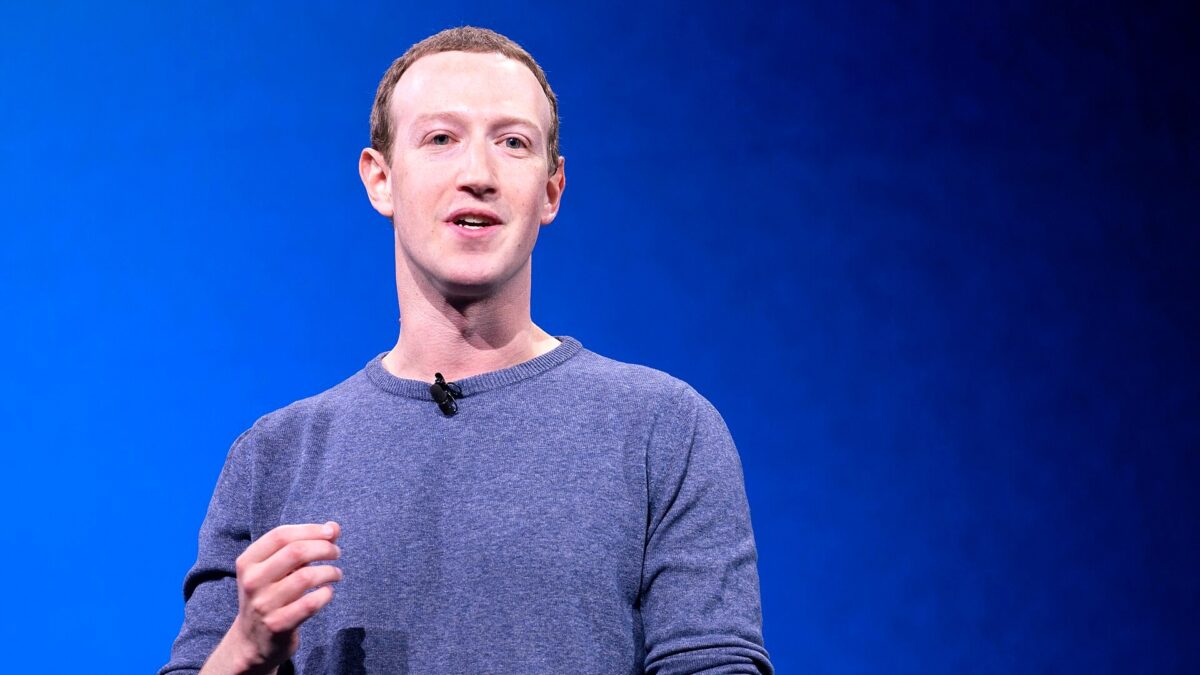
Featured image: Meta chief executive Mark Zuckerberg at Facebook’s F8 developer conference, 30 April 2019. Photo: Anthony Quintano / Wikimedia Commons (CC BY 2.0), cropped to 16:9 and lightly polished for publication.

About the Author — Abdul Mannan
Related Articles

The Students Who Outlasted a Strongman: Serbia’s Night of Reckoning
Sixteen minutes of silence, held every day for two years, became the ballot that ended fourteen years of…

When an Airport Becomes a Battlefield: Riyadh, Yemen and the War the World Stopped Watching
On 25 October, Riyadh's King Khalid airport reopened two terminals — and was threatened again within hours. This…
The Streets Have Learned to Speak Again: Europe’s Autumn of Anger — and What It Is Really About
On one Saturday, Paris, Tirana, Milan, Madrid, Brussels and Lisbon all filled with protesters — six different wounds,…