When an Airport Becomes a Battlefield: Riyadh, Yemen and the War the World Stopped Watching

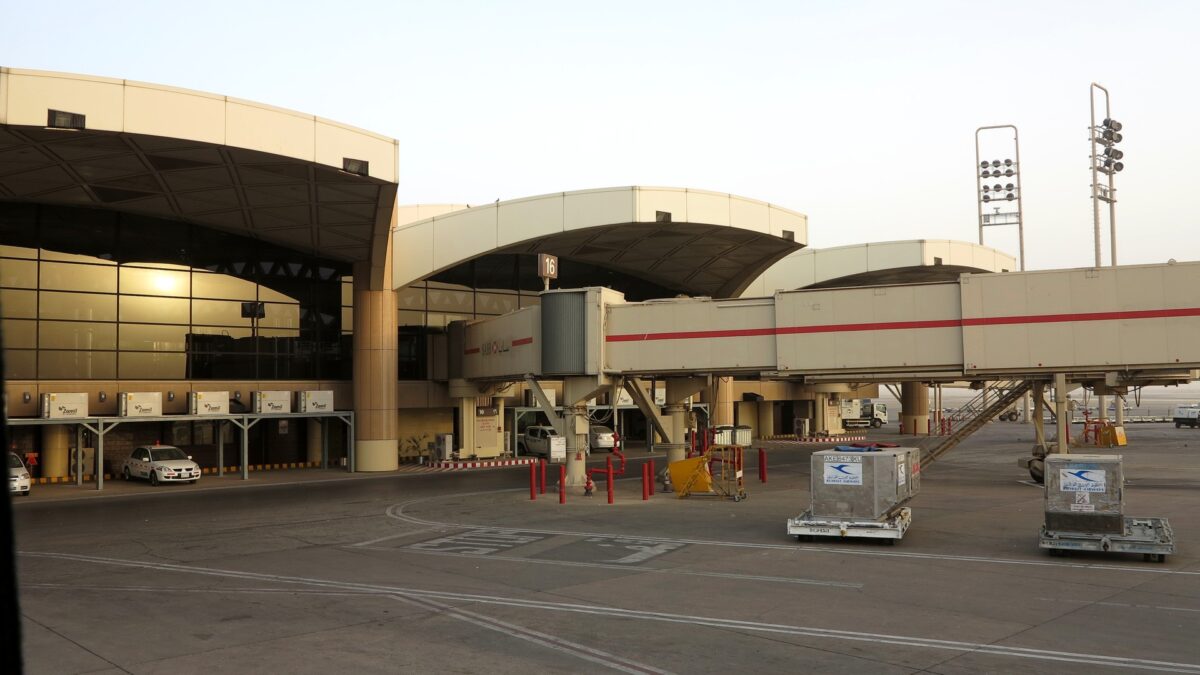
When Did an Airport Become a Battlefield?
Picture it, if you can bear to. A family stands at a check-in kiosk, boarding passes in hand, a child tugging at his mother’s sleeve, asking when the plane will come. They are not soldiers. They are not politicians. They are pilgrims, workers, mothers, sons — ordinary people doing the most ordinary thing in the modern world: going home, or going to see the House of God. And then the sky answers them, not with an aeroplane, but with a missile.
That is what happened at Riyadh’s King Khalid International Airport on 10 October 2026, and I ask you, reader, the question that has haunted me ever since I read the news: when did we agree, silently, that an airport — that temple of departure and return — could become a battlefield? When did the departure lounge become a legitimate target, and when did the rest of us stop being shocked?
Thirteen people were killed that day, and more than three hundred were wounded. Reuters called it the deadliest attack in the kingdom in more than a decade. The Saudi-led coalition called it, with a bluntness rare in official language, a “full-fledged war crime”. A day later, another projectile struck Terminal 4 and killed one more person. Between 6 and 12 October, the Houthis struck three Saudi airports — Riyadh, Abha and Dammam — killing at least twenty people and wounding more than three hundred and seventy. A Saudia Airbus A320 was destroyed on the ground on 8 October; three people aboard it, including the pilot, were killed. The coalition says the Houthis attacked King Khalid airport twenty times in October alone.
And yet, on Sunday 25 October, the airport reopened two of its terminals — Terminal 1 for domestic flights, Terminal 2 for international flights operated by national carriers — and the Houthis answered within hours. Their military spokesman, Yahya Saree, declared the airport would “never be safe” and warned airlines, airport staff and travellers not to use it. The coalition said it intercepted two drones and a ballistic missile over Riyadh overnight, a cruise missile aimed at Khamis Mushait, and later ten ballistic missiles fired towards the Southern Region. Saudi civil defence said shrapnel from two intercepted missiles injured two people and damaged three homes and seven vehicles in Khamis Mushait and Ahad Rafidah. Flight-tracking data, meanwhile, showed strikingly little traffic at the reopened airport on Sunday. The planes, it seems, were not fooled by the announcement. Only the passengers were asked to be brave.
So I ask again: what kind of war is this, where the reopening of an airport is itself an act of defiance, and where the threat to close it again is issued before the first reopened flight has even left the ground?
The Gate That History Keeps Forgetting
To understand this war, you must first understand what Yemen has always been: a gate. Not a country at the edge of the map, but a doorway through which the world has passed for three thousand years. The Queen of Sheba’s incense travelled from these highlands. Roman ships, British steamers and oil tankers have all queued at Bab el-Mandeb — the “Gate of Tears” — the narrow strait at the mouth of the Red Sea through which a tenth of the world’s seaborne oil and a vast share of its trade still passes. Whoever holds that gate holds a hand around the throat of the global economy. That is why Yemen has never been allowed to belong to Yemenis alone.
History, as I have always told you, does not repeat itself — it rhymes, and sometimes it shouts. In 2014, the Houthis seized the capital, Sanaa, and drove the government south. In 2015, Saudi Arabia led a coalition into the war in support of the internationally recognised government. The fighting ground on until a United Nations-brokered truce in April 2022 brought a fragile calm. That calm held, more or less, until this year. In July 2026, after the wider US-Israeli war against Iran, the truce collapsed and the old war returned wearing new weapons: ballistic missiles, armed drones, and a strategy aimed not only at armies but at airports, oil facilities and the nerves of ordinary travellers.
In early September, the Houthis seized Mokha and ground near the Bab el-Mandeb strait. The government answered with a counteroffensive its commanders call “Dawn of Yemen”, aimed at retaking Sanaa itself. Since then the fronts have multiplied like cracks in glass: Taiz, Lahij, Marib, al-Jawf. On 15 October, Yemeni authorities said Houthi missiles hit the presidential palace compound in Aden, the government’s temporary seat, killing five people. And on 19 October came the single deadliest strike of this new phase — three ballistic missiles fired at the al-Alam training camp in Shabwa province while new security recruits were attending a training course.
Watch how the numbers moved, because in war the first casualty is always the count of the dead. Reuters’ first reports, citing government and medical sources, put the Shabwa toll at eighteen. The provincial governor then said fifty-eight were killed and more than two hundred wounded, with fourteen others missing. The local authority later raised the figure again: seventy-three killed, fourteen still missing, more than two hundred wounded. Around seven hundred recruits had been on the course, according to local reporting; one missile, survivors said, struck directly where the recruits had gathered. The United States Embassy to Yemen condemned the attack as “cowardly” and offered condolences, noting that those targeted were Yemenis who had volunteered to protect their communities and their country.
I dwell on these shifting numbers not to confuse you, but to make you feel something the headlines will not: behind every revision of a death toll, there is a family that has just been told, for the second or third time, that the person they were waiting for is not coming home. The arithmetic of war is always revised upward. The grief is never revised at all.
The Pilgrim at the Kiosk
Let me bring you back to that airport, because statistics are a coward’s way of avoiding faces. Among the thirteen killed on 10 October was Mohammed Yousuf Ali, a forty-six-year-old IT professional from Hyderabad, in India. He was at the airport with his family to travel to Medina for Umrah. Debris from a projectile struck him near a check-in kiosk. His wife and two sons were hospitalised; one son underwent knee surgery and the other lost three toes. His daughter and aunt were also injured. Eleven Indians were wounded in the attack in total. India’s foreign ministry called the repeated strikes on civilian infrastructure “completely unacceptable” and expressed solidarity with Saudi Arabia.
Read that again slowly. A man who had saved, planned and prayed for a journey to the Prophet’s city died not in battle, not at a border, but beside a check-in kiosk, holding — one imagines — his family’s boarding passes. If you want to know what this war has become, do not look at the missile trajectories or the interception rates. Look at that kiosk. A pilgrim is the one traveller in all of human history whom every civilisation, every army, every empire has claimed to protect. The ancient Arabs held sacred months in which even tribal blood-feuds were suspended so that pilgrims could travel safely. The Romans kept their roads open for travellers. Even in the darkest years of the twentieth century, the world pretended that some places — hospitals, schools, houses of worship, airports — were beyond war.
That pretence is now gone, and we should say so plainly. When a spokesman can stand before cameras and declare an international airport a “military target”, and when that declaration is treated as routine news rather than as a scandal, something has broken in the conscience of the world that no air-defence system can repair. Interception is a technical achievement; it is not a moral answer. Ten missiles intercepted is a headline. Two people wounded by falling shrapnel in Khamis Mushait is a family whose roof is gone. Both are true, and only the second one matters in the way that matters.
The Widening Circle
Wars, like fires, do not respect the fences built around them. Egypt’s President Abdel Fattah el-Sisi has said his country’s military is prepared to protect Saudi Arabia from the escalating Houthi attacks, and that it is inconceivable that Egypt would allow Saudi security or stability to be harmed. Egypt’s parliament was due to take up a Saudi defence authorisation in its session on Monday 26 October. Whether that session produces a vote, a warning or merely a gesture, the direction of travel is unmistakable: a war that began as a Yemeni civil conflict is being pulled, step by step, into a regional confrontation, with the wider US-Israeli offensive against Iran as its backdrop and Saudi Arabia — the world’s largest crude exporter — as its pressure point.
The economic tremors are already visible. Etihad cancelled its Abu Dhabi flights to Dammam, Riyadh and Jeddah through 24 October. The Houthis have warned airlines against using Saudi airports other than those serving Mecca and Medina, and have claimed strikes on Aramco facilities in Yanbu and the Rabigh refinery — claims the coalition has answered with reports of intercepts over Riyadh, Taif and Yanbu, without confirming hits. Every cancelled flight is a small economic wound; every warning to airlines is a tax on confidence. And confidence, once lost, is the hardest currency in the world to reprint.
Meanwhile, the ground war grinds on in places whose names rarely reach your television screen. Government commanders report heavy clashes on the al-Maqatirah front in Lahij; fighting around Taiz, where the Houthis are besieging the last major urban stronghold of anti-Houthi forces in the southern highlands; offensives in Marib and al-Jawf backed by artillery, drones and coalition airstrikes. Off the coast near al-Mukalla, armed men in a skiff fired on a liquefied natural gas tanker before breaking off. The sea, too, is becoming a battlefield — as it always does when the gate is contested.
The People the Cameras Never Count
But here is the part of the story that should shame us most, and it is the part I want you to carry with you when you close this page. The United Nations says that between 7 June and 19 October 2026, the International Organization for Migration recorded approximately 258,679 displaced people in Yemen, the majority in Taiz and Lahj governorates. Nearly 260,000 people have been forced from their homes since August alone. The UN refugee agency, UNHCR, reported more than 250,000 displaced between 1 August and 17 October. The UN’s humanitarian office, OCHA, says its partners have reached more than 174,000 displaced people with food, hygiene kits and emergency cash — nearly six in ten displaced households — and that newly displaced families name shelter as their most pressing need, followed by food and cash.
Read those figures as people, not as data. A quarter of a million people in less than three months. Families experiencing repeated movements, seeking refuge in already overstretched displacement sites. In Taiz city, where roads are closed and diesel for water trucks is scarce, water production has fallen by about half and the cost of trucked water has roughly tripled, according to OCHA’s spokesperson in Geneva. UNICEF has screened more than 168,000 children in Taiz this year and found more than 52,000 acutely malnourished, including more than 11,500 suffering from severe acute malnutrition. Reports cited by UN News put at least 1,574 people killed and 6,939 injured in the Yemen conflict since August. The UN Human Rights Office has verified 251 civilian casualties, including 57 people killed — half of them children.
Half of them children. Sit with that sentence. Not soldiers, not militiamen, not “legitimate targets” — children. And cholera cases, OCHA warned earlier in October, have tripled in recent weeks, including in displacement camps, while measles, dengue and malaria continue to spread. This is what happens when a war is allowed to become background noise: the dying continues in the dark, and the world scrolls past it on its way to a celebrity video.
Yemen was already one of the world’s worst humanitarian crises before this escalation — more than 22 million people expected to need humanitarian assistance in 2026, more than half the country’s population. Now add a quarter of a million newly displaced, a besieged city running out of water, and an airport war that threatens the region’s air links. This is not a “forgotten war”. Forgotten implies that we once remembered and then, innocently, let it slip. We did not forget Yemen. We chose to look away, because looking at it would require us to admit that our attention is rationed by power, and that some lives are priced lower than others in the market of global sympathy.
What History Is Trying to Tell Us
Now, reader, let me do what I always do with you, and hold this present crisis up to the mirror of history. There is an old pattern in the story of Arabia, and it has repeated itself so often that we should recognise it by now. Whenever the great powers of an age have treated the peninsula as a chessboard rather than as a home — whether it was the Ottomans and the British contesting Aden, or the Cold War patrons arming rival Yemens, or today’s patrons supplying missiles and air defences — the people of the land have paid for the game with their homes, their water and their children.
The empires always promise that this time the intervention will be short, surgical and decisive. It never is. The British promised Aden would be a coaling station, not a colony, and stayed for 128 years. The coalition that entered Yemen in 2015 did not promise a decade of war, and yet here we are, eleven years on, counting displaced people in the hundreds of thousands and arguing about whether an airport is a military target. The lesson is not that intervention is always wrong or that resistance is always right; the lesson is that once a war becomes a proxy for other people’s rivalries, it stops belonging to the people who are dying in it, and it becomes almost impossible to end — because ending it would require the patrons, not the fighters, to agree.
That is why the reopening of King Khalid airport matters more than it appears. An airport is, in the end, a declaration of faith: faith that strangers can arrive and depart in safety, that a country is open to the world, that normal life is possible. When that faith is broken — when a family must weigh the price of a ticket against the risk of a missile — a country does not merely lose flights. It loses its connection to the world, and the world loses its connection to that country. Isolation is the quiet ally of every prolonged war. It starves diplomacy first, and people second.
The Verdict I Leave With You
So what, you may ask, is to be done? I am a columnist, not a general, and I will not insult you with a five-point plan for peace in a region where wiser men than I have failed. But I will tell you what I believe, because a column that ends without a verdict is merely a report, and you deserve more than reports from me.
First, the world must stop grading wars by their proximity to its own capitals. A missile over Riyadh and a missile over any other capital are the same crime against the same humanity; a child in Taiz and a child in any European city are the same child in the eyes of whatever justice we still claim to believe in. If we condemn the targeting of civilian infrastructure in one war and shrug at it in another, our condemnation is not morality — it is geography.
Second, the parties to this war — and their patrons, without whom neither side could sustain this tempo of missile fire — must be pressed, publicly and persistently, to protect civilian infrastructure as a non-negotiable rule, not as a talking point. An airport is not a bargaining chip. A water truck is not a weapon. A training camp full of recruits is a military site, and the laws of war have things to say about proportionality and distinction that no spokesman, on any side, can wave away with a slogan.
Third, and most urgently, the humanitarian catastrophe must be treated as the emergency it is, not as the background to a military story. A quarter of a million displaced people, a city running out of water, children starving and falling sick in camps — these are not side effects of the war. They are the war, as experienced by the people who never chose it.
I began with a family at a check-in kiosk, and I will end there, because that is where the moral question lives. That family did not ask to be brave. They asked to board a plane. The fact that boarding a plane in Riyadh now requires courage is an indictment — not of one side alone, but of a world that has learned to intercept missiles with great skill and to protect civilians with very little. We have built machines that can knock ten ballistic missiles out of the sky in a single day. We have not yet built the will to keep one pilgrim safe at a check-in kiosk.
Until we do, the departures board will keep flickering with cancellations, the terminals will keep reopening under threat, and the gate — that ancient, beautiful, terrible gate at Bab el-Mandeb — will keep exacting its price in the only currency wars have ever accepted: the lives of people who never wanted to be part of the story at all. History is watching, reader. And history, as always, will remember not only who fired the missiles, but who looked away.
Sources & References
- Reuters — Yemen’s Houthis renew warning against using Riyadh airport (25 October 2026)
- SRN News (Reuters) — Saudis say Riyadh airport partly reopens despite renewed Houthi threats (25 October 2026)
- SRN News (Reuters) — Houthi attack kills 58 at Yemen government training camp, governor says (19 October 2026)
- South24 Center — Death toll from Houthi missile attack on Shabwa training center rises to 73, with 14 missing (20 October 2026)
- UN News — Yemen: Deepening concerns for Taiz City as aid is blocked from entering (October 2026)
- Defense and Tech — Houthi-Saudi War: Where Things Stand in October 2026
- New York Post (Reuters) — Egypt prepared to defend Saudi Arabia after deadly Houthi airport attack (17 October 2026)
- Indian Opinion — Hyderabad pilgrim killed in Houthi attack on Riyadh airport (October 2026)

About the Author — Abdul Mannan
Related Articles
The Streets Have Learned to Speak Again: Europe’s Autumn of Anger — and What It Is Really About
On one Saturday, Paris, Tirana, Milan, Madrid, Brussels and Lisbon all filled with protesters — six different wounds,…

The Forest Cannot Vote: Brazil’s Runoff, a Dynasty’s Second Act, and the Choice the Whole World Is Watching
Today Brazil votes in a runoff too close to call — an 80-year-old incumbent against the 45-year-old son…
They Shot at a Funeral: The Karak Church Massacre and the War on Grief Itself
Gunmen opened fire on mourners at a Greek Orthodox funeral in Karak, Jordan, killing seven. Why this unprecedented…