Gen Z Regelt: The Children Europe Ignored Have Taken Its Streets

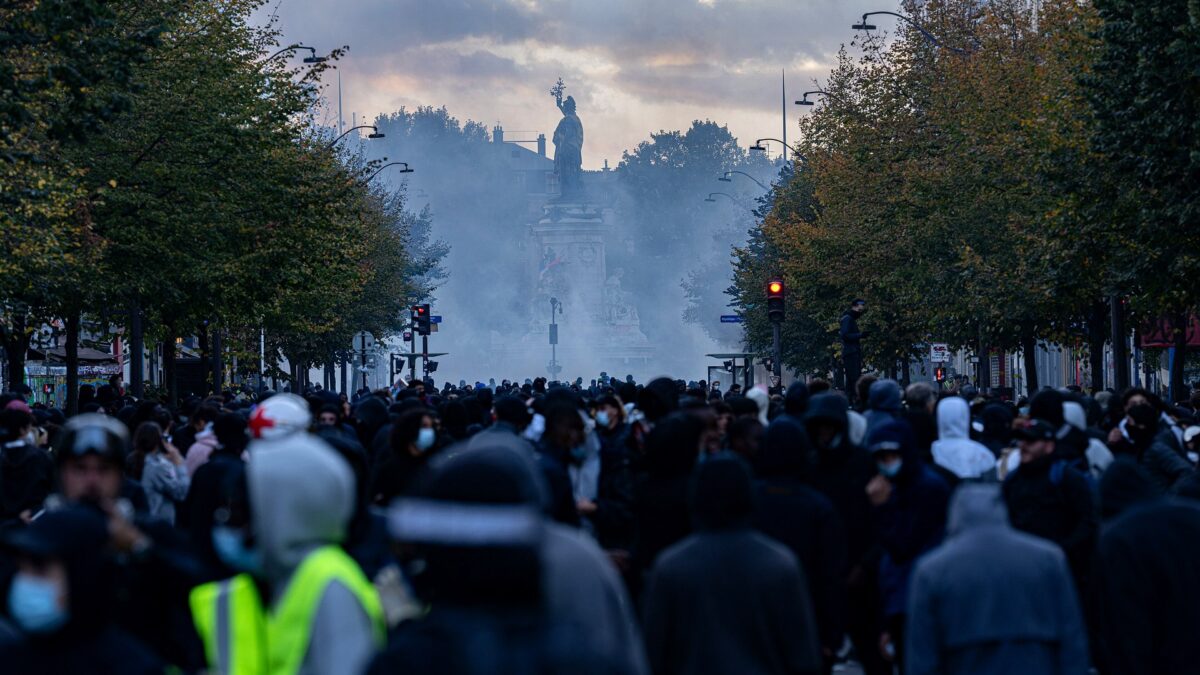
On Halloween night, the children of Europe put on their costumes — and then they took off their masks. In Paris, in Berlin, in Frankfurt and Cologne, in Lyon and Marseille, the youngest generation of the richest continent on earth walked out of its classrooms and into the streets, and asked the oldest question in politics: if the future is ours, why does no one ask us what it should look like?
Three hundred and twenty thousand people marched in France on Saturday, 31 October, according to the French Interior Ministry — seventy thousand of them in Paris alone. In Germany, a movement that did not exist a month ago, calling itself Gen Z regelt — “Gen Z has got this” — brought tens of thousands onto the streets of more than thirty cities. And this was not the first weekend. It was the third. The crowds are smaller than the 550,000 who marched on 17 October, and smaller than the 410,000 of the week after — but they are still coming, and that is the fact that should frighten every government in Europe. A protest that shrinks a little and refuses to die is not a protest fading away. It is a protest learning to endure.
I have watched many crowds in my life, and I have learned to read them the way a physician reads a pulse. A crowd that gathers once is an event. A crowd that gathers three weekends in a row, in the rain, on Halloween, after the tear gas and the arrests and the smashed shop windows, is a verdict. And the verdict Europe’s young are delivering is simple: you have broken the promise, and we will not pay for it quietly.
Saturday, 31 October: A Continent in the Streets
Let us be precise about what happened, because precision is the first duty of anyone who writes about a crowd. In France, the Interior Ministry counted 320,000 demonstrators nationwide, with 70,000 in Paris. Seventy thousand police officers and gendarmes were deployed across the country. By six in the evening, 296 people had been detained. The marches were, for the most part, peaceful — and then, at the tail end of the processions in Bordeaux, Toulouse, Rennes, Lille, Nantes, Marseille and Lyon, radical elements tried to force their way into city centres, and the police intervened. In Rennes, several hundred violent individuals attacked police officers after the main march had ended, throwing projectiles and setting fires.
In Germany, the day began peacefully and ended in smoke. In Berlin, thousands gathered at the Brandenburg Gate — the same gate where, thirty-seven years ago, crowds celebrated the fall of a wall — demanding more investment in schools and housing. In Frankfurt, rioters smashed shop windows along the Zeil, threw Molotov cocktails at emergency workers, and broke into a gun shop; police arrested a suspect and seized two weapons. In Cologne, water cannon were turned on marchers after fireworks were set off. In Hamburg, barriers were set alight and emergency workers were pelted with pyrotechnics. The organisers say 120,000 people took part across Germany; the authorities counted up to 18,000 in Frankfurt, Munich and Berlin alone. More than 160,000 people had registered on the movement’s website before the day began, saying they would come.
And it was not only France and Germany. In Lisbon, thousands of families with small children marched peacefully against the housing crisis, carrying placards and little cardboard houses. In The Hague, shops boarded up their windows in fear of looting that never came. In Italy, a general strike and mass rallies had already shaken the country days earlier. Spain, Portugal, Albania — the wave has been rolling across the continent for weeks, and on Saturday it crested in two countries at once.
Halloween added its own strange theatre to the day. France’s Interior Minister, Laurent Nuñez, had warned of a “very high risk” of disorder and declared that demonstrations would only be authorised outside town centres. Paris police reminded the public on X that concealing one’s face carries a fine of €150, and that carrying a weapon — even a fake one — can mean three years in prison and a €45,000 fine. On social media, the word “purge” was circulating, borrowed from a dystopian film franchise in which all crime is legal for twelve hours a year.
It Began in a Classroom
Here is the fact the television cameras keep missing, and it is the most important fact of all: this did not begin with a riot. It began in a classroom.
The French protests began in late September 2026, led by high-school students — lycéens, sixteen and seventeen years old — demanding improvements to deteriorating school buildings, an end to teacher shortages, more resources, and changes to the university admissions system. That is all. They asked for roofs that do not leak, teachers who actually arrive, and a fair chance of getting into university. When those demands were ignored, the students kept marching. The unions joined them. Then the Yellow Vests — the movement born in 2018 against soaring fuel prices — joined them. And then the question changed. It was no longer only about schools. It was about the cost of living, about low wages, about public services that no longer serve the public.
Do you see the pattern, reader? Every great upheaval in history begins with a small, reasonable demand that is treated as an unreasonable one. The students asked for functioning schools. The state answered with 70,000 police officers. The students asked for teachers. The state answered with tear gas. And so the students learned the lesson that every generation in history has had to learn for itself: when you ask politely and are ignored, you must ask loudly, and when you ask loudly and are ignored, you must ask in the street.
In Germany, the demands are written plainly on the movement’s own website: more spending on schools, stronger climate protection, action on housing — and opposition to any return of mandatory military service. “We are young people who no longer want to watch decisions being made about our future without us,” the movement states. Its spokeswoman, Lina Friedrich, put it even more plainly: “We are against compulsory military service and we are in favour of a fairer distribution of the burden.”
Read that last phrase once more: a fairer distribution of the burden. That is not the language of vandals. That is the language of citizens. These young people are not asking for the moon. They are asking why the burden of every crisis — the pandemic, the energy shock, the war in Ukraine, the inflation — always seems to fall on the young, while the decisions are always made by the old.
1968 Is Not a Memory. It Is a Warning.
Paris has seen this before, and Paris remembers. In May 1968, students occupied the Sorbonne, workers joined them, and within weeks some ten million French workers were on strike — the largest general strike in the history of Europe. President Charles de Gaulle, the hero of the Resistance, the man who had saved France, fled secretly to a military base in Germany to ask whether the army would still obey him. He survived. But France was never the same again.
Go further back, and the mirror grows sharper. In 1789, the French Revolution did not begin with philosophy. It began with bread. The price of bread had doubled, the people were hungry, and a hungry people discovered that the king’s promises were made of the same thin air as his palaces. The Bastille fell on 14 July 1789 not because the revolutionaries had read Rousseau, but because they could no longer afford to eat. In 1848, revolution swept across Europe in a single spring — Paris, Berlin, Vienna, Milan — because a generation that had been promised progress discovered it had been given only poverty with better manners.
That is what Gen Z regelt means, and that is why it frightens the powerful. It is not a slogan. It is a declaration of independence. “Gen Z has got this” — we will sort it ourselves, since you have proven you cannot, or will not. When a sixteen-year-old in Lyon and a seventeen-year-old in Frankfurt arrive, independently, at the same conclusion on the same Saturday, that is not a conspiracy. That is a diagnosis.
Kathmandu, Dhaka, Colombo: The World Has Seen This Film Before
Europe likes to believe that youth revolt is something that happens to other continents. Europe is wrong, and the rest of the world has already shown it the ending.
In September 2025 — barely a year ago — the young people of Nepal rose up against corruption and a government that had banned their social media platforms. They were called Gen Z, too. They marched in Kathmandu, the police opened fire, dozens of young people were killed — and within days, Prime Minister K.P. Sharma Oli had resigned and fled his residence as it burned. A generation that had been dismissed as screen-addicted and apolitical brought down a government in a week.
A year earlier, in the summer of 2024, the students of Bangladesh rose against a quota system for government jobs. The government answered with bullets. More than a thousand people were killed, according to the United Nations — and Prime Minister Sheikh Hasina, who had ruled for fifteen years and believed herself unshakeable, resigned and fled the country by helicopter on 5 August 2024. And in Sri Lanka in 2022, it was the young — the Aragalaya, the struggle — who occupied the presidential palace and sent Gotabaya Rajapaksa fleeing the country he had bankrupted. The palace is still there. The president is gone. The young are still there.
I list these names — Kathmandu, Dhaka, Colombo — not to frighten you, but to remind you. The world has already learned what Europe is only now discovering: that a generation which cannot afford a house, cannot afford an education, cannot afford to start a family, and cannot afford to believe the future will be better than the present, is a generation with nothing left to lose. And a generation with nothing left to lose is the most powerful force in politics. It has no property to protect, no pension to defend, no position to preserve. It has only its future — and it intends to take it back.
The Generation That Cannot Afford to Wait
Let us talk, then, about the numbers that do not appear on the protest placards but are written on every one of them in invisible ink.
Across Europe, the young pay more for housing than any generation before them, earn less in real terms than their parents did at their age, and face a labour market that offers them precarious contracts where their parents were offered careers. In France, the students who began this movement did so because their schools are crumbling — because the state that can find billions for defence and for war cannot find teachers for its classrooms. In Germany, the protesters march against the return of military conscription, because they have understood something their grandparents learned the hard way: that when a state begins talking about drafting its young, it is confessing that it has failed to give them a future worth defending.
And so the young are asked to accept a bargain no generation before them was asked to accept: pay the highest rents, accept the lowest security, breathe the warmest air, inherit the largest debt — and be grateful. Grateful for what, exactly? For a school with no teachers? For a flat they will never own? For a planet their elders heated and then handed them with a lecture about responsibility?
President Emmanuel Macron, speaking to the YouTuber Hugo Travers, described the violence of these weeks as a “collective failure.” He is right, though perhaps not in the way he intended. “I think no high school student started pushing for their demands expecting to suffer such terrible consequences,” Macron said — and when schoolchildren and police officers are both victims of the same failure, the failure belongs to those who govern, not to those who march and not to those ordered to stop them.
As of 29 October, at least 1,193 police officers had been injured since the protests began. That number should haunt us. It means the violence is real, and it is hurting real people on both sides of the barricade. But it also means something else: that the state has chosen to meet a crisis of legitimacy with force, and force, once chosen, always demands more force. The 70,000 officers deployed on Saturday did not answer a single student’s question. They did not fix a single school. They did not lower a single rent. They only proved, to every young person watching, that the state can mobilise seventy thousand people in a weekend — just never for the things the young actually need.
The Violence Question — and Who Benefits From It
Now, reader, I must say something that will displease everyone, and therefore must be said. The violence is wrong. The looting of shops is wrong. The Molotov cocktails thrown at firefighters in Frankfurt are wrong. The smashing of a gun shop’s windows and the theft of weapons is not protest; it is crime, and it endangers everyone, including the protesters themselves. On 17 October, more than 3,000 shops were attacked or looted across France, and over 2,700 people were arrested. Those numbers are not a footnote. They are a disgrace, and the movement’s own organisers know it — the German movement explicitly instructs its participants to keep their faces visible, even in Halloween costume, and to protest peacefully.
But — and here is the question the powerful do not want you to ask — who benefits when the whole conversation becomes about the violence? The moment we talk only about the smashed windows, we stop talking about the crumbling schools. The moment we talk only about the looted shops, we stop talking about the looted future. The violence is real, and it must be condemned. But the violence is also convenient — convenient for every minister who would rather deploy riot police than answer a sixteen-year-old’s question about why her classroom has no teacher.
That is the oldest trick in the book of power: take the worst act of the few, and use it to discredit the demand of the many.
So I ask you, plainly: if the violence is the problem, why does the violence keep happening after the demands have been ignored for a month? And if the demands are the problem, why is no one in power willing to say which of them is unreasonable? Better schools? Lower living costs? A fairer distribution of the burden? Which of these is the extremist demand? Point to it. I am waiting. Europe is waiting. The children, in their Halloween costumes, are waiting — and they have stopped waiting patiently.
What Happens on 5 November
The calendar now matters more than the commentary. The student unions have promised new blockades of schools and universities on Tuesday and Thursday. On 5 November, the inter-union coalition has called a nationwide strike and mobilisation over rising living costs. The German movement has announced further actions on 20 November as part of a Europe-wide movement. The machinery of protest is being built, week by week, in the open, on websites and social media, by teenagers who organise better than most governments.
Governments across Europe now face a choice, and it is the same choice every government in history has faced when the young take to the streets. They can answer the demands — fund the schools, control the rents, share the burden fairly, and abandon the conscription plans — or they can answer the demonstrators, with more police, more bans, more fines for covered faces, more warnings of “very high risk.” The first choice costs money. The second choice costs legitimacy. And legitimacy, once spent, cannot be bought back at any price — as the rulers of Kathmandu, Dhaka and Colombo discovered, each in turn, each too late.
The Verdict of the Young
So let me end where I began: on Halloween night, with children in costumes in the streets of Paris and Berlin. There is something the powerful should understand about Halloween. It is the night when the young dress up as the things that frighten them — ghosts, monsters, the dead — and walk the streets laughing at them. On Saturday, the young of Europe dressed as ghosts and pirates and zombies and walked the streets of the richest continent on earth — and the continent was frightened of them. The masks were supposed to be a joke. The fear was real.
But here is the deeper truth, and it is the truth this column exists to tell: the young are not the monsters. The young are the mirror. When a society looks at its children in the street and sees a threat, it is seeing its own failure reflected back at it. The students who marched on Saturday did not fail France. France failed them — with its leaking school roofs, its missing teachers, its unaffordable rents, its promises that dissolved on contact with reality. The students who marched in Berlin did not fail Germany. Germany failed them — with its underfunded universities, its housing crisis, its talk of drafting the very generation it refused to invest in.
The old order always believes it has time. The young always know it does not. Between those two beliefs, history is made — and on Saturday, 31 October 2026, history was made again, by children in costumes who refused to stay home. Europe can answer them with schools and fairness, or it can answer them with barricades and fines. But it cannot answer them with silence any longer. The children have spoken. The only question left is whether anyone in power is still listening — or whether, like every ruler before them who mistook patience for surrender, they will learn the answer in the street.
Sources & References
- CNN — “Protests spread to Germany as hundreds of thousands march again in France”, 31 October 2026 (turnout figures, detentions, Frankfurt/Cologne/Hamburg incidents, Macron’s “collective failure” remark, 5 November strike).
- The Guardian, via World Right Now — “Cost of living protests to spread to Germany and reignite in France on Halloween”, 31 October 2026 (Gen Z regelt’s demands, 160,000 pre-registrations, 70,000 French officers deployed, Italy/Spain/Portugal/Albania wave).
- NPR, via World Right Now — “France seethes again as youth-led protests sweep Europe”, 31 October 2026 (Lisbon housing march, The Hague, school blockades, 5 November mobilisation).
- Today News Brief — “Europe cost-of-living protests turn violent in France and Germany”, 1 November 2026 (320,000 in France, Frankfurt looting, Lina Friedrich quote, Lisbon and Italy context).
- Wikimedia Commons — Featured image: protesters at Place de la République, Paris, 17 October 2026. Photo: Jorge Jaramillo (JJxFile), CC BY-SA 4.0. File photo from the same protest wave, not from 31 October.

About the Author — Abdul Mannan
Related Articles

Blue Planet III: The Ocean Refuses to Lie
Tonight, a hundred-year-old David Attenborough returns with Blue Planet III — and the BBC has made a startling…

Elon Musk Says Saving Is Pointless. History Has Heard This Sermon Before.
Elon Musk says saving for the distant future is pointless in an age of super-intelligent abundance. History —…
Make It So: Patrick Stewart, the Boy from Mirfield Who Taught the World How to Lead
Patrick Stewart died on 28 October 2026, aged 86, at his home in Los Angeles. This column traces…