Blue Planet III: The Ocean Refuses to Lie

When did you last believe your own eyes?
I ask you this plainly, because tonight the question stops being philosophy and becomes television. On Sunday, 1 November 2026, at eight o’clock on BBC One, a hundred-year-old man will speak to you from the edge of the sea, and the sea behind him will not be perfect. The water will be cloudy. Plankton will drift across the lens like dust across an old mirror. A boat will sit in the frame where once an editor would have cut it away. And that imperfection — that deliberate, stubborn imperfection — is the most honest thing you will see on a screen this year.
Blue Planet III has arrived. And its makers have done something no great television series has ever done before: they have refused to make it beautiful enough to be doubted.
Think about that for a moment. In an age when a machine can conjure a whale out of nothing, when a few typed words can summon a storm that never happened, the BBC’s Natural History Unit spent four years filming across five oceans, in more than thirty-seven countries, and then announced — proudly, almost defiantly — that not a single frame of it was made by generative AI. “No gen AI was used in this series. Not a single frame. It’s all real photography,” Jack Bootle, the BBC’s head of specialist factual commissioning, told journalists at a press screening in October. The executive producer, Elizabeth White, put it more simply still: artificial intelligence, she said, “makes us want to be even more authentic.”
Reader, I have spent my life watching men lie with words. Politicians lie with statistics. Empires lie with maps. Tonight, for the first time in my memory, a television programme is telling the truth with its flaws — and the flaws are the proof.
A Hundred-Year-Old Voice Returns to the Sea
Sir David Attenborough turned one hundred years old on 8 May 2026. Let that number sit with you. A century. He was born in the same year that television itself was barely learning to walk, and he has outlived every medium that tried to replace him. When the BBC confirmed in May — on his hundredth birthday — that he would return to narrate Blue Planet III, it was not nostalgia. It was a statement. There are voices that age into authority, and there are voices that age into something rarer: trust.
He did not lend his name from a distance. Producer Yoland Bosiger told the press that Attenborough worked on the scripts line by line — “He basically changed every single line.” At one hundred, he is still editing. Still arguing with a sentence until it tells the truth. I confess I find that more moving than any creature the cameras found, because it tells you what this series really is: not a farewell, but a final lesson from a man who has spent seventy years teaching a species to look at its own home.
He first took us beneath the waves in 2001, when The Blue Planet showed a generation that the ocean was not an empty blue desert but a crowded, burning city of life. Sixteen years later, Blue Planet II returned with a harder message, and the world listened in a way no summit or treaty had ever managed. Now, nearly a decade after that, the third series comes to a world that has changed in one decisive way: we can no longer tell, at a glance, what is real.
That is why the voice matters. In a century of noise, Attenborough’s voice is one of the few sounds left that people still trust without checking. The BBC knows it. That is why they put him at the centre of this gamble — because when a hundred-year-old man tells you the whale is real, you believe him.
The Murk Is the Message
Here is the detail that stopped me cold when I read it, and I want you to hold it in your mind while you watch tonight. In every previous underwater shoot, the rule was simple: if the water was cloudy, if plankton filled the frame, if a buoy or a boat wandered into shot, the footage was thrown away. Perfection was the standard, and the standard was a lie of omission — the ocean, edited until it looked like a dream.
This time, the rule was reversed. The murk stays. The plankton stays. The boats and the buoys stay. White and her team are, in her own words, “really leaning into that authenticity” — keeping the cloudy, less polished shots precisely so that you, the viewer, can see that no machine invented what you are watching. The Guardian’s report on the press screening, published on 23 October and updated the next day, captured the logic exactly: in a world of seamless fakes, a dead giveaway of the artificial is that it looks too polished. Reality has grain. Reality has weather in it.
Consider what a revolution this is. For seventy years, television has polished reality until it shone, and we called the shine “quality.” Now the finest wildlife filmmakers on earth are telling us the opposite: the shine is the suspicion. The smudge is the signature. When the water clouds over and the shot stays in the film anyway, the film is saying to you — this happened, we were there, the sea did not pose for us.
There is a history lesson hiding inside this, and it is an old one. The forgers of every age have always produced work too perfect to be true — the coin too round, the manuscript too clean, the painting without a single trembling line. The authentic thing always carries the mark of the hand that made it, or the water it swam in. The BBC has simply remembered, before the rest of us, that in the age of the machine, imperfection is the only watermark that cannot be faked.
Twenty-Five Years Ago, the Sea First Spoke
I want you to remember what happened the last time this series spoke, because it is the measure of what is at stake tonight. When Blue Planet II ended in December 2017, its final episode did not merely show you the ocean. It showed you what we are doing to it — a pilot whale carrying her dead calf, a dead pelican’s stomach filled with plastic — and something in the public mind broke open and never closed again.
They called it the “Blue Planet effect,” and it was not a slogan; it was a measurable convulsion. Searches for plastic recycling rocketed. Conversations about plastic waste more than doubled in the first quarter of 2018. Eighty-four per cent of viewers said the series had changed their attitude to plastic. The BBC itself pledged to ban single-use plastics from its own operations by 2020. In April 2018, the British government, responding to public pressure directly linked to the programme, announced it was considering a national ban on single-use plastic products. Queen Elizabeth II banned plastic bottles and straws across the Royal estates. The prime minister of the day, Theresa May, carried a signed Blue Planet II box set to Beijing as a gift for President Xi Jinping — a symbol, British officials said, of a joint plan to tackle plastic pollution. Universities reported sudden surges in applications for marine biology courses. In China, some eighty million people streamed the series at once, and the traffic was so heavy it was said to slow the country’s internet.
Reader, pause on that. One television series — one voice, one ocean — moved a government, a Queen, a superpower and a generation of students. No protest march did that. No United Nations resolution did that. A whale did that. A whale, and a man who knew how to let the whale speak.
That is the standard tonight’s series inherits, and it is a terrifying one. The first Blue Planet made us fall in love with the sea. The second made us ashamed of what we had done to it. The third arrives in a world where we are no longer sure the sea we are looking at is the sea at all.
What the Cameras Found This Time
And yet — and this is the part that should make you smile — the sea, as always, refused to be outdone by our anxieties. Bootle told the press screening that the new series is “bursting with novel behavior,” because the hardest problem for a third series was not finding beauty; it was finding something nobody had ever seen. The ocean, obliging as ever, provided.
Off some coral reef, dolphins have been filmed doing something no human being had ever witnessed: plugging holes in the coral with sea sponges, sealing the exits so the fish inside cannot escape, and then feeding at leisure. Tool use. Planning. A trap, laid with patience, by animals we still call “lesser.” The behaviour was captured by the world’s first underwater CCTV camera — nicknamed the “stonefish” cam — developed by the programme’s producer and director Yoland Bosiger, a device that sat quietly on the reef and waited, as a fisherman waits, until the sea decided to reveal itself.
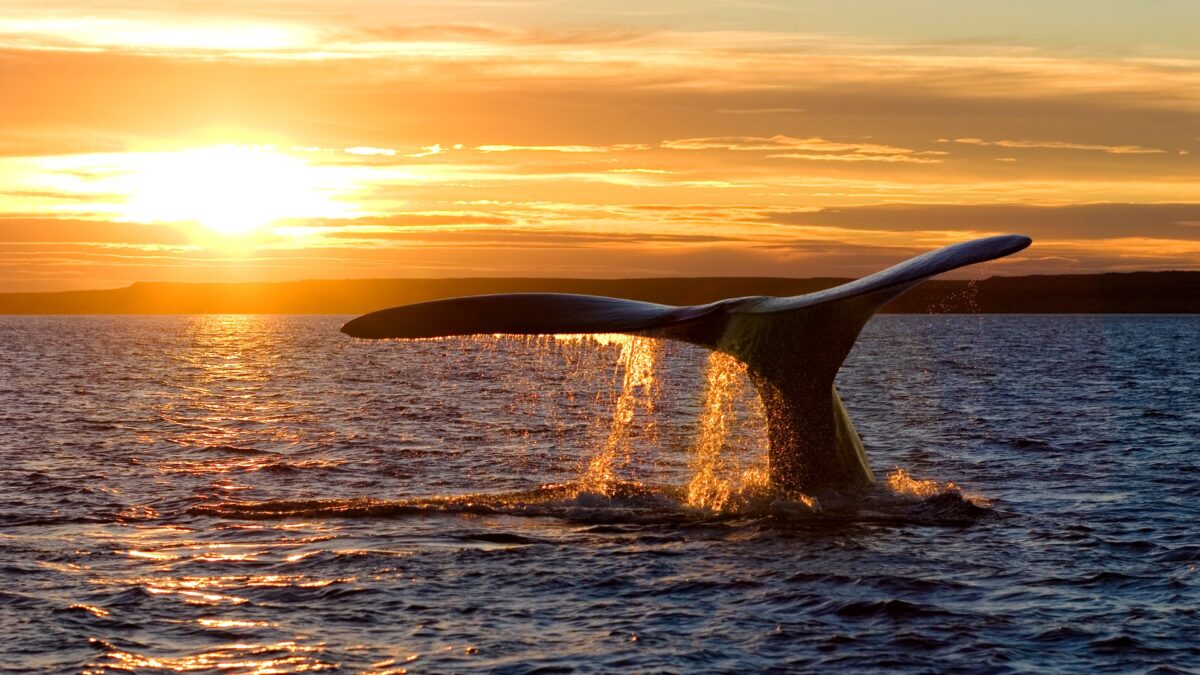
Episode one opens in tropical seas with a pair of Indonesian harlequin shrimps, creatures so jewelled and strange that a machine inventing them would be accused of excess. A southern right whale — the great, slow sovereign of the southern oceans — moves through the series like a reminder of scale: this animal was hunted to the edge of extinction, and it is still here, still breaching at sunset, still refusing to apologise for its size.
There are six hour-long episodes — Tropical Seas, Open Ocean, Seasonal Seas, Polar Waters, The Deep and Future Seas — each one devoted to a different underwater world, filmed with mini-dome cameras, deep-sea selfie sticks and lasers that light the dark the way a lamp lights a cellar. The co-production spans the BBC Natural History Unit with ZDF, France Télévisions, Skai TV and The Open University. It is, by any measure, the most ambitious attempt ever made to show you the whole ocean at once.
But I tell you plainly: the technology is not the story. The story is that the machines were pointed at real things, and the real things were stranger than anything the machines could have invented. White said it herself — the creatures they filmed were more remarkable than AI could imagine, and completely real. The ocean has always been the greatest fabulist on earth. It did not need our help.
The Deep Does Not Flatter Us
Do not mistake this series for comfort. The final episode is called Future Seas, and the title is a question, not a promise. The same ocean that gave us the dolphin’s trap and the whale’s breach is the ocean into which we throw, by the most widely cited estimate, some eight million tonnes of plastic every single year — a garbage truck’s worth, every minute, of every day. The same warming seas that bleach the coral reefs are the seas the cameras swam through for four years. Blue Planet III will show you wonders, but it will not lie to you about the price of them, because lying is the one thing it has publicly refused to do.
That refusal is what makes this series different from every nature documentary that came before it, and it is why I am writing to you about a television programme as if it were a matter of public morality — because it is. We live in a time when a video of a man saying words he never said can travel the world before breakfast, when a photograph of a place that does not exist can win applause before lunch. The forgers have never been faster, or cheaper, or more convincing. And in that time, the most powerful institution in broadcasting has chosen to fight back not with a louder claim, but with a quieter one: look at the cloudy water. It is cloudy because it is real.
I think of the old forgers again — the men who made coins too round, manuscripts too clean. Their work always failed in the end for the same reason: reality has texture, and texture cannot be counterfeited forever. Sooner or later, someone holds the coin up to the light and sees that it has no weight. The BBC has simply decided to hold its own work up to the light first.
Why Imperfection Is Now Proof
And here, reader, is where I must speak to you directly, because this is no longer about fish. It is about you, and me, and the question I opened with: when did you last believe your own eyes?
We have built a world in which seeing is no longer believing, and we did it so quickly that we never stopped to mourn what we lost. A generation is growing up that assumes every image is manipulated until proven otherwise — every face, every crowd, every sunset. That suspicion is not cynicism; it is self-defence. But a civilisation that cannot trust its own eyes cannot trust its own history, its own courts, its own witnesses. The man who doubts every photograph will soon doubt every testimony, and the man who doubts every testimony will soon believe nothing at all — and a man who believes nothing will follow anyone who shouts loudest.
That is why a cloudy shot of a whale matters more than a perfect one. The murk is not a flaw in the film. The murk is the film’s argument: that truth leaves marks, that reality is not seamless, that the world does not come with a filter. The BBC’s producers understood something the rest of our institutions have been slow to learn — that in an age of synthetic perfection, the only way to prove you are real is to show your scars.
Think of the history in that idea. The great witnesses of the past were believed not because they were polished, but because they were wounded. The letter with the tear in it. The photograph with the thumb in the corner. The voice that breaks. Attenborough’s own voice tonight will be weathered by a hundred years, and that weathering is precisely why we trust it. Perfection is the accent of the machine. Imperfection is the accent of the living.
The Sea Is Still Waiting for an Answer
So tonight, when the music rises and that familiar voice says whatever it will say over the first shot of tropical seas, I ask you to watch differently than you have ever watched television. Do not watch for beauty. Watch for honesty. Notice the plankton. Notice the buoy. Notice the water that is not quite clear, and understand that somebody chose to leave it there for you — a small, deliberate act of respect for your intelligence.
And then ask yourself the question the series is really asking. The ocean covers more than seventy per cent of this planet, and we have explored less of it than we have of the surface of the moon. It feeds us, it steadies our climate, it holds the memory of every storm and every species we have ever known — and we are filling it with plastic, warming it with our smoke, and now, in our newest folly, filling our screens with false images of it while the real one dies out of sight.
Blue Planet II changed laws. It changed a Queen’s household, a government’s policy, a generation’s habits. What will Blue Planet III change? That depends, as it always has, not on the filmmakers but on us — on whether we are still capable of being moved by something real, or whether we have grown so used to the counterfeit that the genuine article now looks strange to us.
A hundred-year-old man has done his part. He changed every line of the script, stood before the cameras of the world, and lent his century of trust to six hours of cloudy, plankton-filled, stubbornly real ocean. The sea has done its part — it showed up, it behaved, it refused to be invented. The question that remains is the oldest one in the book, the question every prophet and every poet has ever asked of their audience: now that you have seen it, what will you do?
The ocean, I suspect, already knows the answer. It has watched empires rise and fall from its depths. It watched the first Blue Planet in 2001, and it will watch the third tonight, with the patience of something that was here long before us and intends, if we let it, to be here long after us. The murk in the water is not a defect. It is a witness, testifying in the only language it has — the language of being real.
Believe your eyes tonight. They are the last honest instruments you own.
Sources & References
- The Guardian — “Blue Planet III features cloudier footage to prove authenticity amid AI boom”, by Tara Conlan, 23–24 October 2026 (Bootle and White quotations; four years of filming across five oceans; dolphins and the “stonefish” camera).
- Wikipedia — “Blue Planet III” (premiere 1 November 2026 on BBC One and BBC iPlayer; six episodes and titles; Attenborough confirmed as narrator on his 100th birthday; co-producers).
- New Scientist — “Blue Planet III is the best yet from the BBC and David Attenborough” (review of the first three episodes; Attenborough’s script involvement; first series 2001, second 2017).
- Radio Times — “Blue Planet III review” (premiere Sunday 1 November at 8pm on BBC One and iPlayer; episode one, the harlequin shrimps).
- Wikipedia — “Blue Planet II” (the “Blue Planet effect”: 84% of viewers changed their attitude to plastic; UK government and Royal estate responses; BBC single-use plastics pledge; China streaming figure).

About the Author — Abdul Mannan
Related Articles
Elon Musk Says Saving Is Pointless. History Has Heard This Sermon Before.
Elon Musk says saving for the distant future is pointless in an age of super-intelligent abundance. History —…
Make It So: Patrick Stewart, the Boy from Mirfield Who Taught the World How to Lead
Patrick Stewart died on 28 October 2026, aged 86, at his home in Los Angeles. This column traces…
She Left the Most Powerful Chair in Europe to Speak: Christine Lagarde, the Euro, and the Price of Silence
Christine Lagarde will step down as ECB president on 7 February 2027, about nine months early, saying she…