The Drum Beats Twice: Cyclone Murasu and the Warning India Has Learned to Hear

Have you ever heard a drum beat twice in the same week — and understood, the second time, that it was not an echo but a warning?
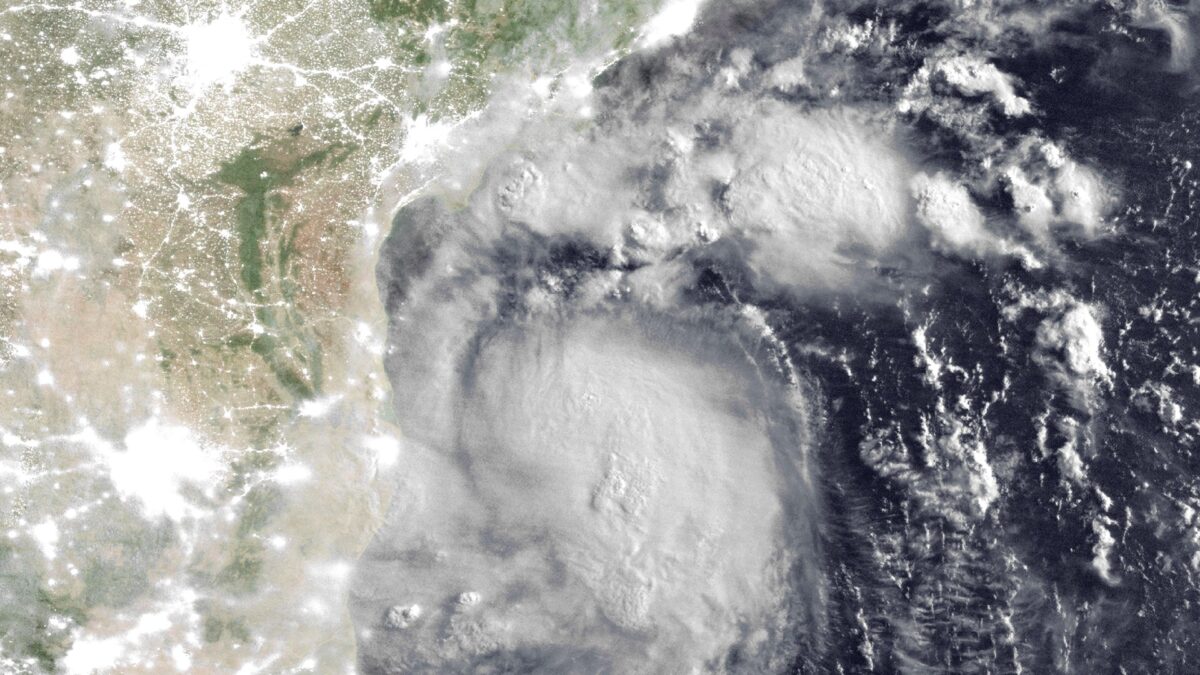
Tonight, as you read these words, a storm the size of a province is rolling towards the coast of Andhra Pradesh. Its winds are already tearing at 100 kilometres an hour. Its surge — a wall of sea one and a half metres high — is already rising. Thirty thousand people are being moved out of its path. And its name is Murasu. In Tamil, that word means drum.
I have spent a lifetime listening to the drums of history. The drum that warned a village of war. The drum that called men to prayer. The drum that beat for a king’s coronation and for a martyr’s funeral. But I have never known a drum quite like this one — a drum beaten not by human hands but by the sea itself, sounding twice in seven days over the same wounded coast. The question before us tonight is not whether the storm will come. It will. The question is whether we have finally learned to hear it.
A Storm Born in the Andaman Sea
Every cyclone begins in silence. On 29 October, a low-pressure area formed over the Andaman Sea — nothing more than a restless patch of warm water and rising air, the kind of thing the satellites watch by the hundred each year. But the Bay of Bengal in November is no ordinary sea. Its waters were warm, the air above them was heavy, and the system fed and fed until, on the morning of Sunday, 1 November, the India Meteorological Department gave it a name. At 11:30 in the morning, the deep depression over the southwest Bay of Bengal intensified into Cyclonic Storm Murasu.
By Monday morning it had grown teeth. The IMD upgraded it to a severe cyclonic storm, spinning over the west-central Bay of Bengal some 160 kilometres east-south-east of Nellore, moving west-northwest at about 20 kilometres an hour. Its sustained winds are 100 to 110 kilometres an hour, with gusts reaching 120. It is expected to cross the south Andhra Pradesh coast between Nellore and Narsapur, near Ongole, between 11:30 tonight and 4 o’clock tomorrow morning, and when it does it will drag behind it a storm surge of one to one and a half metres above the astronomical tide — enough water to drown low-lying villages in Bapatla, Krishna and Prakasam districts — and waves four to six metres high in the open sea.
The numbers, read coldly, are the numbers of a serious storm. But read them the way a fisherman in Machilipatnam reads them, and they are something else: a sentence. The sea has passed its verdict, and the coast must answer it.
And the coast is answering. The Andhra Pradesh State Disaster Management Authority has already moved some 2,000 people out of the low-lying areas, and its managing director, Prakhar Jain, has told Reuters that the state plans to move about 30,000 in all. Six teams of the National Disaster Response Force and seven teams of the State Disaster Response Force are in position. In Odisha, more than 300 rescue personnel from the NDRF, the Odisha Disaster Rapid Action Force and the fire service have been stationed in Ganjam, Gajapati and Koraput. Twenty-one flights have been cancelled — eleven at Chennai, ten at Vijayawada — and schools stand closed in Chennai and across Palnadu district. Fishermen have been told to stay in port until Wednesday. The helplines — 112 and 1070 — are open. Chief Minister N. Chandrababu Naidu has cancelled his visit to New Delhi to oversee the response himself, and Deputy Chief Minister Pawan Kalyan has ordered officials in Nellore, Prakasam and Bapatla to put evacuation first.
Pause on that for a moment. Thirty thousand people, lifted out of harm’s way before the water arrives. That sentence, so calmly delivered in a news bulletin, is the product of half a century of grief. It was written in the blood of the dead. To understand why it matters, you must go back to the last time the drum beat over this same coast — and nobody heard it.
The Second Blow in Seven Days
Murasu is not the first storm of the week. It is the second. Less than seven days ago, Cyclone Arnab battered the very same coastline — Andhra Pradesh and Odisha — and the wounds are still open. Six people are dead. Ten are still missing. The floods that followed affected 118,000 people, damaged 1,672 houses and drowned 75,388 hectares of standing crops. The earth is still saturated. The slopes are still loose. The power lines that were repaired are about to be tested again, and the families that were only just returning to their homes are being asked to leave them a second time.
This is what makes Murasu crueller than an ordinary cyclone, and more instructive. A single storm is a disaster; two storms in a week are a question. The first storm tests your roofs. The second tests your patience, your institutions, and your memory. It asks whether the lessons of the first week survive the second.
There is a detail in the record that I cannot stop thinking about. The IMD’s director general, Mrutyunjay Mohapatra, noted in the same breath as this storm that October 2026 was the hottest October in India since records began in 1901. Think about that. The sea that bore Murasu is warmer than it has ever been in living memory, and warm seas are the fuel of cyclones. The drum is not beating louder by accident. The hand that beats it grows stronger every year.
1977: When the Drum Was Silent
Now let me take you back, because history is the only mirror in which the present can see its own face clearly. On 19 November 1977 — forty-nine years ago this month — a cyclone made landfall near Chirala, in the Prakasam district of central Andhra Pradesh, with winds of 260 kilometres an hour. A seven-metre storm surge — a wall of water two storeys high — swept over Diviseema, the island at the mouth of the Krishna river. About 10,000 people died. The official count says 10,000; some estimates run to 50,000. In Divi taluka alone, some 8,000 perished.
Ask yourself: how does a nation lose ten thousand of its own people in a single night? The answer is that in 1977 there was no drum. There were no satellites watching the Bay. There were no bulletins every six hours, no red warnings, no NDRF teams pre-positioned, no 30,000 people moved to safety. The storm came as a thief in the night, and the people of Diviseema died in their sleep, in their fields, in their boats — because nobody had told them to run.
The large loss of life prompted the establishment of early-warning meteorological stations along the Andhra coast. That is the sentence history wrote in the aftermath. But notice what it does not say. It does not say the dead were avenged. It does not say the sea apologised. It says, coldly, that the living learned something. The dead paid the tuition fee for every warning that has been issued since.
I think of the mothers of Diviseema whenever I read a modern evacuation figure. Ten thousand dead in 1977; thirty thousand moved to safety in 2026. That is not a statistic. That is a civilisation keeping a promise to its dead — slowly, imperfectly, but keeping it.
1999 and 2013: The Lesson Written in Water
The coast learned its lesson twice more, and the two lessons together are the most important parable in modern Indian history. In October 1999, a super cyclone struck Odisha near Paradip with winds of 260 kilometres an hour — the same ferocity as 1977. Nearly 10,000 people died. Villages vanished. The state was broken for months. It was, by every measure, a catastrophe of the same order as Diviseema.
Fourteen years later, in October 2013, Cyclone Phailin struck the same coast with winds of about 215 kilometres an hour — a storm the size of Hurricane Katrina, carrying a surge of more than three metres. It affected more than 12 million people. It destroyed over 300,000 houses and 650,000 hectares of crops. And it killed, by the official count, 38 people.
Read those two numbers again. Ten thousand. Thirty-eight. The storms were brothers; the outcomes were strangers. What changed between 1999 and 2013 was not the sea. What changed was us. A cyclone alert was issued five days in advance. Nearly a million people were evacuated — some of them forcibly, carried from their homes by officials who had been taught, by the dead of 1999, that a warning unheeded is a warning wasted. In 1999, Odisha had about twenty cyclone shelters. By 2013, it had hundreds, and the drills to fill them were rehearsed the way soldiers rehearse a battle.
This is the whole philosophy of disaster in a single comparison: you cannot command the sea, but you can command yourself. The storm is an act of God; the death toll is an act of man. That is the difference between a tragedy and a crime — and it is a difference measured in the tens of thousands.
The same story repeated in 2014, when Cyclone Hudhud struck Visakhapatnam with winds of 170 to 180 kilometres an hour and killed 63 people in Andhra Pradesh, and again in 2019, when Cyclone Fani struck Puri and killed 64 in Odisha. The winds were fearsome. The deaths were counted in dozens, not thousands. The drum had been heard.
What the Drum Means
And so we return to the name. Murasu. In the old Tamil world, the murasu was the great war drum — beaten to summon an army, to announce a king, to warn a village that danger was coming. The naming of cyclones in this ocean is the work of a panel of thirteen countries under the World Meteorological Organization; each country contributes its names in turn, and India offered this one. Someone in a committee room chose a drum for a storm. They could not have chosen better.
For what is a cyclone warning if not a drum? A drum is the oldest mass medium in human history. Before the telegraph, before the radio, before the satellite, the drum was how a village learned that the enemy was at the gate. The murasu was beaten on temple towers and on the battlefield, and its sound carried for miles across the paddy fields. It said one thing: leave what you are doing, and prepare. The satellite that photographed Murasu last night is the same message, written in a different technology. The IMD bulletin is a drum. The SMS alert is a drum. The policeman with a loudspeaker in a fishing village is a drum. The 30,000 people walking to shelters tonight are answering a beat that their ancestors would have recognised instantly.
But here is the thought that troubles me, and it is the thought I want to leave with you. A drum is only useful if someone is listening. In 1977, the drum was silent because we had no drum to beat. Today, the drum beats louder than ever — satellites, radars, phones, television, a thousand channels of warning — and yet the question has shifted from the drum to the ear. Do we listen? The fisherman who takes his boat out against advice, the family that refuses to leave a mud house because it has stood for forty years, the official who files a warning instead of acting on it — these are the people the drum is beaten for, and these are the people it can still fail to reach.
Technology has given us the finest warning system in the history of this coastline. The IMD counted 184 systems of all strengths crossing the Andhra coast between 1891 and 2019, and Andhra Pradesh has the highest frequency of severe cyclonic storms of any Indian state. We know these waters. We know these storms. We have no excuse left for surprise.
Tonight, on the Coast
So tonight, between 11:30 and 4 in the morning, when Murasu crosses between Nellore and Narsapur, think of the coast as it is at this hour. The fishermen of Machilipatnam and Ongole are ashore, their boats pulled high and lashed down. The schoolrooms of Chennai stand empty. The relief camps are lit, and in them sit families who have done the hardest thing a human being can be asked to do: leave their home not knowing whether it will be there in the morning. The NDRF teams wait with their boats and their ropes. The helplines ring. And above it all, the satellites keep their cold, patient watch.
These are not the images that make headlines. Headlines prefer the wave and the wreckage. But these quiet images — the evacuated village, the empty beach, the shelter with its lights on — are the real story of Murasu. They are the story of a country that buried ten thousand people in 1977 and swore, without ever saying the words aloud, never again.
If you live far from that coast, do not read this as someone else’s story. The Bay of Bengal is not a distant sea. Its storms are born in the same warming ocean that is raising the temperature of every October, flooding every monsoon, and rewriting the weather of every continent. The drum that beats over Andhra tonight is the same drum that will beat, sooner or later, over every coastline on earth. The question Murasu asks of India tonight, it will ask of the world tomorrow: when the warning comes, will you move?
The Verdict of the Drum
History does not repeat itself, but it does keep the beat. In 1977 the drum was silent and ten thousand died. In 1999 the drum was faint and ten thousand died. In 2013 the drum was loud and thirty-eight died. Tonight, the drum beats twice in a week — once for Arnab, once for Murasu — and thirty thousand people are already safe on higher ground.
That is not a small thing. It is, in fact, the largest moral achievement of the modern Indian state, and it is almost never celebrated, because its proof is an absence: the funerals that did not happen, the orphans who were not made, the villages that were not emptied. We measure our failures in bodies and our successes in silence, and so the success goes unnoticed. But it is there, in the ledger, in the difference between ten thousand and thirty-eight.
And yet — and here the preacher in me must speak plainly — let no one mistake a well-heeded warning for a victory over the sea. The sea is patient. It has all the time in the world. October was the hottest since 1901, and the waters that fed Murasu will be warmer still next year. The storms will come more often, and they will come stronger, and the drum will have to beat louder every time. A civilisation is not judged by a single evacuation. It is judged by whether it can keep listening, year after year, storm after storm, without growing deaf from familiarity.
The murasu was beaten in the temples of old Tamilakam to remind men that danger does not announce itself twice. But tonight, the sea has announced itself twice in a single week. Take it as a mercy. The first beat was Arnab, and it cost six lives. The second beat is Murasu, and it is sounding even now, over the dark water, between Nellore and Narsapur. Listen to it. Move when it tells you to move. And remember — when the morning comes and the damage is counted — that the lives saved were not saved by luck, but by listening. The drum is not the storm. The drum is the difference between the storm and the slaughter. And tonight, for the second time in seven days, India is listening.
Sources & References
- Cyclone Murasu — Wikipedia (formation, track, landfall forecast, Arnab comparison)
- Mirror Now — Cyclone Murasu: Andhra Pradesh Braces for Landfall as Chennai Battles Heavy Rain (NDRF/SDRF deployment, flight cancellations, school closures)
- Blaze Trends — India Evacuates 2,000, Plans to Move 30,000 Ahead of Cyclone Murasu (evacuation figures, Reuters/APSDMA, storm surge, helplines)
- Education Times — Why is Cyclone Murasu named so? (the Tamil word for “drum”, IMD naming, Arnab toll)
- Transclew — India’s deadliest cyclones, and why fewer people die in them now (1977, 1999, Phailin death tolls compared)
- 1977 Andhra Pradesh cyclone — Wikipedia (Diviseema surge, 10,000 deaths, early-warning stations)
- Devex — A tale of 2 cyclones (Phailin: one million evacuated, 38 deaths)
- Zoom Earth — Cyclonic Storm Murasu LIVE Tracker (live position, wind speed, wave height)
Featured image: Satellite view of Cyclone Murasu over the Bay of Bengal, 1 November 2026. Photo: NASA EOSDIS Worldview / NOAA-20 VIIRS (public domain, via Wikimedia Commons).

About the Author — Abdul Mannan
Related Articles

Tomorrow, America Votes — and History Is Holding Its Breath
Fifty-three million Americans have already voted before Election Day. On Tuesday 3 November 2026, the rest of America…
Gen Z Regelt: The Children Europe Ignored Have Taken Its Streets
On Halloween night, the children of Europe put on their costumes — and then they took off their…

Blue Planet III: The Ocean Refuses to Lie
Tonight, a hundred-year-old David Attenborough returns with Blue Planet III — and the BBC has made a startling…