Tomorrow, America Votes — and History Is Holding Its Breath

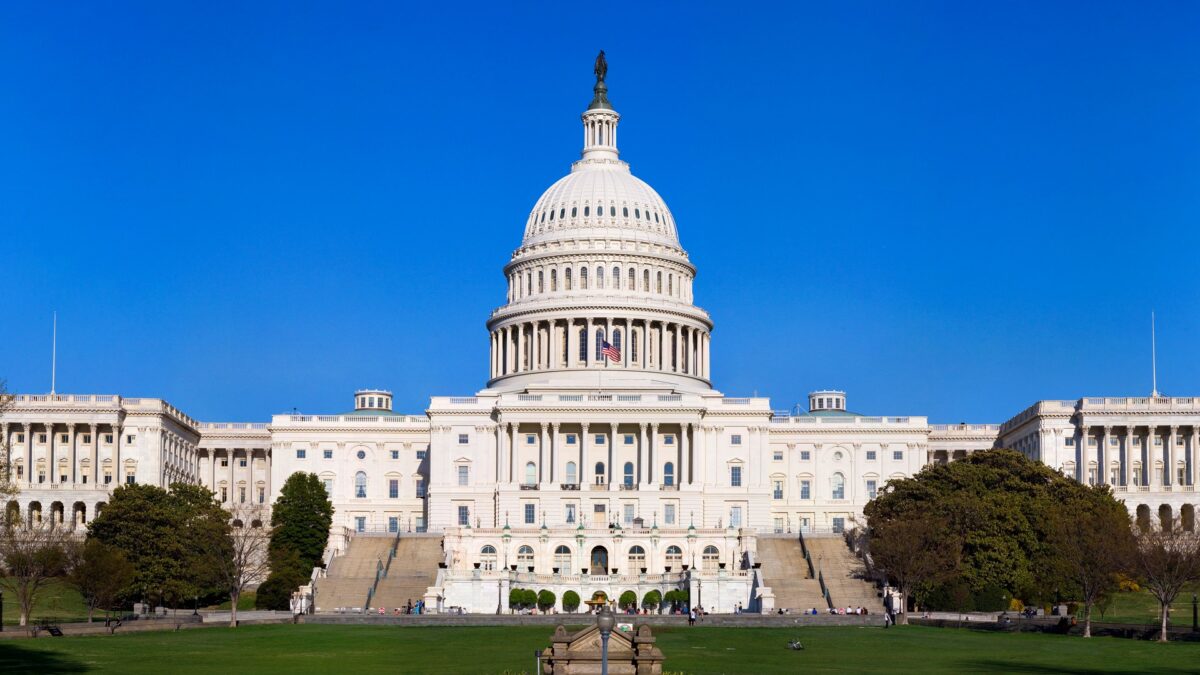
What is a midterm? Ask the question in Washington tonight and you will get a shrug, a spreadsheet, a poll average. Ask it of history, and history will answer you in a different voice altogether. A midterm is the night a republic looks into a mirror and decides whether it still recognises its own face.
Tomorrow, Tuesday 3 November 2026, America votes. All 435 seats of the House of Representatives are on the ballot. Thirty-five of the hundred seats in the Senate are on the ballot. Thirty-six governorships are on the ballot. And beneath all of that arithmetic, something older and heavier is on the ballot too: the question of whether a free people still know how to restrain power — or whether they have forgotten, and must now re-learn the lesson the hard way.
I write this on the eve of the vote, when the counting has already begun in all but name. More than fifty-three million Americans have already cast their ballots. Fifty-three million. Before a single polling station opens tomorrow morning, a quarter of the entire registered electorate — some 210 million souls — has spoken. Let that number sit with you for a moment, reader, because it is the first fact of this election, and it tells you everything about the temper of this republic in the year 2026: nobody is indifferent. Nobody is staying home in their heart. Whatever else divides America, apathy is not on the ballot.
Fifty-Three Million Have Already Spoken
The University of Florida’s Election Lab, which tracks the early vote state by state, counted 53.14 million early ballots by Sunday morning — 29 million cast in person and 23 million returned by post. The old record for a midterm, set only four years ago, was 45.9 million early votes in total. That record was already broken by midday on Friday 30 October, when the count stood at 47.9 million. America is not merely voting early. America is voting early in numbers no midterm has ever seen.
And who are these early voters? In the states that record party registration, registered Democrats account for roughly 44 per cent of the early ballots cast, Republicans about 31 per cent, and unaffiliated voters and members of smaller parties about 25 per cent. Modelled nationally, the early electorate leans Democratic by about 12 points — wider than the equivalent figure in 2022. Texas alone has produced more than seven million early votes, with in-person participation running some 50 per cent higher than at the same stage four years ago. Georgia has passed two and a half million. In South Carolina — a state Donald Trump carried by nearly eighteen points in 2024 — early voting has surged 83 per cent compared with the same point in 2022. In Kansas, it is up 34 per cent.
Now, before you rush to a conclusion, stop. I have watched enough elections to know the oldest trap in this game: the early vote is not the result. Republicans have traditionally voted on Election Day itself, in far greater numbers, and every serious analyst — from the Associated Press to the University of Florida’s own Michael McDonald — warns that party registration is not a vote, that a ballot cast early is not a ballot cast for a party, and that tens of millions of Americans will still walk into polling stations tomorrow. The early numbers are a weather report, not a verdict. But weather reports matter when a storm is coming. And a storm, by every measure, is coming.
The Numbers That Frighten Both Sides
Look at the national polls, and the wind is blowing in one direction. RealClearPolling’s congressional ballot average puts the Democrats at 51.4 per cent and the Republicans at 43.2 per cent — a lead of more than eight points. An Economist/YouGov survey found 44 per cent of registered voters expecting the Democrats to take the House, against 31 per cent expecting the Republicans to hold it. The Senate is closer in expectation — 39 per cent foresee a Democratic majority, 36 per cent a Republican one — because the map is crueller there: Republicans today hold 53 of the 100 seats, and the Democrats must defend more ground than they can attack.
And then there is the number that hangs over this whole election like a verdict already half-written. The New York Times’ approval tracker puts President Trump at 36 per cent — the lowest approval rating for any president heading into a midterm in eighty years. Eighty years. That is not a polling blip. That is a historical sentence. Presidents with numbers like that do not merely lose midterms; they lose the argument about what their presidency was for.
Yet — and this is the part the partisans on both sides refuse to hear — the Republicans have their own reasons to hope. The House majority they defend is razor-thin, 218 to 214, but thin majorities have survived before. The Senate map favours them. And Election Day itself, as I have said, belongs disproportionately to their voters. In 2022, every expert in America predicted a red wave, and the wave never came. In 2016, every expert predicted a coronation, and the coronation never came. The only honest thing a columnist can tell you on the eve of a vote is this: the polls are a photograph of a river. The river is still moving.
History’s Mirror: Republics Are Not Murdered, They Are Voted Away
And here, reader, is where I must do what I always do in this column: hold the present up to the mirror of history, and ask you to look at both faces at once.
Two thousand years ago, the Roman Republic did not fall in a single night. There was no one morning when the senators woke up and found an emperor on the throne. It fell the way republics always fall — in instalments, in midterms, in small surrenders. Cicero warned the Senate. Cato warned the Senate. The people, tired and frightened and angry at a system that seemed to serve only the rich, cheered for the strong man who promised to cut through the mess. Caesar crossed his Rubicon, and the Rubicon was not a river; it was a line the republic had drawn in its own mind, and the day the people stopped believing in the line, the line ceased to exist. Rome kept its Senate, its elections, its robes and its rituals for decades afterwards. It kept the furniture of the republic long after the republic itself was dead.
You think I am talking about Rome. I am talking about every republic that ever lived, including the one voting tomorrow.
Look at America’s own history, and the mirror sharpens. In 1866, a year after the Civil War, the midterm election was a referendum on a president — Andrew Johnson — who had tried to govern against the Congress elected beside him. The voters did not merely rebuke him; they buried him, handing the Radical Republicans a majority so large it could override his vetoes at will. The republic survived because the voters understood, in that hour, that a president is not a king, and that Congress is not a rubber stamp. In 1938, the mirror turned the other way: Franklin Roosevelt, the most popular president of the century, tried to bend the Supreme Court to his will, and the voters punished his party in the midterms — a reminder that even a beloved president must bow to the balance of powers. In 1994, the voters swept the Democrats out of Congress after forty years, in a single night, because they believed government had grown deaf. In 2018, they took the House from Donald Trump’s party in his first midterm, because they believed the presidency had grown too loud. In 2022, the wave that was supposed to come did not come — because the voters, in their quiet wisdom, decided that the threat they feared most was not in the White House but in the statehouses, in the ballot measures, in the laws being written about their own bodies.
Do you see the pattern, reader? The midterm is America’s immune system. It is the moment when the body politic checks its own fever. Sometimes it overcorrects. Sometimes it under-corrects. But it has corrected, without fail, for two hundred and fifty years — and the reason it has corrected is that ordinary Americans, whatever their party, have always understood one thing in their bones: no one man, no one party, no one moment of anger is bigger than the republic itself.
Tomorrow will tell us whether that understanding still lives.
The Ballot Measures Nobody Is Watching
While the cameras fix on the House and the Senate, something quieter — and in the long run, perhaps more consequential — is happening further down the ballot. One hundred and forty-five statewide ballot measures are being decided across the country. One hundred and forty-five questions that no president can answer and no Congress can overrule, because they are the people answering directly.
In California, voters will decide on a one-time five per cent wealth tax on billionaires — a measure that, if it passes, will be studied in every finance ministry on earth, because it asks the oldest question in political economy in its bluntest form: how much may one person own while others go without? In several states, voters will decide the fate of abortion rights, the question that remade American politics in 2022 and has not let go of it since. There are measures on voter identification, on taxes, on the rules of elections themselves — the very machinery by which power is won and held.
I ask you to pay attention to these measures, because they are the truest mirror of all. A presidential election is a contest of personalities. A midterm is a contest of parties. But a ballot measure is a contest of ideas — and ideas, once voted into law by the people themselves, are far harder to undo than any politician. The East India Company did not conquer India in a single battle; it conquered it in a thousand small contracts, each one reasonable on its own, each one surrendering a little more ground. The ballot measure is the modern form of that same slow arithmetic — except that here, for once, the people hold the pen. What they write tomorrow will govern their grandchildren.
Alaska’s Warning: When the Trick Becomes the Story
There is one race that tells you more about the state of this republic than any poll average, and it is happening in the place you would least expect: Alaska. There, a retired schoolteacher named Daniel J. Sullivan — a Democrat, recruited, according to the New York Times, by aides to the Democratic candidate Mary Peltola — appeared on the ballot alongside the Republican incumbent, Senator Dan Sullivan. Same surname. Same ballot. A “ballot composition project”, they called it. The state’s Division of Elections found in June that the candidacy had been filed “with a purpose to confuse or mislead”, and tried to strike it from the ballot. The courts restored it. The Justice Department sued to block certification of the result. And on Sunday, a federal judge — Sharon Gleason — threw the department’s case out, ruling that it had no standing, that the ballots had already been cast and mixed beyond separation, and that there was, in her words, “no workable plan” to unpick them.
I do not write this to take a side in Alaska. I write it because the story is a parable, and parables are how republics warn themselves. When the trick becomes the story — when the manipulation of the ballot matters more than the ballot itself — the republic is already ill. The judge was right in law, and the law is not the whole of the matter. A system that must rely on judges to decide whether its elections were honest is a system that has already spent something it cannot buy back: trust. Trust, once lost, is not restored by a court order. It is restored only by the conduct of the people who seek power — and by the voters who punish them when they cheat, whatever their party.
Remember this tomorrow, whoever you vote for: the candidate who tricks his way onto a ballot is telling you, in advance, how he intends to govern.
What the World Is Really Watching
And what of the rest of us — the world beyond America’s borders, watching this election as if our own futures depended on it? Because, in a measure, they do.
The world is watching because the questions on America’s ballot tomorrow are the world’s questions too. Whether the United States continues to stand by Ukraine or turns inward. Whether the shadow of war with Iran — the threat that has moved oil past $110 a barrel and sent Gulf markets tumbling — grows or recedes. Whether the tariffs and trade wars that have shaken every market from Karachi to Kuala Lumpur are a policy or a permanent condition. Whether the richest country on earth still believes in the alliances it built, or whether it now believes only in itself.
I have no vote in this election. You, my reader in Pakistan, have no vote in it either. But do not let anyone tell you it does not concern you. When America catches a cold, the world catches pneumonia — and when America loses its temper, the world pays the bill. The farmer in Punjab whose fertiliser price doubled, the exporter in Faisalabad whose orders dried up, the student in Lahore whose visa was delayed — all of them are, in a real sense, voting tomorrow too, without ever seeing a ballot. That is the weight of American power. And that is why the whole world holds its breath tonight.
The Verdict Belongs to the Morning
So here we stand, on the last night before the verdict. Fifty-three million have spoken. Tens of millions more will speak tomorrow. The first polls close at six in the evening, Eastern time; the last at one in the morning. By Wednesday, we will know whether the House has changed hands, whether the Senate has held, whether the governors’ mansions have new occupants, whether the billionaires of California will pay their five per cent, and whether the republic’s immune system still works.
But I will leave you with a thought that no poll can measure and no pundit can predict. Republics are not murdered, reader. They are voted away — slowly, politely, one midterm at a time, by people who were too tired, too angry, or too certain to notice what they were giving up. The Roman Senate kept meeting long after Rome was dead. The forms survived. The spirit did not.
America’s founders knew this. That is why they built the midterm into the very bones of the republic — a built-in moment of reckoning, every two years, whether the president wants it or not. It is the most radical idea in the history of government: that power must ask permission, again and again, forever, and that the people may always say no.
Tomorrow, the people will answer. And history, which has watched a hundred republics rise and fall, will be watching the answer — not in Washington, but in the quiet booths of Texas and Georgia and South Carolina and Kansas, where ordinary men and women, one by one, pick up a pen and decide what kind of country their children will inherit.
The ballot is small. The question is not. And the morning will tell us, at last, whether the republic still knows its own face.
Sources & References
- More than 50 million votes cast in US midterm elections: What does it mean? — Jamaica Inquirer, 1 November 2026 (University of Florida Election Lab figures; RealClearPolling averages)
- Democrats Are Winning the Early Vote. But What Does That Really Tell Us About the 2026 Midterms? — George Magazine (early-vote tracker data, 28 October 2026)
- US Midterm Elections 2026: Early Voting Hits Record 47.9 Million, Democrats Lead — Sapta Shwa TV, 31 October 2026
- Democrats lead Republicans as US midterm early voting hits record 48 million — Chronicle.ng, 30–31 October 2026
- Associated Press / Al Jazeera English — early voting analysis and midterm polling coverage, 31 October – 1 November 2026 (43 million early votes five days before Election Day; RealClearPolling 51.4%–43.2%; 145 ballot measures; first polls close 6 p.m. ET Tuesday)
- Fox News Channel / Al Jazeera English social coverage, 31 October – 1 November 2026 (Senate 53–47; House 218–214; 36 governorships; California billionaire wealth-tax measure)
- New York Times approval tracker, cited 1 November 2026 (presidential approval 36%, lowest for a president heading into a midterm in 80 years)

About the Author — advmannan1
Related Articles
Gen Z Regelt: The Children Europe Ignored Have Taken Its Streets
On Halloween night, the children of Europe put on their costumes — and then they took off their…
Blue Planet III: The Ocean Refuses to Lie
Tonight, a hundred-year-old David Attenborough returns with Blue Planet III — and the BBC has made a startling…
Elon Musk Says Saving Is Pointless. History Has Heard This Sermon Before.
Elon Musk says saving for the distant future is pointless in an age of super-intelligent abundance. History —…