The Big Show Bows Out: Glenn Maxwell and the Night Cricket Learned to Believe in the Impossible

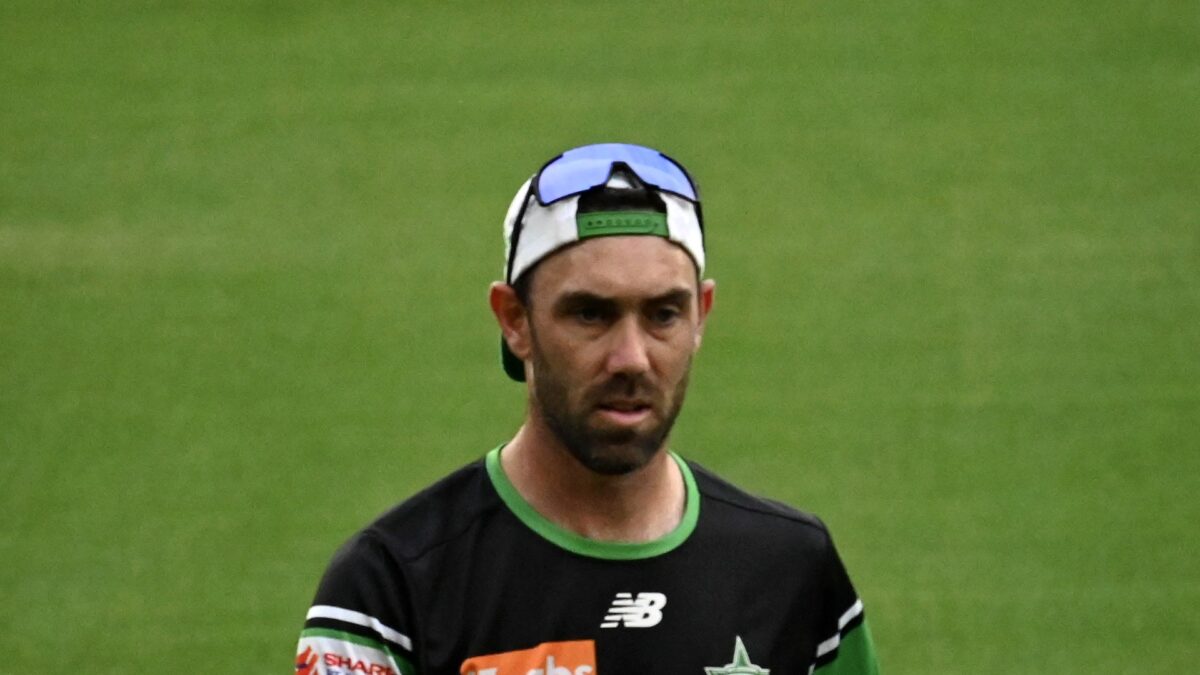
What do you do when the body says no, the selectors say no, and the farewell you dreamed of is quietly taken off the table — and yet the whole world still stops to say your name? On Monday, Glenn Maxwell answered that question the only way he ever answered anything in his life: he walked up to the microphone, smiled, and told the truth. The Big Show is over. International cricket will never see his like again.
I have watched cricket for a lifetime, and I have learned one hard lesson from it: the game does not remember the careful. It remembers the brave. It forgets the men who played the percentages and played them well; it carves into its memory the men who, with everything lost and nothing left to lose, decided to play the shot nobody else would dare. Glenn Maxwell was such a man. He did not merely play cricket. He conducted it, like a man leading an orchestra that only he could hear.
And now, at thirty-eight, he has put the bat down. Not with a final flourish at his beloved Melbourne Cricket Ground, as he had quietly hoped. Not with a guard of honour and a lap of the ground and a crowd on its feet. His last act in Australian colours came in February, in a World Cup match against Oman, in a game Australia lost and a tournament Australia forgot. He took two wickets that day. He did not even get to bat. Tell me, reader — is that any way for a giant to leave the stage? Or is that precisely the point?
The Announcement That Came Without a Crowd
Maxwell made his announcement on The Final Word podcast, in an episode released on Tuesday, 3 November 2026. There was no press conference, no choreographed farewell, no tearful wave from the middle of the MCG. Just a man, a microphone, and the plain truth: “I’m going to be announcing my retirement from international cricket and domestic games for Victoria in the 50 over and the four-day stuff, red ball completely.”
He admitted, with a candour that has always been his second gift, that he had held a small hope of a send-off game at the MCG, his home ground, in the Twenty20 series against England that begins on 21 November. “There was, I suppose, a small hope or discussion that I might have been able to potentially get a send-off game at the MCG,” he said, “but I can completely understand the direction they’re going with this squad.” The selectors had announced their squad on Monday, the same day as his announcement, and his name was not in it. There is going to be, as he put it himself, “a lot of change over the next 12 to 24 months with the Olympics coming up in 2028.” Cricket Australia had already left him off its national central contract list for the 2026-27 season, back in April. The writing was on the wall, and Maxwell, to his eternal credit, read it before anyone had to spell it out for him.
He will keep playing franchise Twenty20 cricket — he remains contracted to the Melbourne Stars in the Big Bash League until the end of the 2027-28 season — but the baggy green era, the gold-and-green era, is done. Fourteen years. Two hundred and eighty-six international matches. Seven thousand two hundred and twenty-six runs. One hundred and thirty-six wickets. Three World Cups. Ten international centuries. And one night in Mumbai that will outlive us all.
The Night a Crippled Man Conquered the World
Let me take you back to that night, because if you understand that night, you understand the man. It was 7 November 2023, the Wankhede Stadium in Mumbai, a World Cup league match against Afghanistan. Australia, chasing 292, had collapsed to 91 for 7. The game was gone. The tournament, for all practical purposes, was gone with it. The crowd had begun that low murmur that crowds make when they are watching a funeral.
And then Glenn Maxwell, batting on a body that was failing him, did something that belongs not in the record books but in the realm of myth. His legs cramped so badly he could barely move. At times he could not run at all. He refused to leave the field for treatment. He stood at the crease, planted like a tree in a storm, and hit the ball to places the fielders had not thought to guard — because no sane batsman hits the ball there.
Two hundred and one not out. One hundred and twenty-eight balls. Twenty-one fours. Ten sixes. An unbroken stand of 202 with his captain, Pat Cummins, who made just 12 not out from 68 balls — a man holding one end while a miracle happened at the other. Australia won by three wickets with nineteen balls to spare. It was the first double century by an Australian man in one-day international cricket. It was the first by any non-opener batting second in the history of the format. And it kept Australia’s World Cup alive — a World Cup they went on to win, beating India in the final in Ahmedabad, in front of a hundred thousand silenced souls.
I ask you: what is greatness, if not this? Not the smooth accumulation of runs on flat pitches against tired attacks. Greatness is standing on one leg, in agony, with your team seven wickets down and the world watching, and refusing — refusing — to accept the ending that has been written for you. The poets of the old world understood this. The hero is not the man who never falls. The hero is the man who falls, breaks, and rises again in the same breath.
The Fastest Hundred and the Price of Genius
That was not even his only miracle of that World Cup. Thirteen days earlier, in Delhi, against the Netherlands, Maxwell had blazed the fastest hundred in World Cup history — off just forty balls. He finished with 106 from 44 deliveries, and he did it while feeling so ill he had told himself, in his own words, that he did not really want to bat. He had not slept properly. His wife Vini and his infant son had just arrived in India. The night before, against Pakistan, he had been dismissed first ball. And then he walked out, calmed himself down, and broke a record set only weeks earlier by South Africa’s Aiden Markram, who had needed forty-nine balls at the very same ground.
It was the fourth-fastest hundred in the entire history of one-day cricket, nine balls behind AB de Villiers’ impossible thirty-one. It was also, as Maxwell himself admitted with a grin, a record he had been chasing for years. “I’m very aware of them,” he said of the fastest-hundred records. “I love the fastest 50, fastest 100 records. I think they’re pretty cool records.”
Here is the thing about genius that the cautious never understand: it is not an accident. It is a choice, made over and over again, to attempt what others call impossible. Maxwell’s whole career was built on that choice. His maiden international hundred — 102 from 53 balls against Sri Lanka at the Sydney Cricket Ground in the 2015 World Cup — was the same story: violence with a smile. His 108 against England at Old Trafford in 2020, in an empty ground in the depths of Covid, dragging Australia from 73 for 5 chasing 303, in a stand of 212 with Alex Carey, was the same story. His five Twenty20 international centuries — a record he shares with India’s Rohit Sharma — were the same story, told five different ways.
And yet, look at the numbers honestly, as a friend should. Seven Tests only, the last of them in 2017. An ODI average in the mid-thirties, not the mid-forties of the immortals. A career that lurched between the sublime and the silent. Maxwell was never the most consistent batsman of his generation. He was something rarer: the most dangerous. When he failed, he failed quickly and spectacularly. When he succeeded, he succeeded in a way no one else could. The statisticians will argue about where he ranks. The crowds will not argue at all. They know what they saw.
The Maverick and the Machine
There is a deeper story here, and it is the story of every age, not just this one. Cricket, like every great institution, has always been torn between two tribes: the orthodox and the improvisers. The orthodox build the machine — the technique, the system, the selection policy, the central contract. The improvisers remind the machine why it exists. They are the ones who play the reverse sweep to a fast bowler, who switch-hit the spinner, who treat the coaching manual as a suggestion rather than scripture. Every generation produces one or two of them, and every generation tries, gently and then firmly, to tame them.
Maxwell was never tamed. He was dropped, doubted, left out of Test sides, and told, in a hundred polite ways, to be more sensible. He answered by being more Maxwell. And here is the paradox that history will record: the system that could never quite find a permanent place for him was the same system that could never win a World Cup without him. He was part of three World Cup-winning squads — the 50-over titles of 2015 and 2023, and the Twenty20 title of 2021. The machine needed the maverick. It always does. The question is whether the machine knows it in time.
It did not know it in time for the farewell. And perhaps that, too, is part of the story. The greats of every era have learned the same bitter lesson: the game moves on without ceremony. Don Bradman got a duck in his last innings. The farewell is almost never the one you script. Maxwell wanted one more night at the MCG, in front of his own people, against England, the old enemy. Instead he got a podcast microphone and a quiet Tuesday. If that feels unjust to you, good — it should. But do not pity him. Pity the game that let its most thrilling entertainer leave through the side door.
The Man Behind the Show
There is another Maxwell, the one the highlight reels do not show, and he deserves his moment too. In 2019, at the height of his powers, he stepped away from the game to protect his mental health — one of the first great cricketers to say the words out loud and refuse to be ashamed of them. He came back better. In April 2024, he did it again, taking an indefinite break from the Indian Premier League to refresh himself mentally and physically, telling his captain and coaches plainly that he felt it was time to try someone else. “I have been in this situation in the past,” he said, “where you can keep playing and get yourself deeper into a hole.”
Think about what that took. In a world where sportsmen are taught to hide every crack, here was a man who pointed at his own cracks and said: this is me, and I will fix it my way. In November 2022, he broke his leg in a freak accident at a friend’s birthday celebration, an injury so severe it threatened his career and forced him to rebuild his body from scratch. He came back from that, too, and within a year he was playing the greatest innings the one-day game has ever seen. If you want a definition of resilience, stop searching the self-help books. Watch the tape of Wankhede, and watch a man who could not walk, win a match he had no right to win.
He was born Glenn James Maxwell on 14 October 1988 in Kew, Victoria. He made his international debut, fittingly, against Afghanistan — on 25 August 2012 in Sharjah. His Test debut came against India in March 2013. His Twenty20 debut against Pakistan in September 2012. He leaves with 3,990 one-day runs at a strike rate of 126.7, and 2,897 Twenty20 runs at a strike rate of 154.4 — numbers that say, in the cold language of statistics, what the eye always knew: when Maxwell batted, the game sped up. The ball travelled further. The crowd leaned forward. The impossible felt, briefly, like the plan.
What the Big Show Leaves Behind
So what remains, now that the show is over? Not the records, although the records are real enough: the fastest World Cup hundred, the joint-most Twenty20 centuries, the first Australian men’s one-day double hundred. Records are broken. They always are. What remains is the idea he embodied — that a game played only by the book is a game half-played, and that the bravest thing a sportsman can do is to trust his own imagination in the moment when everyone else is telling him to be careful.
That idea will live on in every young cricketer who tries the reverse sweep for the first time, in every street game in Lahore and Karachi and Sydney where a child with a taped tennis ball attempts a shot his coach would never approve of, in every player who is told he is too unorthodox, too risky, too much — and decides to be exactly that, only more so. Maxwell gave that child permission. That is a legacy no selector can omit from a squad list.
And there is a warning in his farewell for the game’s administrators, if they are listening. A sport that cannot find room for its entertainers, that cannot manage the dignity of a farewell for a three-time world champion, is a sport that is slowly forgetting what it is for. The crowds do not come for the selection policy. They come for the miracle. They come for the night a crippled man stood at the crease and refused to fall. Give them fewer miracles, and one day you will look up and find the stands empty, wondering where everyone went.
I began by asking what a man does when the body says no, the selectors say no, and the farewell is taken off the table. Now you know the answer. He tells the truth, he thanks the game, and he walks away with his head high — leaving behind a night in Mumbai that no one who saw it will ever forget, and a question for the rest of us: when the moment comes, will we play safe, or will we play like Maxwell? The Big Show has left the stage. The applause, I suspect, will go on for a very long time.
Sources & References
- Reuters — “‘Big Show’ Maxwell announces international retirement”, 3 November 2026
- The Hindu BusinessLine — “Glenn Maxwell retires from international cricket after 14-year career”, 3 November 2026
- Cricket Australia (cricket.com.au) — “How Magical Maxi conjured up 40 balls of mayhem”, October 2023
- ESPNcricinfo — “Top 10: when Glenn Maxwell reigned supreme in the ODI game”
- Wikipedia — “Glenn Maxwell” (career statistics and dates)
- Sky Sports — “Glenn Maxwell: Australia all-rounder takes break from IPL for mental and physical health”
- Wikimedia Commons — “Glen Maxwell 2026” photograph by Storm machine (CC0)

About the Author — Abdul Mannan
Related Articles

At Twenty, He Took the Crown: Kimi Antonelli and the Day Formula 1 Grew Young Again
On Sunday in Mexico City, a twenty-year-old boy carried the whole weight of Formula 1 history — and…
Today in Antigua, the King Will Speak of Sorrow — But Sorrow Is Not an Apology
Today in St John's, Antigua, King Charles III will open the Commonwealth summit and speak of slavery with…
The Drum Beats Twice: Cyclone Murasu and the Warning India Has Learned to Hear
Tonight, between Nellore and Narsapur, the sea will come ashore for the second time in a week. Cyclone…