Today in Antigua, the King Will Speak of Sorrow — But Sorrow Is Not an Apology

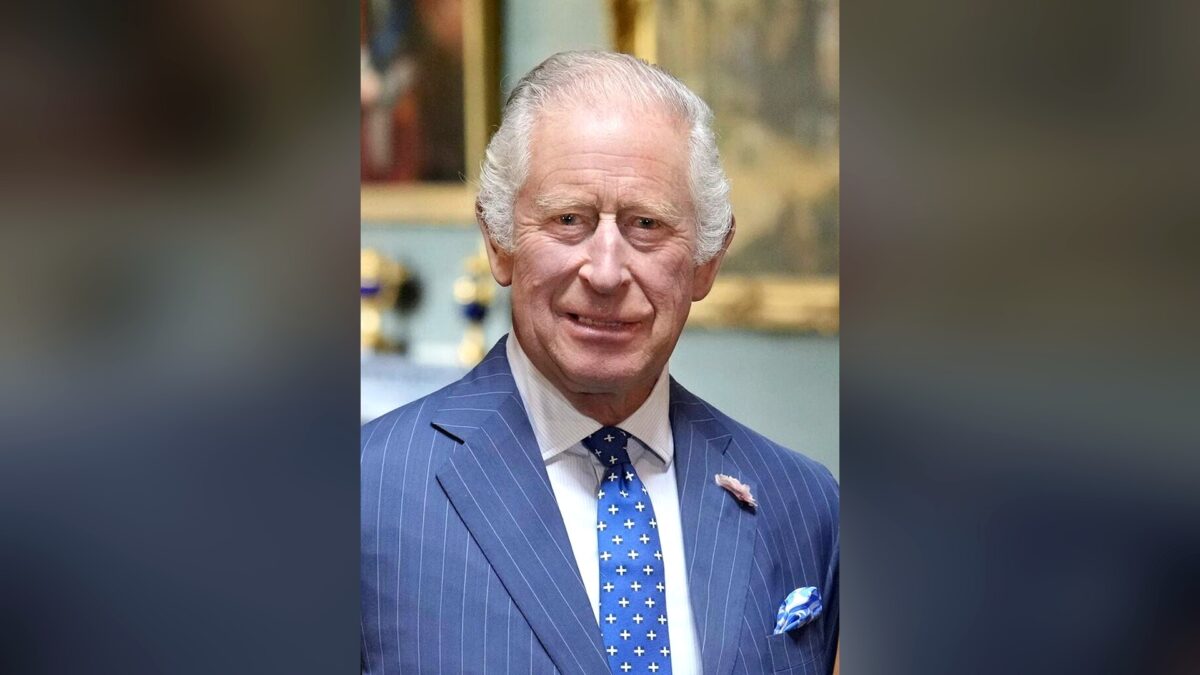
There is a question that has crossed four centuries of ocean to arrive, at last, in a small room in St John’s, Antigua — and today, it will be asked of a king to his face. Will you say the word?
Not sorrow. Not regret. Not pain, not honesty, not the deepest anything. The word is apology. And for all the careful language that Buckingham Palace has prepared for King Charles III as he opens the Commonwealth summit today, that one small word is the only one the whole world is listening for — because it is the only one that has never been spoken.
Think of it, reader. A king of Britain stands on an island his country seized in 1632 and turned into a machine for making sugar out of human beings. He has spent nine days sailing through the Caribbean — the Bahamas, Guyana, Antigua — looking at shackles in museum cabinets, standing where enslaved rebels were executed after the Demerara uprising of 1823, listening to the descendants of the people his ancestors bought and sold. And when he rises to speak to the leaders of fifty-six nations, the Palace tells us in advance what he will say: he will address slavery with “unflinching honesty and sincere sorrow”. He will not shy away from “the most shameful aspects of the past”. But he will not apologise. It would not be “appropriate”, the Palace says, for him to address the government’s position. Sorrow, yes. Apology, no. That is the whole of it — and that, precisely, is the scandal.
The Island That Remembers
Antigua was not chosen by accident, and it was not chosen by the British. The Commonwealth summit comes to St John’s because it is Antigua and Barbuda’s turn, but history chose the ground long before the diplomats did. This is the island where the chattel model — the cold, legal invention that turned a human being into property, into a thing that could be bought, branded, bred and bequeathed like a chair — was perfected on sugar plantations. Sir Hilary Beckles, chairman of the Caribbean Community’s Reparations Commission, said it plainly this week: the British King and Prime Minister have come to “the ancestral site of where this chattel model was established”, and this is “a very critical moment in the development of the reparations movement”.
Let the numbers stand before you without decoration, because they need none. Some 12.5 million Africans were abducted and sold into slavery by European merchants between the fifteenth and nineteenth centuries. Britain alone transported an estimated 3.2 million of them. These are not statistics; they are the arithmetic of an empire. Every one of those millions had a name, a mother, a language, a god — and the empire took all four and gave back a number branded on skin.
And here is the thing the island remembers, even if London has trained itself to forget: when the trade ended, it was not the enslaved who were compensated. It was their owners. When Parliament passed the Slavery Abolition Act in 1833, the British state paid £20 million to the slave owners — a sum equal to some forty per cent of the government’s entire annual spending, worth roughly £17 billion in today’s money, according to research by University College London. The enslaved received nothing. Not a penny, not an acre, not an apology. And the British taxpayer — the ordinary working man and woman of Britain, most of whose ancestors never owned a slave — kept paying off that loan to the owners until 2015. Two hundred years after abolition, the debt for buying human beings was still being serviced. That is not history, reader. That is a receipt, still warm.
So when the King walks through the museum at Government House in Antigua, as he did this week, and looks at the shackles and the diagrams of slave ships packed with bodies and the conch shell enslaved people used to summon one another to work, he is not looking at the past. He is looking at the founding capital of the world we live in. The sugar in your tea, the cotton in your shirt, the wealth of the great houses of Bristol and Liverpool and London — all of it was planted in Caribbean soil and watered with African blood. The historian will tell you this politely. The island tells it plainly.
A Door Opens — But Only Just
Something has changed, and honesty demands that I say so before I say anything else. On Friday, the British Prime Minister, Andy Burnham, wrote in The Guardian that he is “open” to a formal apology for Britain’s role in the transatlantic slave trade. Read his words, because they matter: “The transatlantic slave trade was a brutal and barbaric violation of those people. They were denied their humanity. They were separated from their families, treated as property and worked to their deaths. I want to express my sorrow and regret for the pain and suffering of so many millions and to recognise the way it still shapes our world today.”
No British prime minister has ever said anything like this in office. Tony Blair, in 2007, offered only “deep sorrow and regret”. David Cameron, standing in Jamaica in 2015, told the Caribbean to “move on”. Rishi Sunak dismissed the calls in 2023. Keir Starmer ruled out compensation in 2024. At Samoa in 2024, Commonwealth leaders demanded reparations talks and were refused. So yes — Burnham’s words are a door opening. Ghana’s President John Mahama called them a “watershed moment”, and he is not a man given to exaggeration.
But look at the door, reader, and look at what stands behind it. In the same breath, in the same article, Burnham ruled out financial reparations. The apology is “open” for discussion; the money is off the table. Instead he proposes a “structured dialogue” and a programme of debt restructuring for the poorest Commonwealth countries, led by the former prime minister Gordon Brown. It is a real proposal, and it is not nothing — more than forty per cent of the world’s poorest countries now spend more on servicing their debts than on healthcare for their people, and that is a scandal of its own. But notice the shape of it: sorrow, yes; dialogue, yes; restructuring, perhaps. The word reparations itself remains unspeakable, and the chequebook stays shut. The door is open a crack, and a crack is not an entrance.
The reactions tell you everything about where the world stands. Antigua’s Prime Minister Gaston Browne welcomed the opening. Barbados’s Mia Mottley welcomed it and promised to engage in good faith, while holding her position. The campaigner Denis O’Brien said Britain must “stop obfuscating and give a full and formal apology now”. The Labour MP Bell Ribeiro-Addy said the opening was welcome but not far enough: acknowledgement, she said, is not the same as understanding. And from the other side, the old chorus: Kemi Badenoch called it a “navel-gazing distraction”; Nigel Farage said, “I say no. I say enough.” The King’s own position is the strangest of all: he will speak of sorrow, but the Palace has made clear that a formal apology is a matter for the government, not the Crown. The King may feel sorrow. The Prime Minister may consider an apology. Nobody, it seems, may actually deliver one.
The Language of Sorrow
Here is where I must ask you to look at the pattern, because a single speech is an event, but a pattern is a policy. King Charles has now performed this ritual of sorrow four times. In Rwanda, at the Commonwealth summit of 2022, he said, “I cannot describe the depths of my personal sorrow at the suffering of so many.” In Kenya, in November 2023, standing at a state banquet in Nairobi, he spoke of “the greatest sorrow and the deepest regret” for the “abhorrent and unjustifiable acts of violence” of British colonial rule during the Mau Mau struggle — and stopped there. In Samoa, in 2024, he said “the most painful aspects of our past continue to resonate” — and stopped there. Today, in Antigua, we are promised “unflinching honesty and sincere sorrow”. Sorrow, sorrow, sorrow. The vocabulary never changes, because the vocabulary is the point: it is language designed to sound like an apology while carefully never becoming one.
Now set beside it the sentence that was spoken in Tanzania on the first of November 2023, by a man with no empire to protect and no crown to polish. The President of Germany, Frank-Walter Steinmeier, stood in the former colony and publicly, sincerely apologised for the atrocities committed by his country during its colonial history. No euphemism, no “sincere sorrow” as a substitute, no constitutional excuse. He said he was sorry, on behalf of his country, for what his country did. The sky did not fall. Germany did not collapse. The word was spoken, and the world went on — except that, for the people who heard it, something real had happened. That is the difference between sorrow and apology: sorrow is a feeling you report about yourself; an apology is a debt you acknowledge to someone else. One costs nothing. The other costs everything, which is why it matters.
Even Britain has apologised before, when the victims were close enough and the crime small enough to count. In 2013, the British government paid nearly £20 million in compensation to 5,228 survivors of torture during the Mau Mau Emergency in Kenya, after a London court forced the issue. The then Foreign Secretary, William Hague, expressed regret in Parliament. But that was a court order, not a conscience. The apology that is freely given is the only one that counts, and Britain has never freely given one for slavery — not in 1833, not in 2007, not in 2023, and, if the Palace is to be believed, not today.
Dr Niambi Hall Campbell-Dean, who chairs the Bahamas National Reparations Committee, called the King’s remarks on this tour “hollow platitudes”. It is a harsh judgement, and I will not pretend it is unfair. When a king tells a youth rally in Nassau that “some of what is best in Bahamian culture today, the most joyful, the most hopeful, the most bright, was born out of darkness”, the sentence is beautiful and it is empty at the same time. It praises the descendants for surviving what his ancestors did to them, as if survival were a gift the empire gave them rather than a crime they endured despite it. The poetry is exquisite. The justice is absent.
The World Has Moved — Has Britain?
But here is the part of the story that should alarm London more than any speech: the world is no longer waiting for Britain’s permission to decide what slavery was. On 25 March 2026, the United Nations General Assembly adopted a declaration, led by Ghana, recognising the trafficking of enslaved Africans and racialised chattel enslavement as the gravest crime against humanity. One hundred and twenty-three states voted in favour. Three voted against — the United States, Israel and Argentina. Fifty-two abstained, including the United Kingdom and every member of the European Union. Read that vote again, slowly: the country that transported 3.2 million human beings could not bring itself to vote that the crime was a crime. It abstained. History will remember the abstention longer than it remembers the speeches.
And the law is moving too. On 31 August 2026, the United Nations Committee on the Elimination of Racial Discrimination published its General Recommendation No. 40, setting out states’ obligations to pursue reparatory justice for colonialism, the transatlantic trade and racialised chattel slavery — not merely to remember the wrongs, but to repair them. The African Union, at its summit in February, declared slavery, deportation and colonisation crimes against humanity and acts of genocide against the peoples of Africa, and proclaimed a decade of reparations running from 2026 to 2036. This week, in Johannesburg, the Second Africa and African Diaspora Conference gathers under the theme “The Return to Africa”, with reparatory justice at the top of its agenda. The tide has turned, and it is not turning back.
So the question in Antigua is not whether reparations will be discussed. Sir Hilary Beckles said it best: reparations are not on the summit’s official agenda, “but it doesn’t have to be on the agenda because reparations is all around this conference”. The question is whether Britain will arrive at the discussion as a partner or as a defendant — whether it will lead, or be dragged, by history. The Commonwealth itself is the stakes: fifty-six nations, most of them former colonies, gathered under a theme of “Accelerating Partnerships and Investment for a Prosperous Commonwealth”, while the richest member in the room refuses to settle the oldest debt on its books. A family that will not discuss its inheritance cannot honestly discuss its future.
The New Chains Are Made of Interest
And now I must tell you the part that makes this more than a quarrel about words, because the empire did not end when the ships stopped sailing. It changed its instruments. The chains are gone; the interest payments remain. Burnham himself admits it: more than forty per cent of the world’s poorest countries spend more on debt interest than on healthcare. Think about that sentence until it hurts. A mother in a Commonwealth village cannot get medicine for her child, not because there is no medicine in the world, but because her government’s money goes first to a creditor in London. The plantation has become a spreadsheet, and the overseer now wears a suit and calls himself a bondholder. This is why the Caribbean and African leaders insist that reparations are not about the past at all. They are about the present — about an economic order built on stolen labour, which still extracts wealth from the same countries, through the same ports, to the same banks.
That is why the proposals now on the table matter more than the speeches. Gordon Brown’s debt drive — restructuring the debts of the poorest Commonwealth countries — is a serious idea, and if it is done honestly it could save lives. Ghana has proposed converting portions of African countries’ bilateral debt into investment in education, healthcare and industrial development. The Church of England, to its credit, has put £100 million into a Fund for Healing, Repair and Justice for its own historic links to slavery. These are not reparations in the full sense, but they are movement — the first admission, however indirect, that the ledger is still open and that somebody owes somebody something.
And yet, reader, notice what is still missing from every one of these proposals: the admission. Debt relief is charity; reparations are justice. Charity says, “We are generous.” Justice says, “We were wrong.” Britain will do the first all day long. It will restructure, it will fund, it will dialogue, it will sorrow. What it will not do — what it has not done in two hundred years — is say, in the plain language of a man to his neighbour: we did this, it was a crime, and we owe you. Until that sentence is spoken, every fund and every restructuring is a payment made without an apology attached — and a payment without an apology is a bribe to history, not a settlement with it.
What an Apology Actually Is
So what, then, is an apology? Let me tell you what it is not. It is not sorrow, because sorrow is private and an apology is public. It is not regret, because regret looks backwards and an apology looks forwards. It is not a speech, because a speech ends when the applause ends and an apology begins when the applause ends. An apology is a transfer of power: the wrongdoer kneels, the wronged stands, and for one moment the world is the right way up. That is why the powerful fear it more than they fear any fine. A fine is money. An apology is surrender — the surrender of the story that says we were the civilisers, the benefactors, the bringers of light. And once that story surrenders, everything built on it must be renegotiated: the debts, the museums, the street names, the schoolbooks, the wealth itself.
That is the real reason the word has not been spoken in Antigua, or in Nairobi, or in Kigali, or in Samoa. It is not that the word is difficult. It is one word, two syllables, and a child could say it. It is that the word is a door, and behind the door stands the bill. The King cannot say it, says the Palace, because apology is a matter for the government. The government will not say it, says the Prime Minister, because the money is off the table. And so the two of them stand together in Antigua, the King and the Prime Minister, each pointing politely at the other, while the descendants of the enslaved wait in the room where the chattel model was invented — waiting for a word that two centuries of British power have been unable to pronounce.
I am not a cynic, and I do not write this column to despair. Something is genuinely moving. A British prime minister has said the words “brutal and barbaric violation” about his own country’s history, and that would have been unthinkable ten years ago. The United Nations has declared the crime the gravest against humanity. The African Union has proclaimed a decade of reparations. The Caribbean has refused, politely and immovably, to let the subject die. The arc is bending, and I believe it bends towards the word being spoken — perhaps not today, perhaps not by this King or this Prime Minister, but by someone, soon, because history does not accept abstentions forever. You can abstain in a vote. You cannot abstain in a verdict.
But today, in St John’s, let us be honest about what we are watching. A king will speak of sorrow with unflinching honesty, and the sorrow will be real, and the honesty will be real, and both will be insufficient — because sorrow is what you feel when you remember a tragedy, and an apology is what you owe when you caused one. The difference between the two is the difference between a man who visits a museum and a man who returns what is in it. Until Britain learns that difference, the King may sail to every island in the Caribbean, and look at every shackle in every cabinet, and speak every beautiful sentence in the language — and the word will still be waiting, unspoken, in the room. History is patient, reader. But it is not forgetful. And one day — in Antigua, or in London, or wherever the reckoning finally arrives — somebody will have to stand up, look the descendants of the enslaved in the eye, and say the two syllables that two centuries of empire could not say. Sorry. Not sorrow. Sorry. And then, and only then, will the healing begin.
Sources & References
- The Times — “King Charles to address slavery ‘with honesty and sincere sorrow’” (1–2 November 2026): the King formally opens CHOGM in St John’s, Antigua, on Tuesday 3 November; Palace wording; Burnham’s Guardian article; the Nassau and Guyana tour; 12.5 million abducted, 3.2 million transported by Britain.
- Hello! Magazine — “Palace reveals King Charles’s plans for slavery issue response” (2 November 2026): Palace statement in full; no apology expected; the King’s 2022 Rwanda and 2024 Samoa remarks; the Demerara executions; arrival 30 October.
- Caribbean Media Corporation (via CANA News) — Sir Hilary Beckles on the “ancestral site” of the chattel model and a “very critical moment” for the reparations movement (2 November 2026).
- Institute for Security Studies (ISS Africa) — “Can the UN’s transatlantic slavery decision deliver meaningful reparations?” (9 April 2026): the 25 March 2026 UN General Assembly resolution, 123 votes in favour, 3 against, 52 abstentions including the UK; non-binding; calls for dialogue on reparatory justice.
- United Nations Working Group of Experts on People of African Descent (OHCHR) — 38th session document (April 2026): the African Union reparations agenda; the 25 March 2026 General Assembly Declaration; report A/HRC/60/77 on reparatory justice.
- Energy Radio — “King to address slavery at Commonwealth summit in Antigua” (1–2 November 2026): summit dates 1–4 November, 56 member countries, 2026 theme; Gaston Browne’s call for a reparations framework.

About the Author — Abdul Mannan
Related Articles

The Drum Beats Twice: Cyclone Murasu and the Warning India Has Learned to Hear
Tonight, between Nellore and Narsapur, the sea will come ashore for the second time in a week. Cyclone…
Tomorrow, America Votes — and History Is Holding Its Breath
Fifty-three million Americans have already voted before Election Day. On Tuesday 3 November 2026, the rest of America…
Gen Z Regelt: The Children Europe Ignored Have Taken Its Streets
On Halloween night, the children of Europe put on their costumes — and then they took off their…